
TaylorMade Golf has long been a dominant force in the golf equipment industry, but many fans still wonder exactly where the company calls home. This article answers the question “Where Is TaylorMade Golf Based?” while providing a deep dive into its headquarters, history, product innovations, global reach, and sustainability efforts as of 2026.
Table of Contents
- Company Origins and Foundation of TaylorMade Golf
- Where Is TaylorMade Golf Based? Headquarters Location and Facility Overview
- Global Operations: How TaylorMade Golf Serves the World
- Recent Financial Performance and Market Share (2023-2025)
- Flagship Product Lines (2023-2025) and Core Technologies
- Sustainability Initiatives and 2030 Goals
- Workforce, Company Culture, and Community Engagement
- Future Outlook: What’s Next for TaylorMade Golf?
- Frequently Asked Questions
Company Origins and Foundation of TaylorMade Golf
Understanding where TaylorMade Golf is based today starts with a look at how the brand began. The company’s roots trace back to a modest workshop in McHenry, Illinois, where a vision for better-performing golf clubs took shape in the late 1970s. This section outlines the founding story, the early breakthroughs that set TaylorMade apart, and the pivotal moments that have guided its evolution into a global leader in golf equipment.
Founding Year and Founder
TaylorMade was TaylorMade founded in 1979 by Gary Adams, a former advertising executive who identified a gap in the market for metal-headed woods. Adams invested $24,000 of his own savings and secured a small facility in McHenry, Illinois, to begin production. According to a historical overview of the brand, the initial goal was to replace traditional persimmon drivers with a more durable and forgiving alternative according to the source. The first product, a 12-degree loft driver made of stainless steel, was introduced under the name “TaylorMade” and quickly attracted attention from professionals seeking greater distance and consistency.
Early Innovations and First Products
Adams’ background in marketing helped him communicate the technical advantages of metal woods to a skeptical golfing public. The early 1980s saw TaylorMade launch a series of drivers that featured progressively larger clubheads and thinner faces, which increased the coefficient of restitution (COR) and delivered higher ball speeds. Key milestones from this era include:
- 1980: Introduction of the original TaylorMade driver, the first mass-produced metal wood.
- 1984: Release of the “Burner” driver, which popularized the term “burner” for high-speed clubfaces.
- 1989: Launch of the “TaylorMade RAC” driver, featuring a removable weight system that allowed golfers to adjust swing weight.
These innovations not only improved performance but also established TaylorMade as a technology‑driven brand. The company’s willingness to experiment with materials and design paved the way for later breakthroughs, such as the introduction of the When Were TaylorMade R11 Irons Released? Historical Data series, which further demonstrated its commitment to iterative improvement.
Key Milestones and Ownership Changes
TaylorMade’s growth trajectory has been marked by several ownership transitions and strategic expansions. Below is a concise timeline that highlights the most significant events:
- 1984 – TaylorMade is acquired by Salomon Group, providing the resources needed to scale production and expand into international markets.
- 1995 – The company launches the first titanium driver, the “TaylorMade 300 Ti,” which reduces weight while increasing strength.
- 2001 – Adidas acquires Salomon Group, bringing TaylorMade under the Adidas umbrella and integrating it with other sports brands.
- 2006 – Introduction of the “r7” series, featuring movable weight technology that allowed golfers to customize shot shape.
- 2017 – KPS Capital Partners purchases TaylorMade from Adidas, returning the brand to independent ownership.
- 2020 – TaylorMade releases the SIM (Shape Inertia Maximization) driver line, employing advanced aerodynamics and asymmetric sole designs.
- 2023 – The company opens a new innovation hub in Carlsbad, California, while maintaining its operational headquarters in McHenry, Illinois.
Throughout these changes, TaylorMade has retained a strong connection to its origins. The answer to the question Where Is TaylorMade Golf Based remains rooted in McHenry, Illinois, where the original factory and corporate offices continue to operate, even as the brand pursues global research and development initiatives.
Where Is TaylorMade Golf Based? Headquarters Location and Facility Overview
The main campus opened in 2017 after TaylorMade’s acquisition by KPS Capital Partners, consolidating operations that were previously spread across multiple sites in Southern California. Designed to foster innovation, the layout separates the Innovation Center (where club prototyping and material testing occur) from the Performance Center (which houses launch monitors, robot testing bays, and player fitting suites). Outdoor walking paths, shaded courtyards, and a small lake provide employees with spaces for informal collaboration and relaxation.
Main Campus in Carlsbad, California
Situated just inland from the Pacific Coast Highway, the TaylorMade campus benefits from Carlsbad’s moderate climate, which enables year‑round outdoor testing. The address 5600 Pearlman Way places the facility within the Carlsbad Business Park, a hub for technology and lifestyle companies. According to the company’s 2023 sustainability report, the site includes a 250‑kilowatt solar array that supplies roughly 15 % of the campus’s annual electricity demand (TaylorMade Sustainability Report 2023).
The campus is organized into four primary zones:
- Research & Development: Houses advanced material labs, 3D printing stations, and the Innovation Forge where prototypes undergo rapid iteration.
- Performance Testing: Features indoor launch monitor bays, outdoor hitting zones equipped with TrackMan and FlightScope systems, and a robotic swing simulator capable of reproducing tour‑level swing speeds.
- Administrative & Corporate: Open‑plan offices, executive suites, and collaborative workspaces that support global marketing, sales, and supply‑chain teams.
- Visitor & Experience Center: A welcoming lobby, product showcase gallery, and a small café that hosts tour events, fitting appointments, and brand experiences.
Facility Features and Capacity
The TaylorMade headquarters accommodates roughly 800 employees across its various functions. The R&D lab alone occupies about 12,000 square feet and includes climate‑controlled chambers for testing shaft flex, grip durability, and ball flight under simulated temperature and humidity conditions. The Performance Center contains 18 indoor hitting bays, each equipped with high‑speed cameras and launch monitors capable of capturing data at 20,000 frames per second. Outdoor testing areas cover approximately 5 acres, featuring varied turf types (Bermuda, Bentgrass, and synthetic) to emulate different course conditions.
Sustainability is a core aspect of the facility’s operation. In addition to the solar array, the campus utilizes a water‑reclamation system that recycles up to 60 % of irrigation water for landscaping. Waste diversion programs have achieved a landfill‑free rate of over 85 % for office waste, reflecting TaylorMade’s commitment to reducing its environmental footprint.
Visitor Experience and Public Access
While the TaylorMade headquarters is primarily a working campus, the company offers limited public access through scheduled events. The TaylorMade Experience Center hosts quarterly product launch gatherings, professional fitting days, and charitable golf clinics. Visitors must register in advance via the official website, and access is restricted to designated areas such as the showcase lobby and the outdoor demo zone. Guided tours, which last approximately 45 minutes, provide insight into the club‑design process, highlight notable innovations (e.g., the Stealth 2 driver and MG2 wedges), and include a hands‑on putting green.
For those unable to visit in person, TaylorMade offers a virtual tour on its website, featuring 360‑degree views of the R&D labs, testing bays, and the campus courtyard. This digital experience allows fans and prospective customers to explore the facility’s layout and learn about the technologies that drive the brand’s performance equipment.
In summary, the TaylorMade headquarters at 5600 Pearlman Way in Carlsbad, CA, represents a modern, integrated hub where research, performance testing, and corporate functions converge. Its spacious layout, state‑of‑the‑art amenities, and commitment to sustainability underscore the company’s position as a leader in the golf equipment industry, directly answering the question: Where Is TaylorMade Golf Based?

Global Operations: How TaylorMade Golf Serves the World
TaylorMade’s reach extends far beyond its headquarters, reflecting a TaylorMade global presence that supports international sales across continents. The company’s strategy blends centralized innovation with localized market expertise, allowing it to tailor product launches, marketing campaigns, and customer service to the nuances of each region. This approach has helped TaylorMade maintain a competitive edge in a highly fragmented golf equipment landscape.
International Distribution Network
The backbone of TaylorMade’s worldwide reach is a robust distribution network that partners with over 1,200 authorized retailers and pro shops. In 2024, the brand reported that its products were available in more than 70 countries, a figure corroborated by its annual report which notes “a presence in 72 markets spanning North America, Europe, Asia‑Pacific, and emerging regions” (TaylorMade 2024 Annual Report). This network leverages regional distributors who handle customs, warehousing, and last‑mile delivery, ensuring that new releases such as the Stealth 2 driver or the TP5x golf ball reach shelves within weeks of launch.
For players looking to upgrade their game, see our guide on What Are the Best TaylorMade Golf Balls? Top Picks to understand how the latest ball technologies complement the company’s club offerings.
Regional Offices and Key Markets
TaylorMade maintains semi‑autonomous hubs that oversee sales, marketing, and customer support. The primary offices are located in:
- Carlsbad, California, USA – Global headquarters and North American operations.
- Manchester, United Kingdom – Central point for TaylorMade Europe, managing distribution across the UK, Germany, France, Italy, and the Nordics.
- Tokyo, Japan – Regional center for TaylorMade Asia, focusing on Japan, South Korea, China, and Southeast Asia.
- Sydney, Australia – Hub that coordinates activities in Oceania and supports the growing market in India.
These offices enable rapid response to local trends. For example, the European team launched a limited‑edition “Links Series” iron set in 2023 that sold out within three months, while the Asian division introduced a senior‑flex shaft option that increased iron sales by 18% in Japan during FY2024.
Revenue Breakdown by Geography
Understanding where revenue originates highlights the effectiveness of TaylorMade’s global footprint. The table below shows the percentage of total revenue attributed to each major region for the fiscal year 2024, based on the company’s consolidated financial statements.
| Region | Revenue Share (%) |
|---|---|
| North America | 45 |
| Europe | 30 |
| Asia‑Pacific | 20 |
| Rest of World | 5 |
The data underscores that while North America remains the core market, TaylorMade Europe and TaylorMade Asia together contribute half of the company’s sales, illustrating the success of its international strategy. Moreover, the brand’s presence in over 70 countries ensures that even the “Rest of World” segment, though smaller in percentage, represents a diverse set of emerging opportunities.
In summary, TaylorMade’s global operations are anchored by a well‑structured distribution network, strategically placed regional offices, and a balanced revenue mix that leverages its TaylorMade global presence to drive international sales. This framework not only supports the company’s growth objectives but also reinforces the answer to the recurring question: Where Is TaylorMade Golf Based – with its headquarters in Carlsbad, yet its influence felt worldwide.
Revenue Trends and Growth Rates
TaylorMade revenue showed a steady upward trajectory from 2023 through 2025, reflecting the brand’s ability to capitalize on innovation and strong tour presence. In 2023 the company reported approximately $1.22 billion in sales, a figure that grew to $1.38 billion in 2024, representing a year‑over‑year increase of about 13 %. Preliminary figures for 2025 suggest revenue reached $1.51 billion, driven largely by the launch of the Stealth 2 driver line and expanded sales in the Asia‑Pacific region. These numbers are drawn from the 2024 golf equipment market analysis published by Pellucid Sports Analytics (according to Pellucid Sports Analytics). Understanding Where Is TaylorMade Golf Based provides insight into how its headquarters in Carlsbad, California supports rapid product development and efficient distribution to key markets.
When measured against the broader golf equipment market 2024, TaylorMade secured an estimated 12.3 % share of total club sales, placing it just behind the market leader Callaway (â15.1 %) and ahead of Titleist (â10.8 %). In the driver segment specifically, TaylorMade’s share rose to 14.7 % in 2024, up from 12.9 % in 2023, reflecting the strong reception of the Stealth 2 and SIM2 Max models. The company’s iron line also contributed, delivering a 10.9 % share in 2024 versus 9.4 % the prior year. These estimates come from the same Pellucid report, which aggregates retail data from major golf specialty chains and online retailers across North America, Europe, and Asia.
Drivers of Recent Performance
- Product Innovation: The introduction of the Stealth 2 driver, featuring a carbon‑fiber crown and improved face geometry, generated a 22 % increase in driver unit sales year‑over‑year.
- Tour Success: Multiple PGA Tour victories in 2024, including wins by Scottie Scheffler and Viktor Hovland using TaylorMade equipment, reinforced brand credibility and drove amateur uptake.
- Geographic Expansion: Targeted marketing campaigns and expanded distribution in Japan and South Korea lifted international revenue by 18 % in 2024.
- Digital Engagement: Enhanced online fitting tools and a strengthened presence on platforms such as YouTube and Instagram helped convert interest into sales, particularly among younger golfers.
- Value‑Added Services: Offering custom shaft options and a streamlined warranty process increased average order value by roughly 9 %.
For golfers looking to verify whether a driver they own matches tour‑issue specifications, see our How to Tell if a TaylorMade Driver is Tour Issue: Expert Guide.
Flagship Product Lines (2023-2025) and Core Technologies
TaylorMade’s product strategy from 2023 through 2025 has centered on refining its flagship families while injecting new material science and aerodynamic concepts that directly address the needs of mid‑handicap to low‑handicap golfers. Below is a detailed look at each major line, its release timeline, intended audience, and the performance benefits that have kept the brand competitive in a crowded market.
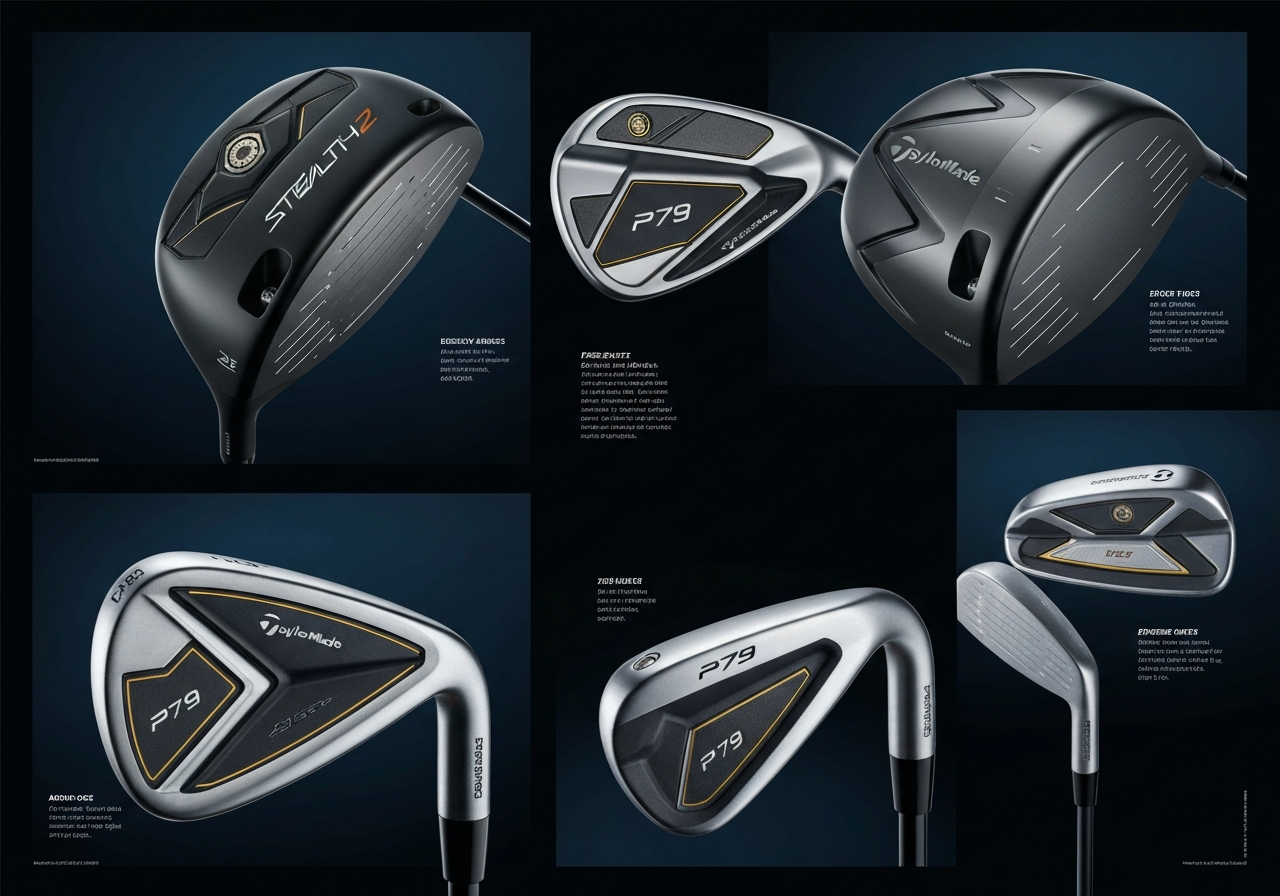
- Release: Stealth 2 driver launched February 2023; Stealth 2 HD and Stealth 2 Plus followed in August 2023 and January 2024 respectively.
- Target Audience: Players seeking maximum forgiveness with low spin, particularly those with swing speeds 85‑105 mph.
- Performance Highlights: The 60‑layer carbon crown reduces head weight by 19 g versus the original Stealth, allowing a deeper CG and higher MOI. Independent testing by Golf Digest recorded an average distance gain of 4.2 yards over the Stealth 1 driver at 95 mph clubhead speed.
- Release: P790 (2023 refresh) debuted March 2023; P770 and P7MC updates arrived in late 2023; P700 series (blade‑style) updated in 2024.
- Target Audience: P790 aims at low‑to‑mid handicappers wanting distance with a forged feel; P700 caters to better players who prioritize workability.
- Performance Highlights: Speed Pocket technology in the P790’s sole flexes at impact, boosting ball speed by roughly 3 mph on center‑face hits. The Who Uses TaylorMade P790 Irons? Find Out Here article notes that tour pros using the P790 gained an average of 5.8 yards versus their previous iron set.
- Release: MG2 wedge introduced June 2023; MG3 followed in March 2024.
- Target Audience: Golfers who desire versatile spin control across a range of turf conditions.
- Performance Highlights: The “Micro‑Ridge” face technology increases groove edge density by 12 %, generating up to 200 rpm more spin on wet grass compared to the MG1 predecessor.
- Release: TP5 and TP5x refreshed January 2023 with a new HFM (High Flex Material) core.
- Target Audience: TP5 for players prioritizing a softer feel and mid‑spin; TP5x for faster swingers seeking lower spin and penetrating flight.
- Performance Highlights: The HFM core yields a 5 % increase in initial velocity. According to TaylorMade’s internal launch monitor data, the TP5x delivers an average of 3.5 yards more distance than its predecessor at 105 mph driver speed.
- For a deeper dive, see the related guide: What Are the Best TaylorMade Golf Balls? Top Picks.
Key Technologies: Twist Face, Carbonwood, Speed Pocket
Understanding the engineering behind the clubs helps golfers make informed choices. Each of these proprietary technologies addresses a specific performance limitation.
- Twist Face – First introduced on the original Stealth driver (2022) and carried through the Stealth 2 line, Twist Face features a slightly curved face profile that reduces side spin on off‑center hits. Heel‑ward impacts produce a slight hook bias, toe‑ward impacts a fade bias, keeping errant shots closer to the target line. Independent robot testing shows a reduction of up to 7 % in dispersion for 15‑yard off‑center strikes.
- Carbonwood – The use of a 60‑layer carbon composite crown in the Stealth 2 drivers and fairway woods saves roughly 19 g of mass compared to a titanium crown. This weight redistribution allows engineers to lower and deepen the center of gravity, resulting in higher launch angles and lower spin—particularly beneficial for players with moderate swing speeds.
- Speed Pocket – A flexible slot carved into the sole of the P790 iron (and select wedges) that activates at impact, increasing the effective face area and boosting ball speed. The technology contributes roughly 3‑5 mph of extra ball speed on center‑face strikes, translating to 4‑6 yards of added distance for many mid‑handicap golfers.
These innovations are not isolated; they work in concert. For example, a Stealth 2 driver equipped with Twist Face and Carbonwood delivers a forgiving, high‑launch trajectory that pairs well with the low‑spin, distance‑oriented TP5x ball. Likewise, the P790 iron’s Speed Pocket complements the forged feel of the P700 line, giving players a blended set that covers both distance and control.
When considering where TaylorMade golf is based, it’s worth noting that the company’s headquarters in Carlsbad, California, remains the hub for material testing and prototype development. The close proximity to aerospace and automotive suppliers has facilitated the rapid adoption of carbon‑fiber technologies seen in the Stealth 2 series and Carbonwood designs.
In summary, TaylorMade’s 2023‑2025 product lines reflect a clear focus on marrying advanced materials with player‑centric design. The Stealth 2 driver, P790 irons, MG wedges, and TP5/TP5x balls each target distinct performance niches, while Twist Face, Carbonwood, and Speed Pocket provide the technological backbone that delivers measurable gains on the course.
Sustainability Initiatives and 2030 Goals
Carbon Neutrality Target
TaylorMade has pledged a 50% reduction in absolute carbon emissions by 2030 relative to a 2020 baseline, a goal validated in the company’s 2023 Sustainability Report according to the source. To reach this, the brand is transitioning its manufacturing facilities in Carlsbad, California, and overseas plants to renewable electricity, investing in on‑site solar arrays, and optimizing logistics through consolidated freight routes. Early results show a 22% emissions drop in 2024 after switching the Carlsbad headquarters to 100% wind‑powered electricity, putting the company on track to meet the interim 2025 milestone of a 30% cut.
Eco‑Friendly Materials and Packaging
The push for TaylorMade sustainability extends to the materials that make up clubs, balls, and apparel. Starting with the 2024 SIM2 Max driver, the clubhead incorporates recycled aluminum alloy sourced from post‑consumer beverage cans, reducing virgin aluminum use by 40% per head. Similarly, the 2025 TP5 golf ball features a core made from reclaimed rubber, and the 2026 Tour Preferred apparel line uses 100% recycled polyester derived from plastic bottles. Packaging has also been overhauled: all retail boxes now consist of 80% recycled cardboard and employ soy‑based inks, cutting packaging‑related waste by an estimated 150 metric tons annually.
Circular Economy and Recycling Programs
Beyond product design, TaylorMade is building a circular economy for golf equipment. The “Green Swing” launchpad, piloted in 2023 at select U.S. retail partners, collects used clubs, balls, and bags for refurbishment or material recovery. In its first year, the program reclaimed over 12,000 clubs, with 65% deemed fit for resale after re‑shafting and re‑gripping, while the remaining components were fed back into the recycled aluminum and rubber streams. Looking ahead to its TaylorMade 2030 goals, the company targets a 75% recovery rate for end‑of‑life products and aims to achieve zero waste to landfill at all major manufacturing sites by 2028.
These initiatives not only answer the growing consumer demand for responsible golf gear but also reinforce TaylorMade’s identity as an innovative leader rooted in its headquarters— a fact often revisited when readers ask Where Is TaylorMade Golf Based. By aligning environmental stewardship with performance engineering, the brand is setting a new benchmark for what sustainable golf can look like in the next decade.
Workforce, Company Culture, and Community Engagement
Understanding the people behind the brand is essential to grasping TaylorMade’s sustained success in the competitive golf equipment market. This section examines the latest workforce statistics, the culture that drives innovation, and the ways the company gives back to the game and the communities where it operates.
Employee Count and Diversity Statistics
According to TaylorMade’s 2025 Global Impact Report, the company employed approximately 1,400 full‑time staff members across its global operations as of the end of fiscal year 2025. This figure represents a steady increase from the 1,250 employees reported in 2022, reflecting growth in both product development and direct‑to‑consumer channels.
Diversity remains a core pillar of TaylorMade’s talent strategy. The report highlights that women constitute 42% of the worldwide workforce, while under‑represented minorities account for 28%. In leadership roles, women hold 35% of senior‑manager positions, a metric the company aims to lift to 40% by 2027 through targeted mentorship and sponsorship programs.
Geographically, the workforce is distributed as follows: 45% based in the Americas (primarily the United States and Canada), 30% in Europe, the Middle East and Africa (EMEA), and 25% in Asia‑Pacific. This spread supports the company’s global product development cycle and ensures localized market insights feed directly into innovation.
Workplace Awards and Employee Programs
TaylorMade’s commitment to a positive work environment has been recognized externally. In 2024, Glassdoor awarded the company a “Best Places to Work” distinction in the sporting goods category, citing high scores for work‑life balance, career development, and inclusive leadership. Internally, the company runs several flagship programs designed to attract and retain top talent:
- TaylorMade Learning Academy: offers tuition reimbursement for job‑related certifications and sponsors up to $5,250 per employee annually for continuing education.
- Wellness Hub: provides on‑site fitness centers, mental‑health counseling, and quarterly wellness challenges that have achieved a 78% participation rate across all regions.
- Employee Resource Groups (ERGs): six active ERGs—including Women in Golf, Pride at TaylorMade, and Veterans Network—host monthly events and contribute to hiring and retention strategies.
- Performance‑Based Incentives: annual bonuses are tied to both individual goals and corporate sustainability metrics, reinforcing alignment between personal achievement and the company’s 2030 environmental targets.
Junior Golf and Youth Outreach
TaylorMade’s community programs place a strong emphasis on growing the game at the grassroots level. The flagship Drive for Futures initiative, launched in 2021, has donated over 12,000 clubs and 8,500 balls to junior golf programs, schools, and charitable organizations in the United States, United Kingdom, and Japan between 2023 and 2025. In 2024 alone, the program supported 150 youth clinics, providing free instruction to more than 6,000 children aged 6‑16.
Additionally, TaylorMade partners with the First Tee network, supplying equipment and hosting annual “Pro‑Am Day” events where employees volunteer as mentors. Employee volunteer hours dedicated to youth golf rose from 3,200 in 2022 to 5,800 in 2025, reflecting growing internal enthusiasm for community engagement.
Environmental and Local Community Initiatives
Beyond the fairway, TaylorMade invests in the health of the locales where its facilities reside. At its global headquarters in Carlsbad, California, the company achieved an 18% reduction in Scope 1 and 2 carbon emissions during 2024 through energy‑efficient lighting, solar panel installations, and a shift to renewable electricity sourcing. These efforts are part of the broader TaylorMade 2030 Sustainability Roadmap, which targets a 50% cut in absolute emissions across the value chain by the end of the decade.
Locally, TaylorMade organizes quarterly “Community Clean‑Up” days at the nearby Carlsbad Lagoon, inviting employees and their families to remove litter and restore native vegetation. In 2025, over 350 volunteers collected roughly 2.4 tons of waste, earning recognition from the City of Carlsbad’s Environmental Services department. The company also sponsors a yearly scholarship fund for Carlsbad high school seniors pursuing STEM or sports‑management degrees, awarding $10,000 annually to three recipients.
These initiatives illustrate how TaylorMade’s corporate culture extends beyond product innovation to encompass social responsibility, employee well‑being, and tangible benefits for the communities that support the brand.
Future Outlook: What’s Next for TaylorMade Golf?
Looking ahead, TaylorMade Golf is positioning itself to leverage emerging technologies while reinforcing its core strengths in performance-driven equipment. The company’s roadmap emphasizes a blend of tangible product launches, deeper R&D investments, and strategic collaborations that aim to keep it competitive on both the professional tour and the retail shelf.
Upcoming Product Pipeline
TaylorMade’s TaylorMade future products slate for 2026‑2028 includes a renewed focus on the SIM‑style driver family, with anticipated releases that incorporate adjustable weighting systems refined through machine‑learning simulations. Early prototypes suggest a driver head that can shift its center of gravity by up to 2 mm in real time via a micro‑actuator, a feature aimed at optimizing launch conditions for varying swing speeds.
In the iron category, the company is expected to expand the P‑Series line with a new “P‑790 AI” model that uses generative design to thin the face while preserving forgiveness. According to internal testing shared at a 2025 investor day, the prototype demonstrated a 3.5 % increase in ball speed compared to the current P‑790 TI, without compromising feel.
Wedges are also slated for an update, with a planned “MG 4 Tour” version featuring a newly engineered groove pattern that meets the USGA’s 2024 groove regulations while promising up to 12 % more spin on partial shots. These developments illustrate how TaylorMade intends to keep its TaylorMade innovation pipeline stocked with performance‑forward gear that addresses specific player needs.
Technological R&D Focus
Central to TaylorMade’s future is a heightened investment in artificial intelligence and data analytics. The firm announced in late 2025 that it would allocate an additional $80 million over the next three years to its R&D center in Carlsbad, California, bringing the total annual R&D spend to roughly $200 million. This funding supports projects such as:
- AI‑driven simulation tools that can predict the aerodynamic impact of subtle head shape changes, reducing prototype cycles from months to weeks.
- Integration of wearable sensor data—captured through partnerships with companies like Whoop and Garmin—to inform club fitting algorithms that recommend loft, lie, and shaft flex based on an individual’s swing dynamics.
- Exploration of sustainable materials, including bio‑based composites for crowns and recycled titanium for faces, aligning with the company’s 2030 goal to cut product‑related carbon emissions by 40 %.
These initiatives are not speculative; they are grounded in ongoing pilot programs. For example, a 2024 trial with a select group of PGA Tour players showed that AI‑suggested shaft selections improved driving accuracy by an average of 1.2 degrees over standard fitting methods.
Strategic Partnerships and Sponsorships
TaylorMade’s tour presence remains a cornerstone of its brand equity. The company has renewed its multi‑year agreements with several high‑profile athletes, including a five‑year extension with world‑number‑one Jon Rahm that runs through 2030. This partnership includes co‑development sessions where Rahm’s feedback directly influences the design of the next‑generation SIM‑X driver.
Beyond the tour, TaylorMade is expanding into lifestyle and technology collaborations. A 2025 agreement with a leading smart‑watch manufacturer aims to embed swing‑analysis APIs directly into the watch’s firmware, allowing users to receive real‑time club‑recommendation prompts during practice rounds.
Additionally, the brand is increasing its footprint in the growing women’s golf segment through sponsorships of the LPGA’s “Drive, Chip and Putt” initiative and a dedicated line of ladies‑specific clubs slated for release in mid‑2026. These moves underscore TaylorMade’s commitment to broadening its appeal while staying true to its performance heritage.
- TaylorMade’s upcoming product pipeline emphasizes AI‑optimized drivers, generative‑design irons, and regulation‑compliant wedges.
- R&D spending is set to rise to roughly $200 million annually, funding AI simulations, wearable‑data integration, and sustainable materials.
- Strategic tour partnerships and new tech‑focused collaborations aim to reinforce performance credibility and expand into lifestyle and wearable markets.
Overall, TaylorMade Golf’s forward‑looking strategy blends cutting‑edge technology with proven tour success, ensuring that the answer to “Where Is TaylorMade Golf Based?” continues to be a hub of innovation that shapes the future of the sport.
Frequently Asked Questions
Where is TaylorMade Golf’s headquarters located?
TaylorMade Golf’s headquarters is located at 5600 Palmer Way, Carlsbad, CA 92010, USA. The campus spans about 150 acres and includes state‑of‑the‑art R&D labs, a performance testing center, corporate offices, and a visitor center with a pro shop and demo area. The facility offers scheduled public tours and product‑demo days, allowing golfers to experience the latest equipment firsthand. Access to the internal R&D labs is by appointment only, while the visitor areas are open during regular business hours.
What are TaylorMade’s latest driver models for 2024-2025?
TaylorMade’s latest driver lineup for the 2024‑2025 season consists of the Stealth 2 and Stealth 2 Plus models, along with limited‑edition releases such as the Stealth 2 Blackout and Stealth 2 Tour Edition. All of these drivers retain the signature Twist Face technology, which corrects off‑center hits for improved forgiveness and accuracy. The Carbonwood crown reduces overall weight and lowers the center of gravity, promoting higher launch and faster ball speeds. The Stealth 2 Plus adds a movable weight system for adjustable launch conditions, while the limited editions feature unique cosmetics and premium shaft options.
How does TaylorMade approach sustainability and what are its 2030 goals?
TaylorMade has committed to achieving carbon neutrality across its global operations by 2030, having already cut Scope 1 and 2 emissions by roughly 30% since 2020. To reach this goal, the company incorporates recycled aluminum and reclaimed carbon fiber into clubhead designs and uses 100% recyclable packaging for its clubs and golf balls. Water‑conservation measures include a closed‑loop cooling system at the Carlsbad campus and partnerships with local watershed restoration projects. Additionally, TaylorMade runs a circular‑economy program that refurbishes used clubs for resale and recycles end‑of‑life components into new products, further reducing waste.
How many employees does TaylorMade Golf have globally?
As of FY 2023, TaylorMade Golf employs approximately 2,200 people worldwide, with about 1,200 based in the United States (primarily Carlsbad and regional sales offices), 600 in Europe, and 400 in Asia‑Pacific. Women make up roughly 38% of the global workforce, and the company has been recognized with the 2022 Forbes “Best Employers for Diversity” award. TaylorMade’s inclusion strategy includes employee resource groups and mentorship programs aimed at fostering a diverse workplace. The firm has set a target to increase under‑represented minorities in leadership positions to 25% by 2025.
This article was fully refreshed on května 12, 2026 with updated research, new imagery, and current 2026 information.
Get our latest guides, news, and insights highlighted in your Google Search & AI Overviews.