
✨ This article was AI edited. Editorial responsibility: GolfGearDirect.blog.
It is an incredibly common source of frustration. The truth is, most women drastically underestimate their potential on the course because they compare themselves to highly unrealistic standards.
We analyzed the latest 2026 Arccos Driving Distance Report, and the findings completely shatter old assumptions about women’s golf.
They tracked millions of real-world shots, giving us the most accurate look at recreational performance ever compiled. It turns out that your age has very little to do with how far you hit the golf ball.
Instead, a completely different metric dictates your power and distance off the tee, and we reveal exactly what that is just below.
Table of Contents
- What is the average drive for a female golfer?
- Carry Distance vs. Total Distance: What You Need to Know
- Driving Distance Breakdown by Handicap and Age
- 3 Actionable Tips to Increase Your Swing Speed
- How Equipment and Attack Angle Impacts Your Total Distance
- LPGA Tour vs. Amateur Women: A Realistic Comparison
- Common Myths About the average drive for a female golfer
- Final Thoughts: Don’t Stress Over the Average
- Frequently Asked Questions
What is the average drive for a female golfer?
According to the most recent comprehensive data, the average drive for a female golfer sits right around 140 to 150 yards. However, that single number paints a very incomplete picture of the overall golfing landscape.
When we dig deeper into the actual analytics, we see massive variations based entirely on skill level rather than physical size or age. A brand new beginner might struggle to break the 100-yard barrier, while an experienced amateur easily clears 200 yards with the exact same physical exertion.
The 2026 Arccos report provides the most accurate snapshot of everyday recreational players we have ever seen. They track millions of individual shots using GPS sensors attached to clubs, giving us hard, undeniable data rather than mere guesswork.
We found that a player’s handicap serves as the ultimate predictor of distance off the tee. A scratch golfer consistently outdrives a 20-handicap player by a massive margin on every single hole. This happens because lower handicaps possess vastly superior swing mechanics, leading to much better energy transfer at the moment of impact.
If you currently hit the ball 130 yards, you are actually right in the middle of the pack for weekend recreational players. Do not feel discouraged or frustrated if you currently fall below the 150-yard mark.
Building elite distance takes time, patience, and dedicated practice. Identifying your personal baseline is the crucial first step toward improvement. Once you know your starting point, you can implement highly targeted changes to your technique, fitness routine, and equipment choices. We have seen players add 30 yards in a single season just by addressing basic mechanical flaws.

Carry Distance vs. Total Distance: What You Need to Know
Many recreational players completely confuse carry distance with total distance, leading to extremely poor club selection on the golf course. Carry Distance refers exclusively to how far the golf ball travels in the air before it makes its very first contact with the ground.
Total Distance includes that initial aerial flight plus all the extra yards the ball rolls after landing. Understanding this critical distinction is absolutely vital for lowering your scores and hitting more greens in regulation.
When you test new clubs on a professional Launch Monitor, you must pay close attention to both numbers independently. If you play your rounds on soft, wet, or elevated fairways, your roll will be practically non-existent.
In those soggy conditions, your carry distance essentially becomes your total distance. Conversely, on firm, fast summer fairways, you might easily gain an extra 20 to 30 yards of helpful roll.
We always recommend optimizing your driver specifications for maximum carry, because that aerial distance is the only factor you can fully control with your swing. You cannot rely on dry fairways to bail out a low, descending drive.
If your ball flies too low, it will stop dead on a wet course, robbing you of crucial yardage. By focusing your training on maximizing how long the ball stays in the air, you guarantee consistent performance across all types of weather conditions and course setups.
This is why professional club fitters spend hours dialing in launch angles and spin rates to maximize that vital carry number for their clients.
Driving Distance Breakdown by Handicap and Age
Let us look at the highly specific numbers from the groundbreaking 2026 data. When breaking down the statistics, your Handicap drastically outweighs your age as the primary distance-determining factor.
An athletic 60-year-old with a 10-handicap will almost always outdrive a 30-year-old beginner by a wide margin. We put together a clear, easy-to-understand breakdown to help you set highly realistic goals for your upcoming season.
High Handicaps (25+):
For women playing with a handicap of 25 or higher, the typical drive lands securely between 110 and 130 yards.
Mid Handicaps (15-24):
When we move into the 15 to 24 handicap range, the average distance jumps significantly to 135 through 155 yards.
Low Handicaps (1-9):
Single-digit handicaps, ranging from 1 to 9, regularly average anywhere between 170 and 195 yards off the tee.
Scratch Players:
Finally, the elite amateur scratch players consistently push well past the 210-yard barrier, often rivaling some professional numbers.
Notice exactly how the yardage scales directly with skill progression. Better players make consistently more centered contact on the clubface and generate significantly higher clubhead speeds.
While a senior player might naturally lose a small amount of physical flexibility over time, she can easily compensate through superior technique and course management.
Focus your energy heavily on dropping your handicap through better ball-striking quality, rather than worrying endlessly about getting older. Age truly is just a number when your swing mechanics are perfectly dialed in.
3 Actionable Tips to Increase Your Swing Speed
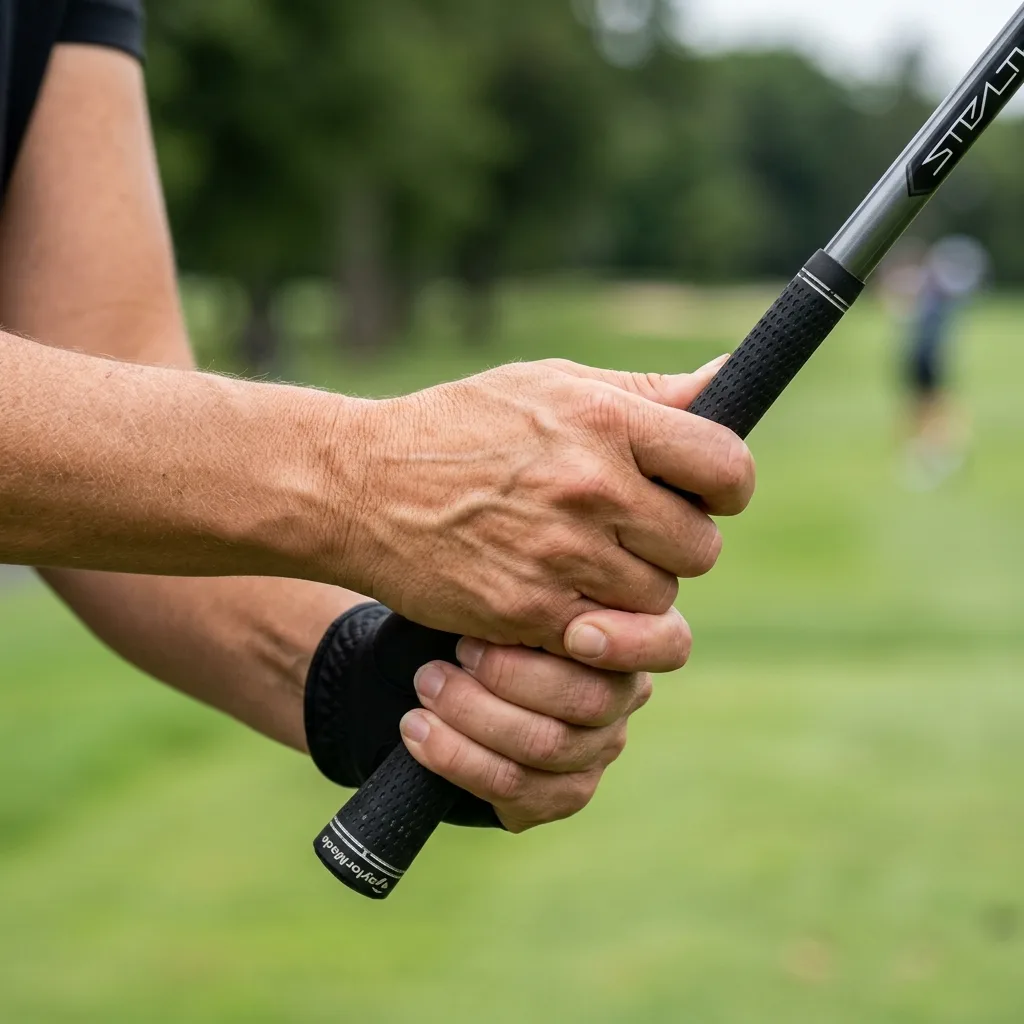
Swing Speed acts as the primary engine for all your golf shots. If you want to hit the ball noticeably further, you simply must swing the golf club faster through the impact zone.
However, swinging faster does not mean swinging harder, tensing up your muscles, or losing your physical balance. Here are three highly proven methods to safely and effectively build immense speed:
- Focus heavily on your core rotation: Your true power comes directly from the ground up, moving powerfully through your hips and torso. Practice making smooth swings where you consciously fire your hips toward the target slightly before your hands drop from the top of the backswing.
- Incorporate dedicated speed training tools: Over-speed training involves swinging specialized clubs that are slightly lighter than your standard driver. We highly recommend dedicating just ten focused minutes a day to this drill for highly noticeable gains.
- Improve physical flexibility and range of motion: A longer, less restricted backswing gives you significantly more time to accelerate the club. Incorporate daily stretching exercises specifically targeting your shoulders, hips, and thoracic spine.
When your muscles move freely without painful restriction, your swing speed naturally increases, creating massive distance gains on the course.
How Equipment and Attack Angle Impacts Your Total Distance
You absolutely cannot maximize your yardage if your gear actively fights against your natural mechanics. Playing with a driver that perfectly fits your specific swing speed is completely non-negotiable in the modern game.
Many women unknowingly use shafts that are entirely too stiff or heavily weighted, which violently robs them of crucial clubhead speed. If you want to see an immediate boost, golf drivers specifically engineered for women’s swing dynamics offer significantly lighter components and much more forgiving club faces.
Equally important to your equipment is your Attack Angle. This highly technical term describes whether the clubhead travels upward or downward as it physically strikes the golf ball.
For the driver, you absolutely need a positive Attack Angle, meaning you explicitly hit up on the ball. Striking the ball with an upward trajectory dramatically decreases excessive backspin and actively promotes a much higher launch.
This optimal combination strictly maximizes both your carry and your subsequent Total Distance.
To permanently fix a negative, descending attack angle, try teeing the golf ball slightly higher and moving it further forward in your stance. Tilt your spine slightly away from the target at address to preset the correct angles.
These minor setup tweaks naturally encourage a powerful upward strike. If you pair a positive attack angle with the absolute right driver for distance, you can instantly unlock 15 to 20 extra yards without changing a single thing about your actual swing effort.
LPGA Tour vs. Amateur Women: A Realistic Comparison
We constantly watch the incredible professionals on television and wonder exactly how their astronomical numbers compare to our own weekend efforts. The LPGA Tour represents the absolute pinnacle of female golf talent globally.
These women dedicate their entire waking lives to perfecting their craft, and their statistics heavily reflect that extreme, unwavering dedication. Comparing your casual weekend game to a touring professional can be incredibly discouraging if you lack the proper context.
On the current LPGA Tour, the average driving distance hovers right around 255 yards. The absolute longest hitters on the tour regularly smash the ball well over 275 yards with frightening consistency.
They achieve these staggering numbers through near-perfect swing mechanics, intense daily physical conditioning, and elite, world-class ball-striking quality. Their clubhead speeds routinely exceed 95 miles per hour, generating explosive, effortless power at impact.
As an everyday amateur, you should use these impressive LPGA figures as motivation and inspiration rather than a direct, pass-fail benchmark. Very few recreational players possess the free time, coaching resources, or physical ability to swing a club at 100 miles per hour.
Instead of constantly aiming for 250 yards, focus entirely on optimizing your own unique mechanics. Maximizing your personal potential yields far more lasting satisfaction than chasing physically impossible professional standards.
Common Myths About the average drive for a female golfer
The golfing world heavily suffers from countless outdated myths that hold amateur players back from reaching their true athletic potential.
One highly prevalent myth about the average drive for a female golfer is that you absolutely must use a men’s club to hit it further. This is entirely, demonstrably false. Men’s clubs feature much heavier shafts and stiffer flex profiles that actually severely slow down the swing speed of most women.
Using properly fitted ladies’ equipment almost always yields superior, longer results.
Another extremely common misconception heavily involves raw physical strength. Many players incorrectly believe that building bulky muscles directly equates to longer drives.
While general fitness certainly helps prevent injury, golf requires explosive fast-twitch muscle fibers and rotational speed, not raw powerlifting strength. Dynamic flexibility, proper sequencing, and perfect timing contribute far more to your overall distance than the sheer amount of weight you can bench press in the gym.
Finally, we frequently hear players loudly claim that their advanced age totally prevents them from ever hitting the ball past the 150-yard marker. As the groundbreaking 2026 data proved, your technical proficiency dictates your distance far more than your birth year.
Senior women who actively maintain their flexibility and utilize modern, highly forgiving, lightweight drivers routinely hit the ball well past the 180-yard mark. Never let outdated, unproven myths limit your expectations or your enjoyment on the golf course.
Final Thoughts: Don’t Stress Over the Average
Obsessing over a specific, arbitrary yardage number often completely ruins the pure enjoyment of the game. Yes, hitting the ball remarkably further certainly makes the subsequent approach shots much easier, but distance alone absolutely does not guarantee lower overall scores.
A player who smoothly hits it 150 yards straight down the middle of the fairway will consistently beat someone who aggressively hits it 200 yards deep into the dense woods. Unwavering accuracy always remains the most critical factor in playing great golf.
Use the published averages simply as a loose guideline to actively track your personal progress over the season. Commit to gradually improving your mechanics, upgrading your outdated equipment, and maintaining your physical fitness levels.
If you put in the highly structured work, your distance will naturally increase over time without feeling forced. Celebrate your personal victories, enjoy your beautiful time on the course with friends, and let the yardage take care of itself.
Frequently Asked Questions
What is a good driving distance for a female golfer?
A good driving distance for a female golfer averages around 140 to 150 yards. However, lower handicap players and professionals often drive the ball 200 yards or more. Your total distance heavily depends on your swing speed, attack angle, and the quality of your ball-striking. Check out our guide on the best golf drivers for distance to maximize your yardage.
How far should a senior woman hit a golf ball?
A senior woman golfer typically hits a drive between 120 and 130 yards. While age can affect flexibility and swing speed, focusing on technique and choosing the right equipment, like a driver designed for slower swing speeds, can help maintain or even increase distance.
Does handicap affect driving distance?
Yes, handicap significantly affects driving distance. The 2026 Arccos report shows that scratch female golfers drive much further than high-handicap amateurs. Lower handicaps generally have better swing mechanics, optimized attack angles, and more consistent ball-striking quality.
What is the difference between carry distance and total distance?
Carry distance is how far the golf ball travels in the air before hitting the ground. Total distance includes the carry plus the yards the ball rolls after landing. When evaluating your average drive, it is crucial to measure both metrics accurately.
How can I increase my swing speed?
To increase your swing speed, focus on core strength, flexibility, and proper weight transfer. Incorporating speed training drills and ensuring your driver is properly fitted to your swing can also lead to significant gains in both carry and total distance.
Get our latest guides, news, and insights highlighted in your Google Search & AI Overviews.