
✨ This article was AI edited. Editorial responsibility: GolfGearDirect.blog.
Finding the best driver for disc golf is the first step to unlocking massive distance, but most players completely sabotage their form by choosing the wrong disc.
You watch professionals bomb a 500-foot drive and immediately assume you need the exact same high-speed plastic to achieve those results. We see this constantly on the course.
A beginner steps up to the tee, grabs a maximum speed distance driver, throws it with all their might, and watches it crash hard to the left after barely crossing 200 feet.
This common mistake ruins your form, kills your distance, and creates frustrating inconsistencies in your flight path.
When Simon Lizotte dropped his new Time-Lapse driver, the disc golf world went crazy. Everyone wanted to replicate his effortless power and towering drives.
We tested the new release alongside dozens of other popular options, and the results confirmed what seasoned pros have known for years. Buying a faster disc does not automatically give you more distance.
In fact, for 80% of amateur players, a high-speed driver actively destroys their potential. The secret to massive, straight flights has nothing to do with the speed printed on the disc.
It comes down to a fundamental misunderstanding of how arm speed interacts with flight mechanics. But there is one specific detail about plastic stability that most players completely ignore.
It determines whether your drive parks under the basket or fades directly into the nearest tree. That detail is hidden in the numbers below.
Table of Contents
- What is the best driver for disc golf?
- Distance Driver vs. Fairway Driver: What’s the Difference?
- Understanding Flight Numbers: Speed, Glide, Turn, and Fade
- How to Match Your Driver to Your Arm Speed
- Top Tips for Throwing Overstable and Understable Discs
- The Impact of Plastic Types on Disc Flight
- Common Myths About High-Speed Drivers
- Conclusion: Choosing the best driver for disc golf
- Frequently Asked Questions
What is the best driver for disc golf?
The absolute best driver for disc golf depends entirely on your current arm speed and skill level, rather than a single universal recommendation.
If we had to pick the ultimate choices based on our extensive field testing, the Axiom Crave stands out as the premier option for beginners and intermediate players.
Meanwhile, the Innova Wraith is the optimal choice for advanced players looking to maximize distance without sacrificing control.
For players just starting out, avoiding high-speed distance drivers is crucial. The Axiom Crave is a versatile fairway driver that requires significantly less arm speed to fly straight.
It offers a smooth, reliable flight path that teaches proper form and release angles. When you throw a Crave, you get instant feedback on your technique.
If you release it flat, it flies flat. This makes it the perfect tool for learning how to control your angles and build foundational power.
Advanced players who have developed consistent, fast arm speed often turn to the Innova Wraith. The Wraith provides explosive distance potential but features a slightly narrower rim than a maximum speed driver, making it easier to grip and control.
It offers a predictable turn and a reliable fade, allowing skilled throwers to execute a wide variety of shot shapes.
However, if you cannot currently throw a fairway driver past 300 feet, stepping up to a Wraith will only hurt your progress. The key is finding a disc that matches your physical capabilities today, not the capabilities you hope to have next year.
Distance Driver vs. Fairway Driver: What’s the Difference?
Understanding the distinction between a distance driver and a fairway driver is essential for building a balanced bag.
Distance Drivers
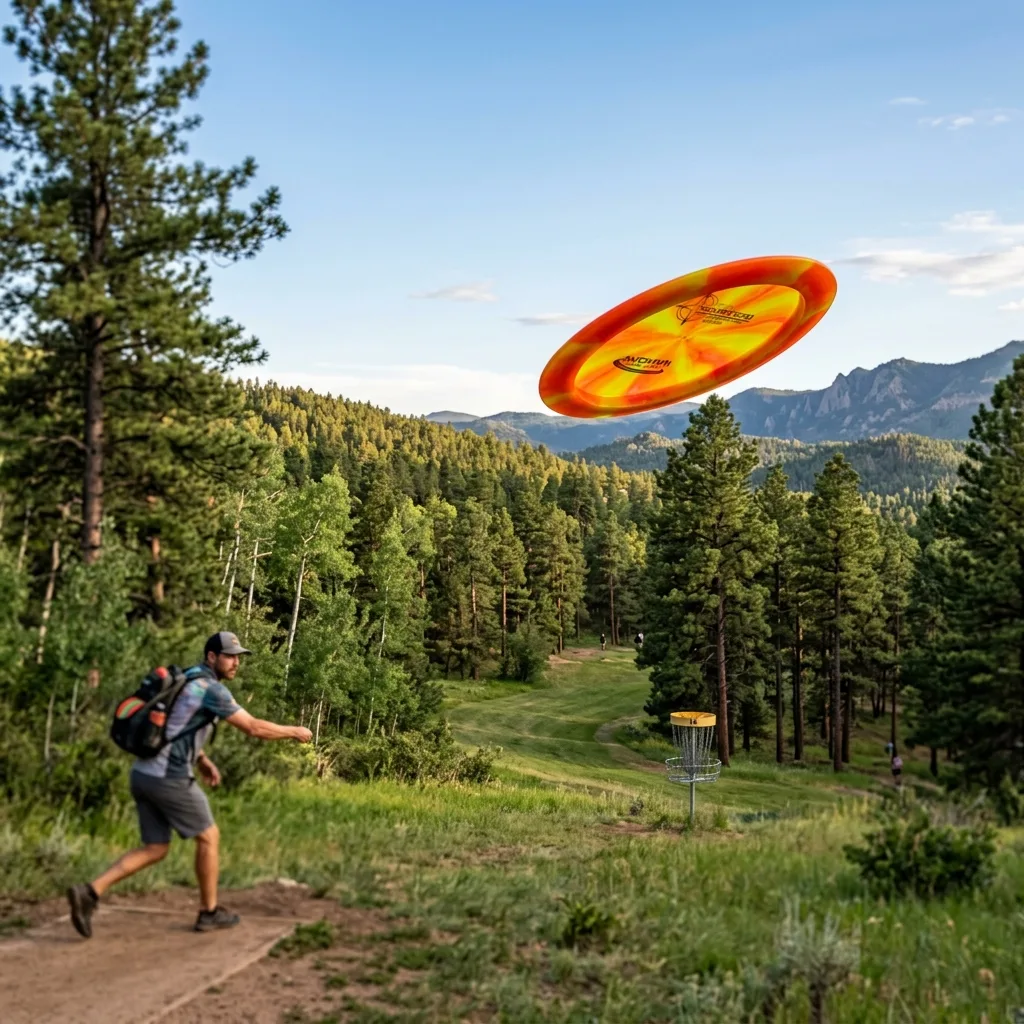
A distance driver is designed for maximum aerodynamic efficiency at high speeds. These discs feature wide, sharp rims that cut through the air with minimal resistance.
When thrown with enough power, a driver for distance will travel further than any other disc in your arsenal.
Iconic examples include the Innova Destroyer and the Discmania Cloudbreaker.
These high-speed beasts require explosive arm speed and flawless technique to achieve their intended flight paths. If thrown too slowly, they act like heavily overstable meat hooks, crashing to the ground prematurely.
Fairway Drivers
A fairway driver bridges the gap between midranges and distance drivers. They have narrower rims, which makes them easier to grip and requires noticeably less arm speed to fly correctly.
While they might not reach the extreme distances of a Destroyer or a Cloudbreaker, fairway drivers offer significantly more control, accuracy, and consistency.
For the vast majority of amateur players, a fairway driver will actually fly further than a distance driver because the player can generate enough speed to activate the disc’s intended glide and turn.
We consistently see players stepping up to tight, wooded holes with a maximum speed distance driver, only to kick off a tree and end up in the rough.
In these scenarios, a fairway driver is almost always the smarter choice. The tighter rim provides a cleaner release, and the slower speed allows for more precise shot shaping.
Unless you are throwing into a wide-open field and have the power to back it up, reaching for a fairway driver will lower your scores and keep you in the middle of the fairway.
Understanding Flight Numbers: Speed, Glide, Turn, and Fade
To truly optimize your game, you must understand the four flight numbers printed on almost every disc.
These numbers represent Speed, Glide, Turn, and Fade, and together they dictate the expected flight path of the disc when thrown flat and at the appropriate speed.
- Speed is the first number, typically ranging from 1 to 15. It represents the aerodynamic profile of the disc and how fast it must be thrown to achieve the rest of its flight ratings.
- Glide is the second number, ranging from 1 to 7. It measures the disc’s ability to maintain loft and stay in the air.
- Turn is the third number, ranging from 1 to -5. It indicates the disc’s tendency to curve to the right (for a right-handed, backhand thrower) during the initial, high-speed portion of its flight.
- Fade is the final number, ranging from 0 to 5. It describes the disc’s natural tendency to hook to the left (for a right-handed backhand thrower) as it slows down at the end of its flight.
A speed 12 driver requires much more force than a speed 7 fairway driver. If you throw a high-speed disc too softly, the remaining numbers become irrelevant because the disc will simply fade out early.
Discs with high glide are excellent for newer players because they naturally float further down the fairway, maximizing distance with less effort. However, high-glide discs can be dangerous in strong headwinds, as the wind can easily catch the bottom of the flight plate and carry the disc off course.
Discs with a negative turn rating are considered understable and are much easier for slower arms to throw straight.
Discs with high fade ratings are heavily overstable and provide reliable finishes in windy conditions. Understanding how Turn and Fade interact allows you to predict exactly how the disc will maneuver around obstacles on the course.
How to Match Your Driver to Your Arm Speed
Your arm speed is the single most critical factor in determining which driver you should throw.
It refers to the rotational velocity and snap you generate at the point of release. Throwing far is not about brute strength; it is about leveraging proper form, timing, and mechanics to accelerate the disc through the power pocket.
If you match your arm speed to the correct disc speed, you will unlock the disc’s true flight path.
A great rule of thumb we use is the “Rule of 35.” Take your average maximum throwing distance in feet and divide it by 35. The resulting number is the maximum disc speed you should be throwing.
For example, if you consistently throw 280 feet, dividing by 35 gives you a speed of 8. This means you should be focusing heavily on speed 7 and 8 fairway drivers. Throwing anything faster will likely result in an early fade and reduced distance.
Evaluating your form is essential for increasing your arm speed over time. Many players try to throw harder by strong-arming the disc using only their shoulder and bicep.
This leads to erratic releases and potential injuries. Proper form starts from the ground up.
You must engage your hips, transfer your weight smoothly from your back foot to your front foot, and pull the disc across your chest in a straight line.
Recording yourself on video is a fantastic way to identify flaws in your technique. Once your form improves and your arm speed increases, you can gradually start experimenting with faster drivers.
Top Tips for Throwing Overstable and Understable Discs
Mastering the different stabilities of discs will completely transform how you attack a disc golf course.
Understanding when to reach for an overstable or understable driver gives you the versatility to navigate any fairway shape or weather condition.
Overstable discs are your reliable, predictable tools. They resist turning over, even when thrown with massive power or into a stiff headwind.
You use overstable drivers when you absolutely need the disc to fade hard at the end of its flight. They are perfect for spike hyzers, flex shots, and skipping around sharp corners.
However, overstable discs are notoriously unforgiving for beginners. If you do not have the speed to push them forward, they will aggressively dive to the ground.
Understable discs, conversely, are the secret weapon for effortless distance and technical woods golf.
They naturally want to turn right (for a right-handed backhand) during the high-speed portion of the flight. This makes them ideal for tailwinds, uphill shots, and long, sweeping turnover drives.
The most valuable shot you can learn with an understable disc is the hyzer flip.
A hyzer flip involves taking an understable driver and releasing it on a steep hyzer angle (with the outer edge tilted down toward the ground).
As the disc accelerates, its natural understable turn fights against the hyzer angle, causing the disc to “flip” up to a flat, level flight.
This results in an incredibly straight, laser-like trajectory that glides for days. Learning the hyzer flip requires practice and precise angle control, but once you master it, you will consistently outdrive players who rely solely on overstable meat hooks.
The Impact of Plastic Types on Disc Flight
One of the most overlooked aspects of disc selection is the plastic type.
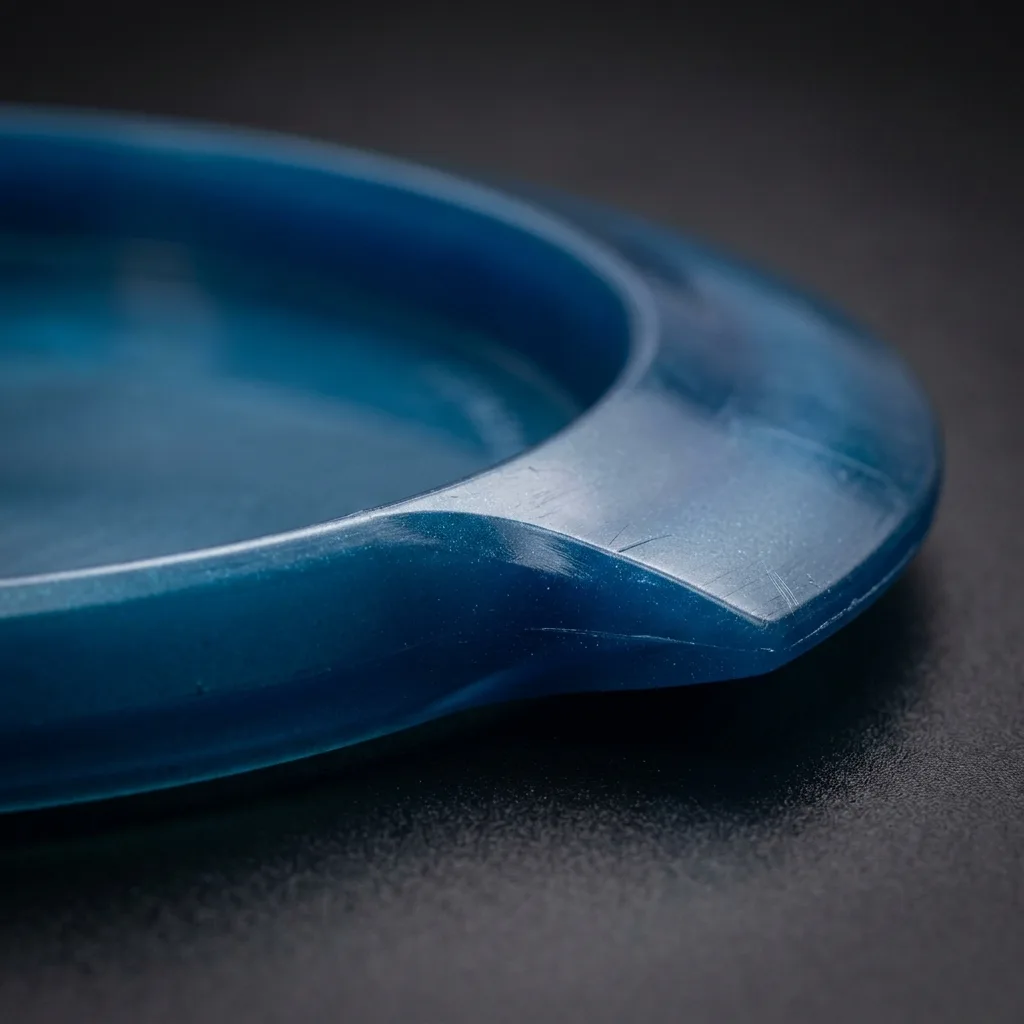
Two identical discs molded in different plastics can fly like entirely different molds. Manufacturers offer a variety of plastic blends, each designed to provide specific benefits regarding grip, durability, and flight characteristics.
Baseline plastics are typically the most affordable option. They offer phenomenal grip, especially in wet or cold conditions.
Out of the box, baseline plastics tend to fly relatively true to their flight numbers. However, they lack durability.
Every time you hit a tree or scrape across concrete, the disc beats in, gradually becoming more understable.
While this means you have to replace them more often, it also allows you to quickly cycle discs to achieve that perfectly worn-in, understable flight.
Premium plastics are designed to withstand heavy abuse. They are incredibly durable and will maintain their original flight characteristics for years.
The trade-off is that premium plastics are almost always more overstable out of the box than their baseline counterparts.
If you buy a heavily overstable driver in a premium plastic, you must be prepared for a long break-in period before it starts to show any noticeable turn.
We always recommend factoring in the plastic type when purchasing a new driver. If you want a disc to fly slightly more understable right away, look for a pro-level or baseline blend. If you want unmatched consistency and durability, invest in premium plastic.
Common Myths About High-Speed Drivers
The disc golf community is filled with misconceptions about high-speed drivers, and these myths actively prevent players from improving.
The most prevalent myth is the belief that a higher speed rating automatically translates to further throws.
As we have discussed, speed simply dictates the velocity required to keep the disc flying flat. If you throw a speed 14 driver with speed 7 power, it will not travel as far as a speed 7 fairway driver thrown correctly.
Another major myth is that professional players only throw maximum speed distance drivers.
If you watch coverage of elite tournaments, you will see pros throwing midranges and fairway drivers on holes exceeding 400 feet.
They understand that control and placement are far more important than sheer distance. They reach for the big distance drivers only when the fairway is wide open and they need every possible foot of carry.
Finally, many players believe that they need to buy the exact same signature series discs that their favorite touring pros throw.
While it is fun to support your favorite players, throwing an extremely stiff, overstable disc designed for a professional with a 500-foot arm will absolutely ruin a beginner’s form.
It forces the player to develop terrible habits, such as rounding their shoulders or releasing with extreme anhyzer angles just to keep the disc in the air. Focus on discs that fit your game right now, not the game of a touring professional.
Conclusion: Choosing the best driver for disc golf
Selecting the best driver for disc golf is a highly personal journey that requires honesty about your current skill level and a willingness to experiment.
Stop obsessing over the fastest speed ratings and start focusing on discs that complement your form.
By mastering fairway drivers like the Axiom Crave before stepping up to higher-speed options like the Innova Wraith, you will build a solid foundation of angle control and smooth mechanics.
Remember that throwing far is a byproduct of excellent technique, not brute force or magic plastic.
Take the time to understand flight numbers, practice your hyzer flips, and learn how different plastic blends affect stability.
As you refine your form and increase your arm speed, you can gradually incorporate faster discs into your bag.
Frequently Asked Questions
Should beginners use a distance driver?
No, beginners should avoid distance drivers and start with putters, midranges, or fairway drivers. High-speed distance drivers require significant arm speed and proper form to achieve the intended flight path, which can cause frustration and reinforce poor throwing habits for new players.
What do the numbers on a disc golf driver mean?
The four numbers on a disc represent its flight ratings: Speed, Glide, Turn, and Fade. Speed indicates how fast the disc must be thrown, Glide is its ability to stay in the air, Turn is its high-speed stability, and Fade is its low-speed finish.
What is the difference between an overstable and understable driver?
An overstable driver will reliably curve in the direction of its fade, resisting turning over in headwinds. An understable driver will naturally curve to the right during the high-speed portion of its flight, making it easier for slower arms to achieve straight distance.
How does plastic type affect a disc golf driver?
Different plastic types affect both the durability and the flight characteristics of a driver. Premium plastics tend to be more overstable out of the box and retain their flight ratings longer, while baseline plastics beat in faster, becoming more understable over time.
What is a hyzer flip and which disc is best for it?
A hyzer flip is a throw where an understable disc is released on a hyzer angle (tilted down). As it flies, the disc’s natural turn causes it to ‘flip’ up to flat, resulting in a very straight, long-gliding flight path. Understable fairway drivers are ideal for this.
Get our latest guides, news, and insights highlighted in your Google Search & AI Overviews.