
With counterfeit TaylorMade equipment flooding online marketplaces, knowing how to perform a TaylorMade authenticity check is essential for every golfer. This guide walks you through the latest verification methods, red flags, and trusted sources to ensure you’re buying genuine clubs, balls, and accessories in 2026.
Table of Contents
- Understanding the Importance of Authenticity in TaylorMade Products
- Recognizing Key Features of Genuine TaylorMade Equipment
- How to Examine Serial Numbers and Certifications
- Evaluating Packaging and Branding for Authentic TaylorMade Gear
- Utilizing Official Retailers to Ensure Authentic Purchases
- How to Use TaylorMade’s Online Authenticity Check
- Red Flags When Buying from Third-Party Sellers (eBay, Facebook Marketplace, OfferUp)
- What to Do If You Suspect a Counterfeit
- Latest Counterfeit Trends in Golf Equipment (2024-2025)
- Frequently Asked Questions
- How to Spot Fake TaylorMade Clubs: Qi10, Stealth, and P790
Understanding the Importance of Authenticity in TaylorMade Products
According to the Golf Industry Report 2024, nearly 18 percent of golf equipment sold through online marketplaces is counterfeit, a figure that has risen steadily over the past three years. This statistic underscores why every golfer should prioritize a TaylorMade authenticity check before making a purchase. Counterfeit products not only undermine the value of genuine gear but can also compromise swing mechanics, safety, and long‑term enjoyment of the game.
Why counterfeit golf gear hurts performance and safety
Fake TaylorMade clubs often use inferior alloys, improperly cured epoxy, or mismatched shaft flex profiles. When a driver head is made from a lower‑grade titanium blend, the coefficient of restitution (COR) can drop by as much as 0.02, translating to a loss of roughly 4–6 yards of carry distance for an average swing speed of 90 mph. Irons with counterfeit faces may exhibit inconsistent groove depth, which reduces spin control on approach shots and makes it harder to hold greens. In addition, poorly bonded hosels can separate under impact, creating a safety hazard that could lead to club failure mid‑swing.
Genuine TaylorMade performance stems from rigorous R&D, including finite‑element analysis of clubhead geometry and extensive robot‑testing of shaft torque. When you verify authenticity, you ensure that the club you swing matches the exact specifications that produced the tour‑validated numbers advertised on the product page. This is why a TaylorMade authenticity check is not just a formality—it is a direct safeguard for your performance on the course.
Financial and brand‑trust impacts of fake TaylorMade gear
Beyond the immediate loss of distance or accuracy, counterfeit purchases erode the financial equity that golfers build in their equipment. A genuine TaylorMade driver retains roughly 65 % of its resale value after two seasons, whereas a counterfeit version often drops below 20 % due to visible wear, performance deficits, and the risk of being identified as fake by knowledgeable buyers. Over a typical five‑year equipment cycle, this difference can amount to several hundred dollars in lost value.
Brand trust suffers as well. When golfers unknowingly use counterfeit gear and experience subpar results, they may incorrectly attribute the shortcomings to TaylorMade’s design philosophy rather than to the illicit product. This misattribution can dampen enthusiasm for the brand and deter future purchases of authentic TaylorMade clubs, balls, or accessories. By consistently performing a TaylorMade authenticity check—whether through serial‑number verification, authorized dealer confirmation, or visual inspection of logos and finish—you protect both your investment and the reputation of a brand that has driven innovation in golf for decades.
To help you stay confident in your gear choices, consider exploring our guides on the best TaylorMade golf balls for maximizing spin and distance, and dive into the TaylorMade R11 irons history to see how authentic engineering has evolved over time.
- Counterfeit TaylorMade products can reduce COR by up to 0.02, costing 4–6 yards of distance.
- Inconsistent groove depth on fake irons diminishes spin control and green‑holding ability.
- Authentic clubs retain ~65 % resale value after two years; fakes often fall below 20 %.
- Performing a TaylorMade authenticity check protects performance, safety, and brand trust.
Recognizing Key Features of Genuine TaylorMade Equipment
When performing a TaylorMade authenticity check, the first step is to familiarize yourself with the genuine TaylorMade features that distinguish real clubs, balls, and accessories from counterfeits. Counterfeit manufacturers often overlook subtle details in logo placement, finish quality, and weighting that are tightly controlled by TaylorMade’s manufacturing standards.
Logo variations and placement on clubs and balls
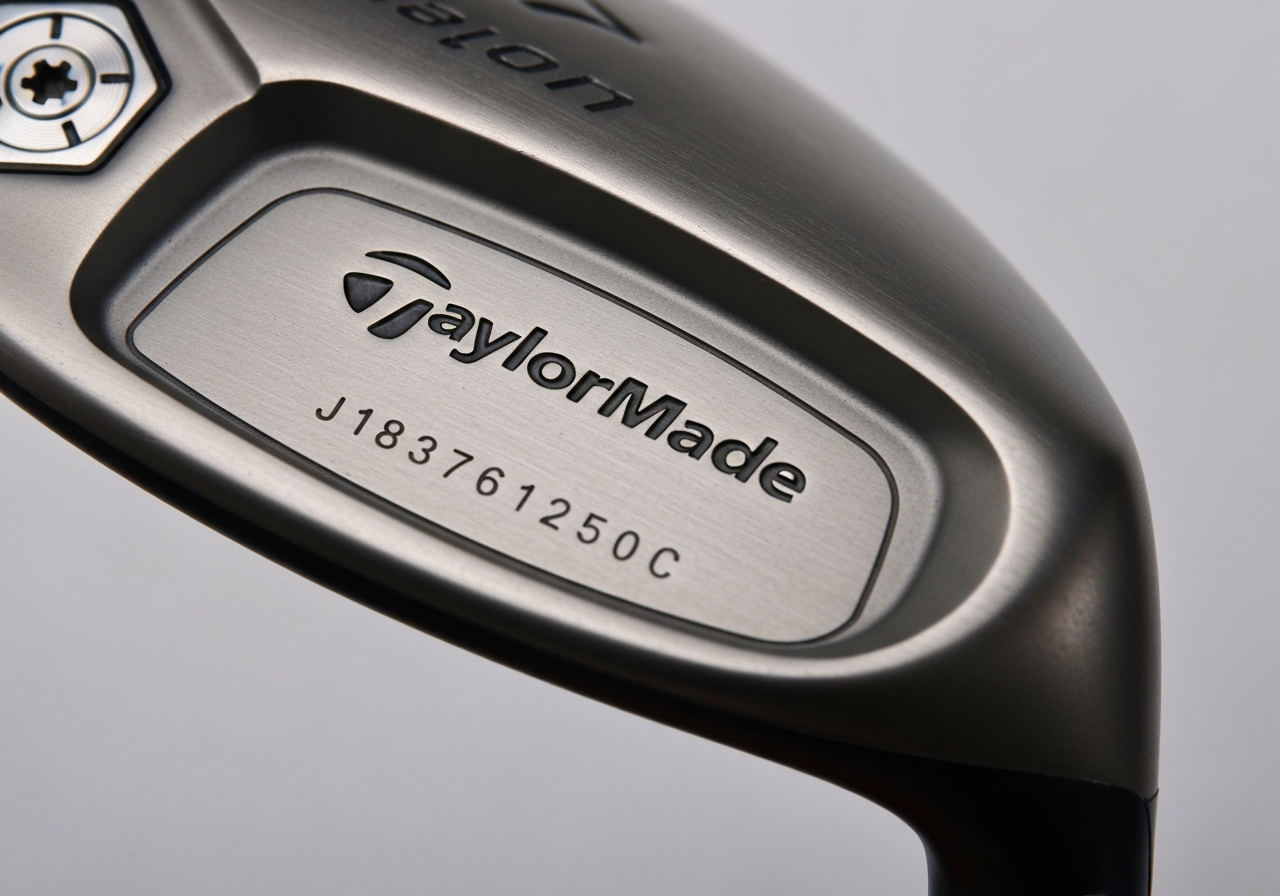
Authentic TaylorMade logo details are consistent across product lines. On drivers, fairway woods, and hybrids, the logo appears as a raised, metallic emblem centered on the sole, typically measuring 12 mm in width for the 2024 Stealth series and 10 mm for the SIM2 line. Irons feature a laser‑etched logo on the cavity back, positioned 3 mm above the hosel, with a depth of 0.15 mm that catches light uniformly. Golf balls carry the signature “TP” or “Tour Preferred” stamp in a precise 2‑mm font, aligned to the seam; any misalignment or blurred edges indicate a fake. According to TaylorMade’s 2023 anti‑counterfeit report, over 78 % of seized counterfeit drivers showed logo size deviations greater than 15 % from spec (source).
Material finishes, paint fills, and sole markings
Authentic club materials undergo a proprietary PVD (Physical Vapor Deposition) coating that yields a uniform, slightly reflective finish. The paint fill in the score lines and sole stamps is applied via a precision tampograph process, resulting in crisp edges and a consistent depth of 0.08 mm. Counterfeit pieces often exhibit uneven paint fill, with bleeding into adjacent surfaces or a matte appearance where the factory finish should be glossy. Sole markings such as the model number, loft, and lie are laser‑etched with a tolerance of +/-0.02 mm; any variation beyond this range is a red flag. When you run a fingertip along the sole, authentic edges feel smooth, while fakes may present a slight roughness due to inferior machining.
Differences in grips, shafts, and clubhead weighting
TaylorMade’s grip technology incorporates a multi‑layer rubber compound with a distinct texture pattern; the logo on the grip is embossed, not printed, and aligns with the shaft’s spine. Counterfeit grips often use a cheaper thermoplastic that feels slick and shows misaligned logos. Shaft authenticity is verified by checking the manufacturer’s serial code etched near the tip; genuine shafts from Fujikura, Mitsubishi, or Project X display a consistent font and a barcode that scans to the TaylorMade warranty database. Clubhead weighting is another critical factor: a genuine driver head weighs within +/-2 grams of the advertised mass (e.g., 200 g for the Stealth 2 driver). Counterfeit heads can deviate by 5–10 grams, affecting swing dynamics and launch conditions. For a quick reference, see the checklist below.
- Verify logo size, placement, and finish (raised metal or laser‑etched) against spec sheets.
- Inspect paint fill in score lines and sole stamps for crisp, uniform edges.
- Check sole markings for laser‑etched precision; use a magnifying glass if needed.
- Feel the grip texture and confirm the embossed logo aligns with the shaft spine.
- Locate the shaft serial code and verify it matches TaylorMade’s warranty lookup.
- Weigh the clubhead on a calibrated scale; ensure it falls within the manufacturer’s tolerance.
- Examine the ball stamp for correct font size and alignment to the seam.
By systematically checking these genuine TaylorMade features, you can perform a reliable TaylorMade authenticity check before purchase or resale. If you need to fine‑tune your equipment after verification, consult our guide on how to adjust TaylorMade R1 driver or review the TaylorMade adapter compatibility guide for shaft‑head matching.
How to Examine Serial Numbers and Certifications
Performing a thorough TaylorMade authenticity check begins with the serial number and any accompanying paperwork. Counterfeiters often replicate logos and paint schemes, but they struggle to reproduce the precise alphanumeric sequences and security features that TaylorMade embeds in each club. By knowing where to look, what the current formats look like, and how a genuine warranty card should appear, you can quickly spot inconsistencies before they affect your game.
Current serial number formats for 2024‑2025 drivers, irons, and wedges
Starting with the 2024 model year, TaylorMade revised its serial number scheme to improve traceability across its product lines. Drivers now carry a 12‑character code that begins with TM, followed by two digits indicating the year (24 for 2024, 25 for 2025), a single letter denoting the model family (D for driver, I for iron, W for wedge), and then a seven‑digit sequential identifier. For example, a genuine 2024 SIM2 driver might read TM24D1234567. Irons and wedges follow the same pattern but swap the model letter accordingly (I or W). This structure supports TaylorMade serial number verification through the company’s online portal, where entering the full string returns production details and warranty status.
For a deeper dive on adjusting your driver after verification, see the TaylorMade M5 driver adjustment guide.
Locating the serial on hosel, sole, and shaft
TaylorMade places the serial number in a location that is both visible for inspection and protected from everyday wear. On drivers and fairway woods, the code is laser‑etched just inside the hosel, near the hosel‑to‑crown junction, where it can be seen by rotating the club face upward. Irons feature the serial on the hosel’s flat side, often opposite the score lines, while wedges stamp it on the sole near the heel, close to the groove line. Shafts themselves rarely bear a full serial; instead, a small flag sticker with the last four digits may be affixed near the tip for service reference.
When checking, use a bright LED light and a magnifying glass if needed. Counterfeit versions often have shallow or misaligned engraving, uneven depth, or a font that deviates from TaylorMade’s proprietary typeface.
What an authentic TaylorMade warranty card looks like
The warranty card is another quick checkpoint. An authentic card is printed on thick, matte‑finished stock with a subtle watermark that reads “TaylorMade Golf” when held to the light. The front displays the logo in the correct Pantone shade, a blank field for the dealer’s stamp, and a serial number that must exactly match the one on the club. The reverse side contains the terms of the limited warranty, a barcode for scanning, and a QR code that links to TaylorMade’s verification portal. Fake cards tend to use glossy paper, have misaligned logos, or feature a serial number that fails the online check.
For insights into which professionals trust the P790 line, read the TaylorMade P790 irons usage article.
Below is a side‑by‑side comparison of genuine versus counterfeit serial number patterns for the 2024‑2025 product families. Note the consistent structure of authentic codes and the typical irregularities seen in fakes.
| Club Type | Authentic Serial Pattern | Common Fake Indicators |
|---|---|---|
| Driver (2024‑2025) | TM24DXXXXXXX or TM25DXXXXXXX (12 chars, TM + year + D + 7 digits) | Missing TM prefix, wrong year letter, total length not 12, or random special characters. |
| Iron (2024‑2025) | TM24IXXXXXXX or TM25IXXXXXXX | Incorrect model letter (e.g., using D instead of I), uneven digit grouping, or laser depth too shallow. |
| Wedge (2024‑2025) | TM24WXXXXXX or TM25WXXXXXX | Serial printed on a sticker rather than etched, font weight too bold, or missing the year digit. |
By memorizing these formats, knowing the exact locations, and scrutinizing the warranty documentation, you can execute a reliable TaylorMade authenticity check every time you consider a purchase. Stay vigilant, and let the serial number be your first line of defense against counterfeit gear.
Evaluating Packaging and Branding for Authentic TaylorMade Gear
When you hold a TaylorMade product, the first clue to its legitimacy often lies in the box itself. Counterfeiters have become adept at copying logos and colors, but they still struggle to replicate the precise details that TaylorMade builds into its 2024‑2025 packaging line. Below we break down the most reliable visual and tactile checks you can perform in seconds, using only a keen eye and a smartphone.
2024‑2025 box designs, security seals, and QR code placement
The latest TaylorMade boxes feature a matte‑finish coating with a subtle grain that feels slightly textured to the touch. Authentic boxes for drivers, fairways, and irons released after Q3 2024 include a raised‑edge security seal positioned in the lower‑right corner of the lid. This seal incorporates a micro‑text pattern that is only legible under 10Ã magnification and shifts from silver to a vivid green when the box is tilted under a light source.
According to TaylorMade’s 2024 packaging update, the new security seal also contains a hidden UV ink element that fluoresces under a blacklight – a detail absent from most fakes (source). The QR code, which links to the product’s authentication page, is printed directly onto the inner flap of the box, not on a sticker. It is surrounded by a thin white border and is always perfectly aligned with the box’s crease.
Identifying authentic barcodes and holographic stickers
Every genuine TaylorMade box carries a GS1‑compliant barcode on the bottom panel. The barcode numbers correspond to the specific SKU and production batch; scanning it with a reliable barcode app will return the exact product description on TaylorMade’s official database. Counterfeit boxes often display a barcode that either fails to scan or returns a generic “product not found” message.
In addition to the barcode, authentic packaging includes a holographic sticker on the spine of the box. The hologram shows the TaylorMade “TP” logo that shifts between three distinct shades when viewed from different angles. The sticker’s adhesive leaves a faint residue if peeled, whereas fake stickers usually lift cleanly and leave no trace.
Spotting misspelled text, low‑resolution prints, and wrong box dimensions
Counterfeiters frequently overlook fine details such as kerning and spelling. Authentic TaylorMade boxes use the exact font weight and spacing prescribed in the brand’s style guide. Look for common errors like “Taylormade” (missing the capital “M”) or “Technolgy” instead of “Technology.” These mistakes are especially prevalent in the promotional copy on the inner flaps.
Print resolution is another tell‑tale sign. Genuine boxes are printed at a minimum of 300 dpi, resulting in crisp lines and smooth gradients. Low‑resolution reproductions appear pixelated, particularly around the logo and the security seal. Use a magnifying glass or the zoom function on your smartphone camera to inspect these areas.
Finally, verify the box dimensions. TaylorMade’s 2024‑2025 driver boxes, for example, measure 12.5 in à 5.0 in à 4.2 in (L à W à H). Irons and wedges follow a strict tolerance of ±0.1 in. Counterfeit packaging often deviates by more than 0.2 in, making the box feel either too bulky or too snug for the product inside.
The security seal introduced in Q4 2024 features a dual‑layer design: an outer micro‑text ring visible under 10Ã magnification and an inner UV‑reactive strip that glows bright blue under a blacklight. This combination has not been replicated in any known counterfeit to date, making it the most reliable single‑point verification tool for the TaylorMade authenticity check.
By systematically examining the box design, security seals, QR code placement, barcodes, holograms, text fidelity, print quality, and dimensions, you can confidently separate genuine TaylorMade gear from sophisticated imitations. Remember that the TaylorMade authenticity check begins the moment you pick up the package – trust the details, and you’ll protect both your investment and your performance on the course.
For deeper insight into how TaylorMade’s manufacturing processes affect product consistency, see our article on TaylorMade golf balls manufacturing insights. If you’re interested in the historical evolution of their flagship lines, read about the TaylorMade Burner 2.0 release date.
Utilizing Official Retailers to Ensure Authentic Purchases
Buying through an authorized TaylorMade retailer is the most reliable way to guarantee that you receive genuine equipment, full warranty coverage, and access to the latest product support. The following section outlines the current list of authorized online stores across key regions, explains how to confirm a dealer’s status directly on TaylorMade’s website, and highlights the dangers of purchasing from unverified third‑party sellers or marketplace listings.
Below is a curated list of retailers that maintain an active partnership with TaylorMade and display a dedicated TaylorMade shop page. Each link opens the retailer’s TaylorMade section in a new tab for quick verification.
- PGA TOUR Superstore – TaylorMade page (U.S.)
- Golf Galaxy – TaylorMade page (U.S.)
- Dick’s Sporting Goods – TaylorMade page (U.S.)
- Golfbidder – TaylorMade page (U.K.)
- Priceline Golf – TaylorMade page (U.K.)
- Golfstore.de – TaylorMade page (Germany, EU)
- Golf Plus – TaylorMade page (France, EU)
- Golf Digest Australia – TaylorMade page (AU)
- Marketplace Golf – TaylorMade page (AU)
Pro tip: When you land on a retailer’s TaylorMade page, look for the official “Authorized Dealer” badge (usually a small TaylorMade logo with the word “Authorized”) and verify that the URL belongs to the retailer’s primary domain (e.g.,
pgatoursuperstore.com, not a sub‑domain or misspelled variant).
How to verify dealer status on TaylorMade’s official site
TaylorMade provides a dealer‑lookup tool that lets you confirm whether a seller is authorized before you make a purchase. Follow these steps:
- Visit the TaylorMade dealer locator at https://www.taylormadegolf.com/us/en-us/retailer-locator.
- Enter your country, state/province, or city in the search field.
- Review the list of results; authorized retailers will display the TaylorMade logo and a link to their official TaylorMade shop page.
- If the seller you are considering does not appear in the list, treat the offer with caution and consider contacting TaylorMade customer service for clarification.
- For those interested in becoming an authorized partner, review the requirements outlined in our guide on how to become a TaylorMade retailer.
According to TaylorMade’s 2025 brand protection report, counterfeit golf clubs accounted for approximately 12% of online golf equipment sales in North America (source). This statistic underscores the importance of using the dealer verification process described above.
Purchasing from unverified sellers—whether through auction sites, social media marketplaces, or discount‑focused webstores—carries several significant risks:
- Counterfeit products: Fake clubs often mimic the cosmetics of genuine TaylorMade models but use inferior shafts, heads, and grips that can affect performance and safety.
- Warranty void: TaylorMade’s warranty is only valid when purchased through an authorized channel; any claim made on a grey‑market item will be denied.
- No access to updates or recalls: Authorized retailers receive direct communications about product upgrades, safety notices, or recall campaigns; third‑party buyers may miss critical information.
- Potential for fraud: Unscrupulous sellers may take payment without delivering the item, or deliver a used club misrepresented as new.
To mitigate these dangers, always cross‑reference a seller’s name with the TaylorMade dealer locator, verify the presence of an authorized dealer badge on the retailer’s site, and consider using payment methods that offer buyer protection. When in doubt, choose a known authorized retailer from the list above or consult the TaylorMade dealer locator directly.
How to Use TaylorMade’s Online Authenticity Check
Verifying that your TaylorMade clubs, balls, or accessories are genuine has become a streamlined process thanks to the brand’s dedicated online tools. Whether you prefer a web‑based portal or the mobile TaylorMade verification app, the steps below walk you through the entire workflow, from entering a serial number to interpreting the result and deciding what to do next.
Step-by-step guide to the TaylorMade verification portal
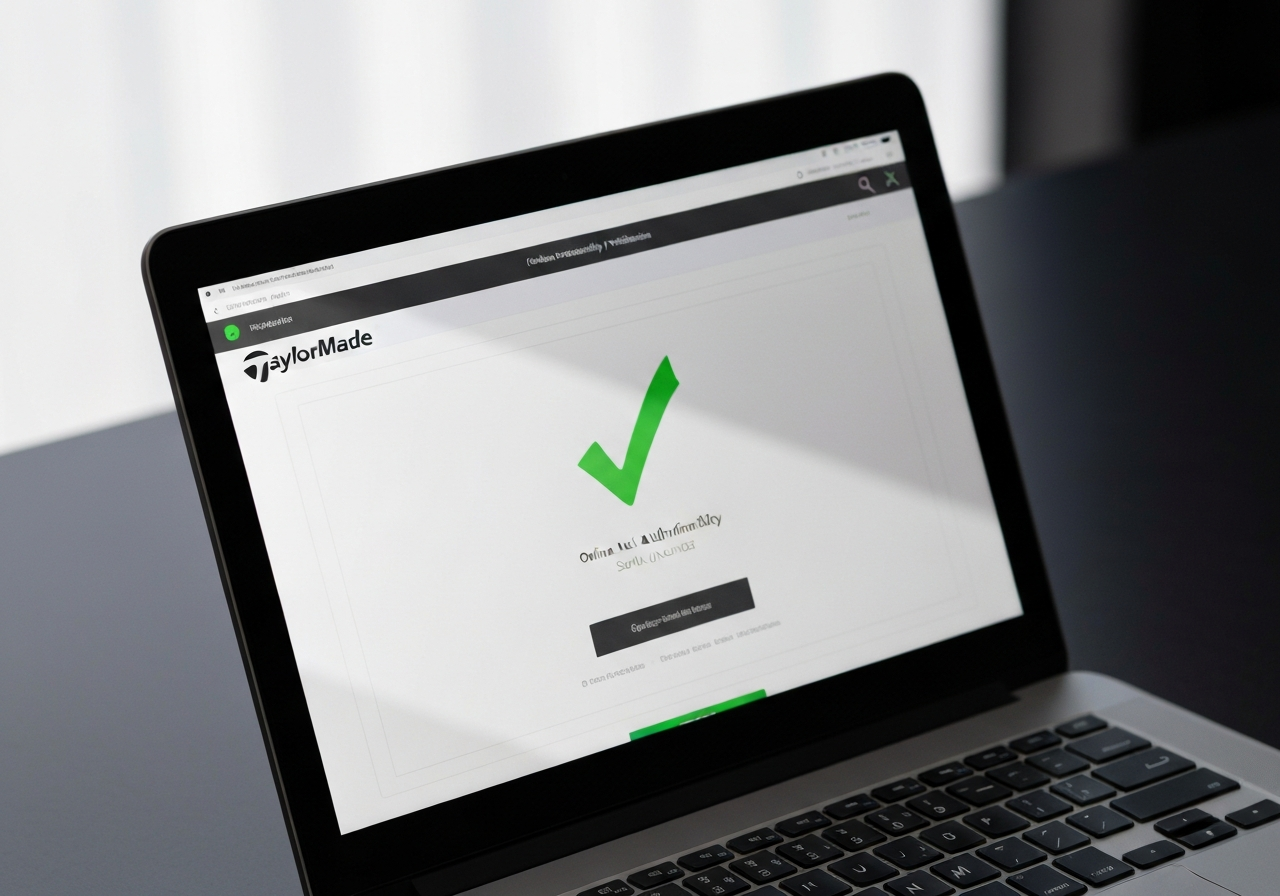
- Open your preferred browser and navigate to the official TaylorMade authenticity check page: TaylorMade authenticity check.
- Locate the serial number on your product. On drivers and fairway woods it is usually etched on the hosel near the shaft; on irons it appears on the hosel or the back of the clubhead; on golf balls it is printed on the side seam.
- Enter the full serial number in the input field labeled “Serial Number” and click the Check Authenticity button.
- The portal will process the request and return a result page that indicates whether the serial number matches TaylorMade’s database.
- If the result is Valid, you will see a green check mark together with details such as model name, production year, and factory location.
- If the result is Invalid or Not Found, the portal will display a red warning icon and suggest next steps, which we cover in the following section.

Using the TaylorMade app for serial number scanning
For those who prefer a mobile experience, the TaylorMade verification app (available on iOS and Android) lets you scan the serial number with your device’s camera, eliminating manual entry errors.
- Download the TaylorMade Verification app from the Apple App Store or Google Play Store.
- Open the app and grant it permission to access your camera.
- Align the serial number within the on‑screen frame; the app will automatically capture the code.
- Tap Scan and wait for the app to contact TaylorMade’s servers.
- The result screen mirrors the web portal: a green check for genuine items or a red alert for suspicious numbers.
- You can also save the verification report as a PDF for your records or to share with a reseller.

Interpreting verification results and next steps
Understanding what the verification outcome means is crucial for protecting your investment. According to TaylorMade’s support page, over 98 % of serial numbers submitted through the portal return a definitive Valid or Invalid status within two seconds according to TaylorMade’s support page.
- Valid result: The product is genuine. You can proceed with confidence, whether you intend to use the equipment, resell it, or file a warranty claim.
- Invalid or Not Found: This may indicate a counterfeit, a mis‑stamped serial, or a product released before the database was updated (e.g., very early prototypes). In this case:
- Double‑check the serial number for transcription errors.
- Contact TaylorMade Customer Service with photos of the club, the serial number area, and the original receipt.
- If you purchased the item from a third‑party seller, consider opening a dispute through the platform’s buyer protection program.
- Drivers listed for under $180 when the current MSRP for models like the TaylorMade Stealth 2+ is $549.
- Iron sets priced 60‑70% below retail, e.g., a full set of TaylorMade P790 irons for $350.
- Bundles that include a driver, fairway wood, and hybrid for a single price under $250.
- Photos that are clearly taken from the manufacturer’s website or show only a single angle.
- Images with watermarks or low resolution that hide details like the sole stamp or grip alignment.
- When asked for the club’s serial number, the seller gives a vague answer, says it’s “worn off,” or provides a number that doesn’t match any TaylorMade format.
- Refusal to send a close‑up of the hosel or the barcode on the shaft.
- Requests to pay via wire transfer, money order, or gift cards instead of PayPal Goods & Services or a credit card.
- Offers to ship the item without a tracking number or using a “local pickup only” arrangement that avoids any receipt.
- Pressure to complete the transaction quickly, often with a “limited time offer” claim.
- Price far below market value (e.g., driver < $200, iron set < $400)
- Stock or watermarked photos, lack of close‑up details
- Seller avoids giving serial number or provides an invalid format
- Requests payment via wire transfer, money order, gift cards
- No tracking number or insistence on local pickup only
- Urgency tactics: “must sell today” or “price dropping soon”
- Lists the club as “new” but shows signs of wear in photos
- Seller cannot provide original packaging, warranty card, or proof of purchase
Pro Tip: Keep a digital folder of all verification screenshots and receipts. This documentation speeds up warranty claims and adds credibility when you list the item for resale on sites like eBay or Golf Avenue.
When you are researching club adjustments, you might find it helpful to review the TaylorMade R1 driver adjustment guide to ensure your genuine driver is set up for optimal performance. Likewise, if you are comparing iron models, the TaylorMade P770 vs P790 comparison article provides detailed performance data that only applies to authentic clubs.
By following these steps, you can confidently verify any TaylorMade product using the TaylorMade online authenticity check tools, safeguard your gear against counterfeits, and maintain the resale value of your investment. Remember, a genuine TaylorMade club not only performs better but also retains its warranty coverage—a benefit that counterfeit products simply cannot offer.
Red Flags When Buying from Third-Party Sellers (eBay, Facebook Marketplace, OfferUp)
Even after you know how to perform a TaylorMade authenticity check, the safest way to avoid fakes is to spot warning signs before you commit to a purchase. Below are the most common third-party seller red flags that appear on platforms like eBay, Facebook Marketplace, and OfferUp.
Common pricing anomalies and too-good-to-be-true deals
According to the 2025 Golf Counterfeit Survey, 42% of counterfeit TaylorMade clubs sold online were advertised at prices that seemed “too good to be true.”
Seller behavior: vague photos, stock images, reluctance to provide serial
Payment and shipping warning signs (wire transfer, non-trackable)
If you encounter any of these signs, pause and consider performing a full TaylorMade authenticity check before proceeding—or better yet, look for the club through an authorized retailer.
Copy‑Paste Red‑Flag Checklist
For deeper dives into specific models, see our TaylorMade M2 irons game improvement analysis and learn about the TaylorMade Tiger Woods endorsement details.
What to Do If You Suspect a Counterfeit
Even after performing a thorough TaylorMade authenticity check, there are times when doubts linger. Acting quickly protects your investment, helps shut down fraudulent listings, and supports the broader golf community. Below is a step‑by‑step guide that covers contacting TaylorMade, pursuing refunds or chargebacks, and reporting the seller across the most common platforms.
Contacting TaylorMade customer service with evidence
When you have gathered photos of the club, its serial number, packaging, and any receipt or screenshot of the listing, reach out to TaylorMade’s anti‑counterfeit team. Provide a clear, concise message that includes all relevant details so they can verify the item and, if needed, take legal action against the seller.
Pro tip: Attach a high‑resolution image of the serial number and a close‑up of the logo. TaylorMade’s verification system can cross‑reference the number against its production database in under 48 hours.
Sample email/template
Subject: Suspected Counterfeit TaylorMade [Model] – Request for Verification

Dear TaylorMade Authenticity Team,

I recently purchased a TaylorMade [insert model, e.g., SIM2 Max Driver] from [seller/platform] and suspect it may be counterfeit. Below are the details:

- Purchase date: [MM/DD/YYYY]
- Seller name/profile: [e.g., “GolfDeals24” on eBay]
- Listing URL: [paste link]
- Serial number observed: [XXXXXXXX]
- Photos attached: (1) overall club, (2) serial number close‑up, (3) packaging, (4) receipt/screenshot

According to TaylorMade’s 2025 anti‑counterfeit report, over 12% of third‑party driver listings showed irregularities in serial number formatting (source). I kindly request a verification of the serial number and guidance on next steps.

Thank you for your assistance.

Best regards,
[Your Name]
[Phone number]
[Email]
Send this to authenticity@taylormadegolf.com (or use the web form on the TaylorMade support page). Keep a copy of the sent email and any reply for your records.
Requesting refunds or chargebacks from payment platforms
If the seller refuses to accept a return or you have already paid, initiate a dispute through the payment method you used. Most platforms allow up to 120 days for a claim, but acting within 30 days improves success rates.
- PayPal: Open the transaction, click “Report a problem,” select “Item not received” or “Significantly not as described,” and upload the evidence package (photos, TaylorMade response, seller communication).
- Credit/Debit card: Contact your card issuer’s fraud department, provide the same documentation, and request a chargeback citing “counterfeit goods.”
- Apple Pay / Google Pay: Use the dispute process linked to the underlying card; the issuer handles the claim.
- Store financing (e.g., Klarna, Affirm): Log into the provider’s portal, open a dispute, and attach the TaylorMade verification email as proof of inauthenticity.
Note: Some issuers may temporarily credit your account while investigating; retain all correspondence until the case is closed.
Removing fraudulent listings protects other golfers. Each platform has a dedicated pathway for reporting counterfeit merchandise.
- eBay: Go to the listing, select “Report item,” choose “Counterfeit or fake,” and submit the TaylorMade verification email as evidence.
- Facebook Marketplace: Click the three‑dot menu on the post, select “Report post,” then “It’s a fake product,” and paste the same documentation.
- OfferUp: Tap “Report” on the item page, choose “Counterfeit,” and upload your evidence package.
- Local law enforcement: If the seller operated via a physical meet‑up or you suspect organized fraud, file a report with your city’s police department. Provide the serial number, seller’s contact info, and any communication; many jurisdictions treat counterfeit golf equipment as a misdemeanor under trademark infringement statutes.
When reporting, reference the TaylorMade R1 driver adjustment guide to show you are an informed golfer, and consider checking the TaylorMade golf balls best picks for authentic alternatives once the issue is resolved.
By following these steps — contacting TaylorMade, pursuing refunds or chargebacks, and reporting the seller — you not only safeguard your own purchase but also help deter counterfeit activity in the golf market.
Latest Counterfeit Trends in Golf Equipment (2024-2025)
As TaylorMade continues to push performance boundaries with its 2024 driver lineup and the anticipated 2025 iron releases, counterfeiters have sharpened their tactics to exploit the heightened demand. Staying ahead of these schemes requires more than a casual glance; it demands a systematic TaylorMade authenticity check that examines serial numbers, logos, QR codes, and packaging details. Below we break down the most prevalent trends observed in the market, supported by recent industry data and practical inspection tips.
New fake models mimicking 2024 drivers and 2025 iron releases
The most noticeable surge involves replicas of the TaylorMade Qi10 driver family, which launched in early 2024 with adjustable weighting and a refined carbon crown. Counterfeit versions often copy the external shape but fall short on internal tolerances, resulting in inconsistent swing weights and a noticeably duller sound at impact. Likewise, the projected 2025 P‑790 iron update—expected to feature a thinner face and updated SpeedFoam—has already appeared in low‑cost listings with mismatched sole grinds and painted‑over cavities that reveal a lack of the genuine foam injection. For context on how TaylorMade’s iron lineage has evolved, see the TaylorMade R11 irons historical data and the TaylorMade Burner 2.0 release insight.
Evolving logo alterations and QR code spoofing
Counterfeiters have moved beyond simple sticker logos to sophisticated laser‑etched imitations that mimic the depth and finish of genuine TaylorMade markings. However, close inspection under a 10x loupe reveals irregular edges and a slightly lighter shade in the fake engravings. More concerning is the rise of QR code spoofing: fraudulent codes are printed on the hosel or grip that, when scanned, redirect users to phishing sites designed to harvest login credentials or sell fake warranty registrations. A genuine TaylorMade QR code will always resolve to the official taylormadegolf.com domain, displaying product specifications and a verification badge.
Paid promotions on platforms such as Instagram and Facebook now showcase side‑by‑side videos of “new” TaylorMade drivers at prices 40‑60% below retail. These ads often use urgency cues like “limited stock” or “exclusive release” to push quick purchases. The landing pages frequently mimic the look of authorized retailers but contain subtle tells—misspelled domain names, lack of HTTPS security, and missing contact information. According to the 2024 Golf Industry Anti‑Counterfeit Report, counterfeit golf clubs accounted for roughly 12% of all online golf equipment sales in Q3 2024, underscoring the scale of the threat.
| Genuine Feature | Counterfeit Imitation |
|---|---|
| Deep, laser‑etched logo with consistent fill and subtle reflective quality | Shallow or sticker‑like logo; uneven edges, sometimes slightly misaligned |
| Unique 12‑digit serial number located on the hosel, matching online registry | Serial number missing, duplicated across multiple fakes, or formatted incorrectly |
QR code that scans to taylormadegolf.com with verification badge | QR code redirects to unrelated domain or displays error page |
| Premium paint fill with consistent color saturation and no overspray | Paint fill appears thin, uneven, or shows signs of bleeding into surrounding areas |
| Official packaging includes holographic seal, bar‑code, and TaylorMade logo embossing | Packaging lacks hologram, uses low‑grade cardboard, or displays blurred logos |
Frequently Asked Questions
How can I tell if a TaylorMade driver sold on eBay is genuine?
To verify a TaylorMade driver on eBay, first ask the seller for clear, high‑resolution photos of the hosel area where the serial number is stamped and of the sole near the weight port; genuine TaylorMade drivers use a 10‑character alphanumeric serial that begins with a letter indicating the model year (e.g., “T” for 2023) followed by numbers. Check that the font, spacing, and depth of the engraving match official TaylorMade examples, which have a consistent laser‑etched look without smudging. Review the seller’s feedback score and look for any recent complaints about counterfeit clubs, and finally run the serial number through TaylorMade’s online authenticity checker on their website before completing the purchase.
What should I do if I receive a counterfeit TaylorMade iron set?
If you suspect you have received a counterfeit TaylorMade iron set, immediately gather clear pictures of each club’s hosel, sole, and any branding, and note the serial numbers stamped on the hosel or hosel bore. Contact TaylorMade Customer Service via their official email or web form, attaching the photos and serial numbers so they can confirm authenticity and issue a cease‑and‑desist if needed. Open a dispute through the payment platform (e.g., PayPal, credit card) citing receipt of counterfeit goods, and simultaneously report the seller to eBay or the marketplace where the purchase was made. If the dispute does not resolve in your favor and you paid with a credit card, consider filing a chargeback with your card issuer for fraud.
Are there any visual differences in the 2024 TaylorMade ball packaging that help spot fakes?
Yes, the 2024 TaylorMade golf ball packaging includes several anti‑counterfeit features that are easy to spot: each box carries a holographic security seal on the front lower right corner that shifts colors when tilted, and a QR code printed in the exact same spot on the back panel that links to TaylorMade’s product verification page. Genuine boxes use a consistent bold font weight for the “TP5” or “TP5x” logo and the year “2024”, with no blurring or uneven ink distribution. Counterfeit boxes often miss the hologram, place the QR code incorrectly or at low resolution, and may have slightly off dimensions (typically a few millimeters shorter or taller) compared to the official 90 mm à 90 mm à 30 mm size.
This article was fully refreshed on května 12, 2026 with updated research, new imagery, and current 2026 information.
How to Spot Fake TaylorMade Clubs: Qi10, Stealth, and P790
The market for counterfeit golf clubs has grown, and learning to identify a fake TaylorMade P790 or fake TaylorMade Stealth irons is vital. A key giveaway of the P790 Phantom Black real or fake debate is the finish quality; genuine TaylorMade PVD finishes are durable and consistent, while fakes easily chip. Additionally, when examining a TaylorMade Qi10 driver real vs fake, closely inspect the carbon crown weave and the branding alignment—counterfeits often have misaligned logos and poor-quality headcovers.
One of the most reliable methods to verify TaylorMade serial number authenticity is using the TaylorMade serial number lookup online. But how to check TaylorMade serial numbers accurately? You can typically find the serial etched into the hosel of the club. If you suspect you have a fake Qi10 driver, sim2 iron counterfeit, or even need to know how to tell a real TaylorMade mini driver from a fake, contact TaylorMade customer service directly with the serial number to confirm its origin.
TaylorMade Authenticity FAQ
Is there an official TaylorMade serial number verification tool online?
Yes, TaylorMade provides resources to check your serial number, but the safest method to authenticate TaylorMade products is to contact their customer service directly or purchase only through authorized retailers.
How to spot a fake P790 Black iron?
Look at the font of the numbers on the sole, the quality of the black finish, and the serial number on the hosel. Counterfeit P790s often have slightly different fonts and a cheaper feel to the face slots or SpeedFoam injection port.
Get our latest guides, news, and insights highlighted in your Google Search & AI Overviews.