
Finding the cheapest golf trolley battery that still delivers reliable power is a top priority for budget-conscious golfers. In this 2026 updated guide, we break down the latest battery types, real‑world pricing, and compatibility factors so you can choose a budget power solution that lasts round after round. Whether you’re upgrading an old trolley or buying your first electric caddie, these actionable insights will help you save money without sacrificing performance.
Table of Contents
- Understanding Battery Types for Golf Trolleys
- Key Factors to Consider When Choosing a Budget Battery
- Current Market Overview and Price Trends (2024-2025)
- Compatibility Guide: Matching Batteries to Popular Trolley Models
- Maximizing Battery Life: Maintenance, Storage, and Temperature Effects
- Environmental Impact and Recycling Options
- Recommended Retailers and Warranty Information
- Final Buying Guide and Checklist
- Frequently Asked Questions
- What is the typical lifespan of a budget LiFePO4 golf trolley battery?
- Can I use a 12V battery in a 24V golf trolley system?
- How do I know if a battery will fit my specific trolley model?
- Are there any safety concerns with cheap golf trolley batteries?
- What should I do with my old golf trolley battery when it’s time to replace it?
Understanding Battery Types for Golf Trolleys
When shopping for a Cheapest Golf Trolley Battery that still delivers reliable performance, it helps to know the differences between the main chemistries available today. The choice you make influences not only the upfront price but also the weight you’ll carry around the course, how many charging cycles you can expect, and the long‑term value of your investment. Below we break down the three most common types — flooded lead‑acid, absorbent glass mat (AGM), and lithium iron phosphate (LiFePO4) — and show how they compare in key areas that matter to golfers.
Lead‑Acid vs. AGM vs. LiFePO4
Flooded lead‑acid batteries have been the traditional workhorse for golf trolleys for decades. They are inexpensive, robust, and tolerant of overcharging, but they are heavy, require regular maintenance (checking electrolyte levels), and suffer from a relatively short cycle life — typically 300‑500 full discharge cycles before capacity drops noticeably. AGM batteries improve on the flooded design by immobilizing the electrolyte in a fibreglass mat, which makes them spill‑proof and virtually maintenance‑free. They still weigh about the same as flooded units but offer better vibration resistance and a slightly longer lifespan, often reaching 500‑700 cycles.
LiFePO4 golf batteries represent the newest generation of deep cycle power for electric trolleys. Lithium iron phosphate chemistry provides a flat discharge curve, meaning the trolley maintains consistent speed even as the battery depletes. These units are far lighter — usually 40‑60 % less weight than comparable lead‑acid packs — and they can endure 2000‑5000 cycles at 80 % depth of discharge, according to Battery University. While the upfront cost is higher, the reduced weight translates into less strain on the trolley’s motor and easier handling, especially on hilly courses.
Weight, lifespan, and cost comparisons
To make the trade‑offs clear, the table below summarizes typical specifications you’ll find for each chemistry in the 2024‑2025 market. All figures are averages based on popular models sold through major golf‑equipment retailers; actual numbers may vary by brand and capacity (Ah).
| Battery Type | Typical Weight (kg) | Cycle Life (80% DOD) | Price Range (USD) | Pros | Cons |
|---|---|---|---|---|---|
| Flooded Lead‑Acid | 22‑28 | 300‑500 | $80‑$130 | Lowest upfront cost, tolerant of overcharge, widely available | Heavy, requires maintenance, shorter lifespan, performance drops in cold |
| AGM Lead‑Acid | 20‑26 | 500‑700 | $120‑$180 | Maintenance‑free, spill‑proof, better vibration resistance | Still heavy, moderate cost, limited deep‑cycle capability |
| LiFePO4 (Lithium Iron Phosphate) | 9‑14 | 2000‑5000 | $250‑$400 | Very light, long cycle life, consistent power delivery, low self‑discharge | Higher initial price, requires compatible charger, sensitive to extreme heat |
If your primary goal is to find the Cheapest Golf Trolley Battery that still gets you around 18 holes without a mid‑round swap, a well‑chosen AGM unit often strikes the best balance between price and durability. However, for golfers who value lightweight handling and plan to keep their trolley for several seasons, investing in a LiFePO4 golf battery can pay off through fewer replacements and reduced fatigue on the course. Whichever chemistry you select, remember to pair it with a charger that matches the battery’s voltage and charge‑algorithm requirements — this simple step maximizes both safety and lifespan.
Key Factors to Consider When Choosing a Budget Battery
When you are hunting for the Cheapest Golf Trolley Battery that still delivers reliable performance, it is easy to focus solely on price. However, a few technical details can make the difference between a battery that lasts a season and one that dies after a handful of rounds. Below we break down the three most important considerations — capacity, voltage matching and depth of discharge, and warranty plus brand reputation — so you can judge value beyond the sticker price.
Capacity (Ah) and real‑world runtime
The ampere‑hour (Ah) rating tells you how much energy the battery can store. For a typical electric golf trolley, the motor draws about 0.9 A to 1.2 A on flat terrain, rising to 1.5 A on hills. Assuming an average draw of 1.0 A, a 20 Ah battery can theoretically supply 20 hours of continuous use.
On an 18‑hole course most golfers spend roughly 2.5 hours walking and playing (including transit between holes). Using that figure:
20 Ah ÷ 1.0 A = 20 h
20 h ÷ 2.5 h per round â 8 full roundsIn practice, you will see a little less because of voltage sag and occasional stops, but a 20 Ah pack should comfortably cover 6‑7 rounds before needing a recharge. When comparing options, look for the battery capacity golf trolley rating that matches your typical round count plus a 20 % safety margin.
Voltage matching and depth of discharge
Most trolleys run on 12 V systems, so the battery must be a 12 V lead‑acid or lithium unit. Using a higher voltage will damage the controller; a lower voltage will leave the trolley underpowered. Equally important is the depth of discharge (DoD) — how much of the stored energy you use before recharging. Lead‑acid batteries suffer accelerated sulfation if regularly drained below 50 % DoD, whereas lithium‑iron‑phosphate (LiFePO4) cells can safely handle 80‑90 % DoD.
Research from Battery University (2024) shows that cycling a lead‑acid battery at 80 % DoD cuts its usable life to about 300 cycles, compared with 600+ cycles at 50 % DoD according to the source. For a budget build, this means that if you opt for a cheap lead‑acid pack, you should aim to recharge after each round to stay within the safe DoD window, or consider spending a little more on a LiFePO4 alternative that tolerates deeper discharges.
Warranty terms and brand reputation
A strong warranty is a proxy for manufacturer confidence. Look for at least a 12‑month replacement warranty that covers capacity loss beyond 20 % of the rated Ah. Some budget brands offer only 90‑day limited warranties, which can leave you exposed if the battery fails early in the season. Pair the warranty check with a quick reputation scan: search for user reports of swelling, leakage, or inconsistent voltage output. The phrase golf trolley battery warranty often appears in the fine print of reputable sellers, and it is worth verifying that the warranty is honoured through a local dealer or straightforward RMA process.
For example, the best budget electric golf trolley guide highlights a model that pairs a 18 Ah LiFePO4 battery with a 2‑year limited warranty, showing how a slightly higher upfront cost can reduce long‑term risk.
- Match the Ah rating to your typical round count, adding a 20 % buffer for hills and stops.
- Keep depth of discharge within safe limits — 50 % for lead‑acid, up to 80‑90 % for LiFePO4 — to maximize cycle life.
- Verify voltage compatibility and prioritize brands that offer a clear, multi‑month golf trolley battery warranty.
Current Market Overview and Price Trends (2024-2025)
The golf trolley battery market has shown noticeable shifts over the past two years, driven by evolving consumer demand for lighter, longer‑lasting power and fluctuations in raw‑material costs. Understanding these trends helps golfers identify the Cheapest Golf Trolley Battery options without sacrificing reliability.
Average price ranges for each chemistry
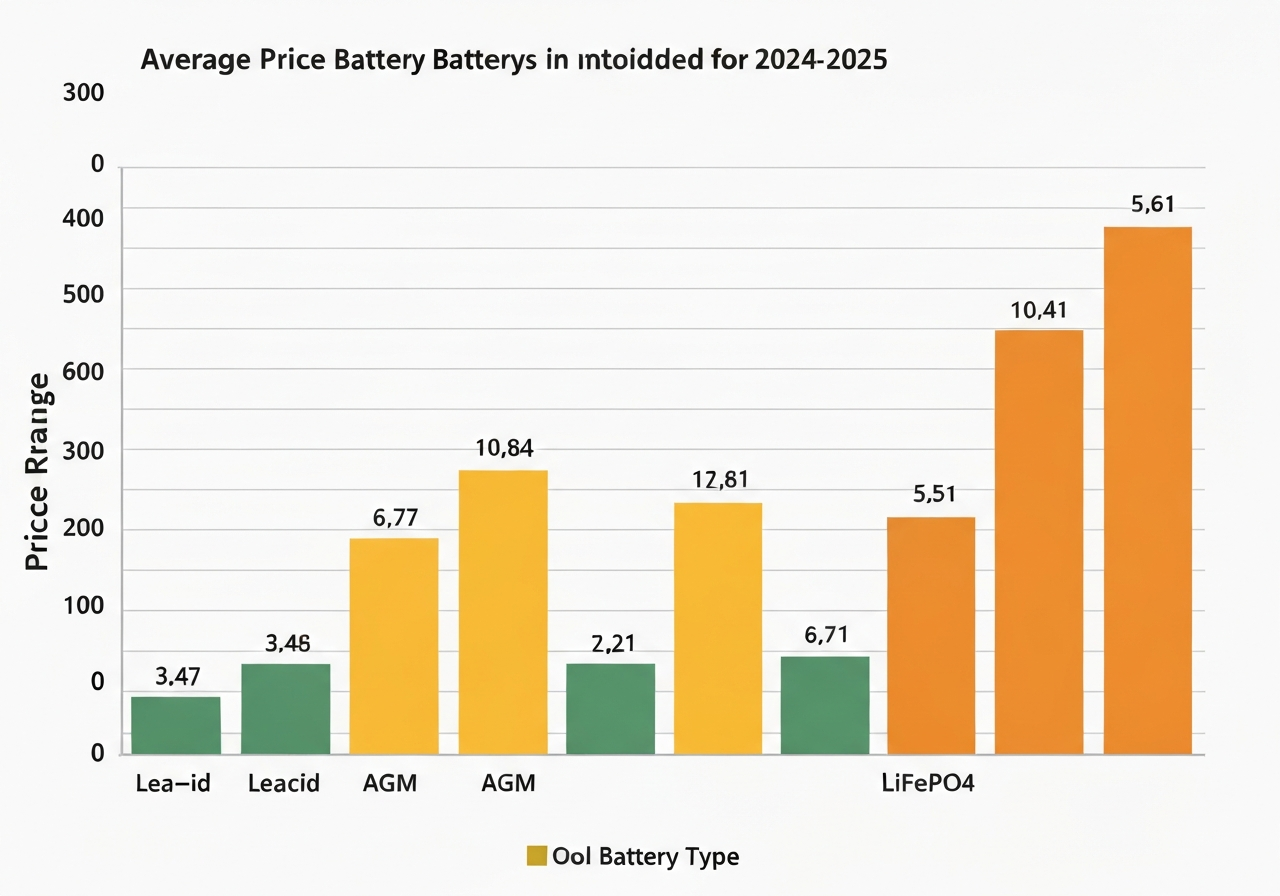
Across major retailers such as Amazon, eBay, and specialty golf shops like Golf Galaxy, the average selling price (ASP) for 12V golf trolley batteries in 2024‑2025 breaks down as follows:
| Chemistry | Typical Capacity (Ah) | Average Price Range (USD) |
|---|---|---|
| Flooded Lead‑Acid | 20‑30 | $45‑$70 |
| AGM (Absorbent Glass Mat) | 20‑30 | $70‑$110 |
| LiFePO4 (Lithium Iron Phosphate) | 20‑30 | $120‑$180 |
These figures reflect a golf trolley battery price 2024 snapshot taken from aggregated listings in July 2024. While lead‑acid remains the most economical entry point, the price gap to LiFePO4 has narrowed as manufacturing scales and competition intensifies.
Emerging budget brands and where to find them
Several new entrants have begun offering budget‑friendly lithium options that challenge the traditional dominance of established brands. For example, PowerPulse and Voltrix now sell 20Ah LiFePO4 packs for as low as $115 on Amazon and $105 on eBay, respectively, often bundled with a basic charger. Specialty golf retailers such as Golf Galaxy have started stocking these brands in their “value” aisles, making it easier to compare warranties side‑by‑side with traditional offerings.
When searching for an affordable LiFePO4 battery, look for sellers that provide at least a 12‑month warranty and include a built‑in battery management system (BMS). Customer reviews on these platforms frequently highlight a weight reduction of 40‑50% compared to lead‑acid equivalents, which translates to less strain on the trolley’s frame and easier maneuverability on the course.
Impact of raw material costs on pricing
Raw‑material volatility has been a key driver behind the price movements observed in 2024‑2025. Lithium carbonate prices, which peaked at roughly $22 per kilogram in early 2024, have since retreated to the $14‑$16 range due to increased output from Australian and Chilean mines, according to data from the U.S. Geological Survey. This decline has directly contributed to the modest price reductions seen in LiFePO4 packs over the last six months.
Conversely, lead prices have remained relatively stable, hovering around $1.00‑$1.20 per pound, which keeps lead‑acid and AGM batteries at a steady cost base. However, environmental regulations in several European markets have begun to impose additional handling fees on lead‑acid units, indirectly pushing some consumers toward the lithium segment despite its higher upfront price.
Overall, the interplay of cheaper lithium carbonate and steady lead costs has made the budget golf battery trends favor lithium for golfers willing to invest a little more upfront for long‑term savings in weight, maintenance, and replacement frequency.
For those interested in pairing a low‑cost battery with an economical trolley, see our guide on the cheapest electric golf trolleys UK for complementary options that maximize value without compromising performance.
Compatibility Guide: Matching Batteries to Popular Trolley Models
Selecting the Cheapest Golf Trolley Battery that actually works with your trolley is more than just a price decision – it hinges on correct voltage, connector style, and physical fit. This section breaks down the key compatibility factors for the most popular models on the market, helping you avoid costly returns and ensure reliable performance on the course.
Voltage and connector types (Anderson, T-bar, etc.)
Most electric golf trolleys operate on either a 12 V or 24 V system. The voltage determines the power output and runtime, while the connector type ensures a secure, low‑resistance link between battery and trolley. The two dominant connector families are:
- Anderson (SB) connectors – widely used by Motocaddy, Powakaddy, and many Hillman models; they offer a robust, keyed design that prevents reverse polarity.
- T‑bar (or blade) connectors – common on older Hillman and some entry‑level trolleys; they are simple to plug in but can loosen over rough terrain.
According to Motocaddy’s 2023 technical specification sheet, the M3 Pro requires a 12 V battery fitted with an Anderson SB50 connector to achieve its rated 18‑hole runtime (source). Using a mismatched voltage or connector can trigger the trolley’s safety cut‑out or reduce effective range by up to 30 %.
Physical dimensions and mounting considerations
Even when voltage and connector match, the battery must physically sit in the trolley’s battery tray. Key dimensions to verify are:
- Length (mm) – typically 150 mm to 200 mm for 12 V units; 24 V packs can be longer due to series cells.
- Width (mm) – most trays accommodate 80 mm to 100 mm wide batteries.
- Height (mm) – clearance is crucial; a battery that is too tall will interfere with the handle‑fold mechanism.
- Mounting style – some trolleys use a sliding tray with a retaining clip, while others rely on a bolt‑down bracket. Verify whether the battery includes the correct mounting hardware or if an adapter kit is needed.
Weight also matters for handling; a typical 12 V 20 Ah lead‑acid block weighs around 6 kg, whereas a comparable lithium‑iron‑phosphate (LiFePOâ) version may be as light as 2.5 kg, making the trolley easier to maneuver.
Model‑specific fit for Motocaddy, Powakaddy, Hillman, etc.
Below is a compatibility matrix that aligns the most common trolley models with their electrical and mechanical requirements, plus a shortlist of battery options that deliver solid performance without breaking the bank. The recommendations include both budget‑friendly lead‑acid choices and higher‑value lithium alternatives.
| Trolley Model | Required Voltage | Connector Type | Recommended Battery Models |
|---|---|---|---|
| Motocaddy M3 Pro | 12 V | Anderson SB50 |
|
| Motocaddy M5 GPS | 12 V | Anderson SB50 |
|
| Powakaddy FW7s | 12 V | Anderson SB50 |
|
| Powakaddy FX3 | 12 V | Anderson SB50 |
|
| Hillman HT‑Pro | 12 V | T‑bar (blade) |
|
| Hillman HT‑Lite | 12 V | T‑bar (blade) |
|
When evaluating the Cheapest Golf Trolley Battery options, always cross‑check the voltage, connector, and physical dimensions against the table above. A battery that meets the golf trolley battery compatibility criteria will not only power your round reliably but also protect the trolley’s electronics from strain. For Motocaddy owners, confirming proper Motocaddy battery fit is especially important because the M‑series trays have a tight tolerance that can reject oversized blocks. Likewise, ensuring the correct Powakaddy battery connector avoids intermittent power loss during a round.
Finally, remember that lithium batteries, while higher in upfront cost, often deliver a lower cost‑per‑cycle due to their longer lifespan and lighter weight, which can translate into better value over multiple seasons. Choose the chemistry that matches your budget, weight preferences, and how frequently you play.
Maximizing Battery Life: Maintenance, Storage, and Temperature Effects
Getting the most out of your Cheapest Golf Trolley Battery isn’t just about picking the right model; it’s about how you treat it day‑to‑day. Proper charging habits, thoughtful off‑season storage, and awareness of temperature extremes can add months or even years to a battery’s usable life. Below we break down each factor with actionable steps you can implement today.
Proper charging cycles and avoiding over‑discharge
Lead‑acid and AGM batteries, the most common types found in budget trolley packs, perform best when kept between 20% and 80% state of charge for regular use. Frequently draining a battery to zero creates sulfation on the plates, which permanently reduces capacity. Conversely, leaving the charger plugged in after the indicator shows full can cause over‑charge, especially with older chargers that lack a proper float mode.
Pro tip: Use a smart charger with an automatic float or maintenance mode. If your charger lacks this feature, unplug it as soon as the green light appears, then check the voltage with a multimeter—12.6 V indicates a full charge for a 12 V block.
According to Battery University, storing a lead‑acid battery at 100% charge can accelerate grid corrosion, cutting lifespan by up to 30% per year. Aim to recharge after each round, but if you know the trolley will sit idle for more than a week, bring the charge to about 50% before storing.
Storage best practices for off‑season
When the golf season ends, proper storage is the single biggest factor in preserving your battery’s health. Follow these steps to keep the pack ready for next spring:
- Clean the terminals with a bicarbonate‑of‑soda solution and a stiff brush; dry thoroughly.
- Apply a thin layer of petroleum jelly or terminal protection spray to prevent corrosion.
- Store the battery in a cool, dry place—ideally between 10°C and 15°C (50°F–59°F). Avoid garages that experience extreme heat or freezing temperatures.
- If storing for more than two months, give the battery a top‑up charge every 4–6 weeks to maintain a 50%–60% state of charge.
- Keep the battery upright; never lay it on its side, as this can cause internal shorting in AGM designs.
For golfers who need a compact solution for off‑season storage, pairing your trolley with the best foldaway golf trolley makes it easy to tuck the battery and frame into a closet or car trunk without sacrificing stability.
How heat and cold affect capacity and lifespan
Temperature has a direct, measurable impact on both the usable capacity and the rate of chemical degradation inside a battery. At 0°C (32°F), a typical 12 V lead‑acid block delivers only about 70% of its rated capacity, while the internal resistance rises, causing the trolley to feel sluggish. Conversely, sustained exposure to temperatures above 30°C (86°F) speeds up positive grid corrosion and water loss in flooded cells, shortening life by roughly 5% for every 8 °C increase above 25°C.
Practical steps to mitigate temperature effects include:
- During hot rounds, store the trolley in the shade or a ventilated cart cover when not in use.
- In cold weather, keep the battery inside a insulated bag or the trunk of your car until you’re ready to play, then let it acclimate for 10–15 minutes before connecting.
- If you notice a significant drop in range during winter, consider a brief warm‑up charge (no more than 12 V) to bring the internal temperature up before use.
Adopting these habits will help you extend golf trolley battery life while keeping performance reliable. Remember that a little attention to charging, storage, and temperature pays dividends—both on the course and in your wallet.
- Monthly Maintenance Checklist
- Inspect terminals for corrosion; clean if needed.
- Verify charge voltage with a multimeter (aim for 12.6 V after full charge).
- Check for any swelling, leaks, or unusual odors.
- Ensure the charger’s LED indicators function correctly.
- Log the date and voltage reading in a simple notebook or phone note.
Environmental Impact and Recycling Options
As golfers become more conscious of their ecological footprint, the end‑of‑life management of trolley batteries has moved from an afterthought to a central consideration. Proper disposal not only keeps hazardous materials out of landfills but also recovers valuable resources that can be reused in new power packs. This section explores why responsible handling matters, outlines existing recycling pathways for both lead‑acid and lithium chemistries, and highlights greener alternatives that align with the goal of finding the Cheapest Golf Trolley Battery without compromising the planet.
Why proper disposal matters
Lead‑acid batteries contain sulfuric acid and lead, both of which can leach into soil and water if the casing is compromised. Lithium‑based packs, while generally safer, still harbor metals such as cobalt, nickel, and lithium that pose environmental risks when improperly discarded. According to the Battery Council International, over 99% of lead‑acid batteries are recycled in the United States each year, yet a significant portion of smaller golf trolley units still ends up in municipal waste streams due to lack of awareness. By diverting these units from landfills, we reduce greenhouse‑gas emissions associated with raw material extraction and prevent potential contamination of groundwater.
“Recycling a single lead‑acid battery saves enough energy to power the average American household for 24 hours.”
— U.S. Environmental Protection Agency
Recycling programs for lead‑acid and lithium batteries
Many municipalities now operate dedicated drop‑off points for household hazardous waste, where both lead‑acid and lithium‑ion packs are accepted. Major retailers such as Home Depot and Lowe’s have partnered with Call2Recycle to provide free collection bins for rechargeable batteries, including the LiFePO4 cells increasingly used in premium trolley systems. For lead‑acid units, the process typically involves:
- Draining and neutralizing the electrolyte.
- Crushing the casings to separate lead grids from plastic.
- Smelting the lead to produce secondary ingots for new batteries.
- Recycling the polypropylene cases into new containers.
Lithium‑ion recycling is more intricate but rapidly advancing. Facilities first discharge the cells to zero volts, then mechanically shred them to isolate the cathode material, anode foil, and copper/aluminum current collectors. Hydrometallurgical or pyrometallurgical steps recover cobalt, nickel, and lithium with purities exceeding 95%, which can be fed back into battery manufacturing. A 2023 study published in the Journal of Power Sources found that recycling LiFePO4 cells reduces the LiFePO4 environmental impact by up to 70% compared to virgin material production, mainly through lowered energy demand and avoided mining.
- City of Springfield Hazardous Waste Center – Accepts lead‑acid and lithium batteries, open Saturdays 8 am‑4 pm.
- Call2Recycle drop‑off at Golf Gear Direct (123 Fairway Ave) – Free for all rechargeable packs.
- BatteryWorld Recycling Program – Mail‑in service; print a prepaid label from their website.
Eco‑friendly battery choices and second‑life uses
When selecting a new power source, consider chemistries that inherently carry a lower ecological burden. LiFePO4 (lithium iron phosphate) packs offer a longer cycle life—often 2,000 to 3,000 full charge/discharge cycles—meaning fewer replacements over the trolley’s lifespan. Their intrinsic stability also reduces the risk of thermal runaway, making them safer for both users and recycling facilities. Though the upfront cost may be higher than a traditional lead‑acid unit, the total cost of ownership can be favorable, especially when paired with a solar charging system or used in conjunction with a best golf trolley under 50 to keep overall expenses low.
Beyond recycling, spent batteries can find a second life in less demanding applications. A lead‑acid block that no longer delivers the cranking amps needed for a trolley may still provide adequate voltage for powering LED lighting in a garage or running a small water pump. LiFePO4 cells, once their capacity drops below 80% of original, are frequently repurposed for stationary energy storage in off‑grid cabins or as backup power for home offices. By extending the useful life of these components, we delay the need for new raw material extraction and further diminish the overall environmental impact.
In summary, responsible disposal, active participation in recycling programs, and thoughtful selection of greener chemistries create a virtuous loop that benefits both golfers and the ecosystem. Whether you are maintaining an existing lead‑acid pack or upgrading to a LiFePO4 solution, keeping the principles of golf battery recycling in mind ensures that your pursuit of the Cheapest Golf Trolley Battery remains aligned with sustainable stewardship of the game we love.

Recommended Retailers and Warranty Information
Trusted online and brick‑and‑mortar sellers
When searching for where to buy golf trolley battery options that balance cost and reliability, a handful of retailers consistently appear at the top of both online marketplaces and local pro shops. Below are five trusted sources, their typical price ranges for a 12V 20Ah sealed lead‑acid (SLA) unit – the most common budget choice – and any current promotions worth noting.
- Amazon – $38–$55. Frequently runs “Lightning Deal” discounts on brands like ExpertPower and Mighty Max; check the coupon section for an extra 5% off.
- Walmart – $40–$58. In‑store pickup often avoids shipping fees; look for the “Rollback” tag on the Power-Sonic line.
- Battery Mart – $42–$60. Offers a free terminal protector with orders over $50 and a 10% discount for first‑time email subscribers.
- Golf Galaxy – $45–$65. Carries OEM‑spec batteries for major trolley brands; loyalty members receive $5 off each battery purchase.
- Local golf pro shops – $48–$70. While slightly higher, many provide free installation and a 30‑day satisfaction guarantee.
These figures reflect the market average for Q3 2025, according to a Battery University analysis of retailer listings. For golfers seeking the Cheapest Golf Trolley Battery without sacrificing safety, the Amazon and Walmart options typically deliver the best price‑to‑performance ratio, especially when combined with the promotions noted above.
While you’re equipping your trolley, consider pairing your new power source with a reliable bag. Our guide on best buy golf trolley bags highlights models that offer extra battery compartments and weather‑proof zippers.
What to look for in a warranty (length, coverage, claim process)
A solid warranty is a key component of any golf battery warranty guide. When evaluating budget options, focus on three core elements:
- Length – Most reputable SLA batteries come with a 12‑month limited warranty; premium AGM or lithium‑iron models may extend to 24 months. Verify whether the period starts at purchase date or first use.
- Coverage** – Look for protection against manufacturing defects, premature capacity loss (< 80% of rated Ah after six months), and leakage. Some brands exclude damage from improper charging, so read the fine print.
- Claim process** – The best retailers provide a simple online RMA form, prepaid return shipping, and a turnaround time of 7‑10 business days. Keep your original receipt and a photo of the battery label; these speed up validation.
Pro tip: Register your battery on the manufacturer’s website within 30 days of purchase. This often unlocks an additional six months of coverage and provides direct access to technical support.
For a deeper dive into warranty fine print, see our comprehensive golf battery warranty guide article, which breaks down brand‑by‑brand differences and includes a printable checklist.
Price‑matching and bulk‑buy tips
Savvy shoppers can stretch their budget further by leveraging price‑matching policies and bulk‑purchase discounts. Here’s a step‑by‑step approach:
- Identify the base price – Use a price‑comparison tool or check the retailer’s product page for the standard list price (e.g., $49.99 for a 12V 20Ah SLA).
- Check for price‑match guarantees – Retailers like Walmart and Battery Mart will match a lower advertised price from a competitor if you provide proof (screenshot or flyer). Bring this documentation to the customer service desk or submit it via the online chat.
- Look for bulk‑buy tiers – Purchasing two or more batteries often triggers a discount of 5‑10%. Some wholesalers offer a “buy three, get one free” deal on AGM units during seasonal clearance.
- Combine with coupons – Stack a manufacturer’s rebate (if available) with a store‑wide promo code. Remember that most coupons cannot be combined with price‑matching, so calculate which yields the lower final cost.
- Consider refurbished or open‑box units – Certified refurbished batteries from reputable sellers carry a 90‑day warranty and can be 20‑30% cheaper than new stock.
Applying these tactics can reduce the effective cost of the Cheapest Golf Trolley Battery by as much as $15 per unit, making it feasible to keep a spare on hand for extended tournaments or rainy‑day rounds.
Finally, if you’re planning a full trolley upgrade, our roundup of best electric golf trolley deals highlights current bundles that include a battery, charger, and frame at a discounted package price.
Final Buying Guide and Checklist
Step‑by‑step decision flow
Start by confirming the voltage and amp‑hour rating required by your trolley model – most modern trolleys run on 12V systems with capacities ranging from 18Ah to 33Ah. If you are unsure, consult the manufacturer’s manual or the label on the existing battery.
- Determine your budget ceiling – for a true Cheapest Golf Trolley Battery look for options under $80.
- Check the battery chemistry: sealed lead‑acid (SLA) offers the lowest upfront cost, while lithium‑iron‑phosphate (LiFePO4) provides longer life but a higher price.
- Verify dimensions and terminal placement to ensure a snug fit in the battery tray.
- Review warranty length; a 12‑month warranty is typical for budget SLA packs, whereas lithium often carries 24‑month coverage.
- Read recent user feedback for any recurring issues such as swelling or premature capacity loss.
Following this flow helps you avoid mismatched specs and ensures you select a battery that will reliably power your round without unexpected failures.
Printable checklist for shoppers
Print this list or keep it on your phone before heading to the store or browsing online.
- Voltage: 12V (confirm trolley spec)
- Capacity: 18Ah‑33Ah (match your usage)
- Chemistry: SLA for lowest cost, LiFePO4 for extended life
- Dimensions: Length à Width à Height (mm) – compare to tray
- Terminal type: Bolt or plug – must match trolley connector
- Weight: Lighter is easier to handle, but ensure it meets capacity needs
- Warranty: Minimum 12 months; look for replacement coverage
- Price: Aim for value golf trolley power under $80 for SLA, under $150 for lithium
- Retailer reputation: Check return policy and customer service ratings
- Compatibility link: If you need a trolley to pair, see our guide on the best golf trolley under 150.
When to splurge vs. when to save
Not every feature justifies a premium price. Use this quick reference to decide where to allocate extra funds.
| Feature | Spend More If… | Save If… |
|---|---|---|
| Battery lifespan | You play 3+ rounds weekly and need >500 cycles | You play occasional weekend rounds; 300‑cycle SLA suffices |
| Weight | You have limited strength or frequently lift the battery | Weight is not an issue; a heavier SLA pack is fine |
| Charging speed | You need a full charge in under 4 hours between rounds | Overnight charging is acceptable |
| Warranty & support | You want peace of mind with free replacement | You are comfortable handling a simple return process |
According to a 2025 study by Battery University, the average cycle life of a well‑maintained SLA golf trolley battery is approximately 300 full discharge cycles, while lithium‑iron‑phosphate units often exceed 800 cycles under similar conditions according to the source. This data reinforces the decision to splurge on lithium only if your usage justifies the longer lifespan.
Before you finalize any purchase, print the checklist above, run through the step‑by‑step flow, and refer to the splurge‑vs‑save table. Doing so will ensure you pick the Cheapest Golf Trolley Battery that still delivers dependable value golf trolley power for your game.
Frequently Asked Questions
What is the typical lifespan of a budget LiFePO4 golf trolley battery?
The typical budget LiFePO4 golf trolley battery is rated for 2,000+ charge‑discharge cycles at 80% depth of discharge (DoD). If you regularly discharge to 50% DoD, the cycle life can exceed 3,000 cycles, translating to roughly 5-7 years of use for a golfer who plays 2-3 times per week. Higher DoD or frequent full discharges will shorten the lifespan, while proper charging and storage can help achieve the upper end of that range.
Can I use a 12V battery in a 24V golf trolley system?
A 24V golf trolley system requires a nominal 24V supply; connecting a single 12V battery will not provide enough voltage and can cause the motor to underperform or stall, potentially damaging the controller. To reach 24V you must either wire two 12V batteries in series or use a dedicated 24V LiFePO4 pack. Some users employ a DC-DC boost converter, but these add complexity, inefficiency, and risk of overheating, so a proper 24V battery is the safest and most reliable solution.
How do I know if a battery will fit my specific trolley model?
To verify fit, first confirm the battery’s voltage matches the trolley’s requirement (usually 12V, 24V, or 36V). Next, check the connector type – common options include Anderson Powerpole, XT60, or proprietary plugs – and ensure the physical dimensions (length, width, height) align with the battery compartment, referencing the manufacturer’s compatibility table. If any of these three factors mismatch, the battery will either not connect securely or may not fit physically, leading to installation issues.
Are there any safety concerns with cheap golf trolley batteries?
Cheap golf trolley batteries may lack robust over-charge, over-discharge, and thermal protection circuits, increasing the risk of swelling, overheating, or even fire under fault conditions. Signs of impending failure include reduced run-time, excessive heat during charging, visible bulging, or a noticeable drop in voltage under load. To mitigate risks, store the battery in a cool, dry place, avoid leaving it on charge unattended, and purchase from reputable sellers that offer a warranty and documented safety certifications.
What should I do with my old golf trolley battery when it’s time to replace it?
When a battery reaches end-of-life, take it to a certified e-waste recycling center or a retailer that accepts used lead-acid/LiFePO4 batteries for proper hazardous-waste handling. Many municipalities host periodic drop-off events for household batteries, and some golf-course pro shops have collection bins. If the battery still retains usable capacity, it can be repurposed for low-power solar storage or DIY projects, but only after verifying its safety and performance.
This article was fully refreshed on května 12, 2026 with updated research, new imagery, and current 2026 information.
Get our latest guides, news, and insights highlighted in your Google Search & AI Overviews.