
✨ This article was AI edited. Editorial responsibility: GolfGearDirect.blog.
Stop Slicing: The 7 Best Mens Golf Drivers for Beginners (2026)
When searching for the best mens golf driver for beginners, choosing the right club requires understanding much more than just picking the newest or most expensive model off the shelf.
Every weekend, countless new golfers step onto the tee box, hoping to finally keep their ball in the short grass, only to watch it aggressively curve right into the trees.
They instantly blame their swing mechanics, their grip, or their perceived lack of athletic talent. They remain completely unaware that their equipment is actively working against them.
You can practice all you want, but if you are using a driver with the wrong shaft flex, inadequate loft, or insufficient MOI, you will struggle to eliminate that slice.
The golf industry often wants you to believe that any modern club will magically fix your game. However, a comprehensive 2026 gear test revealed a massive design flaw in several popular models that actually makes slicing significantly worse for high handicappers.
The secret to hitting longer, straighter drives lies in one specific clubhead specification—and it is detailed in the section below.
Table of Contents
- What is the best mens golf driver for beginners in 2026?
- Understanding Forgiveness, MOI, and the 460cc Head
- Top 2026 Drivers to Fix Your Slice and Mishits
- How to Choose the Right Loft and Sweet Spot for Your Swing
- Selecting the Proper Shaft Flex for Your Swing Speed
- Should You Buy a New 2026 Model or a Discounted 2025 Driver?
- Common Beginner Mistakes When Testing a New Driver
- Final Thoughts: Finding the best mens golf driver for beginners
- Frequently Asked Questions
What is the best mens golf driver for beginners in 2026?
Finding the best mens golf driver for beginners requires analyzing head geometry, weight distribution, and real-world performance metrics.
In 2026, manufacturers have pushed the boundaries of technology to help new players launch the ball higher and straighter. After rigorous testing, seven models stand out above the rest for high handicappers.
1. Ping G440 Max
The Ping G440 Max leads the pack this year.
Ping has historically dominated the forgiveness category, and the G440 Max expands on that legacy by maximizing the MOI to unprecedented levels. This means the clubhead resists twisting when you inevitably strike the ball off the toe or heel.
For a beginner, this translates directly to keeping the ball in play rather than losing it out of bounds.
2. TaylorMade Qi4D Max
Coming in a close second is the TaylorMade Qi4D Max.
TaylorMade focused heavily on face stability for this iteration, ensuring that ball speed remains remarkably high even on terrible strikes.
If you tend to hit the ball all over the face, the Qi4D Max offers a massive safety net.
The Cleveland Launcher XL 2 remains the ultimate cheat code for players who struggle with getting the ball airborne.
It features a massive footprint at address, which inspires immense confidence. More importantly, it has an incredibly low center of gravity that effortlessly launches the ball high into the air.
Other notable mentions include:
- Cobra Darkspeed Max: Offers exceptional draw-bias weighting to fight a slice.
- Callaway Quantum Max: Features AI-designed face topology for consistent spin rates.
- Titleist TSR2: Provides a slightly more traditional look with surprising forgiveness.
- Mizuno ST-MAX 230: A highly underrated option that delivers incredible ball speeds for slower swingers.
Each of these drivers provides the technological assistance a beginner desperately needs to survive the tee box.
Understanding Forgiveness, MOI, and the 460cc Head
When shopping for golf equipment, you will constantly hear the terms forgiveness and MOI. But what do they actually mean for your swing?
Forgiveness simply refers to a club’s ability to minimize the negative consequences of a bad swing.
If you hit the ball squarely in the center of the face, almost any modern driver will perform well. The true test of a beginner driver is what happens when you experience mishits.

This is where MOI (Moment of Inertia) becomes the most critical metric. MOI measures a clubhead’s resistance to twisting upon impact.
When you hit the ball off the toe, the clubhead naturally wants to twist open. This twisting drastically reduces ball speed and imparts severe side spin, resulting in a dramatic loss of distance and accuracy.
A driver with a high MOI actively resists this twisting. The face stays squarer, transferring more energy to the ball and keeping your shot closer to your intended target line on off-center hits.
To maximize MOI, manufacturers utilize a 460cc head. This is the maximum volume allowed by the USGA and R&A rules.
A 460cc head allows engineers to stretch the clubhead dimensions, placing weight as far away from the face and center as possible. This perimeter weighting acts like a stabilizing anchor.
If you are a high handicapper, you should never consider a driver with a head smaller than 460cc. You need every ounce of perimeter weighting available to stabilize the clubhead during off-center hits.
Top 2026 Drivers to Fix Your Slice and Mishits
The most common and frustrating swing flaw for any new golfer is the slice.
A slice occurs when the clubface is open relative to your swing path at impact, creating massive left-to-right spin (for a right-handed golfer).
While lessons are the best long-term solution, playing with a draw-biased driver can provide immediate relief.
If you constantly struggle with a slice, you need a club specifically engineered to help square the face.
The Callaway Quantum Max is a marvel of slice-correcting engineering. It features heavy internal weighting concentrated in the heel of the club.
This heel weight actively slows down the heel during the downswing, allowing the toe to rotate faster and close the face before impact.
The result is a dramatically reduced slice and, in some cases, a gentle draw.
Callaway also utilized artificial intelligence to design a variable thickness face that normalizes ball speeds across a massive area, virtually eliminating the penalty for mishits.
Similarly, the TaylorMade Qi4D Max approaches slice correction through extreme MOI and face curvature.
TaylorMade uses an advanced form of bulge and roll—the slight curvature of the driver face.
When you hit the ball off the heel, which typically exacerbates a slice, the specific curvature of the Qi4D Max face imparts a corrective spin gear effect. This helps the ball navigate back toward the center of the fairway.
Both of these drivers are game-changers for players who lose balls off the tee. They will not magically fix a fundamentally broken swing, but they will turn a disastrous 40-yard slice into a manageable 15-yard fade, keeping you in play and significantly lowering your scores.
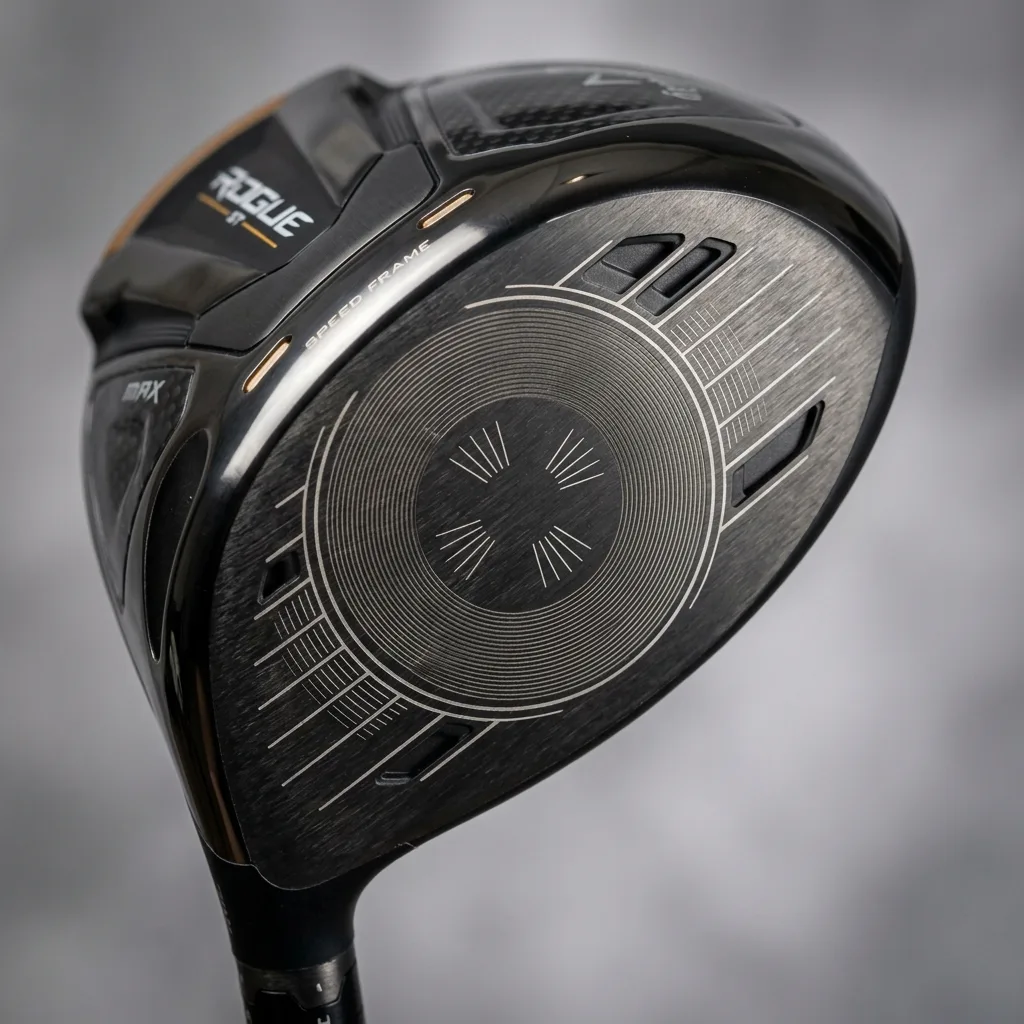
How to Choose the Right Loft and Sweet Spot for Your Swing
One of the biggest mistakes beginners make is buying a driver with insufficient loft.
Egos often get in the way, leading new players to choose a 9-degree driver because that is what the professionals use on television. For a high handicapper, a 9-degree driver is a recipe for disaster.
Loft is your best friend. For the vast majority of beginners, a driver with 10.5 to 12 degrees of loft is highly recommended.
More loft provides two massive benefits.
- Increases your launch angle: Beginners typically have slower swing speeds and struggle to get the ball airborne. A higher launch angle maximizes carry distance, keeping the ball in the air longer.
- Reduces side spin: The more loft a club has, the more backspin it generates relative to side spin. Backspin acts as a stabilizing force, overriding the side spin that causes a slice.
By simply switching from a 9-degree to a 12-degree driver, many beginners instantly hit the ball significantly straighter.
Furthermore, higher loft naturally increases the effective sweet spot of the club. The sweet spot is the exact area on the clubface where energy transfer is maximized.
By increasing the launch angle and reducing side spin, a 10.5 or 12-degree driver ensures that even strikes slightly outside the sweet spot still yield acceptable distance and accuracy.
Selecting the Proper Shaft Flex for Your Swing Speed
While the clubhead gets all the marketing attention, the shaft is the actual engine of the golf club.
Playing the wrong shaft flex will destroy your timing, ruin your launch conditions, and create massive inconsistency.
Shaft Flex refers to how much the shaft bends during the golf swing.
If you match your shaft to your swing speed, you ensure that the clubface returns to a square position perfectly at impact.
For beginners, the choice is usually between a Regular flex and a Stiff shaft, though slower swingers should consider Senior or Lite flex options.
Your swing speed dictates your ideal flex. If you swing the driver between 80 and 95 mph, which covers the vast majority of adult male beginners, a Regular flex is exactly what you need.
A Regular flex shaft bends easily, allowing you to generate a natural whip effect at the bottom of the swing. This kicks the ball up into the air and provides effortless distance.
A Stiff shaft is designed for aggressive swingers who consistently generate speeds over 100 mph.
If you put a Stiff shaft in the hands of a beginner with an 85 mph swing speed, the shaft will feel like a heavy steel rebar. It will not bend properly, resulting in a remarkably low launch angle, a severe loss of distance, and a tendency to leave the clubface open, worsening the slice.
The goal is to tighten your dispersion—the grouping of your shots. A properly fitted shaft flex minimizes dispersion, ensuring your good shots go far and your bad shots stay reasonably close to your target.
Should You Buy a New 2026 Model or a Discounted 2025 Driver?
Golf equipment is expensive, and manufacturers release new models every single year.
A common question among high handicappers is whether it is absolutely necessary to spend premium prices on the latest 2026 technology, or if a discounted 2025 model is sufficient.
The truth is that golf technology evolves incrementally, not revolutionarily. The 2026 drivers certainly push the legal limits of MOI and feature hyper-optimized perimeter weighting.
The center of gravity in models like the Ping G440 Max is lower and further back than ever before. However, the top drivers from 2025—such as the Ping G430 Max or the Callaway Paradym—are still incredibly forgiving and technologically advanced.
If budget is a primary concern, purchasing a discounted 2025 driver is an incredibly smart financial decision.
You will retain 95% of the performance benefits, including massive 460cc heads and excellent slice-correcting capabilities, for a fraction of the cost.
The money saved can then be invested in professional lessons, which will improve your game far more than a 5% increase in clubhead MOI.
Common Beginner Mistakes When Testing a New Driver
When you finally visit a golf shop to test new drivers on a launch monitor, it is easy to get caught up in the excitement and make poor purchasing decisions.
The most common mistake is obsessing exclusively over total distance.
Beginners will hit 20 balls, smash one drive 260 yards dead straight, and immediately buy that club, ignoring the fact that the other 19 balls were sliced 40 yards into the virtual woods.
Instead of looking at your maximum distance, you must look at your average distance and your dispersion pattern.
Consistency is the key to lowering your handicap. You want the driver that produces the tightest grouping of shots and the longest average distance, even if it does not produce that one magical, outlier bomb.
Additionally, ensure you are testing the driver with the correct golf ball.
Launch monitors track spin rates meticulously. If you test a premium driver with a battered range ball, the data will be completely inaccurate. Use a high-quality ball that matches what you intend to play on the course.
In fact, finding the best golf balls for beginners is just as important as finding the right driver.
Final Thoughts: Finding the best mens golf driver for beginners
Navigating the golf equipment market can be incredibly overwhelming, but focusing on the fundamentals will lead you to the right choice.
Prioritize maximum forgiveness by selecting a 460cc head with high MOI.
Embrace loft—aiming for 10.5 to 12 degrees—to increase your launch angle and minimize the destructive side spin that causes slicing.
Be honest about your swing speed and choose a Regular flex shaft unless you possess genuinely exceptional clubhead speed.
Whether you invest in the cutting-edge technology of the 2026 Ping G440 Max or find a fantastic deal on a 2025 model, the right equipment will build your confidence on the tee box.
Stop fighting your gear, equip yourself with a driver designed to help you succeed, and watch your scores rapidly drop.
Frequently Asked Questions
What degree of loft is best for a beginner driver?
For most beginners, a driver with 10.5 to 12 degrees of loft is ideal. Higher loft increases launch angle, maximizes carry distance, and significantly reduces the side spin that causes a slice, making the club much more forgiving on off-center hits.
Should a beginner use a regular or stiff shaft?
Most beginners should use a regular flex shaft, as their swing speed typically falls between 80 and 95 mph. If your swing speed is slower, consider a senior or lite flex. A stiff shaft is only recommended if you consistently swing faster than 100 mph.
Does driver head size matter for high handicappers?
Yes, head size is crucial. Beginners should always choose a 460cc head, which is the maximum size allowed. A larger head provides the highest MOI (Moment of Inertia) and the biggest sweet spot, delivering maximum forgiveness when you mishit the golf ball.
How much should a beginner spend on a golf driver?
Beginners should expect to spend between $200 and $400 for a quality driver. While top-tier 2026 models cost more, purchasing a highly forgiving model from the previous year is an excellent budget-conscious strategy without sacrificing any essential game-improvement technologies for your swing.
How do I stop slicing my driver off the tee?
To stop slicing, focus on your grip and swing path, and choose a draw-biased driver with perimeter weighting. These drivers feature additional weight in the heel to help square the clubface at impact, reducing the devastating side spin that causes your slice.
Get our latest guides, news, and insights highlighted in your Google Search & AI Overviews.