
✨ This article was AI edited. Editorial responsibility: GolfGearDirect.blog.
When deciding when to use a driver vs 3 wood in golf, many amateur golfers believe that stepping down to a 3-wood off the tee box guarantees a safer, more accurate shot. We grab the shorter club, expecting to split the fairway perfectly, but still end up slicing the ball deep into the trees.
We willingly give up 30 yards of crucial distance for a psychological safety net that might not even exist in reality. The traditional risk/reward calculus we learned years ago no longer applies to modern club technology.
The main problem is that sacrificing that yardage completely ruins your chances of hitting the green on your approach. You leave yourself with a long iron approach shot instead of a simple wedge, which makes scoring exponentially harder.
But what if the data definitively proved that your safety club is actually hurting your scorecard every single round? Recent millions of golf shots tracked reveal a surprising truth about your 3-wood accuracy that changes everything you thought you knew about course strategy.
Table of Contents
- When to Use a Driver vs 3 Wood in Golf (The Short Answer)
- What the Latest Shot Scope Data Actually Says About Accuracy
- Understanding the Massive Distance Penalty
- How to Choose Based on Fairway Width and Hazards
- Adjusting Your Choice for Windy Conditions
- The 3-Wood Setup: Are You Making This Common Mistake?
- Driver vs 3-Wood: Strategy for High Handicappers
- Final Verdict: When to Use a Driver vs 3 Wood in Golf
- Frequently Asked Questions
When to Use a Driver vs 3 Wood in Golf (The Short Answer)
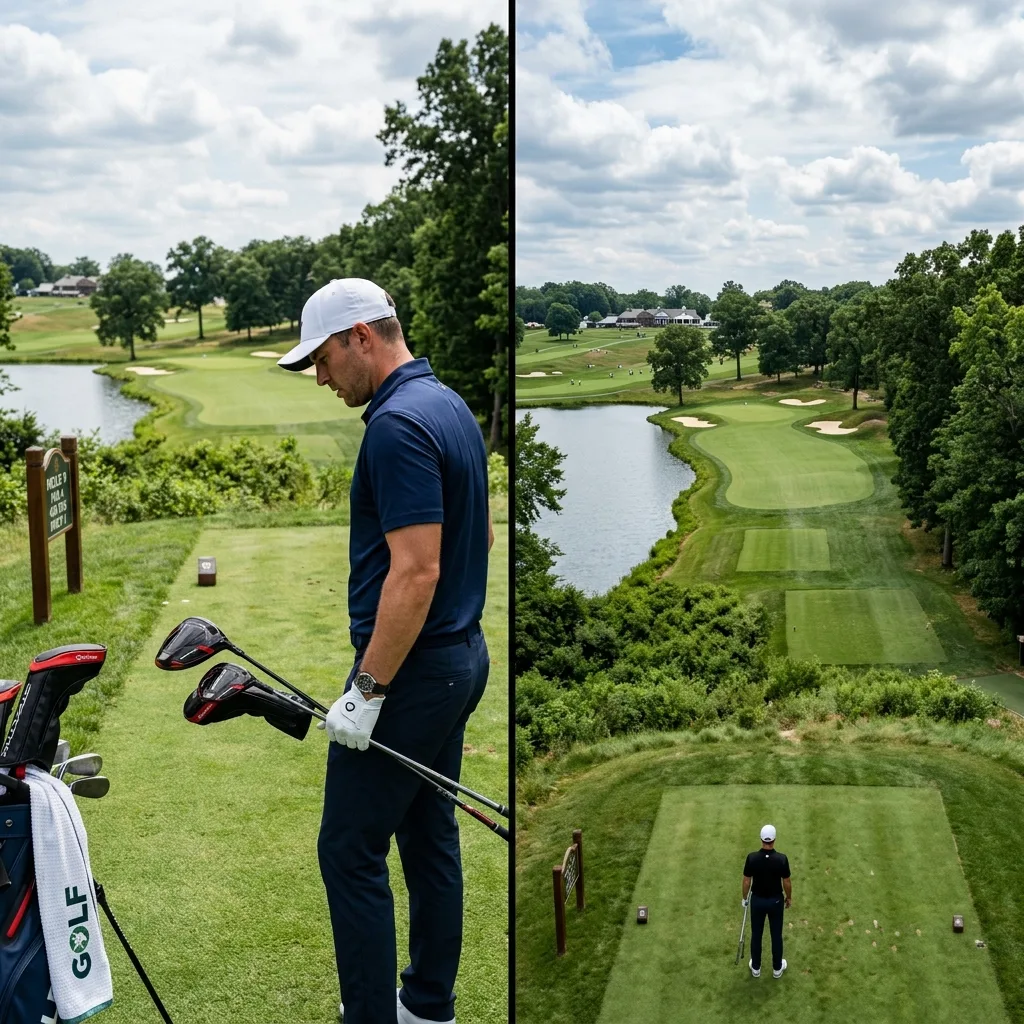
Knowing when to use a driver vs 3 wood in golf requires you to deeply understand your own personal yardage numbers. The general rule is to hit your driver whenever the landing area is completely clear of severe danger.
You should only use a 3-wood off the tee box when a well-struck driver will roll directly into a penalty area, a crossing bunker, or a water hazard.
If the fairway pinches in severely at your specific driver landing zone, stepping down to a 3-wood to purposefully lay up short of the trouble is the only correct play.
However, if you are simply nervous about hitting a bad shot, leaving the driver in your bag is a massive strategic mistake. The 3-wood should act as a surgical tool for specific course distances, not a crutch for poor swing mechanics.
Every single time you opt for the shorter club out of fear, you incur a severe distance penalty. That distance penalty mathematically forces you to hit a much longer, harder club into the green.
You must separate your emotional fear of the driver from the logical realities of the golf course layout. Hitting the fairway is incredibly important, but hitting it 30 yards further back drastically lowers your chance of making par.
What the Latest Shot Scope Data Actually Says About Accuracy
For decades, golf instructors loudly told us that shorter clubs equal straighter shots. But we now have access to billions of data points from modern on-course performance tracking systems.
When we look at recent 2026 data from Shot Scope and Arccos, the old traditional advice falls apart completely.
The statistics conclusively show that for mid to high handicap golfers, the accuracy percentage difference between a driver and a 3-wood off the tee is a mere 1%.
Let that staggering number sink in for a moment. You are giving up significant yardage for a microscopic statistical advantage of just one percent. The dispersion patterns—how widely your shots scatter left and right from your intended target—are nearly identical for both clubs.
Why does this phenomenon happen? Modern drivers are engineered with massive, oversized clubheads designed specifically to mask your worst swing flaws. They push the center of gravity incredibly low and deep, maximizing forgiveness across the entire face.
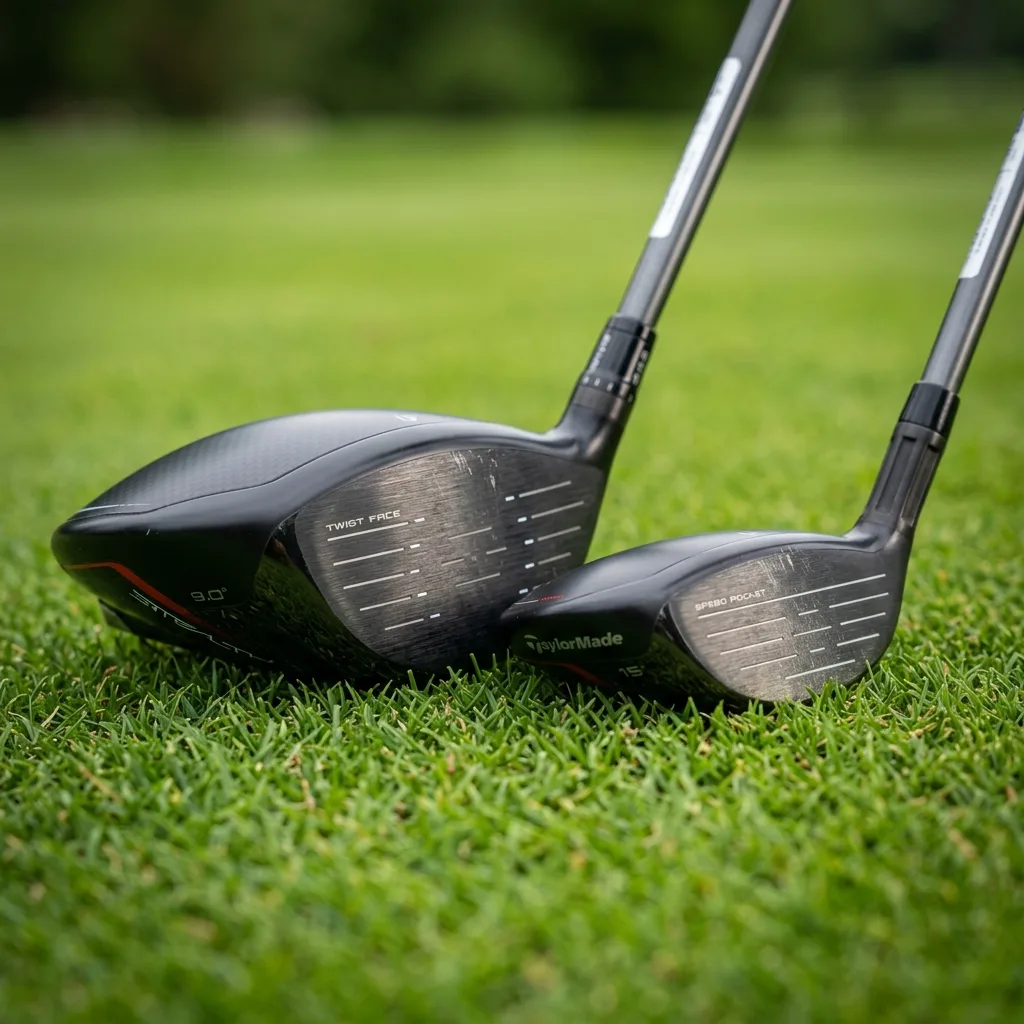
A 3-wood, by contrast, has a much smaller physical footprint. It requires a significantly more precise strike to launch the golf ball effectively.
From a strokes gained perspective, the underlying math heavily favors hitting the driver. Strokes gained analytics prove beyond a shadow of a doubt that total distance correlates directly to lower scores.
Even if you miss the fairway by a few yards with a driver, you are mathematically better off hitting a 9-iron from the light rough than hitting a 6-iron from the short grass.
The comprehensive data from Shot Scope explicitly shows that amateurs score better when they maximize their distance off the tee, completely debunking the persistent myth of the safety wood.
Understanding the Massive Distance Penalty
Let us break down exactly what happens to your scorecard when you choose the shorter club without a valid reason. The average amateur golfer loses between 20 and 30 yards when dropping from a driver to a 3-wood.
In practical terms, that equates to the massive difference between hitting a pitching wedge into a par 4 versus hitting a 7-iron. This single, seemingly harmless decision dictates the entire flow and difficulty of the hole.
Your physical proximity to the hole on your approach shot heavily dictates your ability to hit the green in regulation. PGA Tour statistics and amateur tracking data both violently agree on one principle: the closer you are to the hole, the closer you hit your approach shot to the pin.
By willingly accepting a 30-yard distance penalty off the tee, you artificially inflate the difficulty of your next shot. Hitting a crisp 7-iron requires a much better, more athletic swing to find the center of the green compared to a simple pitching wedge.
This dynamic is exactly where a proper course management strategy becomes incredibly vital to your success. Smart strategy is not about avoiding all mistakes at all costs; it is about maximizing your overall scoring potential while actively managing your worst possible misses.
Modern driver technology provides an enormous sweet spot that a 3-wood simply cannot match. When you miss the center of the face with a driver, the ball still travels a highly respectable distance.
A mishit 3-wood often results in a weak, low flare that barely advances 150 yards, virtually guaranteeing a bogey or double bogey on the hole.
How to Choose Based on Fairway Width and Hazards
While the overwhelming data certainly supports hitting the driver, you still need to play smart, situational golf. You must evaluate the specific architecture of the golf hole before pulling a club from your bag.
The two biggest factors in this critical decision are the overall fairway width and the exact placement of specific hazards.
Look carefully at your intended landing zone for your driver distance. If the fairway width remains consistent and offers a generous, wide target, the driver is always the mathematically correct play.
However, golf course designers frequently use strategically placed bunkers, overhanging trees, and water to pinch the fairway precisely where a good drive lands.
If the landing area at your specific driver distance narrows significantly, and a bad miss results in a lost ball or a drop from a penalty area, you have found the perfect scenario for your 3-wood.
The absolute goal here is to purposefully lay up short of the major trouble. If your driver carries 240 yards directly into a cluster of deep fairway bunkers, but your 3-wood carries 210 yards to the widest, safest part of the fairway, the shorter club wins easily.
You are not using the 3-wood because you think it is magically straighter; you are using it because its total distance purposefully removes the hazards from play.
You must measure the exact distance to the trouble. If you cannot reach the trouble with your absolute best driver swing, always hit the driver without hesitation.
Adjusting Your Choice for Windy Conditions
Weather plays a massive, often underappreciated role in your tee box strategy. When you face severe windy conditions, especially a strong, gusting headwind, your club selection criteria must drastically shift.
Playing into a Headwind
A driver naturally launches the golf ball higher into the air, exposing it to the heavy wind for a much longer period. A ballooning, high-spinning drive into a stiff headwind will stall out in the sky, lose its forward momentum, and drop straight down, costing you incredible amounts of total yardage.
In a heavy headwind scenario, a 3-wood can occasionally provide a far better result if you know exactly how to flight the ball down. The main goal is to produce a lower, more piercing, penetrating ball flight that efficiently cuts through the strong gusts.
However, executing this shot requires a very solid, centered strike. Because the 3-wood offers substantially less forgiveness than the oversized driver, a poor, glancing swing in the wind will still yield disastrous results that travel nowhere.
Playing with a Tailwind
Conversely, when you are playing straight downwind, the driver is your absolute greatest weapon. You want to launch the ball as exceptionally high as possible to let the prevailing wind carry it for miles.
Never lay up with a 3-wood when you have a strong wind at your back, unless physical hazards actively force your hand.
The trailing wind will significantly amplify the distance of your driver, giving you a massive, unfair advantage on your ensuing approach shot. Master the nuanced art of reading the wind, and your club selection will become completely automatic.
The 3-Wood Setup: Are You Making This Common Mistake?
Even when the course situation perfectly demands a 3-wood, many golfers fail to execute the required shot because their setup mechanics are entirely wrong.
They unconsciously treat the fairway wood exactly like a driver, which quickly leads to topped shots, weak slicing ball flights, and immense frustration on the tee.
The driver is specifically designed to hit the golf ball on the upswing. You tee the ball high and position it very forward in your stance, just inside your lead heel.
The 3-wood requires a completely different mechanical approach. Because the clubhead is much smaller and the loft is significantly different, you cannot sweep it exactly like a big driver.
When hitting a 3-wood off a wooden tee peg, you must tee the ball much lower—only about a quarter of the golf ball should rest above the painted crown of the club. You also need to move the ball slightly further back in your stance compared to your standard driver position.
This specific, adjusted ball position naturally encourages a more level, sweeping strike, rather than an extreme upward angle of attack. If you constantly struggle with topping the ball off the tee, you desperately need to refine your proper 3-wood setup before your next round.
Many mid to high handicap players swing far too hard with the fairway wood, desperately trying to artificially create the distance they sacrificed by leaving the driver in the bag.
Keep your tempo incredibly smooth. Let the inherent loft of the club do the heavy lifting. A highly controlled swing with a clean strike will always travel further than a violent, jerky swing that completely misses the center of the face.
Driver vs 3-Wood: Strategy for High Handicappers
If you currently carry a high handicap, your overarching tee shot strategy should focus heavily on maximizing extreme forgiveness. You do not hit the center of the clubface with high consistency, which ultimately means you rely heavily on the advanced engineering of the golf club to save your bad swings.
This is precisely why the driver should remain your primary, trusted weapon on the tee box for almost every single hole.
Modern 460cc drivers possess incredibly high Moment of Inertia (MOI). This technical term simply means the large clubhead strongly resists twisting when you strike the ball poorly off the toe or the heel.
A 3-wood, possessing a much smaller overall volume, twists significantly more on those same off-center hits.
When a high handicap golfer hits a 3-wood off the extreme toe, the resulting gear effect sends the ball diving sharply into the deep rough. When they make the exact same bad swing with one of the most forgiving drivers currently on the market, the ball often stays miraculously in the first cut of rough.
Stop blindly listening to the outdated, recycled advice that high handicappers absolutely need a 3-wood for safety. The raw, objective math proves that the driver masks your glaring errors better than any other club in your entire bag.
Unless you physically struggle to get the driver airborne due to severe swing speed limitations, you should fully embrace the big stick. Work diligently on your driver swing mechanics rather than hiding from the club. It is undeniably the fastest, most effective route to dropping your scores.
Final Verdict: When to Use a Driver vs 3 Wood in Golf
Ultimately, deciding exactly when to use a driver vs 3 wood in golf comes down to trusting the objective data over your own internal anxiety.
The tiny 1% accuracy difference simply does not justify the massive, penalizing loss of yardage on standard golf holes. You should hit your driver confidently and aggressively on par 4s and par 5s to leave yourself the absolute shortest possible approach shot into the greens.
Reserve your 3-wood strictly for specific, tactical situations. Use it only when the fairway physically narrows at your precise driver landing zone, or when a water hazard sits precisely at your average driving distance.
Use it to keep the ball low under severe wind, or to smartly lay up short of a crossing creek. Treat the 3-wood as a surgical precision tool for course management, not a warm safety blanket for swing flaws.
Golf is inherently a game of probability. The analytics explicitly tell us that maximizing distance correlates directly to shooting lower scores. Build a resilient strategy around your driver, accept that you will occasionally miss a fairway, and watch your handicap drop rapidly as your approach shots get dramatically shorter.
Frequently Asked Questions
Is it easier to hit a 3-wood or a driver?
While many beginners strongly feel a 3-wood is much easier to hit due to its shorter shaft, data conclusively shows the accuracy difference is only about 1%. Modern drivers actually offer a significantly larger sweet spot and much more forgiveness on off-center strikes compared to fairway woods.
When should I lay up with a 3-wood off the tee?
You should lay up with a 3-wood off the tee when a driver would put you directly into a severe hazard, such as deep water or crossing bunkers. You should also lay up when the fairway width narrows significantly right at your typical driver landing distance.
How much distance do you lose hitting a 3-wood instead of a driver?
The average distance penalty when dropping from a driver down to a 3-wood is around 20 to 30 yards. This significant yardage gap can leave you with a much longer and considerably more difficult approach shot into the green.
Should high handicappers use a driver or 3-wood?
High handicappers should generally stick with the driver for its massively larger face and maximum forgiveness. Unless facing severe hazards that demand a lay up, the minimal gain in accuracy with a 3-wood does not justify the massive distance penalty.
Do pros ever hit 3-wood off the tee?
Yes, touring pros will hit a 3-wood off the tee to prioritize exact placement over raw distance. They do this especially on very tight holes with severe penalty areas, or when navigating strong windy conditions that demand a much lower ball flight to maintain control.
Get our latest guides, news, and insights highlighted in your Google Search & AI Overviews.