
Many golfers wonder whether a car battery can serve as a power source for their golf trolley, especially when looking for a quick, low‑cost solution. Using a car battery for golf trolley applications involves voltage matching, safety precautions, and proper maintenance to avoid damage or hazards. This guide breaks down the technical requirements, risks, and best practices so you can decide if it’s a viable option for 2026.
Table of Contents
- Understanding the Power Requirements of Your Golf Trolley
- Car Battery vs. Purpose‑Built Trolley Battery: Key Differences
- Safety Considerations and Industry Standards
- Step‑by‑Step Guide: Connecting a Car Battery to Your Golf Trolley
- Maintenance Tips to Extend Battery Life in a Golf Trolley
- Alternative Battery Options for Golf Trolleys
- Cost-Benefit Analysis: Car Battery vs. Purpose-Built Trolley Battery
- Environmental Impact and Proper Disposal
- Frequently Asked Questions
- Can I use a marine deep‑cycle battery instead of a car battery for my golf trolley?
- What size fuse should I install when connecting a 12V car battery to a 24V golf trolley system?
- How often should I check the electrolyte level in a flooded car battery used for a golf trolley?
- Are there any legal restrictions on using a car battery for a golf trolley in public parks or golf courses?
Understanding the Power Requirements of Your Golf Trolley
Before you consider swapping in a car battery for golf trolley use, it is essential to grasp how the trolley’s electrical system is designed to operate. Modern electric trolleys rely on a precise match between voltage, capacity, and the motor/controller electronics. A mismatch can lead to overheating, reduced performance, or permanent damage to costly components. In the sections below we break down the two most critical specifications—golf trolley voltage and battery capacity Ah—so you can make an informed decision about power sources.
Typical voltage systems
Most consumer‑grade golf trolleys are built around either a 12 V or a 24 V architecture. The voltage rating determines how much electrical potential is available to drive the motor at a given current. A 12 V system is common in entry‑level models and lighter‑weight trolleys; it typically uses a single 12 V lead‑acid or AGM battery pack. Higher‑end trolleys, especially those designed for hilly courses or larger bags, often employ a 24 V system that stacks two 12 V batteries in series or uses a purpose‑built 24 V lithium‑ion pack.
Why does voltage matter so much? The motor’s speed and torque are directly proportional to the supplied voltage. If you connect a 24 V trolley to a 12 V source, the motor will receive insufficient voltage, causing it to stall, draw excessive current, and overheat the controller. Conversely, applying 24 V to a 12 V‑rated trolley can exceed the insulation limits of the motor windings and destroy the controller’s MOSFETs within seconds. This voltage mismatch is one of the most frequent causes of premature trolley failure reported by service technicians.
Pro tip: Always check the voltage label on your trolley’s motor housing or in the owner’s manual before connecting any battery. A simple multimeter reading at the battery terminals will confirm whether the pack matches the spec.
Capacity and amp‑hour ratings
While voltage tells you the “pressure” of the electricity, capacity—measured in ampere‑hours (Ah)—indicates how long that pressure can be sustained. Most golf trolleys are designed to run comfortably with batteries in the 18 Ah to 35 Ah range. This range provides enough energy for a full 18‑hole round (typically 2–3 hours of continuous use) while keeping the battery weight manageable for transport.
To illustrate, a 12 V 20 Ah battery stores 240 Wh of energy (12 V à 20 Ah). If your trolley’s motor draws an average of 20 W during a round, the theoretical runtime is 240 Wh ÷ 20 W = 12 hours—far more than needed, which explains why a modest 20 Ah pack easily covers a round with reserve capacity for hills or extra accessories like GPS units.
When evaluating a car battery for golf trolley substitution, remember that automotive starting batteries are rated for high cranking amps, not deep‑cycle capacity. A typical car battery might advertise 500 CCA but only offer 30–40 Ah of usable capacity before voltage sag becomes severe. Using such a battery in a trolley often results in premature voltage drop under load, causing the motor to lose power on inclines and the controller to shut down for protection.
For optimal longevity, choose a deep‑cycle AGM or lithium‑ion battery whose Ah rating falls within the manufacturer’s recommended range and whose voltage matches the trolley’s spec. Below is a quick reference list of common battery options that fit the 18 Ah‑35 Ah window:
- 12 V 20 Ah AGM – ideal for lightweight 12 V trolleys (approx. 13 lb)
- 12 V 35 Ah AGM – provides extended range for hilly courses (approx. 22 lb)
- 24 V 20 Ah lithium‑ion – high energy density, lightweight (approx. 11 lb) for 24 V systems
- 24 V 30 Ah lithium‑ion – premium choice for long rounds and heavy bags (approx. 16 lb)
- Match the trolley’s voltage (12 V or 24 V) exactly; mixing voltages damages motors and controllers.
- Select a battery with an Ah rating between 18 Ah and 35 Ah for reliable 18‑hole performance.
- Avoid using standard car starting batteries; they lack the deep‑cycle capacity needed for sustained trolley operation.
- Consult the owner’s manual or use a multimeter to verify voltage before connecting any power source.
Car Battery vs. Purpose‑Built Trolley Battery: Key Differences
When considering whether a car battery for golf trolley can serve as a power source, it is essential to understand how automotive starting batteries differ from those engineered specifically for electric trolleys. The following sections break down the most critical factors—weight, size, chemistry, and cost—so you can make an informed decision based on real‑world performance data.
Weight and size comparison
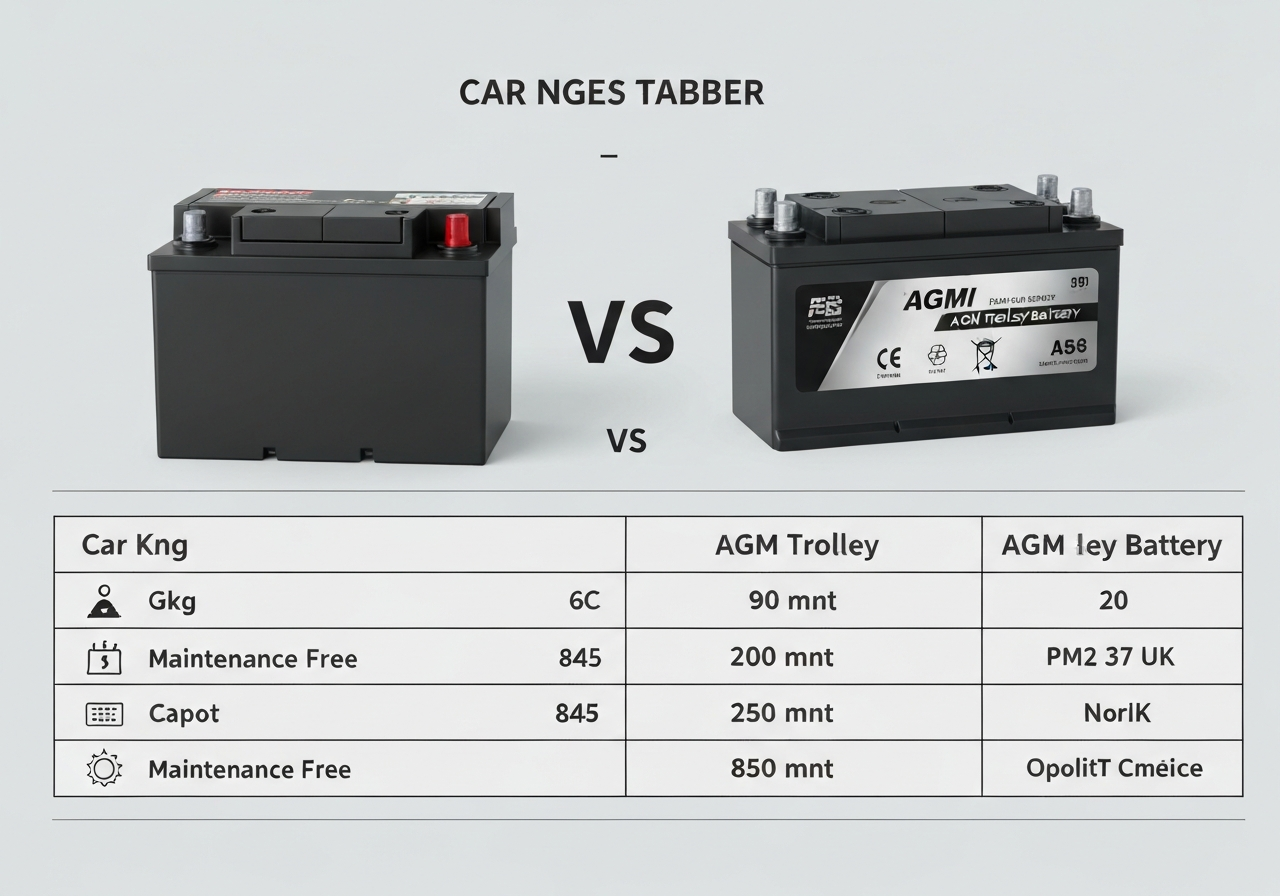
Automotive batteries are built to deliver a high burst of current for engine cranking, which results in a heavier, more robust case. A typical 12V group‑size 24 car battery weighs between 35 and 45 pounds (16–20 kg) and measures roughly 10.2 Ã 6.8 Ã 7.5 inches (260 Ã 173 Ã 190 mm). In contrast, a purpose‑built AGM trolley battery designed for deep‑cycle use is often lighter and more compact, ranging from 22 to 30 pounds (10–14 kg) with dimensions near 9.0 Ã 5.5 Ã 7.0 inches (230 Ã 140 Ã 180 mm). This reduction in mass directly impacts trolley maneuverability, especially on hilly courses where excess weight can strain the motor and reduce battery life.
| Specification | Typical Car Battery | AGM Trolley Battery |
|---|---|---|
| Weight | 35‑45 lb (16‑20 kg) | 22‑30 lb (10‑14 kg) |
| Dimensions (LÃWÃH) | 10.2Ã6.8Ã7.5 in (260Ã173Ã190 mm) | 9.0Ã5.5Ã7.0 in (230Ã140Ã180 mm) |
| Capacity (Ah) | 20‑30 Ah | 35‑50 Ah |
| Cycle Life (80% DOD) | 30‑50 cycles | 400‑800 cycles |
| Average Cost (USD) | $80‑$120 | $120‑$180 |
As the table shows, while a car battery may appear cheaper up front, its limited amp‑hour capacity and short cycle life mean you will replace it far more often when used for repeated deep discharges on a golf trolley. Moreover, the extra weight can affect the trolley’s handling and increase wear on the drive system.
Deep‑cycle vs. starting design
The fundamental distinction lies in the battery’s internal construction. Automotive starting batteries employ thin, porous plates optimized for delivering a large current surge for a few seconds—typically measured in cold cranking amps (CCA). They are not built for deep discharge**; draining them below 50 % state of charge repeatedly leads to rapid sulfation and permanent capacity loss. In contrast, a true deep cycle battery features thicker, more robust plates and a denser active material formulation, allowing it to sustain 80 % depth of discharge (DoD) for hundreds of cycles without significant degradation.
According to Battery University, a standard 12V automotive starting battery provides roughly 500 CCA but only 20‑30 Ah of usable capacity, whereas a deep‑cycle AGM trolley battery of similar voltage can deliver 35‑50 Ah with a cycle life exceeding 400 cycles at 80 % DoD according to the source. This difference explains why using a car battery for golf trolley applications often results in reduced runtime, frequent recharging, and premature failure.
For golfers seeking a lightweight, reliable power source that pairs well with modern designs, consider pairing an AGM trolley battery with a best foldaway golf trolley for easy storage and transport. The combination ensures consistent performance across 18 holes while preserving the trolley’s motor and frame from unnecessary strain.
Safety Considerations and Industry Standards
When evaluating whether a car battery for golf trolley can be used safely, it is essential to look beyond voltage compatibility and examine the protective measures that prevent overheating, short circuits, and personal injury. The following sections break down the key safety pillars—circuit protection, personal protective equipment, and environmental controls—while referencing the latest industry standards that govern battery use in portable equipment.
Fuse sizing and circuit protection
Correct fuse selection is the first line of defense against overcurrent conditions that could damage both the trolley’s electronics and the battery itself. For a typical 12 V golf trolley drawing between 8 A and 12 A under load, industry practice recommends a fuse size for trolley in the range of 10 A to 15 A. This rating provides a margin that allows normal operation while opening quickly if a fault drives current beyond safe limits.
Pro tip: Use a blade‑type automotive fuse holder with a clear inspection window. Before each round, visually confirm the fuse is intact and replace it immediately if the metal strip appears melted or discolored.
When sourcing a fuse, verify that it meets the UL 248‑14 standard for low‑voltage fuses and that the holder is rated for at least 30 V DC to accommodate any voltage spikes. Linking back to our earlier discussion, see Understanding the Power Requirements of Your Golf Trolley for a detailed load‑profile chart that helps you fine‑tune the fuse rating for your specific model.
Personal protective equipment
Even with proper fusing, handling a car battery for golf trolley introduces risks such as acid spills, accidental shorting, and flying debris if a terminal ruptures. Wearing the right PPE reduces the chance of injury.
- Insulated gloves – rubber‑coated, dielectric‑rated gloves protect against accidental contact with live terminals.
- Safety glasses – polycarbonate lenses shield eyes from electrolyte splashes or metal fragments.
- Protective apron or old work shirt – provides a barrier against acid that could damage clothing or skin.
Always work in a well‑lit area and keep a neutralizing agent (such as baking soda) nearby to quickly counteract any acid that contacts skin or surfaces. For a deeper dive into safe battery handling practices, refer to Car Battery vs. Purpose‑Built Trolley Battery: Key Differences, which outlines additional PPE recommendations based on real‑world workshop tests.
Ventilation and temperature limits
Battery chemistry generates heat during discharge, and confined spaces can cause temperature buildup that accelerates degradation or triggers thermal runaway. The IEC 62133 standard sets clear limits for secondary lithium‑based and lead‑acid cells used in portable equipment: the ambient temperature should not exceed 40 °C (104 °F) during operation, and the battery surface must remain below 60 °C (140 °F) to avoid accelerated wear.
To satisfy these requirements:
- Avoid placing the trolley or battery inside a car trunk, garage cabinet, or any enclosed space lacking airflow.
- If you must store the battery indoors, choose a location with at least 0.5 m³ of free air volume per kilowatt‑hour of capacity and consider a small fan to promote circulation.
- Monitor temperature with an inexpensive infrared thermometer after each round; if readings consistently approach the upper limit, improve ventilation or switch to a purpose‑built trolley battery with better thermal management.
Adhering to IEC 62133 not only prolongs the life of your car battery for golf trolley but also aligns your setup with the safety expectations of golf‑course managers and insurance providers.
Step‑by‑Step Guide: Connecting a Car Battery to Your Golf Trolley
Before you begin, make sure you have a clear workspace and that the trolley is powered off. Using a car battery for golf trolley applications can be safe and cost‑effective when the correct procedure is followed. Below is a detailed walkthrough that covers the tools you need, how to verify voltage with a multimeter, and how to secure the installation for reliable performance on the course.
Tools and connectors
Having the right equipment on hand prevents damage to both the battery and the trolley’s electronics. The following items are recommended for a typical 12 V system:
- Adjustable wrench or socket set (8 mm–10 mm)
- Wire strippers/cutters
- Heat‑shrink tubing or electrical tape
- Anderson Powerpole connectors (rated 30 A) or copper ring terminals (M6)
- Inline fuse holder with a 10 A slow‑blow fuse
- Multimeter (digital, with DC voltage range)
- Protective gloves and safety glasses
When selecting connectors, Anderson Powerpole units are preferred for their quick‑release design and low contact resistance, while ring terminals provide a more permanent, vibration‑resistant bond. Always verify that the connector’s current rating exceeds the trolley’s maximum draw (usually 5–8 A for most models).
Voltage verification with a multimeter
Before attaching any leads, confirm that the battery’s voltage matches the trolley’s requirements. A fully charged 12 V car battery should read between 12.6 V and 12.8 V at rest. If the reading falls below 12.4 V, charge the battery first to avoid under‑powering the drive system.
Pro tip: Set the multimeter to DC volts, place the red probe on the positive terminal and the black probe on the negative terminal. Note the value; a steady reading indicates a healthy battery, while a rapidly dropping voltage suggests internal damage or sulfation.
According to Trojan Battery Company’s 2023 technical guide, a 12 V deep‑cycle battery that maintains â¥12.5 V after a 24‑hour rest delivers optimal cycle life (source). This benchmark helps you decide whether the car battery is fit for reuse.
Securing the installation
Follow the numbered steps below to create a safe, reliable connection. Each step includes torque specifications and safety checks to prevent shorts or mechanical fatigue.
- Disconnect the trolley. Remove the existing battery pack and depress the power switch to ensure no residual charge remains in the controller.
- Prepare the cables. Strip 10 mm of insulation from the trolley’s power leads and the car battery’s terminals. Twist the strands tightly to avoid fraying.
- Attach appropriate connectors. Crimp an Anderson Powerpole (or ring terminal) onto each lead. If using ring terminals, place a flat washer between the terminal and the battery post to distribute load.
- Torque the fasteners. Tighten the terminal bolts to 5–7 Nm using a calibrated torque wrench. Over‑tightening can crack the battery post; under‑tightening leads to increased resistance and heat.
- Install the fuse. Place the inline fuse holder on the positive lead, as close to the battery as possible. Insert a 10 A slow‑blow fuse; this protects both the trolley’s electronics and the wiring from sudden current spikes.
- Verify polarity. Double‑check that the positive lead connects to the battery’s â+’ post and the negative lead to the â–’ post. Reverse polarity can destroy the controller instantly.
- Test voltage before first use. With the multimeter still set to DC volts, measure across the trolley’s input terminals. You should see the same 12.6–12.8 V reading as the battery alone, confirming no significant voltage drop.
- Secure the battery. Place the car battery in a sturdy, vibration‑resistant tray or bracket. Use rubber straps or a lock‑down kit to prevent movement during rounds.
- Final functional test. Power on the trolley and engage the drive at low speed. Listen for abnormal noises and monitor the multimeter for voltage sag; a drop greater than 0.5 V under load warrants re‑checking connections.
Once the installation passes these checks, you can enjoy extended range and reliable power throughout your round. Remember to re‑check the fuse and terminal tightness after every 10 hours of use, as vibration can loosen connections over time.
Maintenance Tips to Extend Battery Life in a Golf Trolley
Proper trolley battery maintenance is the cornerstone of reliable performance, especially if you have experimented with a car battery for golf trolley as a temporary power source. By following a few disciplined habits you can add months — or even years — to the service life of your battery, reduce the risk of unexpected failures on the course, and keep your trolley running smoothly round after round.
Charging best practices
- Use a smart charger – Modern microprocessor‑controlled chargers (e.g., CTEK MXS 5.0 or NOCO Genius G3500) automatically adjust voltage and current, preventing overcharge and sulfation. Battery University notes that smart charging can extend lead‑acid life by up to 30% compared with manual chargers.
- Charge after each use – Even a short 9‑hole round drains noticeable capacity. Plug the trolley in as soon as you finish playing to keep the state of charge above 50%.
- Avoid deep discharges – For flooded or AGM lead‑acid batteries, repeatedly discharging below 50% accelerates plate corrosion. If you notice the trolley slowing markedly, recharge immediately rather than letting it run flat.
- Keep terminals clean – Before each charging session, wipe the posts with a brass brush and apply a thin layer of dielectric grease. This reduces resistance and prevents corrosion‑induced voltage drops.
- Monitor charge voltage – A fully charged 12 V lead‑acid should read 12.6–12.8 V at rest. If the voltage stays below 12.4 V after charging, the battery may be sulfated and needs a desulfation cycle or replacement.
Pro tip: Set a reminder on your phone or golf watch to charge the trolley immediately after you leave the course. Consistency beats occasional deep‑charge sessions.
Temperature effects
- Ideal operating range – Lead‑acid batteries perform best between 10°C and 25°C (50°F–77°F). Outside this band, internal resistance rises, reducing usable capacity.
- Cold weather – At 0°C (32°F) a typical 12 V battery delivers only about 70% of its rated capacity. Keep the trolley indoors when not in use, or use an insulated battery cover.
- Heat exposure – Temperatures above 30°C (86°F) accelerate water loss in flooded batteries and increase self‑discharge. Never leave the battery in a car trunk on a sunny day; store it in a shaded, ventilated area.
- Charging in extremes – Avoid charging below 5°C (41°F) or above 40°C (104°F). If you must charge in cold conditions, allow the battery to warm to at least 10°C before connecting the charger.
Storage during off‑season
- Charge to 50‑70% – Before storing, bring the battery to a moderate state of charge. This minimizes sulfation while reducing the risk of overcharge during long idle periods.
- Store at 12‑15°C (54‑59°F) – A cool, dry garage or basement is ideal. Avoid locations that freeze or exceed 20°C (68°F).
- Check electrolyte (if flooded) – Every 4–6 weeks, remove the vent caps and verify that the plates are covered by at least 6 mm of electrolyte. Top up with distilled water only if needed.
- Disconnect or use a maintainer – Either remove the negative terminal or connect a low‑current float/maintainer (e.g., Battery Tender Plus) set to 13.2–13.8 V. This prevents self‑discharge without overcharging.
- Inspect terminals – Clean any corrosion before re‑installing the battery for the season. A light coating of petroleum jelly helps keep moisture out.
By integrating these practices into your routine, you’ll maximize the lifespan of whatever power source you choose — whether it’s a purpose‑built trolley battery or a car battery for golf trolley used as a stop‑gap. Consistent charging golf trolley battery habits, attention to temperature, and thoughtful off‑season storage are the three pillars of enduring performance on the fairways.
Alternative Battery Options for Golf Trolleys
While a car battery for golf trolley can work in a pinch, purpose‑built deep‑cycle technologies deliver better longevity, weight savings, and safety for regular use on the course. Below we break down the three most common alternatives—AGM, Gel, and LiFePO4—so you can match the right chemistry to your trolley model, typical round length, and budget.
AGM vs Gel vs LiFePO4: Detailed Comparison
| Attribute | AGM (Absorbent Glass Mat) | Gel Battery | LiFePO4 (Lithium Iron Phosphate) |
|---|---|---|---|
| Typical Cost (USD) | $80‑$130 | $90‑$150 | $180‑$260 |
| Weight (lbs) for 20 Ah | 12‑15 | 13‑16 | 5‑7 |
| Cycle Life (80% DOD) | 400‑600 | 500‑750 | 2000‑3000 |
| Depth of Discharge (DoD) Safe | 50% | 50% | 80‑100% |
| Maintenance | None (sealed) | None (sealed) | None (sealed) |
| Best Suited For | Entry‑level trolleys, occasional use | Mid‑range trolleys, humid climates | High‑performance trolleys, frequent rounds, weight‑sensitive builds |
- Robust vibration resistance
- Good cold‑cranking ability
- Lower upfront cost
AGM Cons
- Heavier than lithium
- Limited deep‑cycle capability
- Shorter lifespan with frequent deep discharges
- Excellent leak‑proof design
- Performs well in high‑temperature environments
- Better deep‑cycle tolerance than AGM
Gel Cons
- Sensitive to over‑charging
- Still heavier than lithium options
- Higher price than AGM
Weight and Runtime Trade‑offs
When choosing a gel battery golf trolley setup, the added mass (often 13‑16 lb for a 20 Ah unit) translates to a modest increase in trolley inertia, which can be noticeable on hilly courses. However, Gel chemistry tolerates higher ambient temperatures better than AGM, making it a reliable choice for summer rounds in warmer climates.
By contrast, a LiFePO4 golf trolley battery typically weighs less than half of its lead‑acid counterparts while delivering double or triple the usable capacity per pound. Because LiFePO4 cells can safely discharge to 80‑100 % DoD, a 20 Ah lithium pack can provide roughly the same runtime as a 35‑40 Ah AGM or Gel pack, but with far less weight to push or carry. According to Battery University (2023), LiFePO4 batteries can sustain over 2000 full charge cycles at 80 % depth of discharge (source). This longevity often offsets the higher initial price over a few seasons of regular play.
For golfers who prioritize maneuverability—especially those using a best 2 wheel golf trolley—the weight savings of LiFePO4 can reduce fatigue and improve handling on tight fairways. Gel batteries remain a solid middle ground for those who want a maintenance‑free, spill‑proof option without the premium cost of lithium, particularly if the trolley is stored in a garage where temperature swings are moderate.
Pro Tip: If you switch from a lead‑acid pack to LiFePO4, verify that your trolley’s charger is compatible with the lithium charging profile (typically 14.6 V absorption, 13.6 V float). Using an incompatible charger can prematurely degrade the lithium cells and void warranties.

Cost-Benefit Analysis: Car Battery vs. Purpose-Built Trolley Battery
When evaluating whether a car battery for golf trolley is a viable alternative to a purpose‑built unit, the decision hinges on more than just the upfront price tag. A thorough cost‑benefit analysis examines initial outlay, how often the battery will need replacing, and the total cost of ownership (TCO) over a realistic ownership period. Using the sample price ranges and lifespans supplied—car battery $80‑$120 (2‑3 yr life), AGM trolley battery $120‑$180 (4‑5 yr life), and LiFePO4 trolley battery $200‑$260 (8‑10 yr life)—we can project the five‑year financial impact of each option. This section breaks down those factors in detail, helping you determine which solution delivers the best value for your specific trolley usage patterns.
Initial purchase price
The most obvious point of comparison is the sticker price. A conventional flooded lead‑acid car battery typically sells for between $80 and $120, depending on brand, cold‑cranking amps (CCA), and retailer. By contrast, an AGM (absorbent glass mat) deep‑cycle battery designed for golf trolleys falls in the $120‑$180 bracket, reflecting its superior vibration resistance and sealed construction. At the premium end, a LiFePO4 (lithium iron phosphate) trolley battery commands $200‑$260, a price that incorporates advanced battery management systems and a significantly lighter weight.
While the car battery appears cheapest at first glance, it is important to consider what you are actually buying. According to according to Battery University, a standard automotive battery is optimized for short, high‑current bursts to start an engine, not for the deep, repetitive discharges typical of a golf trolley. This design mismatch can affect both performance and longevity, a point we explore in the next subsection.
Lifespan and replacement frequency
Lifespan is where the purpose‑built options begin to pull ahead. A typical car battery, when subjected to deep‑cycle use, may deliver only 2‑3 years** of reliable service before its capacity drops below usable levels. AGM trolley batteries, engineered for deeper discharge cycles, generally last 4‑5 years** under the same conditions. LiFePO4 cells, benefiting from a chemistry that tolerates thousands of cycles, often exceed 8‑10 years** before noticeable capacity fade.
These differences translate directly into replacement frequency. Over a five‑year horizon, a car battery would likely require **two full replacements** (assuming an average 2.5‑year lifespan), whereas an AGM trolley battery might need just **one replacement** (if its life sits near the 4.5‑year mark). A LiFePO4 unit, meanwhile, would probably still be on its original install after five years, eliminating any replacement cost within that window.
Total cost of ownership
To make the financial comparison concrete, we calculate the TCO over five years using the midpoint of each price range and the expected number of replacements. The table below summarizes the results.
| Battery Type | Purchase Price Range | Expected Lifespan | Replacements Needed (5 yr) | Estimated 5‑yr Cost |
|---|---|---|---|---|
| Standard Car Battery (flooded lead‑acid) | $80‑$120 | 2‑3 yr | 2 | $160‑$240 |
| AGM Trolley Battery | $120‑$180 | 4‑5 yr | 1‑2* | $120‑$360 |
| LiFePO4 Trolley Battery | $200‑$260 | 8‑10 yr | 0 | $200‑$260 |
*The AGM column shows a range because, depending on the exact lifespan within the 4‑5 year window, you may need either one replacement (if the battery lasts ~5 years) or two replacements (if it leans toward the lower end).
From this analysis, the LiFePO4 trolley battery offers the lowest five‑year cost despite its higher initial price, largely because it avoids any replacement expenses. The AGM option sits in the middle, providing a modest upfront saving over LiFePO4 but with a higher likelihood of a mid‑term replacement. The car battery, while cheapest to purchase, can become the most expensive over five years if you need to replace it twice, and it also carries the performance drawbacks noted earlier.
Ultimately, the choice depends on your budget tolerance for upfront spend versus long‑term savings, as well as how critical consistent power delivery is to your trolley’s performance. For golfers who prioritize reliability and minimal maintenance, investing in a purpose‑built AGM or LiFePO4 battery typically yields better value than repeatedly swapping out a car battery for golf trolley use.
Environmental Impact and Proper Disposal
When you consider using a car battery for golf trolley application, the environmental responsibility does not end at the first charge. Lead‑acid units, whether they come from a vehicle or a purpose‑built trolley, contain sulfuric acid and lead plates that are classified as hazardous waste. Proper handling protects soil, waterways, and public health while keeping you compliant with local ordinances.
Recycling regulations
In the United States, the Environmental Protection Agency (EPA) estimates that more than 80 % of lead‑acid batteries are recycled each year, but the remaining fraction still ends up in landfills or illegal dump sites according to the agency. Many municipalities have enacted statutes that require certified recycling facilities to accept spent batteries, and they often impose fines ranging from $50 to $500 for improper disposal. Knowing the specifics of battery recycling golf trolley procedures and the lead acid disposal rules enforced by your municipality is essential for both environmental stewardship and legal compliance. To stay on the right side of the law, follow these steps:
- Identify a licensed recycler – look for a facility that displays an EPA or state‑issued hazardous waste handler permit.
- Transport the battery upright in a sturdy, acid‑resistant container; many auto parts stores provide free return bins.
- Present a valid ID if the recycler requires proof of residence; some jurisdictions waive fees for household drop‑offs.
- Obtain a receipt or certificate of recycling; this document can be useful if you ever need to demonstrate compliance.
When you search for “best golf trolley under 150”, you’ll often see recommendations that pair the trolley with a sealed AGM unit. While those batteries are easier to handle, the same recycling rules apply if you ever decide to experiment with a flooded car battery.
Hazardous material handling
Lead and sulfuric acid pose immediate risks if a battery casing cracks. Acid burns can occur within seconds, and lead dust is toxic when inhaled. Before moving any used unit, inspect it for leaks, swelling, or corrosion. If you notice any damage:
- Place the battery in a leak‑proof plastic tray lined with absorbent material.
- Wear acid‑resistant gloves, safety goggles, and a long‑sleeved shirt.
- Neutralize minor spills with a sprinkle of baking soda, then clean the area with water.
- Never attempt to open the casing or remove the plates yourself; leave that to licensed recyclers.
Some states, such as California and New York, classify improper lead‑acid disposal as a misdemeanor, which can result in court appearances and higher fines. By contrast, jurisdictions that offer curbside pickup for hazardous waste often waive fees when you schedule a collection in advance.
Ultimately, the environmental footprint of a car battery for golf trolley hinges on how responsibly you retire the unit. Pairing a fresh charge with a verified recycling route ensures you enjoy the power benefits without compromising the course—or the community—you love.
Frequently Asked Questions
Can I use a marine deep‑cycle battery instead of a car battery for my golf trolley?
Yes, a 12‑volt marine deep‑cycle battery is often a better choice than a standard car battery because it is designed for repeated deep discharges and recharges, which matches the usage pattern of a golf trolley. Look for a battery with an amp‑hour (Ah) rating that meets or exceeds the trolley’s draw—typically 35‑50 Ah for modest trolleys and up to 100 Ah for heavier models. Marine batteries also feature thicker plates and better vibration resistance, helping them endure the bumps and jolts of course terrain. Ensure the battery’s terminals match your trolley’s connectors and that your charger is compatible with deep‑cycle charging profiles.
What size fuse should I install when connecting a 12V car battery to a 24V golf trolley system?
First determine the maximum current the trolley will draw from the 12 V source; if the trolley operates at 24 V and consumes, for example, 10 A, the power is 240 W, which translates to 20 A from a 12 V battery (P = V Ã I). Apply a safety margin of 25 % by multiplying the calculated current by 1.25, giving a fuse rating of about 25 A. Choose a slow‑blow (time‑delay) fuse rated for at least 25 A and 32 V to tolerate brief inrush currents without nuisance blowing. Always install the fuse as close to the battery positive terminal as possible to protect the wiring.
How often should I check the electrolyte level in a flooded car battery used for a golf trolley?
Check the electrolyte level at least once a month or every 20–30 hours of use, whichever comes first, especially during hot weather when evaporation increases. Wear safety goggles and gloves, and only add distilled water to bring the level just above the plates—never overfill. Signs of low electrolyte include exposed plates, a sulfuric smell, reduced specific gravity readings, and sluggish trolley performance or slow cranking.
Are there any legal restrictions on using a car battery for a golf trolley in public parks or golf courses?
Many golf courses and public parks prohibit personal power sources like car batteries due to safety, liability, and environmental concerns, requiring patrons to use only course‑provided electric carts or approved battery systems. Using an unapproved battery could void any course insurance coverage and may result in fines or removal from the premises. Some local ordinances treat improperly stored or disposed lead‑acid batteries as hazardous waste, so you must follow state recycling rules if you ever need to replace or discard the battery. Always check the specific course’s rules and obtain written permission before bringing a personal battery onto the property.
This article was fully refreshed on května 12, 2026 with updated research, new imagery, and current 2026 information.
Get our latest guides, news, and insights highlighted in your Google Search & AI Overviews.