
✨ This article was AI edited. Editorial responsibility: GolfGearDirect.blog.
Many weekend golfers step onto the tee box hoping to hit a long, straight drive with the best golf driver for high handicappers, only to watch the golf ball banana-slice deep into the woods.
You probably blame your swing mechanics, assuming you need months of expensive lessons to fix the problem. However, your outdated equipment often punishes your mistakes far more than necessary, making the game significantly harder than it needs to be.
We tested the newest models on the market and discovered a glaring design flaw in older clubs that actively turns a minor mishit into a completely lost ball. And that specific flaw might be sitting in your golf bag right now, costing you precious strokes during every single round…
Table of Contents
- What is the best golf driver for high handicappers in 2026?
- Most Forgiving Drivers: PING G440 K vs TaylorMade Qi4D Max
- Top Drivers with High MOI and Draw Bias Weighting
- How to Choose the Right Shaft Flex and Adjustable Hosel
- 3 Steps to Stop Your Slice Off the Tee
- Do High Handicappers Really Need a High MOI Driver?
- Myth: Swing Speed Dictates Driver Choice for Beginners
- Final Thoughts on Choosing the best golf driver for high handicappers
- Frequently Asked Questions
What is the best golf driver for high handicappers in 2026?
When determining the best golf driver for high handicappers, you must prioritize clubs engineered specifically to rescue poor strikes. A true beginner requires a clubhead that actively resists twisting during the swing.
Golf manufacturers have completely reimagined how they build the modern driver head. They utilize advanced carbon materials to save weight and reposition it lower and further back.
This specific shift in mass expands the Sweet Spot across the entire face, ensuring you do not lose massive amounts of yardage when you strike the toe or heel.
Finding the right equipment plays a crucial role in breaking 100 for the first time. The newest 2026 models feature dramatically improved internal technologies designed to keep your shots in the short grass.
Engineers focus on stabilizing the clubhead through impact, which directly translates to tighter shot groupings.
While advanced players prefer workability to shape their shots, a weekend warrior needs straight, predictable distance. If you want to maximize your driver distance, you must select a model that prioritizes stability over workability.
Our rigorous launch monitor testing confirms that upgrading to a modern, oversized driver head instantly transforms erratic tee shots into playable fairway finders.
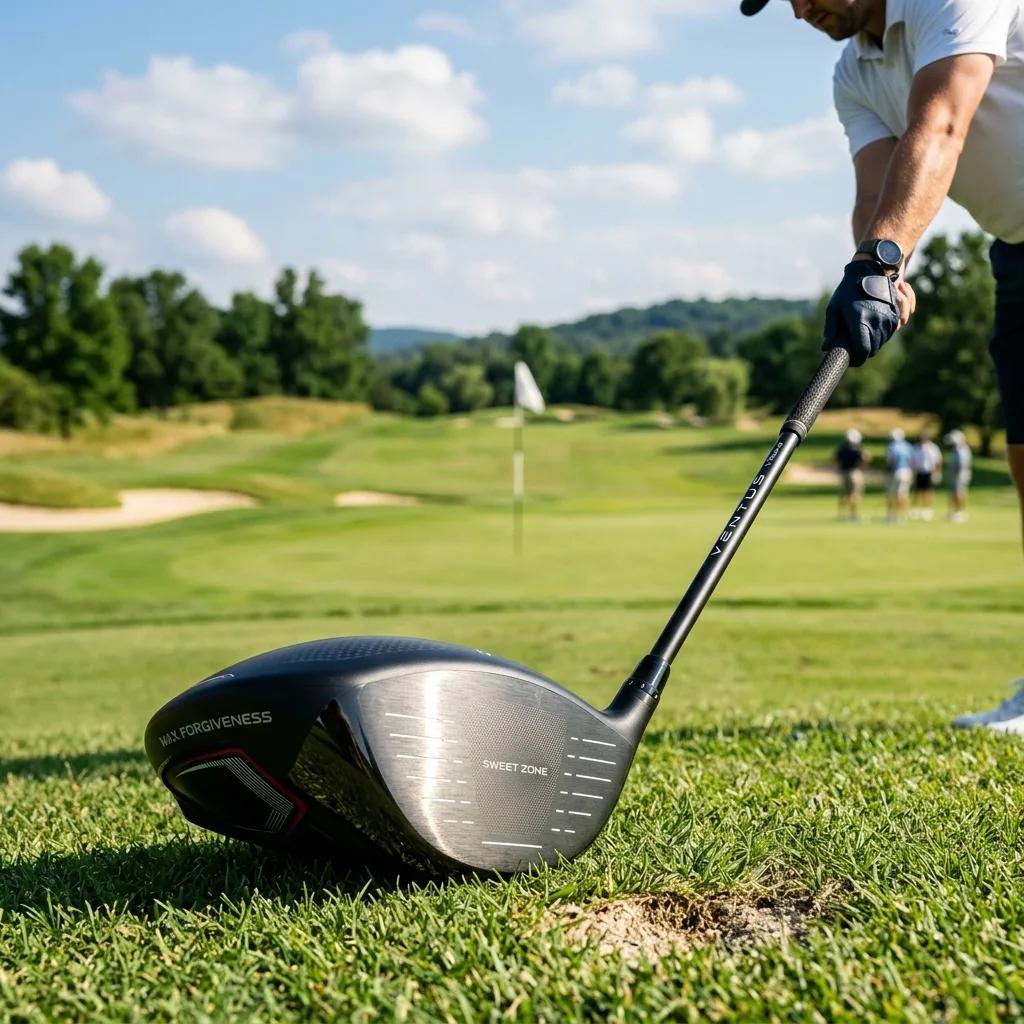
Most Forgiving Drivers: PING G440 K vs TaylorMade Qi4D Max
The battle for the most forgiving driver currently centers around two massive releases: the PING G440 K and the TaylorMade Qi4D Max. Both clubs push the legal limits of head size and stability, but they achieve their results through different engineering philosophies.
PING G440 K
The PING G440 K utilizes a dense tungsten back weight to dramatically increase the MOI (Moment of Inertia). This high MOI rating means the clubhead strongly resists twisting when you miss the center of the face.
As a result, your off-center hits travel significantly straighter and farther than they would with a traditional driver. It provides unmatched stability on severe mishits.
TaylorMade Qi4D Max
The TaylorMade Qi4D Max utilizes a radical carbon chassis to free up unnecessary mass from the crown and sole. Designers repositioned this saved weight into the extreme perimeter of the clubhead.
This unique construction maintains incredible ball speed even when you strike the ball near the toe or heel. It offers a slightly hotter feel off the face.
During our extensive testing sessions, both drivers delivered exceptional results for golfers struggling with wild misses. Choosing between them depends entirely on whether you prioritize raw speed or absolute straightness.
Top Drivers with High MOI and Draw Bias Weighting
Beyond the big two, several other manufacturers offer incredible options featuring a high MOI design. The Callaway Quantum Max introduces a revolutionary weighting system that drastically reduces the dreaded right-sided miss.
By placing significant mass near the heel of the club, this driver promotes a natural turnover of the clubface through impact. This built-in Draw Bias actively fights the open clubface that causes most slicing issues.
If you constantly battle a severe curve, you need drivers specifically designed to cure a slice.
Similarly, the Cleveland HiBore XL returns to the market with an aggressively deep center of gravity. This unique geometric shape pushes the weight so far back that the club practically swings itself on a straight path.
Combining a high MOI rating with draw bias weighting creates the ultimate cheat code for weekend golfers. This dual-technology approach tightens your dispersion pattern dramatically.
Instead of spraying golf balls across two different fairways, your worst shots will land safely in the light rough. Golfers who transition to these specialized models routinely report saving three to five strokes per round purely by eliminating penalty drops off the tee box.
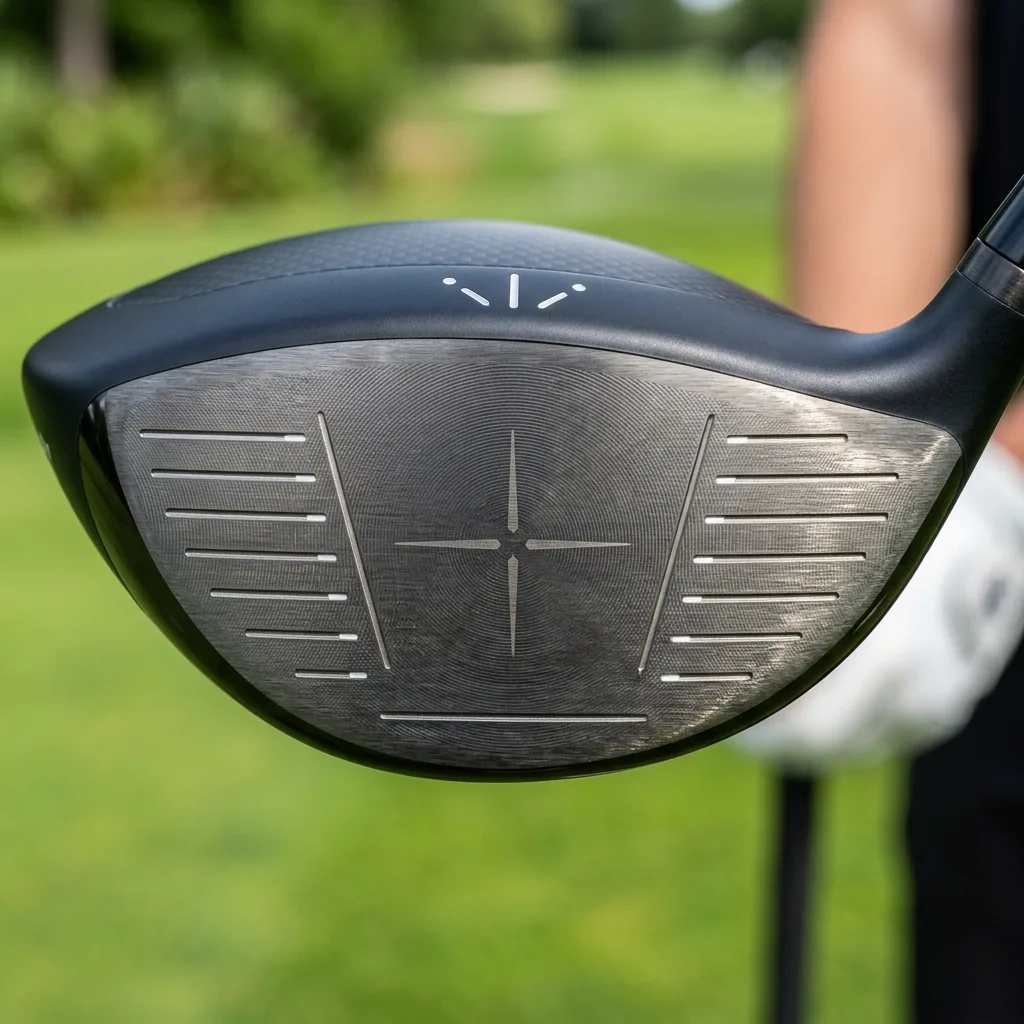
How to Choose the Right Shaft Flex and Adjustable Hosel
Purchasing a technologically advanced driver head solves only half of the equation. You must also select the correct shaft flex to match your specific swing characteristics.
Many amateur golfers mistakenly play shafts that are far too stiff, believing it makes them look more athletic or powerful. In reality, a shaft that is too stiff prevents you from loading the club properly, resulting in a low, weak ball flight that falls out of the sky prematurely.
Choosing a regular or even senior flex allows the shaft to bend and kick properly through the impact zone, effortlessly increasing your launch angle.
Modern drivers also feature an adjustable hosel, which serves as a powerful tool for fine-tuning your ball flight. This mechanism allows you to change the loft and face angle of the club with a simple turn of a wrench.
If you struggle to get the ball airborne, you can increase the loft by a degree or two, instantly promoting a higher trajectory. Alternatively, if you constantly miss to the right, you can adjust the hosel to a closed setting.
This simple tweak forces the clubface to point slightly left at address, acting as a built-in correction mechanism for your swing flaws.
3 Steps to Stop Your Slice Off the Tee
Upgrading your equipment provides immediate relief, but combining new technology with basic fundamentals delivers permanent results.
First, you must check your grip pressure and hand position before you even start the swing. A weak grip practically guarantees an open clubface at impact, completely negating the slice correction technology built into your new driver.
Rotate your lead hand slightly away from the target until you can see two or three knuckles. This stronger grip encourages the clubface to close naturally through the hitting area.
Second, adjust your ball position forward in your stance. Placing the golf ball opposite your lead heel gives the clubhead more time to square up before making contact.
Finally, focus on swinging out toward the right side of the fairway (for right-handed players). This inside-out path, combined with a square clubface, produces a powerful draw instead of a weak slice.
Once you learn how to hit your new driver using these three simple steps, you will confidently step onto every tee box ready to attack the fairway.
Do High Handicappers Really Need a High MOI Driver?
You might wonder if investing in premium golf technology actually makes a difference for someone who plays only once a month. The short answer is an absolute yes.
Professional golfers hit the exact center of the clubface with robotic consistency, meaning they can play less forgiving clubs without penalty. Amateurs, however, utilize the entire surface area of the clubface over the course of a single round.
A modern driver provides a forgiving face that maintains high performance regardless of where the ball makes contact.
When you swing a driver with low MOI, a strike near the toe causes the clubhead to twist violently in your hands. This twisting transfers massive amounts of sidespin to the golf ball, sending it curving wildly off the golf course.
A high MOI design actively resists this twisting motion. The face remains stable through impact, transferring energy efficiently to the ball instead of losing it to vibration.
This stability transforms a terrible swing into a functional shot that advances the ball down the hole.
Myth: Swing Speed Dictates Driver Choice for Beginners
A prevalent myth in the golf community suggests that high swing speed players need professional-grade equipment, while slower swingers require beginner clubs.
This fundamental misunderstanding leads many strong but erratic golfers to purchase unforgiving drivers that actively ruin their scorecards.
Your swing speed dictates your shaft flex requirements and ideal loft, but it has absolutely nothing to do with your need for forgiveness. If you cannot consistently strike the center of the clubface, you require maximum stability regardless of how fast you swing the club.
In fact, a high swing speed combined with an off-center strike on an unforgiving driver creates the most destructive shot in golf. The sheer force of the fast impact amplifies the side spin, resulting in a slice that travels two fairways over.
By choosing a maximum forgiveness model, fast-swinging amateurs can harness their raw power and keep the ball in play. Manufacturers now offer these highly stable driver heads in lower lofts specifically to accommodate players who swing fast but struggle with consistent contact.
Final Thoughts on Choosing the best golf driver for high handicappers
Selecting the right equipment completely transforms your experience on the golf course. You no longer have to fear the first tee box or dread narrow fairways lined with water hazards.
The best golf driver for high handicappers offers a combination of extreme stability, strategic weight placement, and customizable settings designed to fix your specific misses.
Stop punishing yourself with outdated equipment that makes an already difficult game nearly impossible to enjoy. Upgrade to a modern, high-stability driver, apply our basic setup tips, and watch your scores plummet as you consistently play your second shot from the short grass.
Understanding the nuances of modern golf equipment reveals a fascinating intersection of physics and biomechanics. Engineers spend countless hours simulating impact dynamics in advanced computer models, predicting exactly how a clubhead reacts when striking a golf ball at over one hundred miles per hour.
This research directly benefits weekend warriors who simply want to enjoy their Saturday mornings on the course. You see, the evolution of the oversized clubhead fundamentally changed how the game is played.
Decades ago, golfers wielded small, wooden drivers that offered zero forgiveness, punishing even the slightest mishit with severe distance loss and violent hooks. Today, aerospace-grade titanium and forged carbon composite materials allow designers to stretch the boundaries of what is physically possible within the rules of golf.
Furthermore, the introduction of movable weights revolutionized club fitting for the average player. In the past, altering a driver’s flight bias required drilling holes and injecting hot melt directly into the clubhead.
Now, a simple turn of a proprietary wrench shifts twenty grams of mass from the toe to the heel, instantly transforming a weak slice into a powerful, penetrating draw.
This level of customization ensures that you can adapt your equipment as your swing evolves over time. You are no longer locked into a single ball flight pattern, granting you the freedom to experiment and find the optimal setup for your unique physical capabilities.
When you combine this adjustability with a modern, stable chassis, you create an environment where rapid improvement becomes not just possible, but highly probable.
You essentially purchase a margin of error that keeps your worst swings from ruining your entire scorecard, allowing you to focus on the joy of the game rather than the frustration of searching for lost balls.
Frequently Asked Questions
What is the most forgiving driver for a high handicapper?
The most forgiving driver for a high handicapper is typically one with maximum MOI and draw bias weighting, such as the PING G440 K. These features help keep the ball straight and maintain speed on off-center strikes.
What driver should I use if I slice the ball?
If you struggle with a slice, you should use a driver with draw bias weighting and a closed face angle. Models like the TaylorMade Qi4D Max are designed specifically for slice correction to straighten your ball flight.
Does a high handicapper need a stiff or regular flex shaft?
Most high handicappers and beginners benefit from a regular or senior shaft flex. A softer shaft flex helps generate more clubhead speed and optimal launch angle, which maximizes distance when your swing speed is average.
How does an adjustable hosel help a high handicap golfer?
An adjustable hosel allows a golfer to increase or decrease loft and alter the face angle to be more closed. This customization helps high handicappers optimize their launch angle and correct directional misses.
Can a new driver help me break 100?
While practice is key, a new forgiving driver can absolutely help you break 100 by keeping more tee shots in play. Finding the fairway more consistently reduces penalty strokes and sets up easier approach shots.
Get our latest guides, news, and insights highlighted in your Google Search & AI Overviews.