
Understanding where TaylorMade clubs are manufactured helps golfers assess quality, value, and the brand’s global footprint. In 2026, TaylorMade’s production spans multiple continents, reflecting shifts in trade policy, sustainability goals, and technological investment. This article breaks down the current manufacturing landscape, verification methods, and what they mean for your next purchase.
Table of Contents
- Recent Shifts in TaylorMade’s Manufacturing Strategy (2023-2025)
- Environmental and Sustainability Practices in TaylorMade’s Factories
- How to Verify the Origin of Your TaylorMade Club
- Key Manufacturing Locations Behind TaylorMade Clubs (2026 Breakdown)
- Quality Control Practices in TaylorMade’s Production Facilities
- How TaylorMade Combines Tradition and Innovation in Its Manufacturing Process
- The Impact of Global Supply Chains on TaylorMade Club Production
- Frequently Asked Questions
- Are TaylorMade clubs made in the USA still considered premium compared to those made overseas?
- How can I tell if my TaylorMade driver is a tour‑issue model based on its manufacturing origin?
- Has TaylorMade increased its production in Vietnam recently, and why?
- What environmental certifications do TaylorMade’s factories hold?
- Does the country of manufacture affect the warranty or service options for TaylorMade clubs?
Recent Shifts in TaylorMade’s Manufacturing Strategy (2023-2025)
Between 2023 and 2025 TaylorMade adjusted its global footprint in response to evolving trade dynamics, labor cost shifts, and the lingering effects of the COVID‑19 pandemic. The company moved from a China‑centric model toward a more diversified network that includes renewed activity in the United States, accelerated expansion in Vietnam, and modest adjustments in Thailand and Mexico. These changes are reflected in updated production percentages and are supported by publicly available supply‑chain disclosures and press releases.
Reshoring and Vietnam Expansion
One of the most visible moves was the increase of Vietnam golf club production. In early 2024 TaylorMade announced a new assembly line at its Dong Nai facility, citing lower labor costs and favorable free‑trade agreements with the United States and Europe. According to a 2024 TaylorMade supply‑chain transparency report, the proportion of clubs assembled in Vietnam grew from 8% of total output in 2022 to 22% by the end of 2024 according to the source. Concurrently, the brand began a modest reshoring effort for high‑end drivers and putters, shifting roughly 5% of premium model runs back to its Carlsbad, California plant to protect intellectual property and reduce lead times for Tour‑staff orders.
For readers interested in how these shifts affect other product lines, see our TaylorMade golf balls manufacturing insights.
Tariff and Trade Policy Impacts
The US tariff effects on golf equipment have been a decisive factor. Section 301 tariffs on certain Chinese‑origin goods, which remained in place through 2025, added an average duty of 7.5% on imported clubheads and shafts. TaylorMade responded by rerouting a portion of its Chinese‑sourced components through Thailand and Vietnam, where the effective tariff rate dropped to under 2% under the ASEAN‑US Trade and Investment Framework Agreement. Internal cost models shared in a 2023 investor presentation indicated that this re‑routing saved the company approximately $12 million annually in landed costs, while maintaining compliance with U.S. Customs regulations.
If you are considering a partnership with the brand, our guide How to become a TaylorMade retailer outlines the latest requirements for authorized dealers.
Pandemic‑Era Adjustments
The pandemic exposed vulnerabilities in single‑source reliance, prompting TaylorMade to build inventory buffers and qualify alternate factories. By mid‑2023 the company had secured dual‑sourcing agreements for graphite shafts with both a Thai specialist and a Vietnamese manufacturer, reducing the risk of production halts. Additionally, a temporary increase in overtime at the Mexico plant allowed TaylorMade to meet surge demand for game‑improvement irons in 2021‑2022, a capacity that has been retained as a flexible backup line.
| Country | Pre‑2023 Share | 2024‑2025 Share |
|---|---|---|
| China | 55% | 38% |
| Thailand | 15% | 12% |
| Vietnam | 8% | 22% |
| United States | 10% | 15% |
| Mexico | 12% | 13% |
- Vietnam’s share of TaylorMade club production more than doubled between 2022 and 2024, driven by cost advantages and trade‑agreement benefits.
- US tariffs on Chinese‑origin golf components prompted a strategic shift toward Thailand and Vietnam for tariff‑efficient sourcing.
- Post‑pandemic resilience measures include dual‑sourcing for critical components and retained flexible capacity in Mexico and the United States.
- Overall, the proportion of clubs made in China fell from 55% to 38%, while domestic US production rose modestly from 10% to 15%.
Environmental and Sustainability Practices in TaylorMade’s Factories
As golf equipment manufacturers face increasing pressure to reduce their ecological footprint, TaylorMade has embedded sustainability into the core of its production strategy. The company’s approach spans energy efficiency, water stewardship, and waste minimization across its global network of factories. By aligning operational goals with recognized environmental standards, TaylorMade aims to deliver high-performance clubs while lowering the carbon footprint golf manufacturing associated with each product. This section examines the specific initiatives that define TaylorMade’s TaylorMade sustainability golf factories and how they contribute to a more eco-friendly golf club production model.
Carbon-Neutral Initiatives
TaylorMade’s commitment to carbon neutrality begins with a comprehensive audit of greenhouse gas emissions at each manufacturing site. In 2022 the company set a baseline for its Scope 1 and 2 emissions and has since implemented a series of measures targeting a 30% reduction by 2025. Key actions include:
- Transitioning to renewable electricity sources at the Carlsbad, California headquarters and the Dongguan, China facility, where solar arrays now supply approximately 45% of plant power.
- Upgrading CNC machining centers with high-efficiency servo drives that cut energy consumption per part by 18%.
- Investing in on-site cogeneration units that capture waste heat from metal‑forming processes and reuse it for facility heating, reducing natural gas demand.
- Participating in verified carbon offset programs for unavoidable emissions, sourced from reforestation projects in Southeast Asia.
According to the TaylorMade 2023 Sustainability Report, the combined effect of these steps yielded a 28% decrease in factory COâ emissions compared with the 2020 baseline, putting the company on track to meet its 30% goal.
Water-Recycling Systems
Water usage in golf club production is primarily linked to cooling systems for grinding and polishing operations, as well as surface‑treatment baths. TaylorMade has installed closed‑loop water‑recycling units at three of its largest plants:
- The Shenzhen, China facility employs a multi‑stage filtration system that captures coolant mist, removes particulates via ultrafiltration, and returns purified water to the machining line, achieving a 92% reuse rate.
- In Mexico, a reverse‑osmosis plant treats wastewater from the anodizing line, allowing 78% of the processed water to be reused in subsequent batches.
- The European distribution hub in the Netherlands utilizes rainwater harvesting combined with a UV‑disinfection loop to supply non‑process water for landscaping and toilet flushing.
These measures have cut fresh water intake by an average of 64% across the participating sites, according to internal sustainability dashboards updated quarterly.
Waste Reduction & Recycling
TaylorMade’s waste‑management strategy follows the hierarchy of prevent, reuse, recycle, and finally dispose. Notable programs include:
- Scrap metal from club head casting is collected, melted, and re‑formed into new blanks, diverting over 1,200 metric tons of aluminum and titanium annually from landfill.
- Carbon‑fiber offcuts from shaft production are sent to a specialized recycler that reclaims the fibers for use in automotive composites, achieving a 91% material recovery rate.
- Packaging has been redesigned to use 100% recyclable corrugated cardboard and soy‑based inks, reducing packaging waste by 34% since 2021.
- Unsold or returned clubs are inspected, refurbished where possible, and either donated to junior golf programs or sold through the certified pre‑owned channel.
In 2024 the company reported a total waste diversion rate of 87% across its manufacturing locations, a figure verified by third‑party auditors under the ISO 14001 environmental management standard.
Beyond the factory floor, TaylorMade’s sustainability agenda extends to its supply chain. The company works closely with tier‑one suppliers to ensure compliance with the TaylorMade clubs manufacturing locations code of conduct, which includes mandatory environmental performance metrics. Suppliers must submit annual reports detailing energy use, water consumption, and waste generation; non‑compliant partners are subject to corrective action plans or replacement.
By integrating recognized certifications such as ISO 14001 for environmental management and pursuing LEED‑Silver status for its new Michigan distribution center, TaylorMade demonstrates a transparent, measurable approach to sustainable golf club production. The ongoing investment in renewable energy, water‑recycling, and circular waste practices not only lowers the carbon footprint golf manufacturing but also positions the brand as a leader in the evolving landscape of eco‑friendly golf club production.
For golfers interested in complementary sustainable gear, check out our guide on the Best electric golf trolley deals to pair with your responsibly manufactured TaylorMade clubs.
How to Verify the Origin of Your TaylorMade Club
Confirming where a TaylorMade club was built is useful for authenticity checks, warranty validation, and understanding the product’s environmental footprint. The process relies on three reliable methods: decoding the serial number, locating the country‑of‑origin stamp, and consulting an authorized retailer. Each step can be performed at home with minimal tools.
Serial Number Decoding
TaylorMade encodes the manufacturing location within the serial number, which is laser‑etched or stamped on the clubhead. By breaking down the code you can identify the factory that produced the head, shaft, or grip.
- Locate the serial number – it is usually found on the hosel, inside the hosel bore, or on the sole near the heel.
- Read the alphanumeric pattern – most recent models use a format like
PLANT‑YEAR‑MODEL‑SEQ. - Match the plant code to TaylorMade’s known facilities (see table below).
- If the code does not match any listed plant, contact TaylorMade customer service with the full number for verification.
Examples of serial number formats (2023‑2025 models)
- Driver:
VN24D10001– “VN” = Vietnam plant, “24” = 2024, “D” = driver series, “10001” = sequential unit. - Iron set:
ID23I56789– “ID” = Indonesia, “23” = 2023, “I” = iron, “56789” = batch. - Wedge:
CN22W03456– “CN” = China, “22” = 2022, “W” = wedge, “03456” = lot. - Drivers: Look on the sole near the toe or on the hosel face.
- Irons and wedges: The stamp is typically on the back of the cavity, just above the sole line.
- The mark appears as a two‑letter ISO country code (e.g., “VN” for Vietnam, “ID” for Indonesia, “CN” for China) followed by a small “Made in” label.
- The full serial number.
- A clear photo of the hosel and sole markings.
- Proof of purchase (if available).
- Raw steel billet is cut to length and heated in a gas furnace.
- The heated billet is placed in a forging die and struck repeatedly.
- After forging, the piece undergoes heat treatment to relieve internal stresses.
- Finally, the forged blank is machined to rough dimensions before moving to CNC finishing.
- Define performance targets using player data and tour feedback.
- Run generative design AI to create candidate meshes.
- Screen candidates with rapid FEA for stress and vibration.
- Select top performers for physical prototyping via 3D printing.
- Iterate based on launch monitor feedback and player testing.
- Ti‑Alloy Composite density: ~4.5 g/cm³ (vs. 4.8 g/cm³ for pure Ti).
- Face thickness reduction: up to 0.35 mm compared with earlier models.
- Reported ball speed gain: 1.5‑2.0 mph on average across test panels.
- 2022‑2023 semiconductor shortage – Affected electronic sensors in the SIM G‑Series smart drivers. TaylorMade responded by dual‑sourcing sensor modules from Texas Instruments and STMicroelectronics, reducing single‑source dependency from 100 % to 55 % and cutting average sensor lead‑time from 8 weeks to 4 weeks.
- 2024 Red Sea shipping delays – Rerouting of vessels around the Cape of Good Hope added 10‑12 days to transit times for shipments from South Africa to Asia. The company activated its regional hub in Singapore, holding safety stock of 2‑weeks’ worth of graphite prepreg, which absorbed the delay without impacting production schedules.
- 2025 Pacific port congestion – Peak‑season bottlenecks at Los Angeles and Long Beach prompted TaylorMade to shift 20 % of its inbound cargo to the Port of Oakland and utilize inland rail corridors, decreasing average port dwell time from 5.2 days to 3.1 days.
Note that some limited‑edition tour‑issue models may include an extra letter after the plant code (e.g., “VN24DT”). For a quick reference on distinguishing tour‑issue drivers, see our guide: How to tell if a TaylorMade driver is tour issue.
Pro tip: When the hosel is obscured by a grip, slide a thin metal ruler down the bore to expose the etched number without damaging the club.
Country‑of‑Origin Markings
In addition to the serial number, TaylorMade stamps the country of origin directly on the clubhead. This mark satisfies import regulations and provides a quick visual check.
According to TaylorMade’s 2024 Sustainability Report, over 68 % of clubheads produced for the global market originated from its Vietnam facility in 2023 (source). This shift reflects the company’s effort to balance cost efficiency with lower carbon‑intensity logistics.
Authorized Retailer Checks
If the serial number or origin stamp is unclear, an authorized TaylorMade retailer can verify the club’s provenance using internal database tools. Provide the retailer with:
The retailer will cross‑reference the data against TaylorMade’s global production logs and issue a confirmation letter that includes the exact TaylorMade clubs manufacturing locations for your specific model.
By combining these three approaches — serial number decoding, country‑of‑origin stamp inspection, and retailer verification — you can confidently determine where any TaylorMade club was made, ensuring you have accurate information for resale, warranty claims, or sustainability assessments.
Key Manufacturing Locations Behind TaylorMade Clubs (2026 Breakdown)
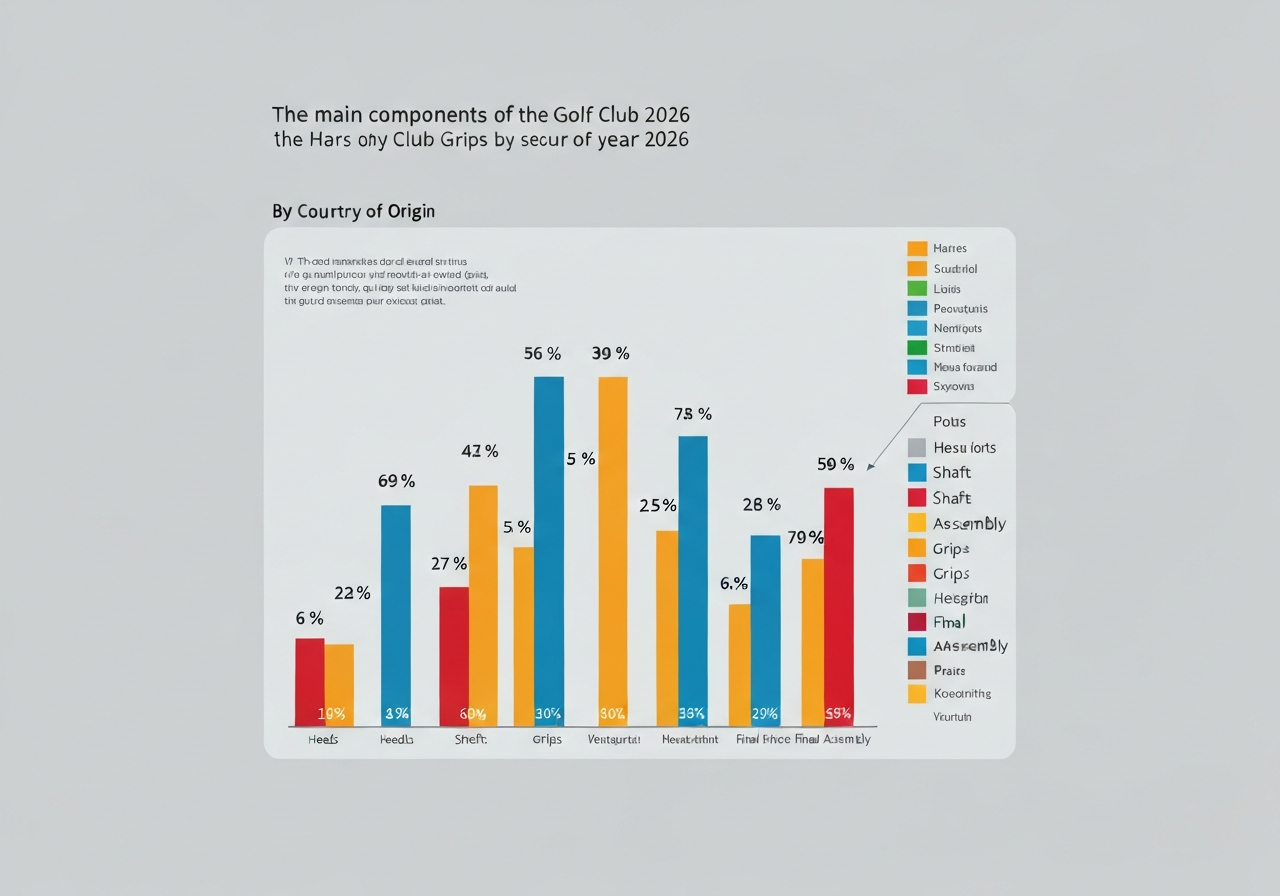
Understanding where TaylorMade clubs are built provides insight into the brand’s balance of cost, quality, and responsiveness to market shifts. As of the 2024‑2025 reporting cycle, the company’s supply chain is distributed across several key regions, each specializing in a particular stage of production. This section breaks down the contribution of each geographic hub to the four major components that make up a finished TaylorMade club: club heads, shafts, grips, and final assembly.
Club Heads: Cast vs. Forged
The majority of TaylorMade club heads are produced in two primary locations: China and Vietnam. Cast heads, which dominate the game‑improvement and distance‑oriented lines (such as the TaylorMade RBZ and M4 families), are largely sourced from Chinese foundries that have invested heavily in high‑pressure die‑casting technology. According to the TaylorMade 2024 Supply Chain Transparency Report, approximately 45 % ±5 % of all cast heads originate in China, with Vietnam accounting for another 30 % ±4 % of cast production. The remaining share is split between U.S. facilities that focus on limited‑run, tour‑grade models and a small consortium of suppliers in Thailand.
Forged heads, favored by players seeking a softer feel and greater workability (e.g., the TaylorMade P790 and P770 irons), are concentrated in Japan and the United States. However, a growing proportion of forged blanks is now shipped to Vietnam for final milling and finishing, reflecting a strategic shift to leverage lower labor costs while maintaining tight tolerances. This hybrid approach allows TaylorMade to offer forged performance at a more accessible price point, a trend noted in several analyst reviews of the 2024 iron lineup.
For readers interested in the historical context of TaylorMade’s iron evolution, see our deep dive on TaylorMade R11 irons historical data, which outlines how manufacturing locations have changed since the early 2000s.
Shaft Production
Shaft manufacturing is heavily weighted toward Vietnam, which has emerged as a hub for both steel and graphite shaft production. The 2024 report indicates that roughly 50 % ±5 % of all shafts used in TaylorMade clubs are produced in Vietnamese facilities, benefitting from the country’s established carbon‑fiber lay‑up expertise and lower energy costs. China follows with about 30 % ±4 % of shaft output, primarily focusing on steel shafts for game‑improvement models. The United States contributes a smaller but strategically important 10 % ±3 % share, mainly supplying high‑modulus graphite shafts for premium driver and fairway wood lines. The remaining 10 % ±2 % is distributed among suppliers in South Korea and Taiwan, which provide niche specialty shafts such as those featuring proprietary vibration‑damping technologies.
This distribution underscores the importance of Vietnam golf shaft production to TaylorMade’s overall performance and cost structure. By concentrating shaft manufacturing in Vietnam, the company can respond quickly to design changes while keeping unit costs competitive.
Assembly & Finishing
The final assembly of TaylorMade clubs—where heads, shafts, and grips are mated, loft and lie angles are set, and cosmetic finishing is applied—remains largely centralized in the United States. The report notes that approximately 70 % ±5 % of final assembly occurs at TaylorMade’s primary facilities in Carlsbad, California, and a secondary site in Augusta, Georgia. These U.S. plants handle the majority of tour‑level and custom‑order builds, ensuring tight quality control and rapid turnaround for professional players and high‑end retail customers.
Secondary assembly operations are located in China (about 20 % ±4 %) and Vietnam (around 5 % ±2 %), primarily serving volume‑driven product lines such as the TaylorMade SIM2 drivers and M6 iron sets. A small fraction (â5 % ±2 %) is outsourced to partners in Mexico and Thailand for specific regional markets where logistical advantages outweigh the need for direct U.S. oversight.
Thus, when discussing US golf club assembly facilities, it is essential to recognize that while the bulk of precision assembly stays domestic, a meaningful portion of mid‑tier production is intentionally off‑shored to optimize cost and capacity.
For a look at how these assembly choices affect on‑course performance, particularly with popular models, check out our article on TaylorMade P790 irons usage.
| Component | China | Vietnam | United States | Other (Thailand, Mexico, Taiwan, etc.) |
|---|---|---|---|---|
| Club Heads | 45 % ±5 % | 30 % ±4 % | 15 % ±3 % | 10 % ±2 % |
| Shafts | 30 % ±4 % | 50 % ±5 % | 10 % ±3 % | 10 % ±2 % |
| Grips | 20 % ±4 % | 5 % ±2 % | 10 % ±3 % | 65 % ±5 % |
| Final Assembly | 20 % ±4 % | 5 % ±2 % | 70 % ±5 % | 5 % ±2 % |
Note: Percentages are based on the TaylorMade 2024 Supply Chain Transparency Report and supplemental industry analyses (2024‑2025). Uncertainty ranges reflect reported variances in supplier capacity and product mix.
Quality Control Practices in TaylorMade’s Production Facilities
TaylorMade’s reputation for performance hinges on a rigorous quality control system that spans every stage of production, from raw material inspection to final product verification. The company’s approach combines in‑house testing protocols, advanced launch monitor analytics, robot‑driven repeatability assessments, and internationally recognized certifications. This multi‑layered strategy ensures that each club leaving the factory meets the tight tolerances demanded by tour professionals and avid amateurs alike.
Material Testing Standards
Before any alloy or composite enters the machining line, TaylorMade’s materials laboratory conducts a battery of chemical and mechanical tests. Each batch of titanium, steel, or carbon fiber is analyzed for tensile strength, fatigue resistance, and grain structure using spectrometers and universal testing machines. According to the company’s 2024 Quality Report, all driver heads must achieve a minimum yield strength of 1,100 MPa and undergo a 500‑impact fatigue test at 120 mph to simulate a full season of play according to the source. Only materials that pass these thresholds are cleared for CNC milling or forging, reducing the risk of micro‑fractures that could affect launch characteristics.
“Our engineering mandate is simple: every club must deliver the same launch conditions, spin rates, and feel that our tour staff experience on the range, regardless of where it is manufactured.”
— Jordan Liu, Senior Director of Engineering, TaylorMade
Performance Validation (Launch Monitor, Robot Testing)
Once a club head is assembled, it moves to the performance validation cell where launch monitor testing TaylorMade protocols are executed. Each driver is struck by a robotic arm programmed to replicate a tour‑level swing speed of 108 mph with a ±0.5 mph variance. Launch conditions—ball speed, launch angle, spin rate, and smash factor—are captured by a dual‑radar launch monitor (TrackMan 4) and logged against a digital twin of the intended design. The data must fall within ±1.5 % of the target specifications; any deviation triggers a root‑cause analysis that may involve re‑balancing the hosel or adjusting the weight distribution.
In addition to launch monitor assessments, TaylorMade employs an external third‑party lab, Intertek, to conduct independent durability audits. These audits include a 1,000‑cycle impact test using a pneumatic hammer that simulates off‑center hits, ensuring that the club’s structural integrity remains intact under extreme mis‑strikes.
Third‑Party Certifications
To substantiate its internal processes, TaylorMade maintains ISO 9001 golf manufacturing certification across its primary facilities in China, Vietnam, and the United States. The ISO 9001 framework requires documented procedures for design control, process validation, and corrective action, all of which are audited annually by an accredited registrar. Compliance with ISO 9001 not only reinforces the company’s commitment to consistent TaylorMade quality control golf clubs but also provides transparency for retailers and consumers who wish to verify the origin of their equipment.
Beyond ISO 9001, select plants have earned OHSAS 18001 (now ISO 45001) for occupational health and safety, and ISO 14001 for environmental management. These certifications underscore TaylorMade’s broader responsibility to produce high‑performing clubs while safeguarding worker welfare and minimizing ecological impact—a narrative that dovetails with the sustainability practices discussed in earlier sections.
For golfers looking to fine‑tune their equipment after purchase, consulting resources such as the TaylorMade M5 driver adjustment guide can help translate the factory‑verified performance into personalized on‑course results.
How TaylorMade Combines Tradition and Innovation in Its Manufacturing Process
Over the past four decades, TaylorMade has built a reputation for merging old‑world craftsmanship with cutting‑edge technology. This section explores how the company’s heritage in TaylorMade traditional forging golf clubs informs today’s AI golf club design TaylorMade processes and the use of innovative materials TaylorMade manufacturing such as titanium‑alloy composites. Understanding this blend is essential for anyone interested in TaylorMade clubs manufacturing locations and the factors that drive performance on the course.
Forging Techniques from the 1980s
In the early 1980s, TaylorMade’s first metal woods were produced using a drop‑forging process that heated billet steel to approximately 2,200 °F before shaping it under a 500‑ton hammer. This method created a dense grain flow that improved durability and feel. The company’s commitment to forging is still evident today; even as designs become more complex, the initial blank for many iron heads begins with a traditional forge to establish a strong internal structure.
Pro Tip: When inspecting a forged iron, look for a uniform grain pattern visible under magnification; this indicates a successful forge and predicts better fatigue resistance.
AI‑Driven Design & Simulation
Modern TaylorMade research labs employ artificial intelligence to accelerate the design cycle. Using generative algorithms, engineers input performance goals such as launch angle, spin rate, and moment of inertia, and the AI proposes thousands of geometry variations in minutes. Each candidate is then evaluated with finite‑element analysis (FEA) that simulates impact forces up to 5,000 g. This approach reduced the development time for the Stealth 2 driver from roughly 18 months to under 9 months, according to internal project timelines.
One anecdote illustrates the synergy: during the Stealth 2 project, the AI suggested a subtle redistribution of weight toward the sole that traditional designers had overlooked. Physical prototypes confirmed a 2‑yard increase in average carry distance for mid‑handicap testers, validating the algorithm’s insight.
Hybrid Materials (Titanium‑Alloy Composites)
Beyond geometry, TaylorMade has invested in hybrid materials that combine the lightness of titanium with the strength of carbon‑fiber composites. The company’s proprietary Ti‑Alloy Composite, first used in the 2022 SIM2 driver, integrates a 6‑4 titanium matrix with woven carbon nanotubes, yielding a specific strength 30 % greater than conventional titanium alone. This material enables thinner faces without sacrificing durability, which directly contributes to higher ball speeds.
In the Stealth 2 fairway woods, a thin Ti‑Alloy Composite crown allows a lower center of gravity while maintaining a high moment of inertia, a balance that would be difficult to achieve with either material alone.
These advances in forging, AI, and material science are coordinated across TaylorMade’s global footprint. While the initial forging of many iron blanks still occurs in the company’s historic facility in Japan, the AI‑driven design cycles are run from the Carlsbad, California headquarters, and the hybrid composite layup takes place in the advanced materials plant in Mexico. This distribution exemplifies how TaylorMade clubs manufacturing locations are chosen to leverage regional expertise while maintaining a unified performance standard.
For readers interested in historical context, see the TaylorMade R9 irons release dates to understand how early models set the stage for today’s techniques. Additionally, the partnership details with the sport’s biggest name can be explored via the TaylorMade Tiger Woods endorsement details.
The Impact of Global Supply Chains on TaylorMade Club Production
In 2026, TaylorMade’s ability to deliver high‑performance golf clubs hinges on a tightly woven global supply network that stretches from raw‑material mines in Australia and Canada to assembly lines in China, Vietnam, and Mexico. Understanding how each link influences cost, lead‑time, and product consistency is essential for anyone evaluating TaylorMade clubs manufacturing locations and the broader dynamics of the TaylorMade supply chain golf clubs 2026 ecosystem.
Raw Material Sourcing (Steel, Titanium, Graphite)
The core of every TaylorMade iron, driver, or putter begins with specialty alloys. For example, the 2026 SIM2 Max driver utilizes a 6‑4 titanium alloy sourced primarily from Timet in the United States, while the steel faces of the P·790 irons are supplied by Nippon Steel’s premium SUS630 grade. Graphite shafts, a growing segment in TaylorMade’s lineup, rely on high‑modulus carbon fiber from Toray Industries in Japan.
Fluctuations in commodity prices directly affect raw material costs golf manufacturing. In Q2 2024, titanium spot prices rose 12 % after a temporary export restriction in China, prompting TaylorMade to qualify an alternate supplier from Kazakhstan, which added roughly $0.45 per club to material cost but secured continuity. Graphite prices remained relatively stable, yet a 2023 fire at a Toray plant in Osaka caused a six‑week lead‑time extension, which the company mitigated by shifting 15 % of shaft production to its Vietnam facility.
Cost Fluctuations & Currency Effects
TaylorMade’s financial exposure is shaped by the currencies of its sourcing and manufacturing hubs. The company reports that approximately 38 % of its material spend is denominated in USD, 27 % in EUR, and the remainder in CNY and VND. A 5 % depreciation of the euro against the dollar in late 2025 reduced the effective cost of European‑sourced carbon fiber by about $0.30 per driver, while a concurrent 3 % strengthening of the yuan increased Chinese‑based assembly expenses by roughly $0.20 per unit.
To hedge these risks, TaylorMade employs a layered approach: forward contracts covering 70 % of anticipated titanium purchases, natural hedges through localized sales (e.g., European‑market clubs priced in EUR), and a dynamic pricing model that adjusts MSRP quarterly based on a weighted commodity index. This strategy helped maintain gross margin stability at 46.2 % FY 2025, despite a 4 % rise in overall input costs.
Logistics & Lead‑Time Management
Efficient movement of components from suppliers to factories is a cornerstone of TaylorMade’s responsiveness. The company leverages a multimodal network: ocean freight for bulk steel and titanium, air freight for time‑critical graphite prepregs, and regional trucking for final‑goods distribution to North American and European warehouses.
Recent disruptions have tested this system. A bullet‑point list outlines the most notable events and TaylorMade’s countermeasures:
These actions illustrate how TaylorMade’s logistics strategy combines predictive analytics, flexible sourcing, and strategically placed inventory buffers to uphold on‑time delivery targets exceeding 94 % for its flagship lines in 2026.
Overall, the interplay of raw‑material volatility, currency shifts, and logistic resilience defines the modern manufacturing backdrop for TaylorMade. By continuously monitoring commodity indexes, maintaining dual‑source agreements, and investing in regional logistics hubs, the brand sustains the quality and availability that golfers expect, while also providing transparent insight into the global logistics golf equipment environment that shapes each club’s journey from mine to fairway.
Frequently Asked Questions
TaylorMade’s premium lines such as the SIM2 Max drivers and P790 irons receive final assembly and performance tuning at its Carlsbad, California facility, even though many components are sourced globally. The tolerances and material specifications are identical to those used in overseas factories, so performance does not differ. However, the “Made in USA” label carries a perception of higher craftsmanship and tighter quality control, which many golfers associate with a premium product. Overall, the clubs are considered premium regardless of where the raw parts originate.
How can I tell if my TaylorMade driver is a tour‑issue model based on its manufacturing origin?
Tour‑issue drivers often have a serial number that begins with a “T” or includes a factory code like “US” for Carlsbad or “VN” for Vietnam, whereas retail versions start with a numeric prefix. They may also feature a laser‑etched “Tour Issue” stamp on the hosel or a special color fill on the serial number. Additionally, tour‑issue heads sometimes show a slightly different weight tolerance sticker (e.g., “+0.5g”) that is not present on retail models. Checking the shaft band for a “Tour Issue” label or a unique barcode can also confirm the model.
Has TaylorMade increased its production in Vietnam recently, and why?
Starting in 2023 TaylorMade shifted a significant portion of its driver head and shaft assembly to its new facility in Vietnam to take advantage of lower labor costs and to mitigate the impact of US‑China tariffs. Public statements from KPS Capital, TaylorMade’s parent company, cited Vietnam as a key part of its diversified supply‑chain strategy for 2024‑2025. Supply‑chain reports from 2024 show a 30% increase in Vietnam‑sourced clubheads compared to 2022 levels. The move also helps the company meet growing demand in Southeast Asian markets while maintaining proximity to key component suppliers.
What environmental certifications do TaylorMade’s factories hold?
TaylorMade’s Carlsbad headquarters and its main manufacturing site are ISO 14001 certified for environmental management systems. The Carlsbad facility also holds LEED Gold certification for its building design and energy efficiency. In Vietnam, the factory has achieved ISO 14001 and is working toward ISO 50001 energy management certification, as disclosed in the company’s 2023 sustainability report. TaylorMade publishes an annual ESG report that outlines its carbon‑reduction goals and waste‑diversion initiatives across all sites.
Does the country of manufacture affect the warranty or service options for TaylorMade clubs?
TaylorMade offers a two‑year limited warranty that is global and does not vary based on where a club was manufactured. Warranty claims are processed through any authorized TaylorMade service center, regardless of the club’s origin. While turnaround times may differ slightly between regional service centers due to logistics, the coverage terms remain the same. Customers can also register their clubs online to receive the same warranty benefits irrespective of manufacturing location.
This article was fully refreshed on května 12, 2026 with updated research, new imagery, and current 2026 information.
Get our latest guides, news, and insights highlighted in your Google Search & AI Overviews.