
Every weekend, passionate golfers step onto the first tee with a brand new, expensive piece of equipment, eager to hit bombs down the fairway. They tweaked the loft in the parking lot using a standard tool from their garage, thinking it was perfectly tight enough.
The first swing feels fantastic, but the sound is a horrifying crunch, and the head flies farther down the range than the golf ball itself. This is a very common nightmare that happens at courses worldwide.
Players invest hundreds of dollars into premium gear but fail to secure the connection points properly. Yet, one tiny mechanical detail that most players overlook completely determines whether your adjustment leads to a record drive or a shattered clubhead. And that specific detail is revealed in the section below.
Table of Contents
- Is Every Torque Wrench for Golf Driver Universal?
- How the Click Mechanism Prevents Over-tightening
- Why New Drivers Don’t Always Include a Wrench
- How to Properly Use a Torque Wrench for Golf Driver
- Where to Buy a Replacement Wrench
- What Happens If You Don’t Use a Torque Wrench?
- Common Myths About Golf Club Wrenches
- Summary: Keep Your Driver Safe and Secure
- Frequently Asked Questions
Is Every Torque Wrench for Golf Driver Universal?
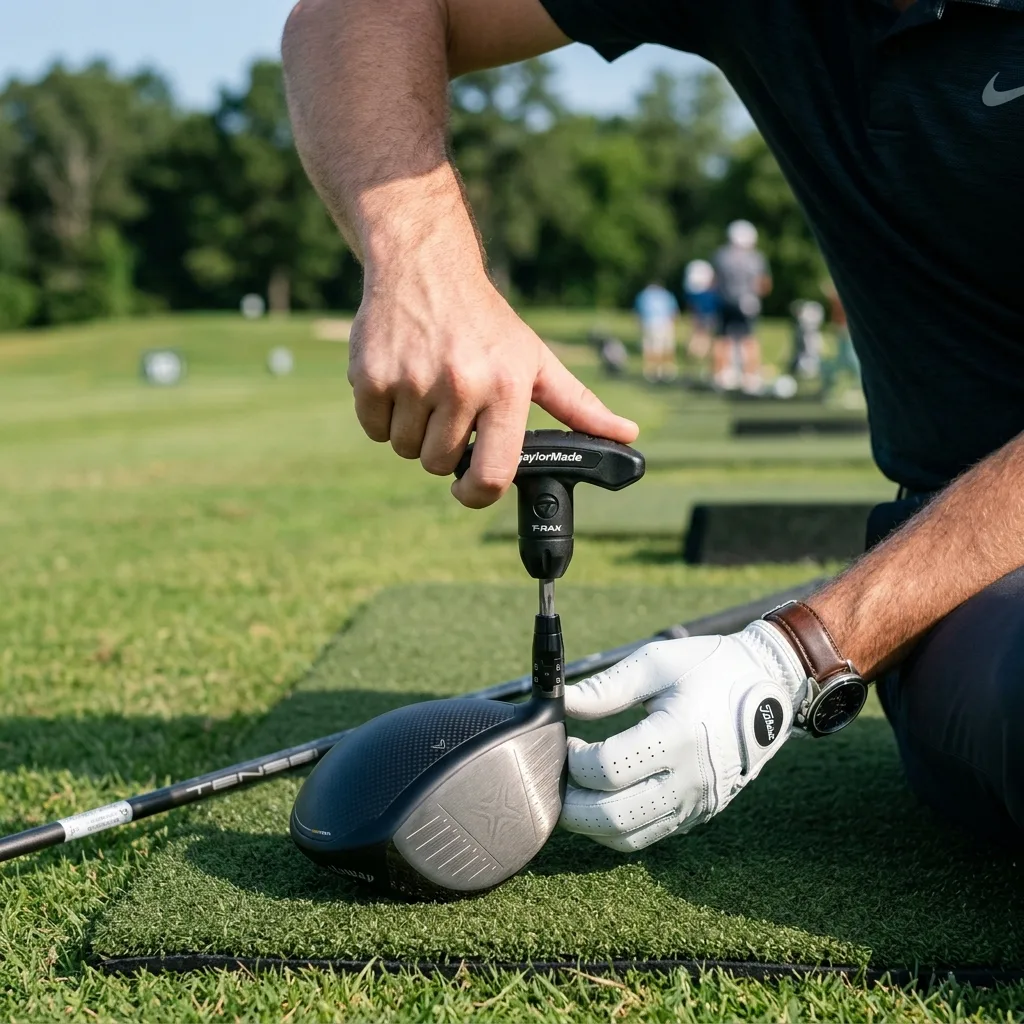
Yes, nearly every modern tool produced by major manufacturers is entirely universal. The golf industry standardized this hardware over a decade ago.
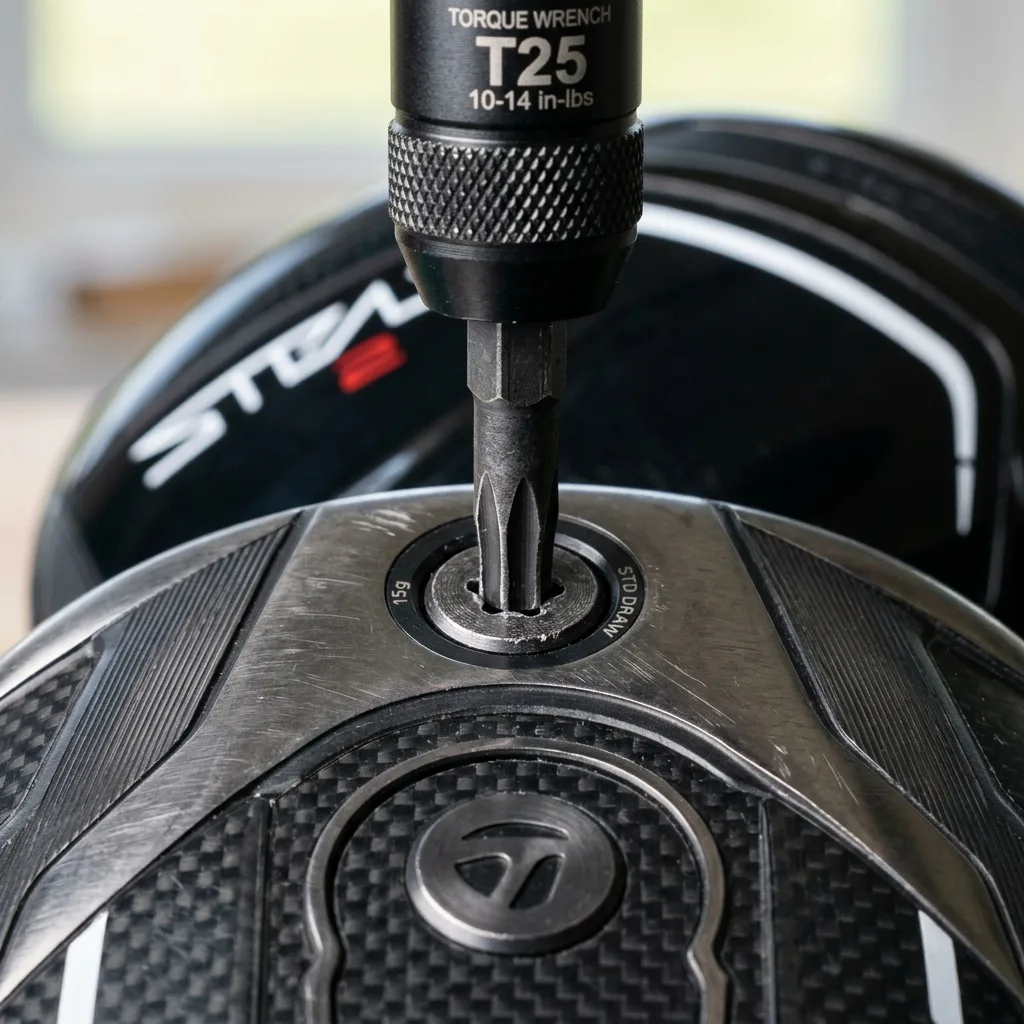
When you examine the tip of the tool, you will find a standard T25 Torx head. This specific star-shaped pattern provides maximum grip and torque distribution across the screw head.
Because manufacturers agreed on this standard fastener size, the tools are highly interchangeable. You can take a wrench from a TaylorMade club and use it perfectly on a Titleist model. You can take a tool from a Callaway driver and use it on a Ping or Cobra clubhead.
The standardized design means you do not need to carry five different tools in your golf bag if you carry mixed brand woods.
Golfers often panic when they buy a used club online and realize it arrived without the original accessory. They rush to find a specific brand replacement, thinking their existing tool will damage the new club. This fear is entirely unfounded.
The internal mechanics and the physical tip of the tool remain exactly the same across all these major golf equipment manufacturers. If you already own one functional tool from any of the big brands, you are completely equipped to adjust almost any modern club on the market.
The universality saves you money, reduces clutter in your bag, and ensures you can always borrow a tool from a playing partner if you need to make a quick loft adjustment on the driving range before your tee time.
How the Click Mechanism Prevents Over-tightening
The most critical engineering feature inside these specialized tools is the internal click mechanism. When you insert the standard T25 Torx head into the screw and turn it clockwise, you will eventually feel a sudden release accompanied by a loud, audible click.
This sound is not a sign that you broke something. The click mechanism is a safety clutch that physically disengages the driver bit from the handle once you reach exactly 40 in-lbs of rotational force.
This measurement equals roughly 8 N-m of torque, which is the exact amount of pressure required to secure the clubhead to the shaft adapter safely.
If you attempt to use a standard tool from a hardware store, you have zero feedback regarding how much pressure you are applying. Human instinct dictates that tighter is always better. Players will lean into the wrench, applying maximum body weight to ensure the head stays on.
This intense pressure leads to severe over-tightening. Once you exceed 40 in-lbs, the metal threads begin to warp and deform. Eventually, you will completely strip the screw, permanently locking the shaft adapter inside the clubhead or preventing you from ever tightening it securely again.
The click mechanism entirely eliminates this human error. It guarantees that you apply the perfect amount of pressure every single time, protecting your expensive equipment from accidental destruction. You simply turn the handle until you hear that loud click, and you know the job is done perfectly.
Why New Drivers Don’t Always Include a Wrench
A few years ago, every single time you purchased a new wood, you received a fresh tool tucked inside the headcover. Today, you might open the shipping box for the newest golf drivers and find no tool included.
Many golfers feel cheated by this change, assuming manufacturers are simply cutting costs to increase profit margins. However, the reality stems from a massive industry-wide sustainability effort aimed at reducing plastic waste and unnecessary metal production.
Over the last fifteen years, manufacturers pumped millions of these identical tools into the market. Avid golfers accumulated massive collections of them in their garages, desk drawers, and golf bags.
Since the tools are completely universal, sending a new one with every single purchase became an environmental nightmare. Brands like TaylorMade and Titleist recognized that most of their customers already owned at least one functional tool.
By removing the tool from the standard packaging, they eliminated tons of single-use plastics, packaging materials, and unnecessary metal casting from their global supply chains.
If you genuinely need a specific brand tool because you are a first-time buyer or you lost your old one, you can easily request one at the point of sale or purchase it separately.
This eco-friendly shift mirrors the technology industry’s decision to stop including USB charging bricks with every new smartphone. It forces consumers to reuse the perfectly capable hardware they already own while significantly reducing the global carbon footprint of golf equipment manufacturing.
How to Properly Use a Torque Wrench for Golf Driver
Adjusting the loft, lie, or face angle on your club requires precise technique to avoid catastrophic damage. First, ensure the clubhead and shaft are entirely clean.
Dirt or sand trapped inside the hosel sleeve can cause uneven seating, leading to a loose connection even if the screw is tight.
Insert the tip of your torque wrench for golf driver directly into the screw located on the heel of the club. Ensure the star-shaped bit sits deeply and squarely inside the screw head to prevent slipping.
Hold the clubhead firmly in one hand and the tool handle in the other. Turn the tool counter-clockwise to loosen and remove the head completely.
Slide the clubhead off the adapter, rotate the shaft to your desired setting, and slide the head back on. Now, turn the tool clockwise.
You will feel continuous resistance as the screw pulls the components together. Keep turning smoothly and steadily. Do not jerk or violently twist the handle.
Eventually, you will hear a loud click and feel the handle give way. Stop turning immediately. That single click indicates you have reached the necessary 40 in-lbs of force.
Never try to push past the click to make it extra tight. This process ensures your driver for distance performs at its absolute peak efficiency, transferring maximum energy from the shaft to the ball without any rattling or structural failure during your aggressive swings.
Where to Buy a Replacement Wrench
Losing your tool usually happens at the worst possible moment—typically right before a major tournament or a weekend trip with friends. Fortunately, acquiring a replacement is a straightforward process.
Your first option is the local pro shop or a big-box golf retailer. Most physical stores keep a surplus of these tools behind the counter. Sometimes, if you maintain a good relationship with the club professional, they might simply hand you an extra one from their lost-and-found bin for free.
If you prefer shopping online, you have two distinct paths. You can purchase an official tool directly from the brand’s website. This guarantees you get the exact matching aesthetics for your bag, but it often comes with a premium price tag and shipping delays.
Alternatively, you can explore the aftermarket options on major e-commerce platforms like Amazon or eBay. Numerous third-party manufacturers produce high-quality, universal tools that feature the exact same T25 Torx head and the crucial 40 in-lbs click mechanism.
These aftermarket options are frequently half the price of the official branded versions and perform the identical mechanical function.
When selecting a third-party tool, always verify the product reviews to ensure the internal clutch is calibrated correctly. A poorly calibrated cheap knockoff might fail to click at the right pressure, exposing you to the exact over-tightening risks you are trying to avoid.
What Happens If You Don’t Use a Torque Wrench?
Ignoring the specialized tool in favor of a standard garage screwdriver is a gamble with incredibly high stakes. The primary risk is under-tightening the screw.
When the screw lacks the required 40 in-lbs of pressure, the clubhead will rattle slightly during the swing. This micro-vibration dramatically reduces energy transfer at impact, costing you significant distance and ball speed.
More dangerously, the repeated stress of hitting a golf ball at 100 miles per hour with a loose head will eventually shear the titanium screw in half.
When the screw breaks, the clubhead turns into a lethal projectile, flying down the fairway and potentially injuring other golfers or destroying the clubhead upon impact with the ground.
Conversely, the secondary risk involves severe over-tightening. Standard tools provide massive mechanical leverage without any safety clutch.
If you crank the screw down as hard as you can, you will permanently strip the threaded receiver inside the clubhead. Once those delicate internal threads are ruined, the entire clubhead becomes essentially worthless.
You cannot simply re-thread a titanium driver head. You will be forced to send the club back to the manufacturer for a costly repair, or worse, purchase a completely new driver.
The specialized tool exists specifically to navigate the incredibly narrow margin of error between a dangerously loose club and a permanently broken one.
Common Myths About Golf Club Wrenches
The golfing community thrives on rumors and misinformation, especially regarding equipment maintenance. The most pervasive myth dictates that using a Callaway tool on a TaylorMade club will instantly void your warranty.
This is entirely false. Customer service departments care about the physical condition of the hardware, not the logo printed on the plastic handle of the tool you used.
As long as you use a tool with a standard T25 Torx head that clicks at the correct pressure, you will not damage the club, and your warranty remains completely intact.
Another common myth suggests that the tools lose their calibration quickly and must be replaced every single season.
While internal springs can wear down after decades of heavy industrial use, a tool used a few times a year by a recreational golfer will remain perfectly calibrated for a lifetime. You do not need to upgrade your tool just because you upgraded your driver.
Some players also mistakenly believe that different loft settings require different torque pressures. The required pressure remains absolutely constant regardless of whether you set the club to an open, closed, upright, or flat position.
The mechanical connection relies on a uniform pressure point to stabilize the shaft adapter inside the hosel sleeve, and that pressure point never changes.
Summary: Keep Your Driver Safe and Secure
Maintaining your equipment correctly is just as important as practicing your swing. Your adjustable driver is a highly engineered, precisely calibrated piece of sporting equipment that demands the right mechanical tools for maintenance.
Always rely on the standardized T25 Torx head and the safety of the 40 in-lbs click mechanism to protect your investment. Never guess the pressure using standard garage tools, and never ignore a loose rattling sound in the clubhead.
By understanding that these tools are universally interchangeable across major brands, you can save money and reduce plastic waste.
Share your extra tools with friends, keep a reliable one permanently stored in your golf bag, and always listen for that satisfying click before heading to the first tee.
If you respect the engineering behind the adjustable hosel, your club will reward you with maximum distance, consistent accuracy, and zero mechanical failures on the course. Review the frequently asked questions below for any remaining doubts regarding brand compatibility and safety protocols.
Frequently Asked Questions
Can I use a TaylorMade wrench on a Titleist driver?
Yes, both TaylorMade and Titleist use the standard T25 Torx head and tighten to exactly 40 in-lbs, so their wrenches are interchangeable.
What happens if I over-tighten my golf driver?
If you don’t use a wrench with a proper click mechanism, you risk stripping the screw or cracking the adjustable hosel entirely.
Do I need a specific brand wrench for my driver?
No, most modern golf driver wrenches are universal and interchangeable because they use a standard fastener size and torque setting.
Why didn’t my new driver come with a wrench?
Many major brands have stopped including torque wrenches with new drivers as part of a sustainability effort to reduce plastic waste.
What is the standard torque setting for a golf club?
The industry standard torque setting for modern adjustable golf drivers is 40 in-lbs (inch-pounds) or roughly 8 N-m (Newton-meters).
Get our latest guides, news, and insights highlighted in your Google Search & AI Overviews.