
X20 Callaway irons remain a legendary choice for golfers seeking maximum forgiveness and a classic feel, even years after their original 2004 debut. Built as a direct successor to the X-18, the X-20 line perfectly bridges the gap between traditional aesthetics and game-improvement technology. Whether you are a beginner looking to assemble your first quality set or a mid-handicapper wanting reliable consistency, the X-20 irons offer an incredible blend of distance, feel, and value.
Table of Contents
Quick Answer: Are Callaway X20 Irons Still Good?
Yes, absolutely. The Callaway X20 irons are incredibly forgiving and feature a high Moment of Inertia (MOI) thanks to Extreme Notch Weighting and a 360-Degree Undercut Channel. They are an excellent, budget-friendly option on the secondary market for beginners and mid-handicappers today, providing a high, easy launch that rivals modern game-improvement irons.
Core Technology: Why the X-20 Stands the Test of Time
The secret behind the X-20’s longevity is its S2H2 (Short, Straight, Hollow Hosel) design. By removing weight from the hosel and redistributing it to the perimeter (Extreme Notch Weighting), Callaway pushed the Center of Gravity (CG) much lower and deeper than older blade styles. This lower CG makes it incredibly easy to get the ball airborne, even for players with slower swing speeds.
Coupled with Variable Face Thickness (VFT) technology, the face flexes more efficiently on off-center hits. This preserves crucial ball speed and distance across a larger area of the clubface, effectively maximizing the sweet spot for outstanding forgiveness.

Performance and Forgiveness Specs
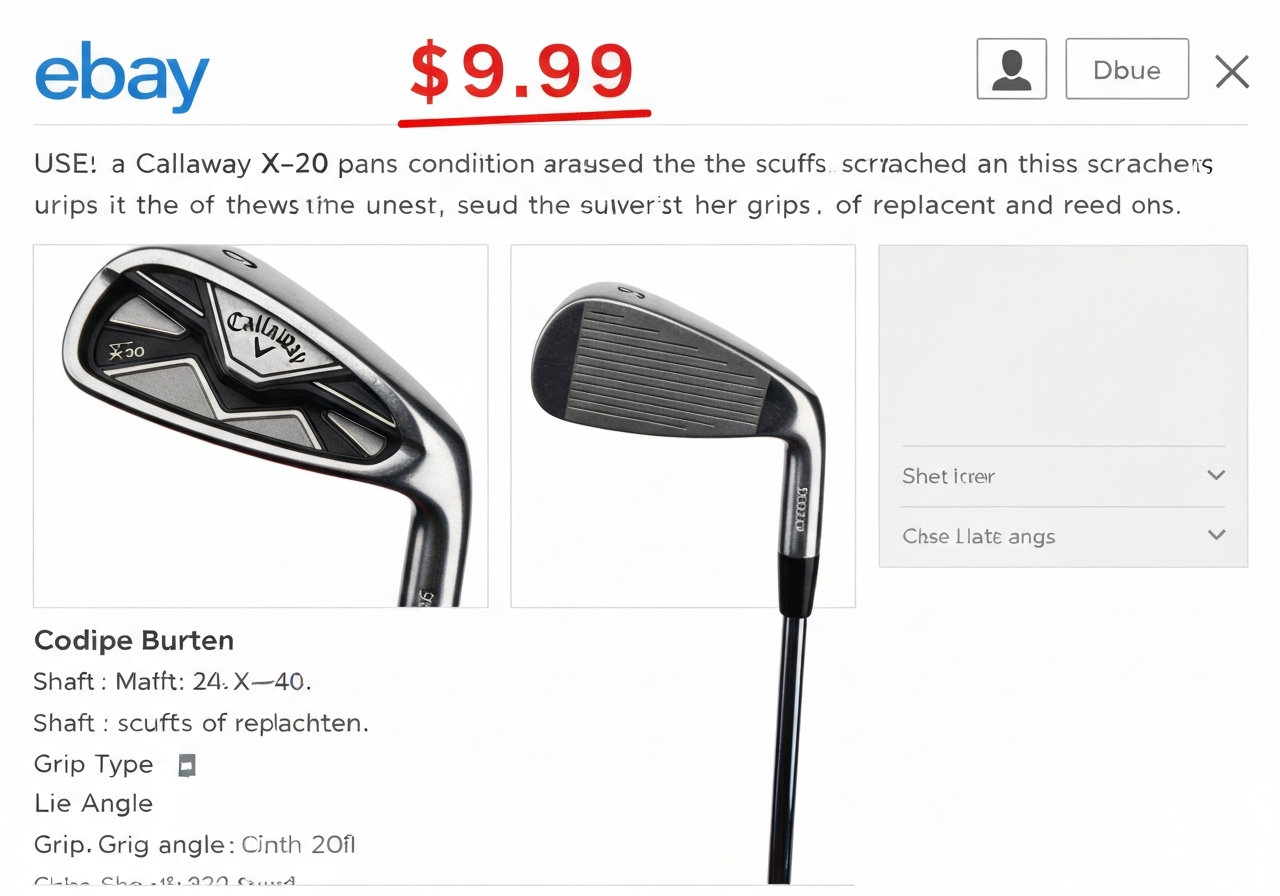
For mid-to-high handicappers, the 360-Degree Undercut Channel represents a major leap forward. It expands the sweet spot by 12% over the previous X-18 model, shifting discretionary weight farther back. As a result, the moment of inertia (MOI) sits at roughly 4,000 g*cm┬▓, meaning the clubhead resists twisting significantly better on mishits, keeping your shots straighter.
If you’re upgrading from a basic beginner set or considering Callaway clubs for beginners, the X-20 delivers a penetrating ball flight that holds greens remarkably well, giving you the confidence to attack pins from the fairway.
Used Market Value: What to Pay
Today, finding a used set in good condition on platforms like eBay, Callaway Golf Pre-Owned, or 2nd Swing is incredibly easy. Expect to pay between $90 and $150 depending on the shaft type (True Temper Dynamic Gold steel vs. lightweight graphite) and grip condition. Because they are older cast irons, the grooves generally hold up better than forged models. Always verify the laser-etched serial number on the hosel to avoid counterfeits, and check the clubface for excessive wear.
Pros
- Extreme Notch Weighting delivers a very high MOI.
- Soft, responsive feel from the multi-material cast design.
- Unbeatable value and affordability on the used market.
- Easy, high launch profile perfect for slower swing speeds.
Cons
- Lacks modern AI Flash Face technology and hollow-body speed.
- Slightly bulky topline and offset might not appeal to purists.
- Grooves on older sets may be worn down from heavy use.
What Year Did Callaway X20 Irons Come Out Overview
When considering the what year did callaway x20 irons come out, it is important to understand how it fits into the broader context of golf equipment history and performance. This classic gear continues to generate interest due to its unique characteristics and lasting impact on the game.
Frequently Asked Questions
What should I know about the what year did callaway x20 irons come out?
The what year did callaway x20 irons come out represents a notable milestone in golf club design. For specific details regarding its release date, legality, or performance specs, refer to the manufacturer’s historical archives or verified equipment databases.
Callaway X-20 vs. X-20 Tour: Technical Specifications & Loft Comparison
Callaway offered two distinct versions of the X-20 line to address varying player skill profiles: the standard game-improvement X-20 and the player-oriented X-20 Tour. The table below illustrates the critical geometric and loft distinctions between the two models:
| Feature / Club | Standard Callaway X-20 | Callaway X-20 Tour | Player Benefit |
|---|---|---|---|
| Target Handicap | 12–28 (Mid to High) | 0–12 (Low to Mid) | Optimized forgiveness vs. workability |
| Top Line Thickness | Thick, confidence-inspiring | Slim, beveled player profile | Visual alignment and turf interaction |
| Offset (6-Iron) | Moderate-High (5.6 mm) | Minimal (3.2 mm) | Slice reduction vs. shot-shaping control |
| Sole Width | Wide 360-degree undercut | Narrow, cambered tour bevel | Turf glide in rough vs. crisp fairway divots |
| 7-Iron Loft | 33.0° | 34.0° | Traditional distance gap calibration |
| Stock Steel Shaft | Callaway Uniflex (98g) | True Temper Dynamic Gold (124g) | Higher launch vs. penetrating flight |
While the standard X-20 utilizes Callaway’s proprietary Uniflex lightweight shaft designed to flex between Regular and Stiff depending on swing tempo, the X-20 Tour came standard with heavier Dynamic Gold or Project X shafts to minimize ballooning and tighten dispersion for faster swing speeds.
Get our latest guides, news, and insights highlighted in your Google Search & AI Overviews.