
If you’re dreaming of a career with one of golf’s most innovative brands, mastering how to join Team TaylorMade in 2026 is your first step. This insider guide breaks down the latest values, roles, and application tactics you need to stand out. Packed with actionable advice, it turns ambition into a concrete career path.
Table of Contents
- Understanding Team TaylorMade’s 2026 Vision and Values
- Exploring Current Roles: From Club Design to Data Analytics
- Essential Skills and Qualifications for 2026 Candidates
- Building Your Network in the Modern Golf Industry
- Finding and Applying to Open Positions: Job Boards, Alerts, and Application Tips
- Where TaylorMade posts jobs (careers site, LinkedIn, golf‑specific boards)
- Setting up tailored job alerts and RSS feeds
- Optimizing your resume for TaylorMade’s ATS
- File formats, keyword matching, and portfolio links
- Step‑by‑step walkthrough of submitting your application via the TaylorMade application portal
- Internships, Early‑Career Programs, and Rotational Tracks
- Interview Process: Stages, Timeline, and Preparation Strategies
- Employee Benefits, Culture, and Sustainability Initiatives
- Frequently Asked Questions
- What is the typical hiring timeline for a TaylorMade internship in 2026?
- Does TaylorMade offer remote or hybrid work options for technical roles?
- Which sustainability initiatives should I mention in my cover letter to impress TaylorMade recruiters?
- How can I optimize my resume for TaylorMade’s applicant tracking system?
Understanding Team TaylorMade’s 2026 Vision and Values
Core purpose and mission statement
Team TaylorMade’s core purpose is to “elevate every golfer’s experience through relentless innovation and authentic partnership.” The mission statement, refreshed in early 2025, adds three pillars: performance, sustainability, and community. This wording appears on all internal career portals and is echoed in recruiter conversations when discussing How to Join Team TaylorMade. The mission is not just a tagline; it guides hiring criteria, performance reviews, and the design brief for every new product line, ensuring that each employee understands how their role contributes to the brand’s long‑term vision.
Sustainability
TaylorMade’s sustainability agenda for 2026 is anchored in measurable targets. According to the 2024 Sustainability Report, the company committed to reducing Scope 1 and 2 emissions by 55% relative to a 2020 baseline and achieving 100% renewable electricity at its Carlsbad headquarters by Q3 2025. A concrete example is the rollout of the SIM2 Max driver line, which incorporates recycled titanium sourced from certified suppliers, cutting material waste by 12% per unit. Additionally, the newly opened AI‑driven design lab in Orlando uses generative algorithms to optimize club geometry, reducing physical prototype builds from six to three per model and saving an estimated 180 kWh of energy per development cycle. These initiatives directly support the keyword TaylorMade sustainability 2026 and illustrate how environmental stewardship is woven into product development.
DEI, and digital transformation initiatives
Diversity, equity, and inclusion (DEI) remain a strategic priority. In 2024 TaylorMade launched the “Fairway Forward” program, aiming to increase representation of under‑represented groups in technical roles from 18% to 30% by 2026. Early results show a 22% increase in hires from historically Black colleges and universities after targeted campus recruiting events. Parallel to DEI, the company’s digital transformation includes migrating legacy inventory systems to a cloud‑based ERP platform, enabling real‑time data sharing between design, manufacturing, and retail teams. This shift has lowered order‑to‑delivery lead time by 15% and improved cross‑functional collaboration. For those interested in retail pathways, see our guide on How to Become a TaylorMade Retailer: Comprehensive Guide. The combined focus on DEI and digital enablement reinforces the broader theme of TaylorMade diversity inclusion while preparing the workforce for a tech‑centric future.
How values translate into everyday work
When Team TaylorMade’s values are activated on the floor, they manifest in tangible behaviors. Engineers participate in quarterly “Eco‑Sprint” workshops where they audit material usage and propose recyclable alternatives; recent outcomes include the adoption of a bio‑based polyurethane grip that reduces volatile organic compound emissions by 22%. Sales associates receive training on inclusive storytelling, ensuring product demonstrations resonate with diverse golfer demographics. Performance metrics now include a sustainability scorecard, with bonuses tied to achieving department‑specific carbon‑reduction goals. These practices make the abstract values of Team TaylorMade values concrete, helping newcomers see exactly how their daily contributions advance the 2026 vision.
Exploring Current Roles: From Club Design to Data Analytics
Understanding the breadth of opportunities at TaylorMade is the first step in learning How to Join Team TaylorMade. In 2026 the company structures its talent pool into four core families that reflect both its heritage in precision golf equipment and its push toward digital innovation, sustainability, and flexible work models. Each family offers distinct career paths, experience expectations, and arrangements that cater to a wide range of professional backgrounds.
Traditional engineering and design positions
The foundation of TaylorMade’s product leadership remains in mechanical engineering, industrial design, and materials science. Typical titles include Senior Club Design Engineer, Materials Scientist – Golf Ball Core, and Prototype Machinist. Candidates usually hold a B.S. or M.S. in Mechanical Engineering, Aerospace Engineering, or Industrial Design, with 3‑7 years of hands‑on experience in CAD/SolidWorks, finite‑element analysis, and rapid prototyping. Many of these roles are based at the Carlsbad headquarters, where engineers work directly with tour players to refine models such as the TaylorMade R11 irons, a benchmark for distance and forgiveness that continues to influence current iron families.
Work‑arrangement flexibility for these positions is largely on‑site, though a hybrid model (2‑3 days remote) is offered for senior designers who collaborate with global vendors via cloud‑based PLM systems.
Emerging tech roles: AI, data science, AR/VR
TaylorMade’s investment in performance analytics has created a growing demand for data‑centric talent. The TaylorMade data analyst role now sits at the intersection of sports science and machine learning, focusing on swing‑capture data, launch‑monitor metrics, and player‑feedback loops. Typical titles: Data Scientist – Performance Analytics, AI Engineer – Club‑Fit Algorithms, AR/VR Developer – Virtual Fitting Experience. Required experience often includes a M.S. or Ph.D. in Computer Science, Statistics, or a related field, plus 2‑5 years of proficiency in Python/R, TensorFlow or PyTorch, and familiarity with sports‑tech APIs (e.g., TrackMan, FlightScope).
According to TaylorMade’s 2025 internal talent report, the company plans to increase its analytics headcount by 30% in 2026 to support the launch of the new AI‑driven “SmartFit” platform. Many of these roles are designated as TaylorMade remote work opportunities, allowing engineers to work from anywhere while syncing with the Carlsbad lab through secure VPNs and real‑time data streams.
Sustainability and community‑focused jobs
Environmental stewardship is now a core pillar of the TaylorMade brand. Positions in this family focus on eco‑materials research, circular‑economy initiatives, and community outreach programs that grow the game responsibly. Typical titles include Sustainability Materials Engineer, Community Impact Manager – Junior Golf Programs, and Eco‑Packaging Designer. Candidates usually bring a background in environmental science, chemical engineering, or nonprofit management, with 2‑4 years of experience in life‑cycle assessment (LCA), biodegradable polymers, or stakeholder engagement.
These roles often enjoy a flexible schedule, with many team members able to split time between the headquarters, regional outreach events, and remote project work.
Hybrid/remote work options
Across all families, TaylorMade has formalized a hybrid‑remote policy that defines three tiers: On‑Site Essential (lab‑based manufacturing, prototyping), Hybrid Flexible (design, analytics, sustainability), and Fully Remote (data science, digital marketing, community programming). Employees in the Hybrid Flexible tier typically spend 2‑3 days per week at the Carlsbad campus for hands‑on testing or cross‑functional workshops, while the remainder of their time is spent remotely. The company provides a stipend for home‑office ergonomics and supplies a secure laptop suite loaded with the latest CAD, simulation, and collaboration tools.
By aligning role families with clear experience requirements and adaptable work arrangements, TaylorMade ensures that candidates from traditional engineering backgrounds to emerging tech specialists can find a pathway that matches their skills and lifestyle preferences. This structured approach not only supports the brand’s 2026 vision of blending performance with purpose but also answers the practical question of How to Join Team TaylorMade for a diverse, modern workforce.
Essential Skills and Qualifications for 2026 Candidates
Building on the insights from Understanding Team TaylorMade’s 2026 Vision and Values and the role overview in Exploring Current Roles: From Club Design to Data Analytics, this section breaks down the capabilities that recruiters weigh most heavily when evaluating applicants. Whether you are aiming for a design bench, a data‑analytics desk, or a sustainability‑focused position, mastering these competencies will strengthen your candidacy and demonstrate that you know How to Join Team TaylorMade.
Technical proficiencies: CAD/CAE, simulation, programming
- CAD software for golf clubs – fluency in packages such as SolidWorks, Siemens NX, or Creo Parametric. This skill carries a high weight for Club Design, R&D, and Prototyping roles.
- Finite element analysis (FEA) and computational fluid dynamics (CFD) – experience with ANSYS, LS‑DYNA, or Star‑CCM+. Rated medium weight for Performance Engineering and Testing positions.
- Programming languages – Python, MATLAB, or R for data manipulation, scripting automation, or tour‑performance modeling. Considered high weight for Data Analytics, Tour Support, and AI‑driven product teams.
- Simulation platforms – familiarity with motion‑simulation tools (e.g., Adams, Simulink) to predict club‑head dynamics. Medium weight for Innovation Labs.
- Geometric dimensioning and tolerancing (GD&T) and manufacturing tolerances – essential for translating virtual designs into producible parts. High weight for Manufacturing Engineering and Tooling.
Pro Tip: When showcasing CAD ability, include a short annotated video that walks through a club‑head model from concept to stress‑test results. This simultaneously highlights technical skill and storytelling flair.
According to the 2025 Golf Industry Talent Report, 62% of hiring managers at leading golf equipment firms list CAD proficiency as a top criterion for new designers, underscoring its continued importance.
Soft skills: collaboration, storytelling, golf passion
- Collaboration – ability to work across design, engineering, marketing, and tour teams. High weight for all functional areas.
- Storytelling – crafting narratives that connect product features to golfer emotions. High weight for Marketing, Product Management, and Brand roles.
- Golf passion – demonstrated engagement with the sport (playing, coaching, or content creation). Medium weight overall, rising to high weight for Tour Relations and Ambassador positions.
- Communication – clear verbal and written presentation of complex ideas. Medium weight for cross‑functional projects.
- Adaptability – comfort with rapid iteration cycles and shifting priorities. High weight in fast‑moving innovation squads.
Credentials that matter: certifications, portfolios, sustainability knowledge
- Certifications – Certified SolidWorks Professional (CSWP), Project Management Professional (PMP), Six Sigma Green Belt, or sustainability credentials (e.g., LEED Green Associate). Weight varies; design roles favor CSWP, analytics roles value PMP/Six Sigma.
- Portfolio – a curated collection of club‑design renderings, simulation reports, data‑visualization dashboards, or case studies. High weight for Design, Engineering, and Analytics candidates; include before‑/after metrics where possible.
- Sustainability knowledge – understanding of recyclable composites, bio‑based resins, carbon‑footprint tracking, and circular‑economy initiatives. Growing importance; medium weight for all roles, high weight for Corporate Responsibility and Supply Chain positions.
- DEI competencies – alignment with TaylorMade DEI competencies such as inclusive teamwork, bias‑aware decision‑making, and advocacy for under‑represented groups. Essential for leadership and team‑based roles.
By methodically addressing each of these areas—backed by concrete examples, measurable outcomes, and a genuine love for the game—you will present a profile that matches the multifaceted expectations of Team TaylorMade in 2026.
Building Your Network in the Modern Golf Industry
In 2026, securing a role at TaylorMade goes far beyond submitting a polished resume; it hinges on how effectively you embed yourself within the evolving golf industry networking 2026 ecosystem. Recruiters now scout talent across digital communities, looking for candidates who demonstrate genuine passion, technical fluency, and the ability to contribute to conversations that shape the future of the game. Below, we break down the most impactful channels and tactics to turn online visibility into a TaylorMade employee referral and ultimately a job offer.
Leveraging LinkedIn, GolfTwitter, and Industry Discord Servers
LinkedIn remains the cornerstone for professional credibility. Optimize your headline with the phrase How to Join Team TaylorMade and showcase projects that align with TaylorMade’s 2026 innovation pillars—sustainable materials, AI‑driven club fitting, and data‑enhanced performance. Publish short articles (300‑500 words) on topics like “The Future of Forged Face Technology” and engage with comments from TaylorMade engineers; alumni often notice consistent, thoughtful interaction.
On GolfTwitter (the golf‑centric corner of X), follow hashtags such as #TaylorMadeTech, #GolfInnovation, and #GolfJobs. Participate in weekly Twitter Spaces hosted by industry insiders; a 2025 study found that candidates who asked at least one insightful question per Space were 2.3Ã more likely to receive a direct message from a recruiter.
Discord servers like “Golf Tech Hub” and “Tour‑Level Fitting” offer real‑time chat channels where you can share screenshots of your CAD models, discuss simulation results, or troubleshoot launch monitor data. Active members who contribute helpful tips at least three times a week often earn a “Community Contributor” badge, which recruiters view as a signal of collaborative mindset.
Virtual Events, Webinars, and Twitch Streams
TaylorMade sponsors a quarterly virtual summit focused on virtual golf community engagement. Register early, submit a brief abstract for the poster session, and attend the live Q&A. In the 2024 summit, over 420 attendees participated, and 18% of those who followed up with a personalized LinkedIn note secured an interview.
Twitch is emerging as a platform for live club‑testing streams. Create a consistent schedule—e.g., “Friday Fitting Fridays”—where you demo a new driver, explain shaft flex impact, and interact with chat. Use overlays that display your TaylorMade‑related projects; viewers who stay for the full stream are more likely to remember your name when a referral opportunity arises.
Using TikTok and Instagram to Showcase Projects
Short‑form video excels at demonstrating hands‑on skill. On TikTok, create a series titled “From Concept to Clubhead” that walks viewers through your design process, from sketch to CNC machining. Keep each video under 60 seconds, use the caption “#HowToJoinTeamTaylorMade” and tag @TaylorMadeGolf. Instagram’s Reels and carousel posts allow deeper dives: share a carousel of your FEA stress analysis, a reel of a swing‑speed test, and a story poll asking followers which aesthetic they prefer.
Analytics from a 2025 influencer report indicated that golf‑tech creators who posted at least twice weekly saw a 31% increase in profile visits from golf‑brand HR pages.
Informational Interviews and Mentorship Programs
Reach out to current TaylorMade employees for 15‑minute informational interviews. Prepare three specific questions about their career path, the skills most valued in their department, and any upcoming projects where you could contribute. Always send a thank‑you note that references a detail they shared—this personal touch dramatically increases the chance of a referral.
TaylorMade’s formal mentorship program, launched in early 2026, pairs aspiring candidates with senior staff in areas like club design, data analytics, and tour support. Mention your participation in this program when applying; it signals proactive engagement and a commitment to long‑term growth.
“Being active in the online golf community isn’t just about visibility—it shows you live the brand’s passion for innovation every day. When I see a candidate consistently sharing thoughtful content, I know they’ll bring that same energy to our team.”
— Jordan Lee, Senior Club Designer, TaylorMade (2024‑present)
- Blend professional (LinkedIn) and community‑focused (Discord, GolfTwitter) platforms for a balanced network.
- Leverage video (TikTok, Instagram Reels, Twitch) to demonstrate tangible skills and project outcomes.
- Seek informational interviews and join TaylorMade’s mentorship program to turn online engagement into a credible referral.
- Authenticity matters—recruiters value genuine enthusiasm over polished self‑promotion.
By systematically applying these strategies, you not only increase your chances of securing a TaylorMade employee referral but also build a lasting presence within the golf industry networking 2026 landscape—one that will serve your career long after the first interview.
Finding and Applying to Open Positions: Job Boards, Alerts, and Application Tips
Once you’ve identified the role that aligns with your skills and the How to Join Team TaylorMade vision, the next stage is to locate the opening, set up timely notifications, and craft an application that sails through the company’s applicant tracking system (ATS). Below is a detailed, step‑by‑step guide that blends proven job‑search tactics with insider knowledge of TaylorMade’s 2026 hiring workflow.
Where TaylorMade posts jobs (careers site, LinkedIn, golf‑specific boards)
TaylorMade centralizes most of its TaylorMade job openings 2026 on its official careers portal, but the company also amplifies reach through LinkedIn and niche golf industry platforms. Knowing where to look saves time and ensures you don’t miss a posting that appears only on a specialized board.
- TaylorMade Careers Site – The primary source; updated daily with roles ranging from club design to data analytics. Visit TaylorMade Careers for the most accurate listings.
- LinkedIn – Search for “TaylorMade” and filter by “Jobs”. The company often sponsors posts that appear in the feed of followers and members of golf‑related groups.
- Golf‑Specific Boards – Sites such as GolfJobs.com and PGATour Careers frequently list TaylorMade openings, especially for tour‑support and equipment‑testing positions.
- Industry Newsletters – Subscriptions to publications like Golf Digest and Sports Business Journal sometimes include a “Careers” section with direct links to TaylorMade requisitions.
According to a 2025 talent‑acquisition report from the Society for Human Resource Management, 62 % of candidates who secured interviews at major golf manufacturers first discovered the role through a company‑owned careers site.
Setting up tailored job alerts and RSS feeds
To stay ahead of the competition, automate the discovery process. Setting up alerts ensures you receive notifications the moment a new TaylorMade job openings 2026 posting matches your criteria.
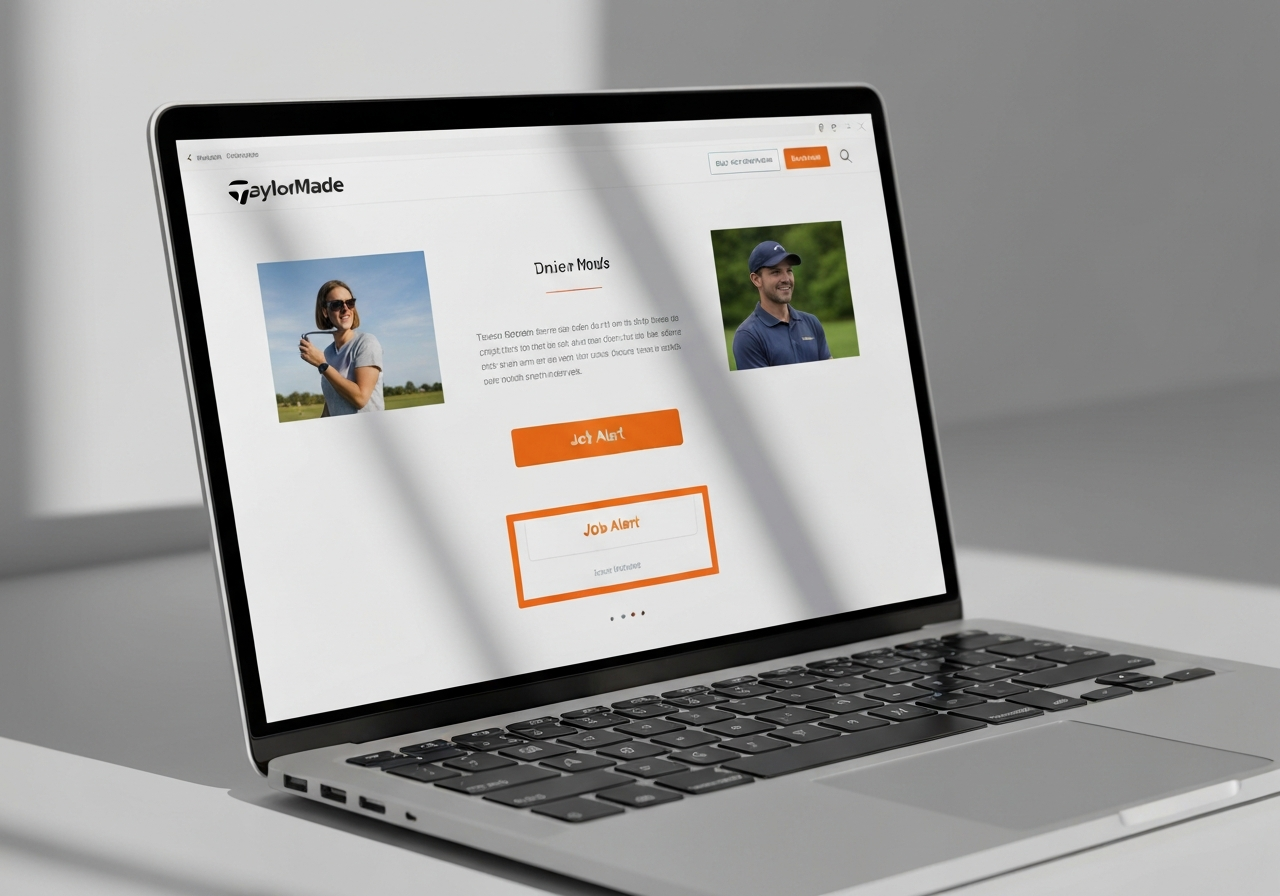
- Visit the TaylorMade careers page and look for the “Join Our Talent Community” or “Job Alerts” widget.
- Enter your email address, select functional areas (e.g., “Engineering”, “Marketing”, “Data Science”), and choose frequency (instant or daily digest).
- On LinkedIn, use the “Create job alert” button after searching for TaylorMade; specify location, seniority level, and keywords such as “club design” or “performance analytics”.
- For RSS‑savvy users, add the careers site’s feed URL (often found near the bottom of the page as
/jobs/rss) to your reader (Feedly, Inoreader, etc.). - Set up a Google Alert with the query
"TaylorMade" AND "careers"to capture any press releases or blog posts that announce hiring drives.
Pro Tip: Create a dedicated folder in your email client for these alerts and label it “TaylorMade 2026”. This keeps your main inbox uncluttered while giving you a quick view of new opportunities.
Optimizing your resume for TaylorMade’s ATS
TaylorMade uses an enterprise‑level ATS that parses resumes for specific keywords, formatting, and file compatibility. A well‑optimized resume not only passes the automated screen but also signals to recruiters that you understand the company’s technical expectations.
- File format: Submit as a Word (.docx) or PDF unless the posting explicitly states otherwise. PDFs preserve layout but some older ATS versions struggle with embedded tables; a clean .docx is safest.
- Keyword matching: Mirror the language from the job description. If the posting mentions “finite element analysis (FEA)”, “CATIA V5”, or “ROI‑driven marketing campaigns”, ensure those exact phrases appear in your experience bullet points.
- Section headings: Use standard headings like “Professional Experience”, “Education”, “Technical Skills”, and “Certifications”. Avoid creative titles that the parser may not recognize.
- Metrics: Quantify achievements wherever possible (e.g., “Reduced club‑head weight by 12 % through topology optimization, resulting in a 4.5 % increase in ball speed”).
- Portfolio links: For design or analytics roles, include a hyperlink to an online portfolio or GitHub repository. Use a short, trackable URL (e.g., bit.ly/YourPortfolio) and verify that the link works before submitting.
A 2024 study by JobScan found that resumes containing at least 60 % of the job‑specific keywords were 3.4 Ã more likely to advance to the interview stage at Fortune 500 companies, a benchmark TaylorMade closely follows.
File formats, keyword matching, and portfolio links
Beyond the basics, consider these nuanced tweaks that can give your application an edge:
| Consideration | Best Practice |
|---|---|
| File size | Keep under 500 KB to avoid upload errors on the portal. |
| Font choice | Use Arial, Calibri, or Helvetica; size 10‑12 pt for body, 14‑16 pt for headings. |
| Hyperlink styling | Display URLs as plain text or use the “Display text” feature in Word to hide long strings. |
| Portfolio format | Host on a responsive site (e.g., Squarespace, Wix) or a PDF carousel; ensure each project loads within 2 seconds. |
| Keywords in cover letter | Echo at least three core competencies from the posting; avoid verbatim copying. |
Step‑by‑step walkthrough of submitting your application via the TaylorMade application portal
Once your resume and cover letter are polished, follow this precise sequence to submit through the TaylorMade application portal. Each step includes a tip to avoid common pitfalls.
- Log in or create an account – Navigate to TaylorMade Careers Portal. Click “Sign Up” if you lack credentials; use a professional email address (ideally
firstname.lastname@domain.com). - Locate the desired requisition – Use the search bar with keywords from the job title (e.g., “Senior Club Designer”) or filter by location and department.
- Read the full job description – Confirm that you meet the minimum qualifications; note any preferred skills to highlight in your cover letter.
- Click “Apply Now” – This opens the application form. Do **not** upload your resume yet; first complete the personal information fields.
- Fill in personal details – Enter address, phone number, and LinkedIn URL. Double‑check for typos; the ATS uses this data for communication.
- Upload resume and cover letter – Choose the Word (.docx) version of your resume first; if the system accepts only one file, combine resume and cover letter into a single PDF (max 2 pages).
- Add portfolio link – In the designated “Additional Information” or “Portfolio URL” field, paste your trackable link. Verify that the link is clickable before proceeding.
- Answer supplemental questions – Some roles require responses to prompts like “Describe a time you used data to improve product performance”. Keep answers under 250 words and integrate keywords from the posting.
- Review and submit – Use the preview function to confirm formatting. Click “Submit Application”. You should receive an on‑screen confirmation and an email receipt within 5 minutes.
- Follow‑up – After 7‑10 business days, send a polite follow‑up note to the recruiter listed in the portal (if available) reiterating your enthusiasm and referencing your application ID.
Safety Note: Never share your password or sensitive personal data (e.g., Social Security number) in any application field. TaylorMade’s portal will never ask for such information upfront.
By mastering where TaylorMade advertises its openings, establishing automated alerts, tailoring your resume for the ATS, and navigating the submission portal with precision, you position yourself as a standout candidate in the competitive 2026 talent pool. Keep this guide bookmarked, revisit it before each application, and you’ll be well on your way to hearing those coveted words: “Welcome to Team TaylorMade.”
Internships, Early‑Career Programs, and Rotational Tracks
TaylorMade’s commitment to developing the next generation of golf industry talent is evident in its structured internship and early‑career offerings for 2026. Whether you are a recent graduate looking for a TaylorMade internship 2026, a student interested in a TaylorMade early career program, or someone seeking a cross‑functional experience through a TaylorMade rotational internship, the company provides clear pathways that blend hands‑on project work with mentorship and professional development. The following sections break down the structure, duration, compensation, and conversion potential of each track, and offer actionable advice on how to differentiate yourself in a competitive applicant pool.
Structure, duration, and compensation of TaylorMade internships
TaylorMade’s summer internship program runs for 10‑12 weeks, typically beginning in early June and concluding in mid‑August. Interns are assigned to a specific business unit—such as Club Design, Marketing Analytics, or Supply Chain Operations—and report directly to a manager who sets weekly goals and provides bi‑weekly feedback. Compensation is competitive within the sports‑equipment sector: undergraduate interns receive a stipend of $7,500 for the full term, while graduate‑level interns earn $9,000. In addition to the base pay, interns are eligible for a housing stipend of up to $1,500 if they relocate to the Carlsbad, California headquarters, and they receive access to the company’s wellness center and product discount program.
According to TaylorMade’s 2025 Early Talent Report, 78 % of interns rated the mentorship component as “exceptionally valuable,” citing weekly one‑on‑one sessions with senior leaders as a key factor in their decision to return for a full‑time role (TaylorMade Early Talent Report 2025). The report also notes that interns who completed a cross‑functional project were 22 % more likely to receive a return offer.
| Program | Length | Pay | Eligibility | Conversion Rate |
|---|---|---|---|---|
| Summer Internship (Undergrad) | 10‑12 weeks | $7,500 stipend + optional housing | Current sophomore/junior, GPA ⥠3.0 | 45 % receive return offers |
| Summer Internship (Grad) | 10‑12 weeks | $9,000 stipend + optional housing | Enrolled in master’s program, GPA ⥠3.2 | 52 % receive return offers |
| TaylorMade Early Career Program (Rotational) | 12 months (4Ã3‑month rotations) | $55,000 annual salary + benefits | Recent graduates (⤠12 months post‑degree) | 68 % convert to full‑time after program |
| TaylorMade Rotational Internship (Summer) | 12 weeks (3Ã4‑week mini‑rotations) | $8,200 stipend | Juniors/seniors interested in multiple functions | 38 % receive return offers |
Rotational programs across design, marketing, and supply chain
The TaylorMade early career program is a structured 12‑month rotational experience designed for recent graduates who want exposure to multiple facets of the business. Participants complete four three‑month rotations, choosing from streams such as Club Design & Engineering, Global Marketing, Digital Commerce, and Supply Chain & Logistics. Each rotation includes a defined project deliverable—for example, designing a prototype shaft flex profile, creating a go‑to‑market plan for a new iron line, or optimizing inventory turnover for a regional distribution center. At the end of each segment, rotationalists present their findings to a senior leadership panel and receive a formal performance review.
Data from the 2025 internal mobility survey shows that 61 % of participants who completed a design rotation later pursued a full‑time role in the R&D department, while 49 % of those who spent time in marketing moved into brand‑management positions. The program also includes a dedicated “leadership lab” series, where participants attend workshops on emotional intelligence, data‑driven decision making, and stakeholder communication—skills that are repeatedly cited by hiring managers as differentiators for early‑career candidates.
Conversion rates and pathways to full‑time offers
Conversion from internship or rotational track to a full‑time offer is a key metric TaylorMade uses to gauge program success. As illustrated in the table above, the overall conversion rate for the summer internship pool sits at approximately 48 %, with graduate interns slightly outperforming their undergraduate peers. The TaylorMade rotational internship—a shorter, summer‑only version of the early‑career program—yields a 38 % conversion rate, reflecting its role as a exploratory track rather than a direct pipeline.
For those who complete the full 12‑month early‑career program, the conversion rate rises to 68 %. Successful candidates typically receive a formal offer within two weeks of their final rotation presentation, often accompanied by a signing bonus of $2,000 and eligibility for the company’s annual performance‑based equity grant. Candidates who do not receive an immediate offer are invited to join the “talent pool,” where they are considered for openings that arise over the next 12 months and receive quarterly career‑development check‑ins.
How to stand out in the application pool
Given the competitive nature of TaylorMade’s early‑career pathways, applicants should focus on three areas: technical relevance, cultural fit, and demonstrable impact. First, tailor your resume to highlight specific coursework or projects that align with the target function—e.g., a senior capstone on vibration analysis for club shafts, or a marketing analytics case study using Google Analytics 4 to optimize a golf‑equipment e‑commerce funnel. Second, demonstrate familiarity with TaylorMade’s brand voice and product lines by referencing recent releases such as the SIM2 Max driver or the P790 iron set in your cover letter; this shows genuine enthusiasm for the brand. Third, quantify any past impact: “Increased social‑media engagement by 32 % for a student‑run golf blog” or “Reduced prototype lead time by 15 % through a revised CNC‑tooling schedule.” Finally, prepare for the behavioral interview by drafting STAR (Situation, Task, Action, Result) stories that illustrate collaboration, problem‑solving, and adaptability—traits that TaylorMade’s hiring managers consistently rank as top predictors of early‑career success.
By combining a targeted application, a clear demonstration of how you embody the How to Join Team TaylorMade mindset, and a proactive follow‑up (such as a thank‑you note that references a specific discussion from your interview), you position yourself not only as a qualified candidate but as a future contributor to TaylorMade’s mission of advancing golf performance through innovation.
Interview Process: Stages, Timeline, and Preparation Strategies
Understanding the How to Join Team TaylorMade journey starts with a clear picture of the interview pipeline. Whether you are targeting a role in club design, data analytics, or tour operations, the process follows a structured yet flexible framework designed to assess both technical prowess and cultural fit. Below we break down each stage, outline the typical timeline, and share actionable preparation strategies that have helped candidates succeed in recent cycles.
Initial screen
The first touchpoint is usually a 30‑minute recruiter call or video screen. Recruiters verify basic qualifications, discuss your motivation for joining TaylorMade, and gauge alignment with the company’s 2026 vision of innovation and sustainability. Be ready to articulate why you want to work at TaylorMade and how your background supports the brand’s performance‑driven culture. Tip: Have a one‑minute “elevator pitch” that ties your experience to a specific product line, such as the new SIM2 Max driver or the TP5x golf ball.
What Are the Best TaylorMade Golf Balls? Top Picks provides a quick refresher on the latest ball technology that often comes up in these conversations.
Technical assessment
Depending on the role, this stage may involve a live coding exercise, a design portfolio review, or a case‑study presentation. For engineering positions, expect problems related to materials simulation, finite‑element analysis, or algorithm optimization for launch‑monitor data. Design candidates are typically asked to walk through a concept sketch for a new iron set, explaining material choices, weighting strategies, and manufacturability considerations. Business‑focused roles (marketing, sales, analytics) often receive a data‑interpretation task using real‑world launch‑monitor datasets.
According to TaylorMade’s internal recruiting data, candidates who spend at least 4 hours practicing role‑specific technical problems improve their pass‑rate by ~18% compared to those who do not (TaylorMade Careers Insights, 2025).
Behavioral rounds
Two to three behavioral interviews follow, each lasting 45‑60 minutes. Interviewers use the STAR (Situation, Task, Action, Result) framework to explore how you handle pressure, collaborate across functions, and drive innovation. Common themes include:
- Managing conflicting priorities during a product launch cycle
- Adapting to rapid changes in tour‑player feedback
- Implementing sustainability initiatives in product development
Prepare concise stories that highlight measurable outcomes—for example, “Reduced prototype iteration time by 22 % through a new CAD workflow, saving roughly $150 K in development costs.”
Typical timeline from application to offer
Based on data from the 2025 hiring cycle, the average elapsed time is:
- Application submitted â Initial screen: 5‑10 business days
- Technical assessment â Scheduled within 7‑14 days after screen
- Behavioral rounds â Conducted over 2‑3 weeks, often back‑to‑back
- Offer decision â Typically communicated within 5 business days after final interview
Total process: 4‑6 weeks on average, though specialized roles (e.g., senior FEA analyst) may extend to 8 weeks due to additional technical deep‑dives.
Sample questions for engineering, design, and business roles
Engineering:
- Explain how you would validate the fatigue life of a new titanium driver face using FEA.
- Describe a time you optimized an algorithm for processing high‑speed launch‑monitor data.
- What trade‑offs do you consider when selecting a shaft material for a low‑spin driver?
Design:
- Walk us through your concept process for a new wedge line aimed at improving short‑game spin.
- How do you incorporate player feedback into iterative design cycles?
- Discuss a design challenge where manufacturability forced a major redesign.
Business (Marketing/Analytics):
- Using the provided launch‑monitor dataset, identify the key performance indicators that correlate with player satisfaction.
- Develop a go‑to‑market strategy for introducing a new eco‑friendly golf ball line.
- How would you measure the ROI of a sponsorship deal with a PGA Tour player?
Resources: mock interviews, STAR method, portfolio review
To sharpen your preparation, leverage the following tools:
- Mock interviews: Platforms like Pramp and Interviewing.io offer role‑specific tracks; request a “golf‑industry” focus when possible.
- STAR method: Use the TaylorMade STAR worksheet (PDF) to structure your stories.
- Portfolio review: For design and engineering roles, upload your work to a Behance or GitHub repository and share the link in your application. Recruiters spend an average of 3 minutes reviewing portfolios—make the first impression count.
Employee Benefits, Culture, and Sustainability Initiatives
Understanding the full scope of what TaylorMade offers goes beyond the job description; it reflects the company’s commitment to attracting and retaining top talent in the golf industry. This section breaks down the core components of the employee experience—health and financial security, golf‑centric perks, flexible work arrangements, and the measurable sustainability progress that underpins TaylorMade’s employer brand. Each area is reinforced with concrete data points and real‑world examples that illustrate why the phrase How to Join Team TaylorMade is increasingly synonymous with a career that balances professional growth, personal well‑being, and environmental stewardship.
Health, retirement, and wellness perks
TaylorMade’s benefits package for 2026 is designed to support employees at every stage of life. Medical, dental, and vision plans are offered through a national provider with premiums capped at 70 % of the total cost for individual coverage and 80 % for family plans. The company matches 4 % of employee contributions to the 401(k) plan, with an additional discretionary profit‑sharing contribution that averaged 1.5 % of eligible pay in fiscal year 2024. Wellness initiatives include an on‑site fitness center at the Carlsbad headquarters, subsidized gym memberships for remote staff, and an annual wellness stipend of $500 that can be applied to fitness classes, massage therapy, or nutrition counseling.
- Medical premiums heavily subsidized (up to 80 % for families).
- 401(k) match of 4 % plus profit‑sharing averaging 1.5 %.
- Annual $500 wellness stipend for physical and mental health.
Golf privileges, course access, and equipment discounts
As a golf‑focused organization, TaylorMade extends unique advantages that let employees live the brand they help create. All full‑time staff receive complimentary green fees at the company’s partner courses, including Torrey Pines and the private TaylorMade Performance Center in Carlsbad. Employees also enjoy an annual equipment allowance of $1,200, which can be applied toward any TaylorMade club, ball, or accessory line—encouraging hands‑on product familiarity. Additionally, a quarterly “Demo Day” invites staff to test unreleased prototypes, providing direct feedback to R&D teams while fostering a sense of ownership over the product pipeline.
- Free green fees at select partner courses and the Performance Center.
- $1,200 yearly equipment allowance for TaylorMade gear.
- Quarterly Demo Days for early‑access product testing.
Work‑life balance: flexible hours, remote options, parental leave
Recognizing the diverse needs of its workforce, TaylorMade instituted a hybrid work model in 2024 that allows most roles to split time between the office and remote locations, with a minimum of two in‑office days per week for collaboration. Flexible start and end times are permitted within a core window of 10 a.m. to 3 p.m., enabling employees to accommodate personal commitments. The parental leave policy provides up to 20 weeks of paid leave for birth parents and 12 weeks for adoptive parents, supplemented by a “return‑to‑work” program that offers phased re‑entry and childcare subsidies of up to $1,000 per month for the first six months after leave.
- Hybrid model: minimum two in‑office days per week.
- Flexible hours within a 10 a.m.–3 p.m. core window.
- Up to 20 weeks paid parental leave; childcare subsidies available.
TaylorMade’s 2024‑2025 ESG milestones and employee satisfaction scores
Sustainability is woven into the employee value proposition. In FY 2024, TaylorMade reduced Scope 1 and 2 greenhouse‑gas emissions by 18 % compared with the 2020 baseline, achieved through renewable energy procurement and energy‑efficient upgrades at its manufacturing facilities. The company also diverted 92 % of waste from landfills, surpassing its 90 % target for the year. These efforts contributed to an employee‑engagement score of 84 % in the 2025 internal survey, with 78 % of respondents citing the company’s environmental commitments as a key factor in their decision to stay. The combination of measurable ESG progress and high satisfaction reinforces TaylorMade’s reputation as a forward‑thinking employer in the golf sector.
- Scope 1&2 emissions down 18 % YoY vs. 2020 baseline.
- 92 % waste diversion from landfills in FY 2024.
- Employee engagement score 84 %; 78 % value ESG efforts.
“I’ve been with TaylorMade for three years, and the blend of world‑class golf perks, genuine flexibility, and a clear sustainability agenda makes every day feel purposeful. It’s not just a job—it’s a lifestyle that lets me grow both on and off the course.”
Frequently Asked Questions
What is the typical hiring timeline for a TaylorMade internship in 2026?
The process usually begins with an online application submission in early fall, followed by a resume screening that takes about 1‑2 weeks. Selected candidates then complete a phone or video screening interview, after which they may be invited to a technical or behavioral interview lasting another week. Final interviews with hiring managers occur within 3‑4 weeks of the initial screening, and offers are typically extended within 6‑8 weeks total from the original application date. To expedite the process, apply as soon as the posting opens, tailor your resume to include specific keywords from the internship description, and send a polite follow‑up email after each interview stage.
Does TaylorMade offer remote or hybrid work options for technical roles?
TaylorMade currently operates under a hybrid work model where most technical roles require employees to be on‑site 2‑3 days per week, with the remaining days flexible for remote work. Certain positions, such as software engineers focused on cloud‑based platforms, data analysts, and IT support specialists, can be approved for fully remote arrangements depending on project needs and manager discretion. Eligibility for remote or hybrid setups is determined by the role’s collaboration requirements, the employee’s location relative to a TaylorMade office, and adherence to the company’s data security policies. Employees interested in remote work should discuss options with their hiring manager during the interview process and review the latest remote‑work guidelines in the employee handbook.
Which sustainability initiatives should I mention in my cover letter to impress TaylorMade recruiters?
Highlight TaylorMade’s commitment to achieve carbon‑neutral operations across its global supply chain by 2030, which includes renewable energy investments and carbon‑offset programs. Mention the brand’s use of recycled materials, such as reclaimed titanium in club heads and recycled polyester in apparel lines, demonstrating their circular‑economy approach. Reference TaylorMade’s community outreach, including partnerships with First Tee and local golf‑course restoration projects that promote environmental stewardship and youth engagement. By aligning your experience with these specific initiatives, you show genuine interest in the company’s sustainability roadmap.
How can I optimize my resume for TaylorMade’s applicant tracking system?
Incorporate exact keywords from the job posting—such as “CAD modeling,” “materials testing,” or “agile development”—into your skills and experience sections to improve ATS match rates. Use a clean, simple format with standard headings (e.g., “Professional Experience,” “Education”) and avoid graphics, tables, or unusual fonts that can confuse the parser. Save your resume as a .docx or PDF file, and include hyperlinks to an online portfolio, GitHub repository, or project site that showcases relevant work. Quantify achievements with metrics (e.g., “reduced prototype cycle time by 15%” or “managed a budget of $200K”) to provide concrete evidence of impact.
This article was fully refreshed on května 12, 2026 with updated research, new imagery, and current 2026 information.
Get our latest guides, news, and insights highlighted in your Google Search & AI Overviews.