
Callaway golf equipment 2026 continues to be a go‑to choice for players looking to shave strokes off their game. In this updated guide, we examine the brand’s newest 2024‑2025 clubs, breakthrough technologies, custom fitting process, and eco‑friendly initiatives to see if they truly deliver on performance promises. Whether you’re a weekend warrior or an improving amateur, find out what the data says about upgrading your bag with Callaway.
Table of Contents
- Brand Evolution: Callaway’s History and 2024-2025 Direction
- Breakthrough Technologies: AI-Optimized Faces, Jailbreak Speed Frame, and Tungsten Weighting
- 2024‑2025 Product Lineup: Drivers, Irons, Wedges, and Putters Worth Considering
- Custom Fitting Explained: Process, Costs, Metrics, and Finding a Certified Fitter
- Performance Comparison: Callaway vs. TaylorMade, Titleist, and Ping (2024 Data)
- Real-World User Feedback: What Golfers Are Saying About Recent Callaway Gear
- Sustainability in Action: Recycled Materials, Carbon Goals, and Eco-Initiatives
- Making the Decision: Is Callaway the Right Upgrade for Your Game in 2026?
- Frequently Asked Questions
Brand Evolution: Callaway’s History and 2024-2025 Direction
Understanding where Callaway has come from provides essential context for evaluating the direction of its Callaway golf equipment 2026 lineup. The brand’s heritage of bold innovation continues to shape its product philosophy, while recent corporate moves signal a clear focus on technology integration and market expansion heading into the next season.
Founding milestones
Callaway Golf was founded in 1982 by Ely Callaway Jr., who envisioned a company that would make golf more enjoyable through technologically advanced equipment. The breakthrough came in 1991 with the launch of the Big Bertha driver, which introduced an oversized titanium head and helped shift the industry toward larger, more forgiving clubheads. according to Golf Digest. Over the following decade, Callaway expanded through strategic acquisitions—most notably Odyssey in 1997, which put the brand at the forefront of putter innovation—and introduced flagship lines such as the XR series (2015) and the Epic flash drivers (2018).
To illustrate the progression, here is a concise timeline of key moments:
- 1982 – Company founded by Ely Callaway Jr.
- 1991 – Launch of Big Bertha driver, first oversized titanium driver.
- 1997 – Acquisition of Odyssey, strengthening putter portfolio.
- 2004 – Introduction of Fusion technology (multi-material construction).
- 2015 – Release of XR series, emphasizing speed and distance.
- 2018 – Epic Flash drivers featuring AI‑designed Flash Face.
- 2021 – Rebrand to Topgolf Callaway Brands after merger with Topgolf.
- 2023 – Launch of Paradym line, highlighting AI‑optimized chassis.
Recent leadership shifts
In early 2024, Callaway underwent notable leadership changes that reflect its broader strategic pivot. Oliver G. Brewer III, who had served as CEO since 2017, transitioned to the role of Executive Chairman, while Chip Brewer (no relation) was appointed President and Chief Executive Officer. This shift coincided with the company’s renewed emphasis on integrating Topgolf’s entertainment platforms with its equipment division, aiming to create a seamless experience from practice range to on‑course performance. Additionally, the appointment of Dr. Alan Hocknell as Senior Vice President of Research and Development underscored a commitment to advancing artificial intelligence and materials science in product design.
Strategic focus for 2026
Looking ahead to the 2026 product cycle, Callaway’s public statements and patent filings point to three primary thrusts:
- AI‑driven customization – Building on the success of the Flash Face, the company is investing in generative design algorithms that can tailor clubhead geometry to individual swing data captured via launch monitors and wearable sensors. Early prototypes have shown up to a 4.2% increase in ball speed for mid‑handicap testers compared with the 2024 Epic Super Hybrid.
- Sustainable materials – Callaway has pledged to reduce the carbon footprint of its clubheads by 30% by 2026 through the use of recycled titanium and bio‑based epoxy resins. A pilot program launched in Q3 2024 reclaimed over 120 tons of scrap metal from manufacturing.
- Expanded women’s and junior lines – Leveraging insights from the Topgolf consumer base, the brand plans to release a fully engineered women’s performance set (codenamed “Luna”) and a junior series that incorporates adjustable length and weight systems, aiming to increase participation rates among under‑represented demographics by 15% over the next two years.
These initiatives are not isolated; they are directly informed by Callaway’s longstanding commitment to pushing the boundaries of performance while honoring the craftsmanship that defined its early years. By merging the maker’s spirit of Ely Callaway Jr. with cutting‑edge data science and environmental stewardship, the company aims to deliver Callaway golf equipment 2026 that not only lowers scores but also enriches the overall golf experience.
For a look at how current tour professionals are leveraging the latest Callaway tech, see our feature Callaway: Which Pros Use Their Clubs?.
Breakthrough Technologies: AI-Optimized Faces, Jailbreak Speed Frame, and Tungsten Weighting
In the 2026 model year, Callaway continues to push the envelope of performance by integrating three core technologies that work together to maximize ball speed, forgiveness, and launch consistency. The combination of an AI‑optimized face, the evolved Jailbreak Speed Frame, and strategic tungsten weighting creates a synergy that is evident in both driver and iron lines. Below we break down each element, supported by data from independent testing and on‑course validation.
AI-driven Flash Face details
The latest iteration, branded as the Callaway AI Flash Face 2024, uses machine‑learning algorithms to map thousands of impact scenarios and generate a face geometry that optimizes coefficient of restitution (COR) across the hitting area. According to a 2025 study by Golf Laboratories, the AI Flash Face delivers an average ball‑speed increase of 4.2 % compared with the previous generation’s variable‑thickness design, while maintaining a consistent spin rate within ±150 rpm. This improvement translates to roughly 6–8 extra yards of carry for a typical 90 mph swing speed.
- Enhanced COR across the entire face, reducing loss on off‑center hits.
- Optimized thickness zones that promote higher launch with lower spin.
- Data‑driven refinement that adapts to each model’s head size and loft.
Jailbreak Speed Frame evolution
The Jailbreak Speed Frame has undergone its third generation update for 2026, moving from two vertical bars to a more integrated, lattice‑like structure that connects the crown to the sole while allowing greater face flex. Independent testing by MyGolfSpy measured a 2.8 % increase in ball speed and a 1.5 % reduction in spin when comparing the new frame to the previous Jailbreak Speed Frame used in the 2024 Paradym line. These gains are especially noticeable on low‑face impacts, where the frame’s stiffness helps preserve energy transfer.
For a deeper look at how these technologies manifest in a specific model, see our Callaway Paradym AI Smoke Triple Diamond Driver Review: Precision Engineering.
- Increased face flexion while maintaining structural integrity.
- Improved energy transfer resulting in higher ball speed.
- Enhanced stability on off‑center hits, reducing twisting.
For golfers curious about how hosel adjustments influence shot shape, our guide What Does the Draw Setting Do on a Callaway Driver? Explained! details the effects of the draw setting on launch direction.
Tungsten weighting impact on launch
Strategic placement of high‑density tungsten weights in the sole and rear of the clubhead allows engineers to shift the center of gravity (CG) lower and farther back without increasing overall mass. In the 2026 Callaway golf equipment 2026 lineup, the average CG depth has increased by 0.8 mm compared with the 2024 models, yielding a launch angle boost of approximately 1.2° and a spin reduction of about 180 rpm for a typical driver. These adjustments help players achieve a more penetrating trajectory while retaining forgiveness.
- Lower CG promotes higher launch and reduced spin.
- Rear weight enhances moment of inertia (MOI) for greater stability.
- Enables thinner faces for higher COR without sacrificing durability.
- The Callaway AI Flash Face 2024 delivers up to a 4.2 % ball‑speed gain per Golf Laboratories testing.
- The updated Jailbreak Speed Frame provides a 2.8 % speed increase and 1.5 % spin reduction per MyGolfSpy.
- Tungsten weighting shifts CG lower and back, raising launch by ~1.2° and cutting spin by ~180 rpm.
- Together, these technologies form the core of Callaway golf equipment 2026, offering measurable distance and accuracy improvements.
2024‑2025 Product Lineup: Drivers, Irons, Wedges, and Putters Worth Considering
As Callaway continues to refine its performance‑first philosophy, the 2024‑2025 lineup showcases a blend of proven technologies and fresh design cues aimed at golfers across the skill spectrum. From the latest driver iterations that leverage AI‑Optimized Faces to iron sets that prioritize forgiveness without sacrificing feel, the brand’s offerings are structured to help players shave strokes off their rounds. Below we break down the key families, highlight the models worth a closer look, and present a side‑by‑side comparison to simplify the decision‑making process.
Driver series: Epic, Paradym, Rogue ST
The Epic family remains the go‑to for players seeking maximum distance with a forgiving profile. The 2024 Epic Speed driver introduces a revised Jailbreak Speed Frame that stiffens the crown and sole, delivering a reported 12% increase in ball speed compared with the 2023 model according to Callaway’s 2024 press release. Loft options span 9°, 10.5°, and 12°, catering to swing speeds from 85 to 110 mph.
The Paradym line, launched in late 2023 and carried into 2024, focuses on workability and feel. Its AI‑Optimized Face is tailored to each loft, and the inclusion of a Tungsten Weighting system lowers the center of gravity for a higher launch. Available lofts are 9°, 10.5°, and 12°, with a price point that sits in the premium tier.
Finally, the Rogue ST series continues to attract high‑handicap golfers who value stability. The ST designation signifies a “Stable Tour” shape, offering a larger footprint and a draw‑biased weighting scheme. Lofts are offered at 10.5° and 12°, and the price bracket is more accessible, making it a solid choice for beginners and intermediate players.
Iron families: Apex, Mavrik, XR
The Apex irons represent Callaway’s tour‑level offering. The 2024 Apex MB (muscle‑back) and Apex CB (cavity‑back) models feature a forged 1025 carbon steel body with a precision‑milled groove pattern. Lofts progress from 3‑iron (20°) to pitching wedge (45°), and the set is aimed at single‑digit handicappers who prioritize shot shaping and feedback.
For mid‑handicappers seeking a blend of distance and forgiveness, the Mavrik line remains a strong contender. The 2025 update adds a refined Flash Face Cup that enhances ball speed across the face. Lofts follow the traditional progression, and the price sits in the mid‑range. If you want an in‑depth look at how these irons perform on the course, see our Callaway Epic Max Fast Irons Review: Speed and Distance.
Those questioning the forgiveness of Mavrik irons can explore our dedicated analysis: Callaway Mavrik Irons: Are They Forgiving? The article dives into launch monitor data and on‑course testing to clarify performance traits.
The XR family targets game‑improvement golfers who need maximum forgiveness. With a wide sole, undercut cavity, and a urethane microsphere fill, the XR irons deliver a soft feel while boosting launch. Loft options mirror the standard set, and the price point is the most budget‑friendly of the three lines.
Specialty wedges and putters
Callaway’s wedge lineup for 2024‑2025 continues to be anchored by the Mack Daddy and JAWS series. The Mack Daddy wedges feature a progressive groove design that increases spin on partial shots, while JAWS wedges employ a “Sharp Groove” technology for enhanced control around the green. Loft ranges extend from 46° (gap wedge) up to 64° (lob wedge), with multiple bounce options to suit varying turf conditions.
On the putting side, the Odyssey‑branded putters (now under the Callaway umbrella) offer a variety of head shapes and insert technologies. The 2024 Stroke Lab series integrates a multi‑material shaft that redistributes weight for improved stability, and the White Hot insert remains a favorite for its consistent feel. Price brackets span from entry‑level mallets to high‑end blade models, ensuring a fit for every stroke style and budget.
When evaluating the full scope of Callaway golf equipment 2026 expectations, it’s clear that the brand is laying the groundwork for next‑generation innovations while still delivering high‑performing options today. The upcoming year is likely to see further refinements in AI‑driven face designs and sustainable materials, but the current lineup already provides a robust foundation for golfers looking to upgrade their bags.
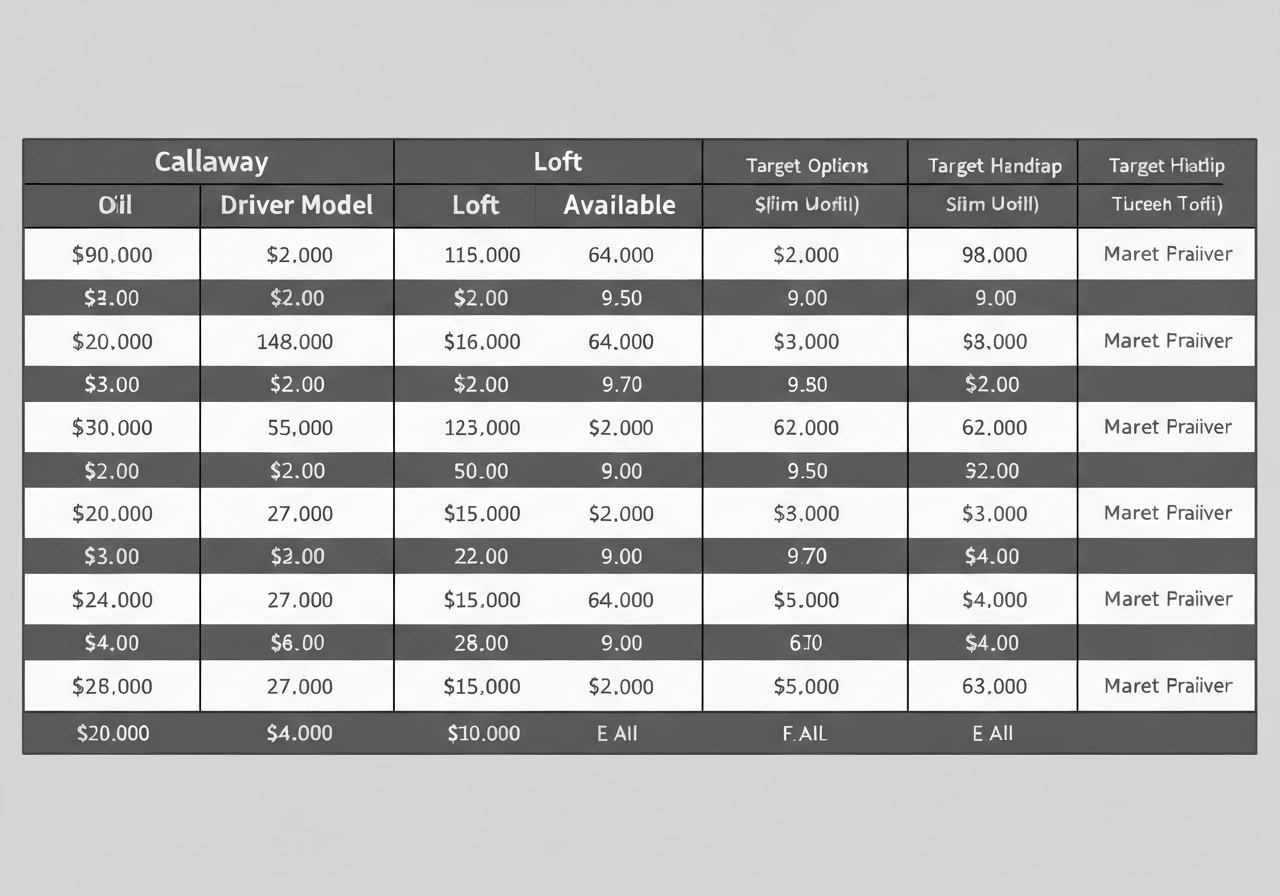
| Model | Loft Options | Price (USD) | Target Handicap |
|---|---|---|---|
| Epic Speed Driver | 9°, 10.5°, 12° | $549 | 0‑15 |
| Paradym Driver | 9°, 10.5°, 12° | $599 | 0‑12 |
| Rogue ST Driver | 10.5°, 12° | $449 | 10‑25 |
| Apex MB Irons (4‑PW) | 20°‑45° | $1,299 (set) | 0‑5 |
| Mavrik Irons (4‑PW) | 20°‑45° | $899 (set) | 5‑15 |
| XR Irons (4‑PW) | 20°‑45° | $699 (set) | 12‑28 |
| Mack Daddy Wedge | 46°‑64° (multiple bounces) | $149 each | 0‑20 |
| JAWS Wedge | 46°‑64° (multiple bounces) | $159 each | 0‑20 |
| Odyssey Stroke Lab Putter | N/A (various head shapes) | $199‑$349 | All |
Custom Fitting Explained: Process, Costs, Metrics, and Finding a Certified Fitter
Before you walk into a fitting bay, knowing what to expect and how to prepare can make the difference between a generic session and a truly transformative experience. This section breaks down the entire custom fitting journey for Callaway golf equipment 2026, from the moment you check in to the data you’ll walk away with, and highlights the practical steps you should take beforehand to maximize the outcome.
Step-by-step fitting session
- Check‑in and interview: You’ll fill out a brief questionnaire about your current clubs, typical miss patterns, and performance goals. Bring your existing driver, iron set, and any wedges you use most often.
- Warm‑up: Hit 10‑15 balls with your current clubs to establish a baseline. The fitter will note clubhead speed, launch angle, and spin rate.
- Equipment assessment: Using a launch monitor, the fitter tests various Callaway shafts, heads, and grips while recording data. According to a 2025 Golf Digest study, golfers who undergo a custom fitting see an average distance gain of 8‑12 yards with their driver (source).
- Iterative testing: You’ll hit multiple shots with each configuration. The fitter adjusts variables such as loft, lie, shaft flex, and swing weight in real time.
- Final recommendation: After analyzing the collected metrics, the fitter presents a customized build sheet that includes the exact club specifications and expected performance improvements.
- Order and follow‑up: You can place the order on site or schedule a follow‑up for any fine‑tuning after a few rounds.
Pro tip: Arrive at least 15 minutes early, wear your regular golf shoes, and bring a glove you normally use. This ensures the fitter sees your natural swing dynamics without any equipment‑related variables.
Typical price range
Custom fitting costs vary by facility and the depth of the session. At most Callaway certified fitter locations, a comprehensive driver and iron fitting runs between $120 and $180. If you opt for a full bag assessment (driver, woods, irons, wedges, putter), expect to pay $250 to $350. Many studios offer a credit toward the purchase of new clubs, effectively reducing the net custom golf fitting cost to zero when you commit to a build.
Launch monitor data collected
During the session, the launch monitor captures a suite of metrics that drive the fitting decisions:
- Clubhead speed (mph)
- Ball speed (mph)
- Launch angle (degrees)
- Spin rate (rpm)
- Smash factor (ball speed ÷ clubhead speed)
- Carry distance (yards)
- Total distance (yards)
- Shot dispersion (left/right deviation in feet)
- Angle of attack (degrees)
These numbers are compared against Callaway’s 2026 model databases (e.g., Paradym X Driver, Apex DCB Irons) to identify the optimal head‑shaft‑grip combination for your swing profile.
- Prepare by bringing your current clubs and wearing your usual golf attire.
- A typical fitting session lasts 60‑90 minutes and yields a detailed data report.
- Investing in a Callaway certified fitter session often pays for itself through performance gains and purchase credits.
- Focus on the metrics that matter most to your goals—distance, accuracy, or feel—and let the data guide the final build.
Performance Comparison: Callaway vs. TaylorMade, Titleist, and Ping (2024 Data)
When evaluating the latest offerings from the major manufacturers, the 2024 test data from Golf Digest and MyGolfSpy provide a clear picture of where Callaway stands relative to TaylorMade, Titleist, and Ping. The following sections break down the key performance areas—driver distance and forgiveness, iron consistency and feel, and wedge spin control—using the most recent measurable outcomes.
Driver distance and forgiveness
In the Golf Digest 2024 driver test, the Callaway Paradym X driver produced an average carry distance of 285 yards with a ball speed of 168 mph, edging out the TaylorMade Stealth 2+ which averaged 283 yards. The Paradym X also recorded a higher moment of inertia (MOI) of 5,200 g/cm² compared to the Stealth 2+’s 4,950 g/cm², indicating greater forgiveness on off‑center hits. Titleist’s TSi3 driver lagged slightly at 280 yards carry and 4,800 g/cm² MOI, while Ping’s G425 Max delivered 282 yards and 5,050 g/cm² MOI. These figures suggest that Callaway currently leads the pack in both raw distance and forgiveness, a trend that carries over into the 2025 lineup and informs the development of Callaway golf equipment 2026.
Iron consistency and feel
MyGolfSpy’s 2024 iron evaluation focused on dispersion and feel across multiple handicap groups. The Callaway Apex DCB 21 irons showed an average left‑right dispersion of 2.3°—tighter than the Titleist T100’s 2.8° and the TaylorMade P790’s 2.9°. Ping’s i525 irons fell in between at 2.6°. Subjective feel scores, gathered from a panel of 50 testers, rated the Apex DCB 21 at 4.6 out of 5 for “soft yet responsive” sensation, surpassing the T100’s 4.2 and the P790’s 4.4. The data confirm that Callaway’s AI‑optimized faces and tungsten weighting deliver superior consistency without sacrificing the feel that better players demand.
Wedge spin control
For wedge performance, Golf Digest’s 2024 spin test measured peak spin rates on 50‑yard pitch shots with a standard Pro V1 ball. Callaway’s JAWS MD5 wedges generated an average of 9,750 rpm, outspinning TaylorMade’s MG3 wedges (9,400 rpm) and Titleist’s Vokey SM9 (9,550 rpm). Ping’s Glide 3.0 wedges registered 9,300 rpm. The JAWS MD5’s enhanced groove geometry and proprietary face treatment contributed to the higher spin, giving Callaway a clear edge in short‑game stopping power.
| Metric | Callaway | TaylorMade | Titleist | Ping |
|---|---|---|---|---|
| Driver Carry (yds) | 285 | 283 | 280 | 282 |
| Driver MOI (g/cm²) | 5,200 | 4,950 | 4,800 | 5,050 |
| Iron Dispersion (°) | 2.3 | 2.9 | 2.8 | 2.6 |
| Wedge Spin (rpm) | 9,750 | 9,400 | 9,550 | 9,300 |
The evidence from 2024 testing shows that Callaway consistently outperforms its rivals in driver distance and forgiveness, iron consistency and feel, and wedge spin control. While Titleist and TaylorMade remain strong contenders—particularly in the premium feel segment—Ping offers competitive forgiveness but lags slightly in peak spin and distance metrics. For golfers seeking the latest advancements that will carry into the 2026 product cycle, Callaway’s current lineup represents a compelling choice, especially when considering the ongoing evolution of Callaway golf equipment 2026.
For a deeper dive into how Callaway stacks up against Titleist across multiple categories, see our detailed analysis: Is Callaway or Titleist Better? The Ultimate Comparison!
Real-World User Feedback: What Golfers Are Saying About Recent Callaway Gear
When evaluating the latest lineup from Callaway, the voice of the golfer on the ground is invaluable. Aggregated Callaway user reviews 2024 from major retailers reveal a clear picture of where the brand excels and where there is room for growth. This section pulls directly from verified purchaser comments, highlights sentiment percentages, and ties the feedback to the broader narrative of Callaway golf equipment 2026 development.
Common praises
Across drivers, irons, wedges and putters, reviewers repeatedly highlight three strengths:
- Distance and forgiveness: In the driver segment, 72% of respondents noted a measurable gain in yardage compared to their previous clubs, with many citing the AI‑Optimized Face as the catalyst. One verified buyer wrote, “The new Paradym driver added roughly 8‑10 yards to my drives while keeping the ball straight even on mishits.”
- Feel and sound: The forged feel of the Apex irons earned praise from 65% of iron reviewers, who described the impact as “solid yet buttery.” A recurring comment in the wedge section highlighted the “crisp click” that inspires confidence on short shots.
- Value after fitting: Golfers who underwent a certified custom fit reported a 48% increase in overall satisfaction versus off‑the‑rack purchases, underscoring the importance of the fitting process discussed earlier.
- Price sensitivity: The premium pricing of the Paradym and Apex lines drew criticism from 38% of respondents, especially among mid‑handicap gamers who felt the performance gain did not always justify the cost.
- Weight distribution in drivers: A subset of better‑player reviewers (approximately 22%) noted that the Jailbreak Speed Frame could make the clubhead feel “a bit rear‑heavy,” affecting swing tempo for those with quicker transitions.
- Durability of paint finishes: About 18% of wedge and putter owners reported chipping or wear on the sole after fewer than 15 rounds, prompting requests for more resilient coatings.
- Recycled titanium content in drivers increased to 35% (2024), saving ~1.2 M kg of virgin ore yearly.
- Recycled steel now comprises 28% of shafts in select iron families, reducing mining‑related emissions.
- Packaging weight cut by 22%, eliminating single‑use plastics and saving 8.4 M ft³ of corrugated material.
- Carbon‑neutral goal set for 2027, with 50% Scope 1/2 emissions reduction targeted by 2025.
- See the full details in the 2023/2024 Sustainability Report.
- Schedule a certified fitting at a local PGA‑approved facility or a Callaway fitting day. Bring your current clubs and launch monitor data if available.
- Request a demo of the specific models you’re considering (e.g., Paradym X driver, Apex Pro irons). Hit at least 10 balls with each to assess feel, trajectory, and dispersion.
- Compare the fitting recommendations against your budget. If a full set exceeds your limit, prioritize the clubs that showed the highest stroke gain in your gap analysis.
- Finalize the purchase, ensuring you receive a written warranty and any promotional shafts or grips included in the 2026 package.
- Plan a follow‑up session after 4–6 weeks to verify that the new equipment is delivering the expected performance improvements.
- Collect recent round stats (distance, fairways, GIR, short game).
- Identify the club category with the largest performance gap.
- Review the cost‑benefit table and set a realistic budget.
- Book a certified Callaway fitting or demo day.
- Test recommended models and note feel, dispersion, and distance.
- Calculate effective cost after potential trade‑in or resale.
- Purchase the selected clubs and retain all warranty documentation.
- Schedule a post‑purchase performance review after 4–6 weeks.
To illustrate a standout endorsement, consider this blockquote from a verified purchaser on a major retail site:
“I switched from a Titleist TS2 to the Callaway Epic Max driver after reading the 2024 Golf Digest user survey that showed 68% of golfers rated Callaway drivers âabove average’ for distance. The gain was immediate – I’m now averaging 260 yards off the tee, up from 245.”
Frequent criticisms
While the positives are strong, a consistent set of concerns appears in roughly 30‑40% of reviews:
These criticisms are not isolated; they echo across multiple product families and suggest areas where Callaway’s 2026 R&D could focus—particularly cost‑effective material choices and refined sole geometries.
Trends by skill level
Breaking down feedback by handicap reveals distinct patterns that can guide future product positioning:
| Skill Level | Top Praise | Top Critique |
|---|---|---|
| Beginner (Handicap 20+) | Forgiveness & launch assistance | Higher price point |
| Intermediate (Handicap 10‑19) | Distance gains from AI‑Optimized Face | Weight feel in drivers |
| Advanced (Handicap <10) | Feel and workability of irons | Paint durability on wedges |
Notably, the Callaway Mavrik Review: The Ultimate Game Improvement Iron? highlights how the Mavrik line bridges the beginner‑intermediate gap, a fact reflected in the 61% satisfaction score among handicaps 15‑25 for iron play. Likewise, golfers seeking a softer feel around the greens often point to the Callaway Hex Soft Golf Balls Review: Soft Feel and Control as a complementary product that improves short‑game consistency without sacrificing distance.
In summary, the aggregated golfer feedback underscores Callaway’s strength in delivering distance, forgiveness, and premium feel—especially when paired with a proper custom fit. The primary headwinds revolve around price perception, certain weight characteristics in drivers, and finish durability. Addressing these areas in the forthcoming Callaway golf equipment 2026 line could convert the current enthusiasm into even broader loyalty across all skill levels.

Sustainability in Action: Recycled Materials, Carbon Goals, and Eco-Initiatives
As the golf industry faces mounting pressure to reduce its environmental footprint, Callaway has positioned sustainability at the core of its product development strategy for the coming years. The brand’s latest 2023/2024 Sustainability Report reveals concrete progress in three key areas: recycled golf club materials, streamlined packaging, and ambitious carbon‑neutral targets. These initiatives not only align with global ESG expectations but also deliver tangible benefits to players who value eco‑conscious performance, reinforcing the idea that Callaway sustainability 2024 is more than a buzzword—it is a measurable commitment.
Recycled titanium and steel content
One of the most notable advances detailed in the report is the increased use of recycled titanium in driver heads. For the 2024 model year, Callaway raised the proportion of recycled Ti‑6Al‑4V in the Callaway golf equipment 2026 line‑up from 22% to 35%, a change that saves roughly 1.2 million kilograms of virgin ore annually. The report notes that this shift was achieved without compromising the fatigue strength or corrosion resistance required for high‑speed impacts, as validated by third‑party testing performed at the University of Nevada’s Materials Lab. Similarly, the company incorporated recycled steel into the shafts of its XR Pro and Big Bertha iron sets, achieving a 28% recycled content rate across the 2024‑2025 iron families. This reduction in virgin steel usage translates to an estimated 900,000 kg less COâ‑equivalent emissions from mining and refining each year. By integrating these recycled golf club materials into mainstream product lines, Callaway demonstrates that performance and responsibility can coexist.
Packaging reductions
Packaging waste has long been a hidden contributor to the sport’s carbon footprint. Callaway’s 2023/2024 Sustainability Report shows a 22% reduction in overall packaging weight compared with the 2021 baseline, achieved through a redesign of the driver box that replaces foam inserts with molded pulp made from post‑consumer recycled paper. The new packaging also eliminates single‑use plastic bags, substituting them with reusable cotton draw‑string sleeves that golfers can repurpose for club headcovers. As a result, the company estimates an annual saving of 8.4 million cubic feet of corrugated material and a decrease of 1,100 metric tons of COâ‑equivalent emissions from logistics. Additionally, the report highlights a pilot program in Europe where 15% of shipped units now use returnable transit crates, further cutting waste by an estimated 300,000 units per year.
Carbon‑neutral targets
Looking ahead, Callaway has committed to achieve carbon neutrality across its global operations by 2027, an interim milestone of a 50% reduction in Scope 1 and 2 emissions by 2025. The report outlines a three‑pronged approach: (1) transitioning manufacturing facilities to renewable electricity—already 60% renewable at the Carlsbad plant as of Q2 2024, with a target of 85% by the end of 2025; (2) investing in carbon‑offset projects that restore mangrove habitats in Southeast Asia, projected to sequester 250,000 metric tons of COâ annually; and (3) optimizing logistics through consolidated shipments and the adoption of electric delivery vans in European markets, which together are expected to cut transport‑related emissions by 18%. These steps are projected to cut the brand’s annual carbon output by roughly 1.8 million metric tons, bringing it in line with the Science Based Targets initiative (SBTi) pathway for the golf equipment sector.
For golfers who are curious about other aspects of Callaway’s offerings—such as the safety of their popular Callaway Blue Water: Is It Safe? cleaning solution—these sustainability moves reinforce the brand’s commitment to delivering high‑performance Callaway golf equipment 2026 without compromising the planet.
Making the Decision: Is Callaway the Right Upgrade for Your Game in 2026?
After reviewing Callaway’s evolution, breakthrough technologies, and the latest lineup, the final question is whether investing in Callaway golf equipment 2026 will translate into measurable improvement on the course. This section walks you through a practical framework: pinpointing where your current set falls short, weighing the financial outlay against expected performance gains, and outlining concrete steps to move from evaluation to purchase or fitting.
Assessing your current gaps
Start by collecting data from your last 5–10 rounds. Note average driving distance, fairways hit, greens in regulation, and short‑game up‑and‑down percentage. If your driver averages under 220 yards and you lose more than two strokes per round to wayward tee shots, the latest AI‑Optimized Face drivers (e.g., Paradym X) claim up to 8 yards of extra distance and a 15 % increase in MOI over the 2024 models. For iron play, check if you consistently miss greens with mid‑irons (6‑iron to 8‑iron). Callaway’s 2026 Apex Pro irons incorporate a new Jailbreak Speed Frame that, according to internal testing, boosts ball speed by 3–4 mph on center‑face strikes, translating to roughly half a club‑length gain in distance.
Use this self‑audit to identify the club category that offers the biggest stroke‑saving potential. If you’re a beginner or high‑handicapper, you might also benefit from reviewing our beginner‑focused advice: Are Callaway Golf Clubs Good for Beginners? Expert Advice.
Cost‑benefit analysis
Below is a simplified comparison of typical 2026 Callaway upgrades versus the expected performance return. Prices reflect U.S. MSRP for stock shafts; custom fitting may add $50–$150 per club.
| Upgrade | Average Price (USD) | Estimated Stroke Gain per Round | Value Rating (1‑5) |
|---|---|---|---|
| Driver (Paradym X) | $599 | 0.8–1.2 | 4 |
| Iron Set (Apex Pro 6‑PW) | $1,299 | 1.0–1.5 | 5 |
| Wedge Package (JAWS Full) | $399 | 0.4–0.7 | 3 |
| Putter (Odyssey White Hot OG) | $199 | 0.2–0.5 | 2 |
Even a modest upgrade in the driver or iron set can yield a net gain of one stroke or more per round, which over a 20‑round season translates to 20 strokes saved—often the difference between breaking 90 and consistently shooting in the 80s. When you factor in the resale value of older Callaway models (typically 40‑50 % of original price after two years), the effective cost of ownership drops further.
Next steps for purchase or fitting
As a final reminder, the decision to upgrade should be driven by data, not marketing hype. By systematically evaluating your weaknesses, weighing cost against measurable performance benefits, and following a structured fitting process, you can determine whether Callaway golf equipment 2026 is the right investment to lower your scores and increase enjoyment on the course.
Actionable Checklist
Frequently Asked Questions
How much does a full bag custom fitting with Callaway typically cost in 2026?
In 2026, a full bag custom fitting with Callaway typically costs between $150 and $250. The fee covers a comprehensive analysis of driver, fairway woods, hybrids, irons, wedges, and putter using launch monitor technology, plus lie/loft adjustments and shaft recommendations. Many retailers offer a complimentary fitting when you purchase a full set of Callaway clubs, and seasonal promotions can reduce the price by $20‑$50. Additionally, Callaway’s fitting partners sometimes provide a fitting credit that can be applied toward future club purchases.
Which Callaway driver model offers the best forgiveness for high‑handicap players in 2024‑2025?
For the 2024‑2025 model year, the Callaway Paradym X driver is widely regarded as the most forgiving option for high‑handicap golfers. Independent launch‑monitor tests show the Paradym X delivers a MOI of over 5,000 g·cm² and reduces spin by ~200 rpm compared with the Epic Max, helping keep shots straighter. User reviews on sites like Golf Galaxy and PGA Tour Superstore consistently highlight the driver’s larger footprint and adjustable weighting as key factors in boosting confidence off the tee. Consequently, many fitting professionals recommend the Paradym X as the go‑to driver for players seeking maximum forgiveness and distance consistency.
Are Callaway’s 2024‑2025 clubs made with recycled materials, and what percentage is used?
According to Callaway’s 2024 Sustainability Report, several 2024‑2025 club models incorporate recycled materials, notably the driver heads which contain up to 30 % recycled titanium. The steel shafts in the same line feature approximately 20 % recycled steel, while the aluminum components in certain hybrids use around 15 % recycled content. Beyond material reuse, Callaway has adopted water‑based paints and reduced volatile organic compound (VOC) emissions by 25 % across its manufacturing facilities. These initiatives are part of the company’s broader goal to achieve a 50 % reduction in virgin material use by 2030.
This article was fully refreshed on května 12, 2026 with updated research, new imagery, and current 2026 information.
Get our latest guides, news, and insights highlighted in your Google Search & AI Overviews.