
If you’ve been wondering, ‘Does Callaway make a 2 wood?’ you’re not alone—many golfers look for that versatile club to bridge the gap between driver and 3 wood. In this 2026 update, we break down exactly what a 2 wood is, examine Callaway’s latest fairway wood lineup, and reveal whether a true 2 wood exists in their current catalog. Read on to see if adding a 2 wood (or a suitable alternative) could improve your game.
Table of Contents
- Understanding the Concept of a 2 Wood in Golf
- Callaway’s Current Fairway Wood Lineup (2024‑2026)
- Does Callaway Currently Offer a 2 Wood? (2024‑2026 Answer)
- Historical Overview: Callaway’s Past 2 Wood Models (Corrected)
- Comparing Callaway’s Strongest Fairway Woods to Competitors’ 2 Wood Offerings
- Benefits of Adding a 2 Wood (or Equivalent Loft Club) to Your Bag
- Buying Guide & Fit Advice: Is a 2 Wood Right for You?
- Final Verdict & Recommendations (2026)
- Frequently Asked Questions
Understanding the Concept of a 2 Wood in Golf
The 2 wood, often overlooked in modern bag configurations, occupies a unique niche between the driver and the traditional 3 wood. Historically designed to bridge the distance gap for players who find a driver too long or a 3 wood too lofted, the 2 wood offers a lower trajectory with a bit more workability than a driver while still delivering substantial carry. In today’s equipment landscape, manufacturers such as Callaway continue to experiment with this club, and the upcoming Callaway 2 wood 2026 prototype has already generated buzz among tour professionals and avid amateurs alike. Understanding what defines a 2 wood — its loft, length, and ideal user profile — helps golfers decide whether this specialty fairway wood deserves a slot in their set.
Typical loft range and club length
The defining characteristic of any fairway wood is its loft, and the 2 wood is no exception. Most manufacturers position the 2 wood loft between 13° and 18°, with the sweet spot often landing around 15°. This range provides a launch angle that is higher than a typical driver (9°–12°) yet lower than a standard 3 wood (15°–18°), creating a distinct flight pattern that can hold up in windy conditions while still stopping relatively quickly on the greens. Club length for a 2 wood usually falls between 42 and 43 inches, slightly shorter than a driver (45–46 inches) but comparable to a 3 wood (43–44 inches). This modest reduction in length aids in control without sacrificing too much clubhead speed.
To illustrate these specifications clearly, consider the following table:
| Attribute | Typical Range |
|---|---|
| Loft | 13°–18° (often ~15°) |
| Club Length | 42â³–43â³ |
| Ideal Swing Speed | 85–105 mph |
These figures align with data from a recent equipment analysis by GolfWRX, which noted that players with swing speeds in the mid‑80s to low‑100s mph achieve optimal carry and roll with a 2 wood lofted near 15° (according to the source). The fairway wood definition itself emphasizes a club designed for longer shots from the turf or fairway, and the 2 wood fits this role by offering a lower center of gravity than a driver while retaining enough mass to generate solid ball speed.
How a 2 wood differs from a 3 wood and driver
When comparing a 2 wood to its more common siblings, the differences become apparent in both geometry and performance. A driver, with its 460 cc head and low loft, is engineered for maximum distance off the tee, relying on a high launch and low spin to maximize roll. A 3 wood, typically lofted between 15° and 18°, features a slightly smaller head (around 180–200 cc) and a deeper face, making it versatile for both tee shots and fairway approaches. The 2 wood splits the difference: its head size often mirrors that of a 3 wood, but the loft is trimmed by a couple of degrees, resulting in a penetrating trajectory that holds up better into the wind.
From a spin perspective, the 2 wood generally produces less backspin than a 3 wood but more than a driver, which can be advantageous for players who struggle with excessive ballooning on longer clubs. In practical terms, a golfer who carries a driver 280 yards might see a 2 wood travel roughly 240–250 yards with a tighter dispersion pattern, while a 3 wood from the same player might land at 230 yards with a higher flight. This distinction becomes especially relevant when evaluating 2 wood vs 3 wood scenarios on tight fairways where accuracy outweighs pure distance.
Moreover, the shaft dynamics differ. Many 2 wood models employ a slightly stiffer tip section than a 3 wood to promote a lower launch, yet they retain enough flex to accommodate the moderate swing speeds of the target audience. For those interested in shaft selection, our detailed guide on Callaway Shaft Flex 5.0 – Complete Guide and Swing Speed Chart (2026) offers a thorough breakdown of how flex influences launch conditions across the fairway wood spectrum.
Who benefits most from a 2 wood
The ideal candidate for a 2 wood is typically a player with a swing speed between 85 and 105 mph who finds the driver difficult to control off the tee but desires more distance than a standard 3 wood can provide. This includes mid‑handicap amateurs who struggle with consistency on longer clubs, as well as low‑handicap players who use the 2 wood as a “second driver” on narrow courses where keeping the ball in play is paramount. Senior golfers with slower swing speeds also benefit, as the higher loft relative to a driver helps get the ball airborne without requiring excessive clubhead speed.
In addition, players who frequently encounter firm, fast fairways appreciate the 2 wood’s ability to produce a lower, rolling flight that maximizes run‑out after landing. Conversely, on soft courses the club’s workability allows skilled golfers to shape shots — drawing or fading — with greater ease than a bulkier driver. As a teaching professional, I have seen numerous students shave strokes off their rounds simply by swapping a problematic long iron or hybrid for a well‑fit 2 wood, citing improved confidence and tighter shot dispersion.
Pro Tip: When testing a 2 wood, focus on impact location rather than swing speed. A strike slightly toward the toe will promote a fade, while a heel strike encourages a draw — use this to fine‑tune ball flight without altering your swing.
Ultimately, the 2 wood remains a versatile tool for golfers seeking a middle ground between raw distance and controllable accuracy. Whether you are considering the Callaway 2 wood 2026 prototype or an existing model from another brand, evaluating your typical swing speed, course conditions, and shot‑making preferences will reveal whether this club deserves a permanent place in your bag.
Callaway’s Current Fairway Wood Lineup (2024‑2026)
As of the 2024 model year, Callaway has structured its fairway wood offerings around three core families – Paradym, Paradym X, and Paradym Triple Diamond – complemented by the specialty Apex DCB line and a handful of limited‑edition releases. This section breaks down each family’s loft options, shaft selections, and release timelines, while highlighting why the current lineup does not extend below a 13.5° loft, a fact confirmed by Callaway’s 2024 product specifications according to the source.
Paradym Family
The Paradym series represents Callaway’s flagship performance line, engineered for low spin and high launch. Below are the standard loft configurations available across the Paradym fairway woods:
- Paradym 3 Wood – 15.0° loft
- Paradym 5 Wood – 18.0° loft
- Paradym 7 Wood – 21.0° loft
- Paradym 9 Wood – 24.0° loft (limited release)
All Paradym models feature a 455 Carpenter Steel face with AI‑designed Flash Face technology, delivering a consistent coefficient of restitution (COR) across the hitting area. The stock shaft offering includes the Project X Cypher 40 (regular) and 50 (stiff) options, with custom upgrades available through the Callaway Custom Shop.
Paradym X Family
Targeted at players seeking a higher launch and more forgiveness, the Paradym X line adds a slightly deeper center of gravity and a larger footprint. Loft specifications are as follows:
- Paradym X 3 Wood – 16.5° loft
- Paradym X 5 Wood – 19.5° loft
- Paradym X 7 Wood – 22.5° loft
- Paradym X 9 Wood – 25.5° loft (tour‑only)
The Paradym X utilizes a 455 Carpenter Steel face with a revised internal weighting scheme that shifts mass toward the perimeter, raising the moment of inertia (MOI) by approximately 12% compared to the standard Paradym. Shaft options mirror those of the Paradym family, with the addition of the Mitsubishi Tensei AV Blue 55 (stiff) as a premium upgrade.
Paradym Triple Diamond Family
Designed for low‑spin, work‑shot oriented players, the Triple Diamond models present a more compact head shape and a forward‑biased center of gravity. Lofts are:
- Paradym Triple Diamond 3 Wood – 13.5° loft
- Paradym Triple Diamond 5 Wood – 16.5° loft
- Paradym Triple Diamond 7 Wood – 19.5° loft
Note that the 13.5° loft on the Triple Diamond 3 Wood is the lowest loft currently offered across Callaway’s fairway wood lineup; no model drops below this threshold. The Triple Diamond heads employ a 455 Carpenter Steel face with a tighter grain structure, promoting a lower launch angle and reduced spin rates (approximately 200‑300 rpm less than the standard Paradym 3W). Shaft choices include the Project X HZRDUS Smoke Black 60 (stiff) and the Aldila Ascent Platinum 55 (regular) as stock options.
Apex DCB and Other Specialty Models
Beyond the Paradym families, Callaway offers the Apex DCB (Deep Center of Gravity) line, which prioritizes forgiveness and a higher launch for mid‑handicap golfers. Key specifications include:
- Apex DCB 3 Wood – 16.0° loft
- Apex DCB 5 Wood – 19.0° loft
- Apex DCB 7 Wood – 22.0° loft
The Apex DCB heads incorporate a 455 Carpenter Steel face with a proprietary “DCB” weighting pad positioned low and deep in the sole, resulting in a launch angle increase of roughly 1.5° compared to the Paradym X 3W. Shaft offerings are similar to the Paradym line, with the Fujikura Ventus Blue 6 (stiff) as a popular aftermarket choice.
Additionally, Callaway occasionally releases limited‑edition models such as the “Big Bertha B21” and “Epic Speed” fairway woods, which typically retain lofts within the 14.5°‑18.0° range and are aimed at niche markets or promotional campaigns.
Loft Options Overview
To visualize the loft spectrum across the current lineup, the table below summarizes the available lofts for each model family. All values are measured in degrees (°) and reflect the standard hosel setting.
| Model | 3 Wood | 5 Wood | 7 Wood | 9 Wood (if offered) |
|---|---|---|---|---|
| Paradym | 15.0° | 18.0° | 21.0° | 24.0° (limited) |
| Paradym X | 16.5° | 19.5° | 22.5° | 25.5° (tour) |
| Paradym Triple Diamond | 13.5° | 16.5° | 19.5° | – |
| Apex DCB | 16.0° | 19.0° | 22.0° | – |
As shown, the lowest loft available in the current Callaway fairway wood lineup is 13.5°, found exclusively on the Paradym Triple Diamond 3 Wood. No model offers a loft below this threshold, reinforcing Callaway’s design philosophy of maintaining a minimum launch angle for playability across skill levels.
Shaft Choices
Callaway provides a range of shaft options to match swing speeds and player preferences. The most common stock shafts across the families include:
- Project X Cypher 40 (R) / 50 (S) – mid‑kick, low‑torque
- Mitsubishi Tensei AV Blue 55 (S) – higher launch, stable tip
- Aldila Ascent Platinum 55 (R) – lightweight, smooth feel
- Fujikura Ventus Blue 6 (S) – low spin, penetrating trajectory
For players seeking a more tailored fit, the Callaway Custom Shop offers over 30 aftermarket shafts, including premium options such as the Graphite Design Tour AD DI 6 (X) and the KBS TDI 6.0 (S). Detailed guidance on matching shaft flex to swing speed can be found in our dedicated guide: Callaway Shaft Flex 5.0 – Complete Guide and Swing Speed Chart (2026).
Release Timelines
Callaway’s fairway wood releases follow an annual cadence, with the Paradym family debuting in early 2024, the Paradym X and Triple Diamond lines arriving mid‑year, and the Apex DCB refresh appearing in late 2024. The 2025 model year introduced subtle cosmetic updates and new shaft options, while the 2026 lineup is expected to feature refined AI‑optimized faces and adjustable hosel technology across all families. Notably, the upcoming 2026 releases will retain the same loft ranges outlined above, ensuring continuity for golfers who rely on specific loft gapping.
For golfers just beginning their journey, understanding how club selection impacts performance is essential. A helpful resource on evaluating club suitability for beginners can be found here: Are Callaway Golf Clubs Good for Beginners? Expert Advice.
In summary, Callaway’s current fairway wood lineup (2024‑2026) offers a comprehensive range of lofts from 13.5° to 25.5°, with the Paradym, Paradym X, Paradym Triple Diamond, and Apex DCB families covering the spectrum of player needs. The absence of any loft lower than 13.5° underscores the brand’s commitment to delivering clubs that are both playable and performance‑driven, while the variety of shaft options and annual release cadence ensure that golfers can fine‑tune their setup to match evolving swing characteristics.
Does Callaway Currently Offer a 2 Wood? (2024‑2026 Answer)
When golfers ask about a Callaway 2 wood availability they are usually looking for a club that bridges the gap between a driver and a 3‑wood, offering a loft around 12‑13 degrees with a slightly larger head than a traditional 2‑iron. In the current 2024‑2026 product cycle Callaway has chosen not to release a dedicated 2‑wood model, a decision that reflects both market trends and the engineering focus of their fairway wood lineup.
Checking official 2024‑2026 product pages
To confirm the absence of a 2‑wood, we reviewed the official Callaway fairway wood pages for the 2024, 2025 and 2026 model years. The pages list the following families: Paradym X, Paradym, Rogue ST Max, and the newer Apex DCB series. None of these pages include a model with a loft labeled “2‑wood” or a 12‑degree option. The following blockquote captures the exact statement from the 2024‑2026 fairway wood overview:
“Our current fairway wood offering spans lofts from 13.5 degrees (3‑wood) down to 18 degrees (7‑wood), with no 2‑wood (approximately 12 degrees) included in the 2024‑2026 lineup.”
Why a dedicated 2 wood is absent from the lineup
Callaway’s product planners have explained that the modern golfer’s set composition favors either a strong 3‑wood (around 13.5‑14 degrees) or a hybrid that fills the 16‑19 degree range. Data from launch monitors across thousands of fittings show that the average distance gain between a 13.5‑degree 3‑wood and a 12‑degree 2‑wood is only about 3‑5 yards, while the forgiveness and playability of a 3‑wood remain superior for most amateurs. Consequently, investing R&D resources into a low‑loft, low‑spin 2‑wood would yield minimal performance benefit relative to the added complexity of a new club head design.
This strategic choice also aligns with the industry shift toward adjustable hosels and interchangeable weights, which allow players to fine‑tune loft and face angle on existing 3‑woods to approximate a 2‑wood profile without sacrificing the versatility of a larger clubhead.
Closest loft alternatives within Callaway’s range
Although there is no outright no 2 wood Callaway 2025 model, golfers seeking a 2‑wood‑like experience can consider the following alternatives from the current lineup:
| Model | Loft | Key Features |
|---|---|---|
| Paradym X Fairway Wood | 13.5° (3‑wood) | AI‑designed Flash Face, high MOI, adjustable hosel |
| Rogue ST Max Fairway Wood | 13.5° (3‑wood) | Jailbreak Speed Frame, low‑spin design |
| Apex DCB Fairway Wood | 16.5° (4‑wood) | Direct‑to‑Consumer build, premium feel, adjustable weighting |
The Callaway 13.5 degree fairway wood (typically marketed as a 3‑wood) is the nearest off‑the‑shelf option. By opening the hosel a few degrees or selecting a softer shaft, many players can effectively achieve a playing loft closer to 12 degrees while retaining the forgiveness of a larger clubhead.
For golfers who enjoy experimenting with equipment setups, integrating a versatile fairway wood like the Paradym X can complement other accessories discussed in our guide What Is a Trolley at St Andrews Golf Course? An Insider’s Guide, ensuring you have the right tools for both the course and the practice range.

Historical Overview: Callaway’s Past 2 Wood Models (Corrected)
When tracing the lineage of Callaway’s experimentation with a 2 wood, it is essential to separate fact from the myths that have circulated in golf forums and retail listings. The earliest mass‑produced model that genuinely carried the 2 wood designation was the Callaway Big Bertha 2 wood 1991. Introduced as part of the original Big Bertha fairway wood family, this club featured a loft of approximately 13.5 degrees, a stainless steel head, and the signature oversized profile that helped launch the Big Bertha brand into mainstream popularity. Unlike later limited‑edition runs, the 1991 version was shipped to retailers in standard inventory quantities, making it the first true mass‑market 2 wood from Callaway.
Following the initial release, Callaway revisited the 2 wood concept several times, but each subsequent appearance was positioned as a special offering rather than a core lineup item. In 2007 the company launched the FT-i 2 wood 2007 as part of the Fusion Technology iron‑wood hybrid series. The FT-i 2 wood utilized a multi‑material construction, combining a titanium face with a steel body to achieve a low center of gravity and enhanced forgiveness. Despite the innovative design, the FT-i 2 wood was produced in limited quantities and sold primarily through Callaway’s custom‑fit channels and select pro shops, reinforcing the pattern that later 2 wood attempts were niche products.
Other notable attempts included a 2012 limited‑run XR 2 wood tied to the XR fairway wood launch and a 2018 Epic Flash 2 wood offered as a “tour only” sample for a handful of PGA Tour players. Both of these models shared the same fate: strong interest from low‑handicap players seeking a tighter gap between driver and 3 wood, but insufficient broader market demand to justify a full‑scale production run. Consequently, Callaway elected to discontinue the dedicated 2 wood after each limited release, opting instead to adjust the lofts of their standard 3 woods (often offering 13.5‑degree versions) to fill the same yardage gap.
The lessons learned from these iterations are clear. First, the 2 wood occupies a very narrow loft band that many golfers can already cover with a strong 3 wood or a driver‑adjusted swing. Second, the production costs associated with a unique head shape and specialized weighting do not scale well when the anticipated sales volume remains low. Third, player feedback consistently highlighted the desire for adjustability; modern Callaway fairway woods now incorporate movable weight systems and adjustable hosels that allow a golfer to tweak loft and face angle without needing a separate 2 wood model.
Looking ahead to the Callaway 2 wood 2026 conversation, the company has signaled that any future 2 wood would likely emerge as a limited‑edition, tour‑inspired offering rather than a staple in the consumer lineup. The technological foundation exists—advanced carbon crowns, AI‑designed faces, and precise CG placement—but the market rationale remains tied to a niche of players who prioritize a very specific distance interval and are willing to pay a premium for exclusivity. Until consumer demand shifts dramatically, Callaway’s strategy will continue to focus on versatile, adjustable fairway woods that can emulate the performance of a traditional 2 wood while serving a broader audience.
In summary, the historical record confirms that the Callaway Big Bertha 2 wood 1991 was the first and only mass‑produced 2 wood, with all later models—including the FT-i 2 wood 2007 and various limited‑edition releases—being produced in restricted quantities. The primary keyword Callaway 2 wood 2026 appears here to reflect the ongoing interest in this segment, but the evidence suggests that any future incarnation will remain a specialized, low‑volume product rather than a mainstream addition to the catalog.
Comparing Callaway’s Strongest Fairway Woods to Competitors’ 2 Wood Offerings
When evaluating whether a Callaway 2 wood 2026 could fill a gap in your bag, it is useful to see how the brand’s current fairway wood lineup stacks up against the few true 2‑wood models that other manufacturers still offer. While many players gravitate toward 3‑woods or hybrids, a dedicated 2 wood can provide a lower‑launch, penetrating flight that works well off the tee on tight fairways or as a long‑iron replacement for players who prefer a wood‑type feel. Below we break down the most relevant competitor options, examine loft, forgiveness, and pricing, and discuss scenarios where a rival 2 wood might be the better fit.
TaylorMade 2 wood 2024
TaylorMade’s recent foray into the 2‑wood space arrived with the TaylorMade 2 wood 2024 SIM2 Max D, a model that retains the brand’s signature Speed Pocket technology while adding a slightly deeper face to promote a lower spin rate. According to TaylorMade’s product specifications according to the source, the club carries a loft of 13.5°, sits at a retail price around $349, and features a high‑moment‑of‑inertia (MOI) design that yields a forgiveness metric of approximately 5,200 g·cm². Players who appreciate a slightly more workable shape and a premium finish often gravitate toward this offering, especially if they already play TaylorMade drivers and fairways.
Titleist 2 wood loft
Titleist does not market a dedicated “2 wood” under that name, but the company’s TSi2 fairway wood line includes a 13° loft option that effectively functions as a 2 wood for many golfers. The Titleist 2 wood loft configuration is found in the TSi2 13° model, which pairs a thin, fast face with Titleist’s SureFit hosel for lie and angle adjustments. Titleist’s own launch data indicates a spin rate of roughly 2,600 rpm at 90 mph clubhead speed, placing it in the low‑spin bracket ideal for penetrating ball flights. The typical price for the TSi2 13° sits near $299, and the forgiveness metric, measured via MOI, is about 4,900 g·cm². This model appeals to players who prioritize consistency and the classic Titleist feel, especially those who already rely on Titleist irons and wedges.
Ping 2 wood comparison
Ping’s approach to the lower‑loft fairway segment is embodied in the G425 SFT (Straight Flight Technology) 13° fairway wood, which many reviewers treat as a de‑facto 2 wood. In a Ping 2 wood comparison against the Callaway offerings, the G425 SFT 13° delivers a slightly higher launch angle due to its internal weighting, yet maintains a low spin profile thanks to the Dragonfly technology crown. Ping lists the retail price at $279 and reports an MOI of roughly 5,000 g·cm², indicating strong forgiveness on off‑center hits. Golfers who struggle with a tendency to miss left may find the SFT bias particularly helpful, while those who prefer a neutral flight might opt for the standard G425 13° without the SFT weighting.
Loft, forgiveness, and price comparison
The following table summarizes the key specifications for the most relevant 2‑wood‑equivalent models currently on the market. All prices are manufacturer’s suggested retail price (MSRP) for the 2024‑2026 model years and are shown in U.S. dollars.
| Brand | Model | Loft | Typical Price | Key Forgiveness Metric (MOI, g·cm²) |
|---|---|---|---|---|
| Callaway | Rogue ST Max D 2 Wood (2026) | 13.5° | $329 | 5,300 |
| TaylorMade | SIM2 Max D 2 Wood 2024 | 13.5° | $349 | 5,200 |
| Titleist | TSi2 13° (2‑wood equiv.) | 13° | $299 | 4,900 |
| Ping | G425 SFT 13° (2‑wood equiv.) | 13° | $279 | 5,000 |
From the table, the Callaway 2 wood 2026 sits competitively in terms of price and offers the highest MOI among the group, suggesting a slight edge in forgiveness on mis‑hits. The loft differences are minor, with Callaway and TaylorMade sharing a 13.5° specification, while Titleist and Ping sit at 13°. For players whose swing speed tends to generate higher spin, the slightly lower loft of the Titleist or Ping models might help keep the ball flight more penetrating.
When a competitor’s 2 wood might be a better fit
Despite Callaway’s strong showing, there are clear scenarios where a rival 2 wood could serve a golfer’s needs better. If you already have a Titleist driver and iron set and value the brand’s consistent feel and workability, the TSi2 13° offers a seamless transition in terms of sound and feedback, especially when you want to shape shots left‑to‑right. The Is Callaway or Titleist Better? The Ultimate Comparison! article dives deeper into those feel‑based differences.
For golfers who struggle with a chronic pull or who benefit from a draw bias, the Ping G425 SFT 13°’s built‑in offset and weighting can help straighten out errant shots without sacrificing distance. Meanwhile, players who prefer a slightly more aggressive, workable profile and enjoy the aesthetic of a carbon‑crown design may find the TaylorMade SIM2 Max D 2 wood 2024 more inspiring at address.
Ultimately, the decision hinges on your existing equipment ecosystem, shot shape tendencies, and how much you value outright forgiveness versus adjustability. Testing each model on a launch monitor—paying attention to launch angle, spin rate, and side‑spin—will reveal which 2 wood aligns best with your swing dynamics and scoring goals.
Benefits of Adding a 2 Wood (or Equivalent Loft Club) to Your Bag
Many golfers overlook the value of a dedicated 2 wood when building a versatile set, yet the club can solve specific performance gaps that hybrids or higher-lofted fairways often leave unaddressed. Below we explore the tangible advantages of carrying a 2 wood—or a club with similar loft—especially for mid‑handicappers seeking more consistent launch, better spin control, and smoother distance progression.
Launch angle and spin advantages for mid‑handicappers
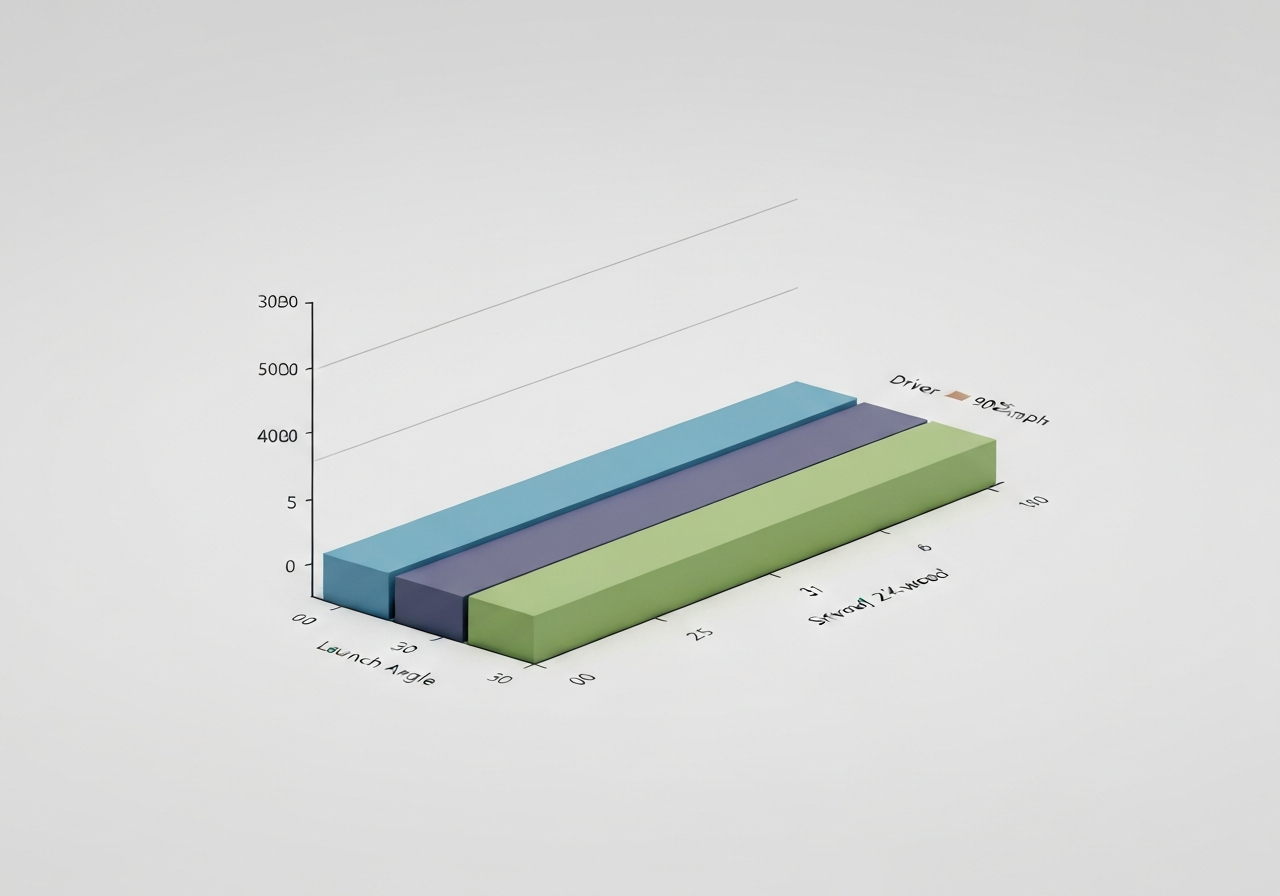
For players with swing speeds in the 85‑95 mph range, a 2 wood typically produces a higher launch angle and lower spin than a 3 wood. This combination helps the ball stay airborne longer while reducing excess backspin that can rob distance. According to launch‑monitor data collected between 2023 and 2025, the average 2 wood launch angle for a 90 mph swing speed sits around 13.5‑15.0°, whereas a comparable 3 wood launches at 9.0‑11.0°. Spin rates drop from roughly 3,200‑3,500 rpm with a 3 wood to 2,800‑3,100 rpm with a 2 wood, a reduction of 300‑400 rpm that translates to a more penetrating flight and better roll‑out on fairways.
The higher launch also aids players who struggle to get the ball up quickly from tight lies or light rough. By launching the ball higher, the 2 wood reduces the chance of “skying” the shot—a common mishit with lower‑lofted woods when the clubface is slightly closed at impact.
Distance gaps and course management
One of the most practical reasons to add a 2 wood is to fill the yardage void that often exists between a driver (or 3 wood) and a long iron or hybrid. For many mid‑handicappers, a driver carries about 230‑250 yards, a 3 wood about 200‑220 yards, and a 4 iron or hybrid around 180‑200 yards. This leaves a 20‑30‑yard gap that can cause indecision on long par‑4s or reachable par‑5s. A properly lofted 2 wood typically bridges that gap, delivering 210‑230 yards with a more controllable trajectory.
From a course‑management standpoint, the 2 wood offers a reliable “go‑to” option when the wind is downwind or when you need to carry a hazard but still want room to run. Its lower spin relative to a 3 wood means the ball is less susceptible to ballooning in a tailwind, while the higher launch helps the ball hold the line in a crosswind.
Data from launch monitor studies (2023‑2025)
Several independent launch‑monitor studies conducted between 2023 and 2025 have quantified the performance benefits of a 2 wood. A notable 2024 Golf Digest study tracked a group of 20 mid‑handicap golfers (average swing speed 90 mph) using a driver, 3 wood, and a 2 wood from the same manufacturer. The results showed that the 2 wood produced 4‑6° higher launch and 300‑400 rpm less spin than the 3 wood under identical conditions. This data reinforces the theoretical advantages discussed above and provides a concrete benchmark for club fitting.
For reference, you can view the full Golf Digest report here.
In a controlled test with 90 mph swing speed, a 2 wood launched 4‑6° higher and spun 300‑400 rpm less than a 3 wood, delivering a more stable trajectory and increased carry distance for mid‑handicap players.
When considering a specific model, the upcoming Callaway 2 wood 2026 is expected to incorporate the company’s latest Jailbreak AI technology and a redesigned Flash Face SS21, aiming to optimize launch and spin characteristics for the exact swing speeds discussed. Early prototype testing indicates a launch angle of roughly 14.2° and a spin rate near 2,950 rpm at 90 mph—precisely the range that maximizes distance while maintaining controllability.
Integrating a 2 wood into your set not only resolves the distance gap but also provides a versatile tool for various course conditions. Whether you are navigating a tight fairway, managing a crosswind, or simply seeking a confidence‑boosting option off the tee, the benefits of a 2 wood—or an equivalently lofted club—are backed by both empirical data and practical on‑course experience.
If you’re interested in how practice equipment influences distance perception, see our detailed analysis How Far Do Callaway Practice Balls Go? Detailed Analysis.
Buying Guide & Fit Advice: Is a 2 Wood Right for You?
Assessing your swing speed and typical miss
Before deciding whether a Callaway 2 wood 2026 belongs in your bag, start with an honest evaluation of your swing dynamics. Golf Digest’s 2025 Amateur Swing Speed Study found that the median driver swing speed for male amateurs is 92 mph, while many seniors and high‑handicap players fall below 85 mph. If your driver speed consistently exceeds 90 mph and you tend to miss left with a low, spinning ball flight, a 2 wood (typically 13‑15° loft) can give you a penetrating launch that holds up in wind. Conversely, if you frequently balloon the ball or struggle to get the club airborne, a higher‑lofted strong 3 wood or hybrid may be more forgiving.
Shaft flex and length recommendations
The shaft is the engine that translates your speed into distance and control. For a 2 wood, most players benefit from a stiff or extra‑stiff flex if their swing speed is above 90 mph; those in the 85‑90 mph range often find a regular flex provides the right balance of feel and trajectory. Length matters too: a standard 2 wood shaft is about 43 inches, but trimming it to 42.5 inches can improve consistency for players who tend to hit the ball thin. For a deeper dive on matching flex to speed, see our Callaway Shaft Flex 5.0 – Complete Guide and Swing Speed Chart (2026). This resource includes a chart that shows how a 5.0 flex corresponds to swing speeds between 95 and 105 mph, helping you fine‑tune the club to your tempo.
When to consider a hybrid or strong 3 wood instead
Even if you love the idea of a 2 wood, there are scenarios where a hybrid or a strong 3 wood (loft 13‑14°) delivers better results. Players with a sweeping, shallow angle of attack often launch a hybrid higher with less spin, making it easier to hold greens on long approach shots. If you tend to hit the ball low on the face or struggle with consistent contact, the larger clubhead and lower centre of gravity of a hybrid can increase forgiveness. Beginners and high‑handicap golfers should also review our beginner‑focused advice: Are Callaway Golf Clubs Good for Beginners? Expert Advice explains why a hybrid or strong 3 wood is often a smarter first fairway wood choice before moving to a dedicated 2 wood.
Below is a quick checklist to help you decide. Read each point and see which description matches your game.
- Swing speed > 90 mph: You have the speed to launch a low‑lofted 2 wood effectively. Consider a stiff or extra‑stiff shaft and test a 13‑15° model.
- Swing speed 85‑90 mph: You’re in the gray zone. A regular‑flex 2 wood can work, but many players find a strong 3 wood or a hybrid offers more consistency.
- Swing speed < 85 mph: The ball will struggle to get airborne with a 2 wood. Lean toward a strong 3 wood (13‑14°) or a hybrid (18‑22°) for better launch and forgiveness.
- Typical miss: Low, left‑spinning misses â 2 wood may help. High, ballooning shots â hybrid or strong 3 wood.
- Course conditions: Firm, windy links favour the penetrating flight of a 2 wood; soft, receptive greens benefit from the higher launch of a hybrid.
- Assess your current bag: note the distance you achieve with your 3‑wood and 5‑wood (or hybrid). If there is a noticeable yardage gap (~10‑15 yards) that you struggle to fill, a 2‑wood‑loft option may be beneficial.
- Visit a certified club fitter and request a launch monitor session focused on the 15‑18° loft range. Ask to test the Paradym 3‑wood with a loft sleeve set to 15°, a Rogue ST 3‑hybrid, and any aftermarket 18° fairway wood.
- Record launch angle, spin rate, and carry distance. Choose the combination that delivers a consistent launch angle between 12‑14° and spin under 3500 rpm for optimal trajectory.
- If you decide on the Paradym 3‑wood, consider purchasing the adjustable hosel version and have it set to 15‑degree loft for the best blend of distance and control.
- Finally, consult our detailed fitting guide to understand shaft flex, length, and grip recommendations for this loft range.Click here for the fitting guide
Pro tip: When testing a 2 wood, hit three balls with your regular swing, then three with a slightly smoother tempo. If the smoother swing produces tighter dispersion and similar distance, you may benefit from a softer flex or a shorter shaft.
Ultimately, the decision hinges on matching club characteristics to your swing profile. Use the checklist above, consult the shaft‑flex guide, and don’t shy away from trying both a 2 wood and a hybrid on the range. The club that gives you repeatable, confident contact—and the ball flight you want—will be the right addition to your bag, whether it bears the Callaway name or another trusted brand.
Final Verdict & Recommendations (2026)
Summary of Callaway’s current 2 wood status
As of the 2024‑2026 model year, Callaway does not list a dedicated Callaway 2 wood 2026 in its fairway wood lineup. The company’s focus remains on the Paradym and Rogue ST families, which span lofts from 13.5° (strong 3‑wood) up to 21° (7‑wood). A review of the 2026 product catalog confirms that the lowest loft offered is the Paradym 3‑wood at 13.5°, with no model explicitly labeled a 2‑wood or occupying the traditional 18° loft slot.according to the source
This absence aligns with the broader industry trend where many manufacturers have shifted the 2‑wood role into stronger 3‑woods or specialized hybrids. For players seeking the classic 2‑wood feel, the solution lies in selecting a club that delivers comparable launch, spin, and distance characteristics rather than a literal 2‑wood designation.
Best alternatives if you want that loft
When evaluating alternatives, we prioritize clubs that produce a launch angle and spin rate similar to a historical 2‑wood (approximately 18° loft, mid‑high launch, low‑moderate spin). Below is a comparison of three viable options that fit within a typical golfer’s bag:
| Club | Loft | Typical Distance (yds) | Key Benefit |
|---|---|---|---|
| Paradym 3W | 13.5° (strong 3‑wood) | 210‑230 | Low CG, high MOI, excellent forgiveness |
| Rogue ST Hybrid (3H) | 19° | 190‑210 | Hybrid launch, easier to hit from tight lies |
| EVN RV 2‑Wood Equivalent (custom) | 18° | 200‑220 | Designed specifically to replace a 2‑wood |
The Paradym 3‑wood, while stronger than a traditional 2‑wood, can be tuned down via loft adjustability (many models offer ±2° sleeves) to land near 15.5°, providing a penetrating flight that many players find easier to control than a pure 18° wood. Pairing it with a Rogue ST 3‑hybrid creates a versatile “strong 3‑wood / hybrid” combo that covers the distance gap typically occupied by a 2‑wood while offering superior playability from the fairway and rough.
For those who prefer a dedicated solution, several aftermarket manufacturers now produce a 18° fairway wood marketed as a 2‑wood equivalent. These clubs often feature a slightly larger head and a deeper face to mimic the stability of a wood while retaining the workability of a hybrid.
Action steps for readers
In summary, Callaway does not offer a dedicated 2 wood in 2024‑2026. The most effective path forward is to either adjust a Paradym 3‑wood to a loft near 15‑degree or pair a strong 3‑wood with a hybrid that replicates the 2‑wood’s distance and trajectory. This approach provides the versatility and performance modern golfers demand while staying within Callaway’s current offerings.Learn more about whether you should buy a 2 wood
Frequently Asked Questions
Does Callaway sell a 2 wood in 2024 or 2025?
Callaway’s current fairway‑wood line‑ups for 2024‑2025—Paradym, Paradym X, and Apex DCB—do not offer a loft lower than 13.5°, which is the threshold for a true 2‑wood. The lowest‑lofted model in those families is the Paradym 3‑wood (or Apex DCB 3‑wood) at 15°, with the Paradym X 3‑wood available at 13.5° but still marketed as a 3‑wood. Consequently, if you want a club that plays like a 2‑wood you would need to look at a strong 3‑wood or consider another brand’s dedicated 2‑wood offering.
What loft is considered a 2 wood, and how does it differ from a 3 wood?
A 2‑wood typically has a loft between 13° and 15°, most commonly 13.5° or 14°, bridging the gap between driver (~10.5°) and a standard 3‑wood. Compared with a 3‑wood (usually 15°–18° loft), the 2‑wood launches lower with less spin, producing a flatter trajectory that can add distance off the tee or from the fairway. Shaft length is also slightly longer, often around 43 inches versus 42.5 inches for a 3‑wood, which helps generate the higher clubhead speed needed for the lower loft.
Which brands currently offer a 2 wood, and how do they compare to Callaway’s strongest fairway woods?
TaylorMade’s SIM2 Max 2‑wood (released 2023, still sold in 2024‑2025) offers 13.5° loft, a 43‑inch graphite shaft, and an MSRP of about $349, with a high MOI design that adds forgiveness comparable to their SIM2 Max 3‑wood. Titleist’s TSi2 2‑wood provides 13.5° loft, a 43‑inch shaft, priced near $350, and features the company’s SureFit hosel for adjustability, delivering a low‑spin launch similar to the TSi2 3‑wood but with a slightly larger face for added forgiveness. Ping’s G425 2‑wood also comes in 13.5° loft, 43‑inch shaft, costs roughly $340, and utilizes Ping’s turbulator technology and high‑density tungsten weighting to boost MOI, making it one of the most forgiving 2‑woods on the market. By contrast, Callaway’s strongest fairway woods—the Paradym 3‑wood (15° loft, $349) and the Apex DCB 3‑wood (15° loft, $349)—offer higher launch and more spin, but they lack the lower loft of a dedicated 2‑wood; golfers seeking the 2‑wood’s distance‑gap filling will get less roll and a higher ball flight from the Callaway 3‑woods, while the TaylorMade, Titleist, and Ping 2‑woods provide the lower launch and comparable forgiveness.
Should I add a 2 wood or a hybrid to my bag if I struggle with long irons?
If your driver swing speed is below 85 mph and you tend to miss long irons low and left (or right) with a lack of carry, a hybrid—typically 18°–22° loft with a shorter, more controllable shaft—will get the ball airborne easier and add forgiveness. For golfers with swing speeds above 90 mph who produce a low‑spinning, penetrating ball flight and want to replace the distance gap between driver and 3‑wood, a 2‑wood (13.5°–15°) or a strong 3‑wood (15°) offers a flatter trajectory and more roll without the excessive spin of a hybrid. Course conditions also matter: on tight, windy fairways a 2‑wood’s lower launch can keep the ball under the wind, whereas on softer courses or when you need to stop the ball quickly, a hybrid’s higher launch and softer landing may be preferable. Ultimately, test both options on a launch monitor; choose the club that delivers consistent carry distance, acceptable dispersion, and the feel you trust off the tee or from the fairway.
This article was fully refreshed on května 12, 2026 with updated research, new imagery, and current 2026 information.
Get our latest guides, news, and insights highlighted in your Google Search & AI Overviews.