
✨ This article was AI edited. Editorial responsibility: GolfGearDirect.blog.

If you are trying to find the best wedge bounce for average golfer setups, you are likely exhausted from chunking chips and watching your ball travel only two feet forward.
A lot of mid-to-high handicappers run out to buy the newest, most expensive wedges, assuming the shiny technology will magically fix their erratic short game. We tested dozens of wedge configurations, and we found that matching your personal swing mechanics to the correct bounce angle is the absolute most critical step to stop the clubhead from violently digging into the grass.
Generally, a mid to high bounce between 10 and 14 degrees is the ideal setup for most mid-to-high handicappers. This specific angle measurement provides the ultimate forgiveness by acting as an aggressive buffer against poor strikes, physically preventing the club from digging deep into the ground when you hit slightly behind the ball.
New wedge releases often highlight complex specifications and tour-level geometries, but getting this one fundamental number right changes everything about how you strike the ball.
Hitting crisp, spinning pitch shots is not about raw talent; it is largely about having a tool that physically prevents you from making a fat strike. However, there is a specific turf condition where having the supposedly “forgiving” high bounce will actually ruin your shot completely, and most amateurs never check the ground before they swing.
Table of Contents
- What Is the Best Wedge Bounce for an Average Golfer?
- Understanding How the Sole and Leading Edge Affect Turf Interaction
- Steep Swing vs. Shallow Swing: Matching Bounce to Your Angle of Attack
- How to Choose the Right Bounce for Firm Turf vs. Fluffy Sand
- A Simple Guide to Wedge Grind for Mid-Handicappers
- Common Mistakes When Buying a Sand Wedge
- Testing Your Divot Depth to Confirm Your Bounce Choice
- Final Thoughts Before You Get Custom Fitted
- Frequently Asked Questions
What Is the Best Wedge Bounce for an Average Golfer?
Generally, a mid to high bounce between 10 and 14 degrees is the ideal setup for most mid-to-high handicappers.
This specific angle measurement provides the ultimate forgiveness by acting as an aggressive buffer against poor strikes. When you inevitably make contact slightly behind the ball, this angle prevents the club from digging deep into the ground.
Master clubmakers like Bob Vokey from Titleist have long championed higher bounce options for amateur players. He frequently describes this feature as your built-in skid pad.
Instead of getting stuck in the dirt and stopping your follow-through, the club simply glides through the grass, maintaining its speed. This gives you a massive margin for error, improving your overall turf interaction significantly on almost every shot.
If you play most of your rounds on standard municipal grass and occasionally find yourself trapped in fluffy sand, putting a 12-degree bounce on your sand wedge will drastically improve your escape consistency. The extra mass pushes the club up and out of the hazard. If you want to see exactly which modern club models offer these exact specifications, we have compiled an updated list of the best sand wedges for high handicappers to help you choose the right tool for your specific bag.
Understanding How the Sole and Leading Edge Affect Turf Interaction
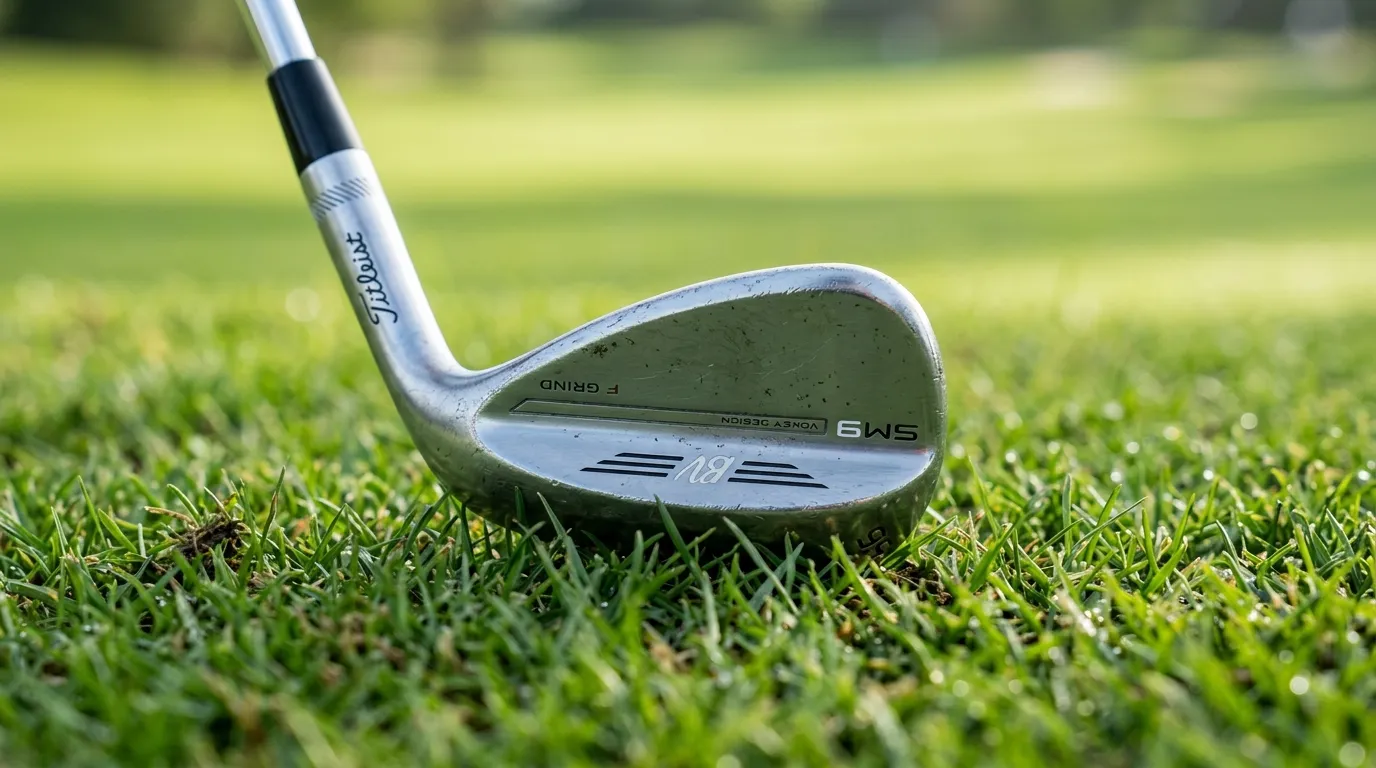
To understand why this specific degree measurement matters so much, you need to look closely at the bottom physical structure of your golf club.
The bounce is mathematically defined as the angle created between the leading edge (the sharp, front-facing bottom part of the clubface) and the lowest trailing point of the sole (the wide bottom of the clubhead).
When you purchase a wedge with a high degree of bounce, that leading edge sits visibly higher off the ground when you place the club flat behind the golf ball.
This intentional design feature means the wide, flat sole hits the ground first during your downswing. It physically stops the sharp front blade from slicing deep into the earth like a shovel.
Conversely, a low bounce wedge allows that front blade to sit flush against the grass, almost hugging the dirt. While elite professionals love this flush profile for striking incredibly precise, nippy pitch shots off bare dirt, average players typically struggle with it.
Any slight miscalculation in your downswing results in a massive chunked shot because the sharp edge immediately digs a trench into the fairway.
Steep Swing vs. Shallow Swing: Matching Bounce to Your Angle of Attack
Your natural, unedited swing mechanics dictate exactly how your club enters the hitting zone just before impact.
We call this path the angle of attack, and it is the single biggest determining factor for what wedge equipment you desperately need.
Steep Swing (Diggers)
Players with a steep swing bring the club down on a sharp, aggressive downward trajectory, similar to chopping wood. If this sounds exactly like your swing, you likely take a massive, deep divot after every short iron shot. A steep downward motion absolutely requires a higher bounce (typically 12 to 14 degrees). You need that extra metallic material on the bottom of the club to aggressively resist digging deeply into the earth and slowing the clubhead speed to zero.
Shallow Swing (Sweepers)
Players with a shallow swing act much more like sweepers. They sweep the ball cleanly off the top of the grass blades, leaving very little damage or disturbed soil behind. If your divot depth is practically non-existent, a high bounce wedge will actually backfire. The thick sole will bounce forcefully up off the grass and strike the middle equator of the golf ball, causing a thin shot. For a shallow angle of attack, a lower bounce (8 to 10 degrees) performs significantly better.
How to Choose the Right Bounce for Firm Turf vs. Fluffy Sand
The specific golf courses you regularly play should heavily influence what iron configurations sit in your bag.
Soft, lush country club conditions demand completely different equipment geometries than hard, baked-out public fairways during a dry summer.
When you play your rounds on firm turf, the hardened ground offers very little give or cushion. A wedge with too much material on the bottom will literally ricochet off the hard dirt before the face ever touches the ball.
This violent bounce leads directly to bladed shots that fly miles over the green. In these hardpan conditions, or when you are forced to hit off bare tight lies with no grass underneath the ball, a lower bounce (around 6 to 8 degrees) is mandatory. It allows the leading edge to get cleanly under the ball without bouncing.
However, when you are playing in soft, muddy winter conditions or navigating thick bunkers overflowing with fluffy sand, you need maximum physical help preventing the heavy clubhead from sinking out of sight.
A higher bounce of 12 to 14 degrees is perfect here. It acts like a surfboard, allowing the clubhead to aggressively splash through the sand without getting buried, popping the ball out smoothly and softly onto the putting surface.
A Simple Guide to Wedge Grind for Mid-Handicappers
You will frequently see letters like S, M, F, or K stamped onto the back of modern wedges, which refer directly to the club’s specific grind.
Grind simply refers to the specific physical areas where heavy material has been artificially shaved off the sole by the manufacturer using a grinding wheel.
By removing metal material from the heel, toe, or trailing edge of the clubhead, the clubmaker permanently changes how the club interacts with the grass when you manipulate the face. For a mid-handicapper looking for ultimate consistency, a standard full grind (often labeled an F grind) is usually the best starting point. It leaves the sole fully intact, offering maximum forgiveness and consistent performance on square-faced, straightforward pitch shots.
However, if you enjoy getting highly creative around the greens and playing distinct shot types, a specialized grind becomes incredibly useful.
By having material removed specifically from the heel section, you effectively lower the active bounce when you try opening the club face for a flop shot. This heel relief allows the leading edge to stay low and tight to the ground, even when the clubface is laid wide open to the sky.
Common Mistakes When Buying a Sand Wedge
The most frequent mistake mid-to-high handicappers make is purchasing their short game tools solely based on loft angles.
They will blindly purchase a 56-degree club simply because they know they need a sand wedge, completely ignoring the second, equally important number stamped on the hosel. Buying a 56-degree wedge with a 4-degree bounce for bunker play is a recipe for leaving every single shot in the trap.
Another incredibly common error is copying the exact equipment setups of PGA Tour professionals. You might read in a magazine that a famous player uses a highly specialized 4-degree bounce on their lob wedge.
You must remember that professionals possess elite hand-eye coordination and strike the ball with millimeter perfection every single time. Mimicking their unforgiving setup usually results in a frustrating disaster for the weekend recreational player who needs margin for error.
Finally, many golfers buy a matching set of identical wedges with the exact same bounce profile across all their scoring clubs. A much smarter, more strategic approach is to mix your setup intentionally. Carry a 12-degree or 14-degree sand wedge dedicated for bunker play and soft grass, alongside an 8-degree gap wedge reserved strictly for tighter fairway lies. This built-in versatility prepares you for any wild situation the golf course throws at you.
Testing Your Divot Depth to Confirm Your Bounce Choice
You absolutely do not need an expensive, radar-based launch monitor to figure out your core swing type.
The undeniable physical proof is right there in the grass immediately after you hit a shot. Go to the practice range, hit ten full wedge shots off natural, real grass, and closely inspect the damage you leave behind.
If your divots resemble long, deep trenches that look like a massive dollar bill carved into the earth, you are an aggressive digger. You absolutely need 12 to 14 degrees of bounce to stop the club from getting stuck in the mud and twisting in your hands.
If your divots are incredibly shallow, merely bruising the top of the grass blades like a light scrape, you are a natural sweeper. A mid-bounce of 10 degrees is likely your perfect sweet spot for all-around play. If you pick the ball completely clean without leaving a single mark on the turf, you might even consider dropping down to 8 degrees to ensure crisp, direct contact with the ball.
Final Thoughts Before You Get Custom Fitted
Choosing the correct equipment specifications transforms your short game from a source of constant anxiety into a reliable scoring weapon.
By simply understanding your unique swing tendencies and matching them directly to the appropriate physical club design, you instantly eliminate the fat, chunked chips that completely destroy your scorecard on the weekends.
While taking the time to learn about these critical specifications gives you a massive mental advantage over your playing partners, nothing beats having a seasoned professional evaluate your swing in real-time. A trained equipment expert will use technology to measure your exact impact dynamics, divot patterns, and speed, eventually handing you the perfect club configuration.
We highly recommend you get custom fitted for your wedges so you can step onto the first tee with total, unshakable confidence in your gear.
Frequently Asked Questions
Should a 56 degree wedge have high or low bounce?
For an average golfer, a 56 degree wedge should typically have a mid to high bounce (10 to 14 degrees). This provides enough forgiveness in fluffy sand, preventing the leading edge from digging in and causing chunked shots. See our guide on the best sand wedges for high handicappers.
Is 10 or 12 bounce better for a sand wedge?
It depends on your angle of attack. If you have a steep swing and take deep divots, 12 degrees of bounce is better. If you have a shallow swing and play on firm turf, 10 degrees offers better turf interaction.
What is the most forgiving wedge bounce?
High bounce (12-14 degrees) is generally the most forgiving wedge bounce for average golfers. It acts as a skid pad on the turf, helping the sole glide through the grass rather than digging, minimizing fat shots.
Do I need a different bounce for tight lies?
Yes, when playing off tight lies, a lower bounce (4-8 degrees) is ideal. It allows the leading edge to sit closer to the ground, ensuring you can make clean contact without the club bouncing into the golf ball.
How does grind relate to bounce on a wedge?
Grind is the removal of material from the sole of the wedge, altering how the bounce interacts with the turf. A specific grind can effectively lower the bounce when opening the club face for a flop shot.
Get our latest guides, news, and insights highlighted in your Google Search & AI Overviews.