
✨ This article was AI edited. Editorial responsibility: GolfGearDirect.blog.
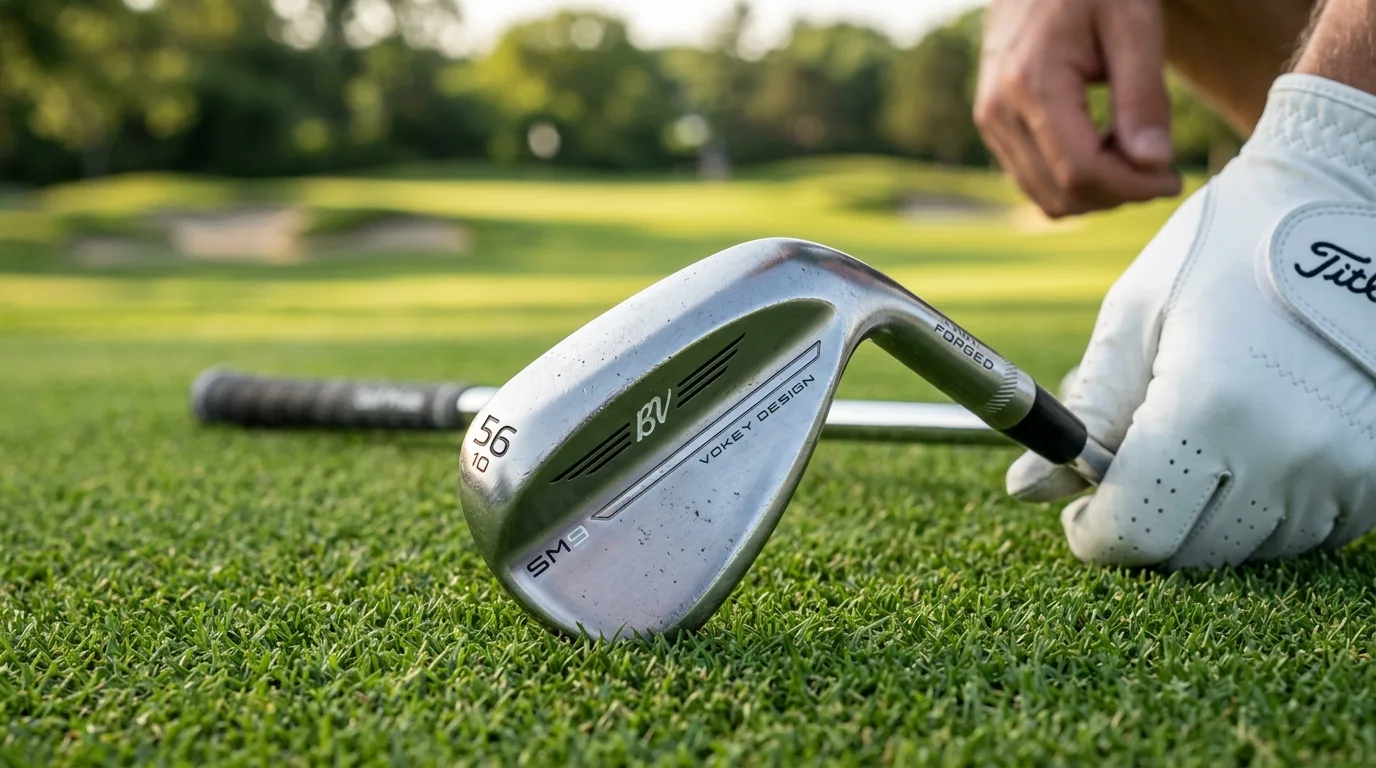
What is bounce on a golf wedge? It is the angle between the Leading Edge and the lowest point of the club’s Sole, dictating how much the clubhead resists digging into the ground at impact.
If you constantly hit fat shots and chunk the ball, you probably blame your swing technique. We analyzed hundreds of amateur swings and found the real culprit is almost always the club itself. You are likely using a wedge specification that actively fights against your natural motion—and fixing it requires changing just one hidden number on your clubhead.
Table of Contents
- What is Bounce on a Golf Wedge? (The Basics Explained)
- Low Bounce vs High Bounce: Which Do You Need?
- How Your Swing Mechanics (Sweeper vs Digger) Affect Bounce
- Matching Bounce to Course Conditions (Soft Turf vs Tight Lies)
- 3 Steps to Choose the Right Wedge Bounce for Your Game
- Does Wedge Grind Change How Bounce Works?
- Common Myths About What is Bounce on a Golf Wedge
- Final Thoughts: Don’t Let the Wrong Bounce Ruin Your Score
- Frequently Asked Questions
What is Bounce on a Golf Wedge? (The Basics Explained)
Look at the bottom of your wedge. The Sole sits at an angle relative to the ground. The difference between the leading edge and the Trailing Edge creates the bounce angle. This design feature acts like a skid plate.
Proper Turf Interaction ensures the clubhead glides through the grass rather than burying itself in the dirt. Master clubmakers like Bob Vokey from Titleist pioneered these designs to give golfers more margin for error on delicate chips.
Low Bounce vs High Bounce: Which Do You Need?
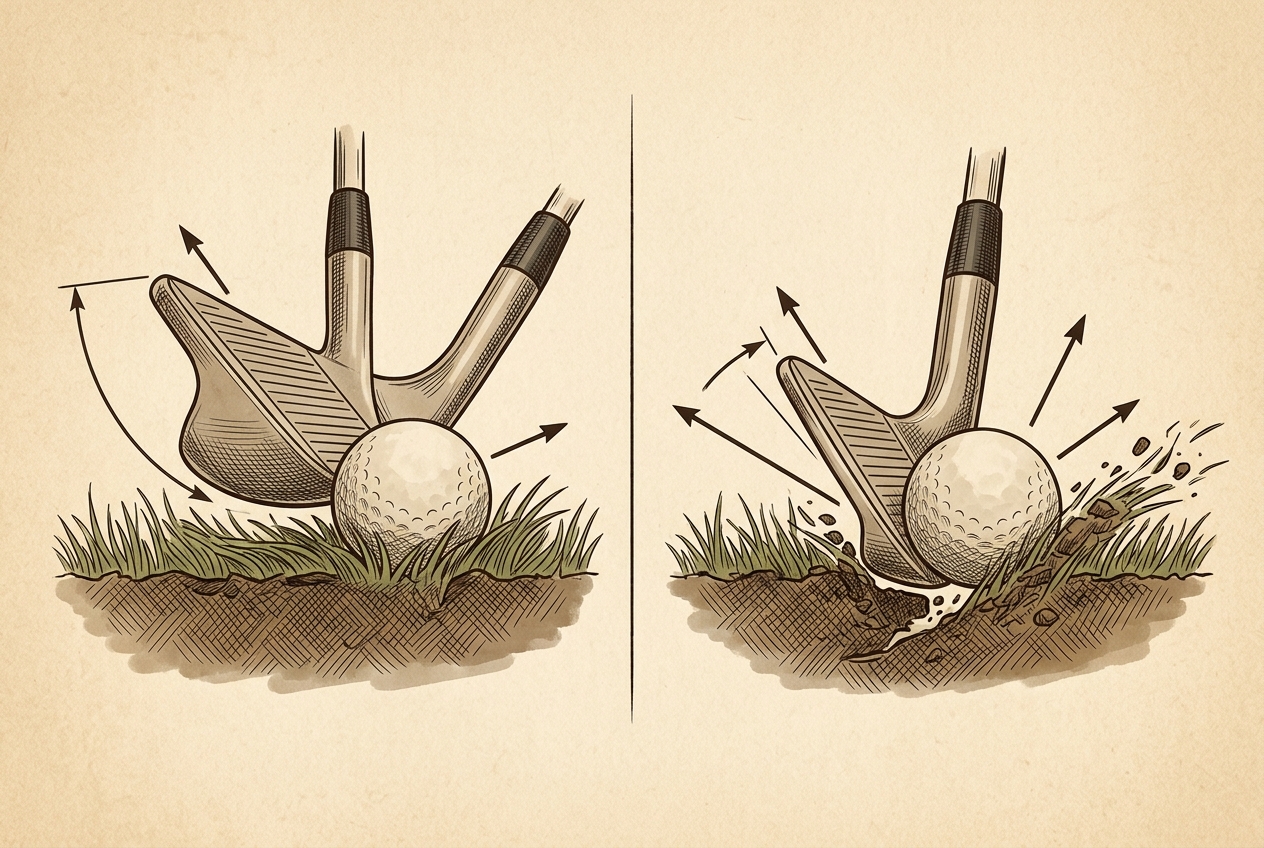
Wedges typically range from 4 to 14 degrees of bounce. Choosing between them depends entirely on your Angle of Attack and the specific shot you face.
Low Bounce Wedges (4°-6°)
Low bounce wedges sit flatter on the ground. They are ideal for firm conditions but require precise ball-striking. When deciding between these options, understanding the differences in loft and bounce between sand and lob wedges becomes critical to avoid hitting a dreaded thin shot.
High Bounce Wedges (10°-14°)
High bounce wedges sit higher, exposing more of the sole. They act as a safeguard against digging, making them highly forgiving for average golfers who struggle with heavy contact.
How Your Swing Mechanics (Sweeper vs Digger) Affect Bounce
Your natural swing dictates your equipment needs. If you have a steep swing and take a massive Divot, you are a digger. Diggers need high bounce to prevent the club from trenching into the earth.
Conversely, if you have a shallow swing and barely bruise the grass, you are a sweeper. A sweeper benefits from low bounce, allowing the club to slip under the ball cleanly.

Matching Bounce to Course Conditions (Soft Turf vs Tight Lies)
Course environments dramatically alter how your wedge performs. Soft turf and bunkers demand high bounce so the club does not sink. Firm turf requires low bounce.
If you face bare dirt or tight lies, a high bounce wedge sits too high, practically guaranteeing a bladed ball. For example, playing a flop shot off a tight lie requires low bounce so the leading edge stays flush with the firm ground.
3 Steps to Choose the Right Wedge Bounce for Your Game
First, identify your typical swing path. Second, assess your home course conditions. Third, build a versatile setup.
Most players use a high bounce Sand Wedge for bunker escapes and a mid-to-low bounce Lob Wedge for delicate chips. To build your ideal bag, check out our guide on the best wedges for your handicap.
Does Wedge Grind Change How Bounce Works?
Yes, the grind modifies the bounce. Grind refers to the removal of material from the heel, toe, or trailing edge of the sole.
By grinding away specific sections, manufacturers alter how the bounce engages with the turf when you open or close the clubface. A versatile grind allows you to manipulate a high bounce wedge as if it had lower bounce on specific open-faced shots.
Common Myths About What is Bounce on a Golf Wedge
Many golfers believe more bounce always equals more forgiveness. While high bounce stops chunking, it punishes you heavily on firm ground.
Another myth suggests you only need bounce in sand. Every shot around the green relies on bounce to control the depth of your strike.
Final Thoughts: Don’t Let the Wrong Bounce Ruin Your Score
Understanding your gear transforms your short game. Match your wedge specifications to your swing tendencies and course conditions, and you can instantly improve your strike quality.
Frequently Asked Questions
Is 10 degrees a lot of bounce on a wedge?
10 degrees of bounce is typically considered a mid-bounce wedge rather than a high bounce. It serves as the most versatile option, suitable for a wide variety of turf conditions and swing types, including both sweepers and diggers. If you play on average courses with normal turf, mid-bounce is ideal for you. To read more about how this fits into your overall setup, check our guide on the best wedges for your handicap.
What happens if you have too much bounce on a wedge?
If you have too much bounce for your swing or tight lies, the leading edge will sit too high off the ground. This often results in a thin shot, as the sole skips over the turf instead of gliding through it.
Should high handicappers use high or low bounce wedges?
High handicappers generally benefit the most from high bounce wedges featuring 10 degrees or more. The extra bounce acts as a safeguard that prevents the leading edge from digging deep into the turf, significantly reducing fat shots and providing much more forgiveness on those inevitable heavy strikes around the greens. Find the best forgiving models in our best wedges for your handicap review.
What bounce is best for soft turf and bunkers?
High bounce wedges ranging from 12 to 14 degrees are generally the best choice for soft turf and fluffy sand. Their wider sole and increased bounce angle effectively help the club glide smoothly through soft material without digging too deeply, which drastically improves your angle of attack and turf interaction. Read more about the differences in loft and bounce between sand and lob wedges to refine your short game strategy.
Do I need low bounce for a sweeper swing?
Yes, if you have a naturally shallow swing or consider yourself a sweeper who takes little to no divot, a low bounce wedge of 4 to 6 degrees is highly recommended. It allows the leading edge to sit closer to the ground and get under the ball easily on tight lies.
Get our latest guides, news, and insights highlighted in your Google Search & AI Overviews.