Ever glanced at a Callaway golf ball and wondered what the numbers actually signify? Beyond mere branding, these digits encode vital performance data tied to compression, construction, and intended player profile—critical knowledge for optimizing your game in 2026. Understanding the Callaway golf ball numbers meaning empowers recreational and intermediate golfers to make smarter, equipment-driven decisions that align with their swing dynamics and on-course goals.
The Evolution of Callaway’s Numbering System: From Simple Compression to Multi-Factor Performance Tags
Understanding the Callaway golf ball numbers meaning requires looking back at how golf equipment marketing has evolved over the last three decades. In the past, selecting a ball was a linear process based largely on a single metric. Today, it is a complex evaluation of core technology, layer construction, and aerodynamic design. The shift from simple compression ratings to modern performance tags reflects the industry’s move toward personalized fitting rather than one-size-fits-all categorization.
Historical context: When numbers primarily indicated compression
Decades ago, the numbers stamped on golf balls often correlated directly with compression ratings. A ball marked “100” was a high-compression ball designed for players with faster swing speeds, while a “90” or “80” indicated a softer feel for moderate swingers. This Callaway golf ball compression logic was straightforward but limited. It ignored spin rates, launch angles, and short-game control. Additionally, some numbers served purely aesthetic or identification purposes. For instance, according to Longwood GC, triple-digit numbers like 300 or 500 often indicate the total number of dimples on the ball, which is more about design than performance characteristics.
Shift to multi-layer construction and why single-number compression became obsolete
As urethane covers and multi-layer cores became standard, the old compression numbering system failed to capture performance nuances. A modern ball might have a low compression core but a high spin cover, rendering a single number misleading. This is why the current model numbering system focuses on identification rather than specs. The Golf Shop Online notes that regardless of whether the ball is numbered 1 or 4, if it is the same model, it has the same construction and will perform the same way. The number is merely an identifier to distinguish your ball from your playing partner’s.
Era
Primary Indicator
Limitation
Pre-2010s
Compression Rating (e.g., 90, 100)
Ignored spin and layer interaction
2024-2026
Model Tier (Tour, Soft, Distance)
Requires deeper tech knowledge to fit
How Callaway’s 2024-2025 model numbering reflects technology tiers, not just feel
In the 2024-2025 lineup, Callaway utilizes specific core technologies that defy simple compression labels. The Chrome Soft X features a Dual Core design that maintains low compression for feel while generating high speed for distance. Conversely, the ERC Soft uses a HyperElastic SoftFast Core to maximize energy transfer without sacrificing greenside control. Because these technologies interact differently depending on swing speed, relying on old compression logic can lead to poor fitting.
Decoding the Core: What Compression Ratings Really Mean in Modern Callaway Balls
For decades, golfers have obsessed over the digits printed on the side of their ball, assuming a direct correlation to performance. However, truly understanding Callaway golf ball numbers meaning requires looking past the ink and into the engineering beneath the surface. In 2026, compression is no longer a standalone metric but one variable in a complex system of energy transfer.
The myth of linear compression: Why a ’70’ doesn’t behave the same across models
The traditional advice suggesting golfers with swing speeds under 85 mph must play 60 or 70 compression balls is outdated. Modern materials science has decoupled feel from pure compression ratings. A critical fact often overlooked is that the printed number on the ball is merely an identifier. According to The Golf Shop Online, whether the ball is numbered 1 or 4, if it is the same model, it has the same construction and will perform the same way. The number does not indicate the ball’s compression rate or performance characteristics.
This means a “low compression” label on a modern tour ball might feel softer than a dedicated “soft” ball from five years ago due to advanced core chemistry. Relying on a simple compression rating explained through old charts can lead to poor fitting. The interaction between swing speed and core resilience is non-linear.
Core innovations: Graphene-infused Dual SoftFast Core vs. HyperElastic SoftFast Core
Callaway has diversified its core technology to manage energy return without sacrificing feel. The ERC Soft utilizes a Graphene-infused Dual SoftFast Core. Graphene strengthens the core structure, allowing it to be larger and softer while maintaining high velocity. In contrast, the Chrome Soft X features the HyperElastic SoftFast Core. This material is designed to maximize energy transfer for faster swing speeds while retaining a soft urethane cover feel.
Feature
Expert Insight: The printed number serves a practical purpose for identification on the course or a sentimental one for the player. Performance is dictated by the model name, not the digit.
To select the right equipment, players must analyze the model-specific engineering. Below is a breakdown of the current lineup based on compression, core technology, and intended player profile.
The Chrome Soft series represents Callaway’s tour-level offering, designed for players seeking greenside control without sacrificing distance. The standard Chrome Soft features a lower compression profile, typically rated around 75, providing a softer feel for players with moderate swing speeds who still require spin separation. Conversely, the Chrome Soft X compression rating sits higher, approximately at 90. This firmer feel benefits faster swing speeds, allowing for reduced driver spin while maintaining high iron spin.
Both models utilize advanced dual-core technology. This construction helps maximize energy transfer at impact, ensuring that even off-center hits retain ball speed. The inclusion of the PARALOID Hybrid Cover further enhances durability and spin control, making these balls viable for low-handicap golfers who demand consistency in all weather conditions.
ERC Soft & Supersoft: HyperElastic core for distance and feel
For golfers prioritizing distance and a unique feel off the putter face, the ERC Soft line is engineered with ERC Soft core technology. This features the HyperElastic SoftFast core, which is designed to maximize compression across a wide range of swing speeds. With a compression rating around 75, the ERC Soft offers a balance between the soft feel of the Supersoft and the performance of the Chrome Soft.
The standard Supersoft remains a benchmark for low-compression balls, often rating below 70. It is ideal for players seeking to reduce spin off the tee to minimize slices or hooks. The cover technology on these models promotes a high launch angle, helping players achieve carry distance even with slower clubhead speeds.
Supersoft Magna & Warbird 2.0: High-launch, low-spin designs for moderate swing speeds
The Supersoft Magna takes the low-compression philosophy and adds a larger diameter option for some markets, focusing on high launch characteristics. The Supersoft Magna launch profile is optimized to get the ball airborne quickly, which is crucial for players struggling with elevation on approach shots. For those interested in the regulatory status of oversized variants, you can read more about Callaway Supersoft Max legality and performance to understand conforming vs. non-conforming options.
On the extreme end of distance lies the Warbird 2.0. This two-piece ball is designed purely for speed. It features a large, high-energy core that maximizes velocity for players with moderate swing speeds who need every yard of carry and roll. The ionomer cover ensures durability, making it a cost-effective choice for high-handicap players or range use.
Key Takeaway: Callaway recommends testing balls from the green back to the tee. Feel and spin on short game shots should dictate your choice more than extra yards off the tee.
Reference Table: Model Specifications and Player Fit
The following matrix summarizes the technical distinctions across the 2024-2025 lineup to assist in your selection process.
Model
Compression Range
Key Technology
Ideal Player Profile
Chrome Soft X
~90
Dual-Core, PARALOID Hybrid Cover
Low handicap, fast swing speed
Chrome Soft
~75
Dual-Core, Urethane Cover
Mid handicap, tour feel seeker
ERC Soft
~75
HyperElastic SoftFast Core
Distance seeker, moderate speed
Supersoft
<70
Low Compression Core
High handicap, straight flight
Warbird 2.0
High
Large High-Energy Core
Maximum distance, durability
Tour Performance: Choose Chrome Soft X if you need workability and spin control around the greens.
Recreation: Choose Supersoft or Warbird if straight distance and durability are your primary goals.
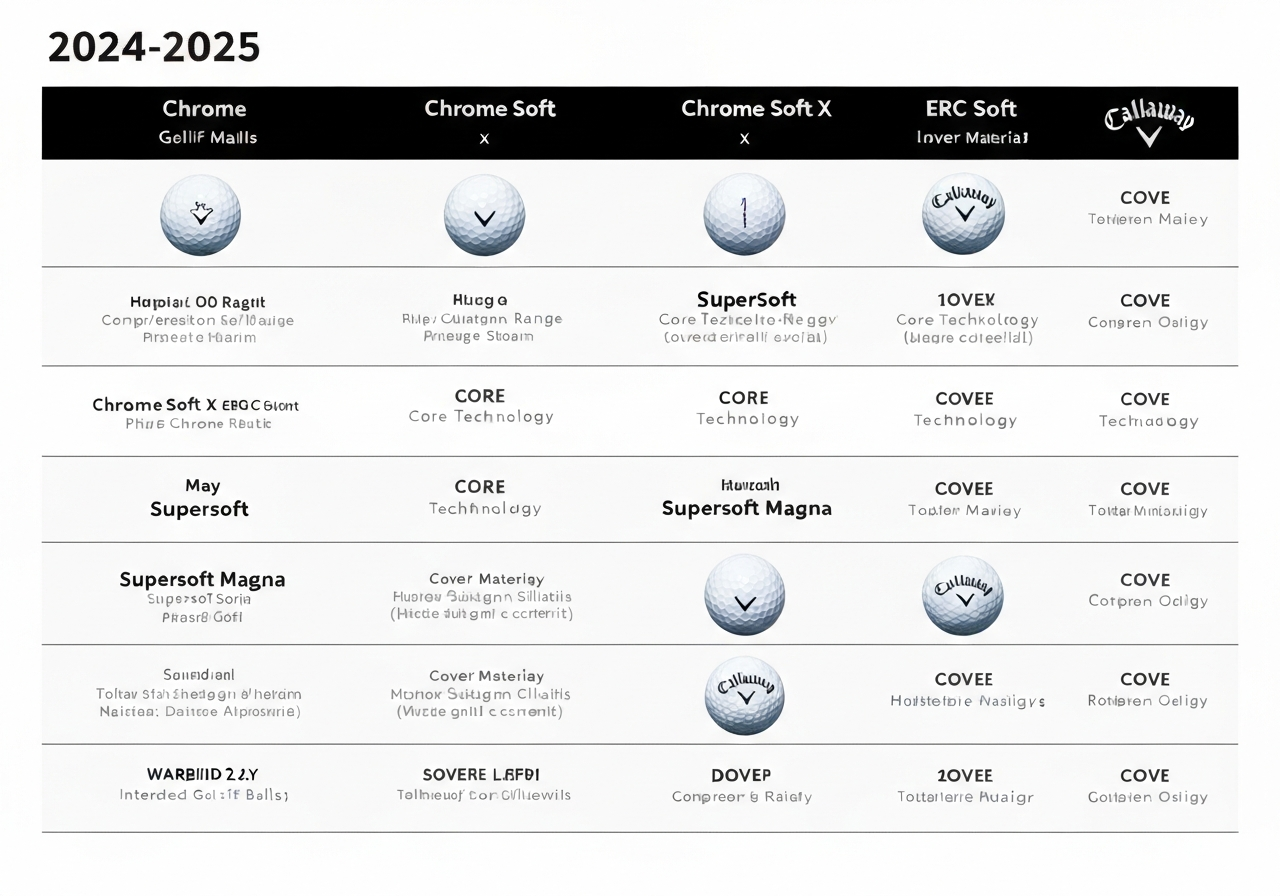
Current Callaway golf ball lineup with compression ranges, core technologies, and targeted player profiles for informed selection in 2026.
How Callaway’s Numbering System Fits Into Modern Ball Fitting: Beyond Swing Speed
Understanding the Callaway golf ball numbers meaning is only the first step in selecting the right equipment. While the printed digit on the side of the ball serves as an identifier, modern fitting relies on much deeper performance metrics. According to The Golf Shop Online Blog, the numbers 1 through 4 marked on the exterior do not indicate compression rates or construction differences. Regardless of the number, the model performs identically. This clarification is vital because it shifts the focus from superstition to science during the golf ball fitting process.
“It’s important to note that these numbers do not indicate the ball’s compression rate, construction, or performance characteristics. Regardless of whether the ball is numbered 1 or 4, if it’s the same model, it has the same construction and will perform the same way.”
Why Launch Monitor Data Trumps Compression Matching
Historically, golfers matched ball compression to swing speed. Today, launch monitor data prioritizes spin rate optimization and efficiency. A player with a 105 mph swing speed might generate too much spin with a soft core, causing ballooning shots. Conversely, a smooth swinger with the same speed might need a higher compression core to maximize energy transfer. This is where understanding launch angle Callaway models provide becomes critical. Fitters now look at spin windows and descent angles rather than just how hard you hit the ball.
Callaway’s Fitting Philosophy: Optimizing for Spin Consistency and Launch Efficiency
Callaway designs its lineup to cover specific spin profiles rather than just speed brackets. For example, the Chrome Soft X is engineered for lower spin off the driver for tour players, while the ERC Soft focuses on maximizing distance for moderate speeds. Think of this energy transfer like an electric caddy system. Just as you might read How electric golf trolleys work – analogy for energy transfer in ball flight to understand battery efficiency, a golf ball core must efficiently transfer clubhead energy into ball speed without wasting power on excessive spin.
Expert Insight: According to The Golf Shop Online, the numbers 1 through 4 marked on Callaway balls do not indicate compression rate, construction, or performance characteristics. Regardless of whether the ball is numbered 1 or 4, if it is the same model, it has the same construction and will perform the same way.
Myth: Higher Number Equals Better Performance or Advanced Player Only
A prevalent belief suggests that a number 4 ball is designed for low-handicap players while a number 1 is for beginners. This is false. These digits are simply personal identifiers to help players distinguish their ball from others in the group. Furthermore, older color-coding systems (Red, Blue, Green) suggesting compression levels are outdated and no longer apply to modern 2026 lineups. Relying on these visual cues instead of actual spec sheets leads to poor fitting.
Myth: Compression Alone Determines Distance or Feel
While compression affects feel, it is not the sole driver of distance. Modern engineering prioritizes energy transfer across layers. A low-compression ball with advanced mantle technology can outperform a high-compression ball with outdated design. Focusing exclusively on compression ignores the cover thickness influence on spin rates and greenside control.
Reality: Aerodynamics and Construction Outweigh Core Compression
The true performance differentiators lie in the dimple aerodynamics impact and internal architecture. For instance, the Chrome Soft X utilizes seamless aerodynamics and a dual-core design to shape flight and spin profiles far beyond what core compression alone dictates. This focus on airflow stability mirrors innovations seen in driver design, such as the Callaway Rogue Sub Zero driver tech – parallel in aerodynamics focus.
Old School Thinking
Number 4 = Pro Ball
Red Dot = High Compression
Compression = Distance
Modern Reality
Numbers = ID Only
Color Codes = Obsolete
Aerodynamics + Layers = Distance
The Role of Color and Alignment Aids: Truvis, Sidestamp, and Visual Perception (Not Performance Tiers)
When golfers examine their equipment, visual cues often dictate perception. However, understanding the Callaway golf ball numbers meaning and color variations is critical to avoiding performance myths. Many players mistakenly believe that specific colors or stamp alignments indicate different compression levels or spin rates. In reality, these features are engineered for visual tracking and psychological confidence, not aerodynamic alteration.
How Truvis patterns enhance focus and alignment without altering aerodynamics
Callaway Truvis technology utilizes high-contrast patterns to help players track the ball in flight and monitor spin around the greens. The distinct hexagonal or checkered designs break up the spherical shape, making rotation more visible to the naked eye. Despite the unique appearance, the dimple pattern remains consistent with the core model specifications. This means a Truvis Chrome Soft performs identically to a standard white Chrome Soft in terms of lift and drag.
Expert Insight: Visual aids like Truvis are designed for feedback, not flight. The pattern helps you see if you are striking the ball cleanly, but it does not change the core construction or compression rating.
Why Callaway uses color for visibility and model differentiation, not distance/control tiers
It is a common misconception that Red, Blue, or Green balls represent different performance tiers within the same model line. Callaway does not use color coding to classify distance versus control. Whether you play a yellow, pink, or white version of the Paradigm ball, the internal construction remains identical. According to The Golf Shop Online, regardless of whether the ball is numbered 1 or 4, if it is the same model, it has the same construction and will perform the same way. The only difference is the identifier marked on the exterior.
This philosophy mirrors other equipment design choices where aesthetics drive confidence. Just as specific cavity back designs can make a player feel more secure at address, visual customization helps mental engagement. For a deeper look at how design influences player confidence, read our Callaway Maverik Max irons review – confidence through design.
The science of visual perception in golf: How contrast aids alignment and confidence
The human eye relies on contrast to judge speed and line, particularly during visual perception putting. High-visibility alignment aid golf balls with side stamps or distinct color bands help golfers square the face to the target line. This reduces parallax error and improves consistency on short putts.
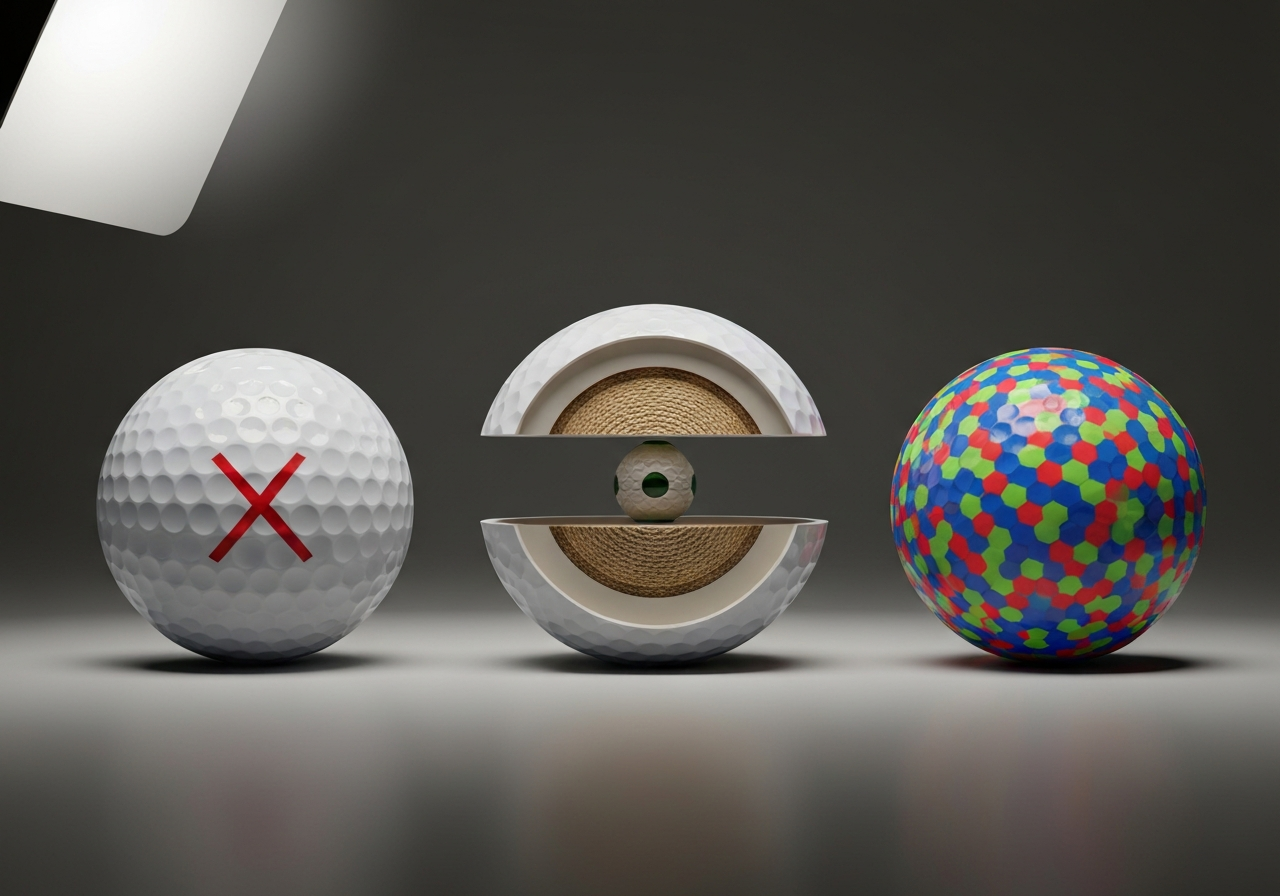
Common misconceptions about what the numbers on Callaway golf balls mean—clarified using 2024-2025 product technology and fitting science.
Practical Guide: How to Choose the Right Callaway Ball for Your Game in 2026
Understanding the Callaway golf ball numbers meaning is only the first step in optimizing your equipment. To truly lower your scores, you must translate those technical specifications into on-course performance. Selecting the right sphere requires a methodical approach that prioritizes your specific skill-based needs over generic swing speed metrics.
Step 1: Assess your priority—distance, spin control, feel, or consistency?
Before purchasing a dozen, identify what limits your game. High handicappers often benefit from low compression models like the Supersoft, which maximize distance through reduced spin off the driver. Conversely, low handicap players typically require the greenside control offered by the Chrome Soft series. It is crucial to ignore irrelevant markings during this phase. For instance, according to Longwood GC, triple-digit numbers found on some balls indicate dimple count (300-500), which is a design feature that does not directly affect how the ball plays.
Step 2: Match to model using launch monitor data or on-course testing
Never buy based on marketing alone. The most effective Callaway ball selection guide strategy involves testing from the green backward. Official guidance suggests a specific order of operations to ensure feel matches performance.
Expert Testing Protocol: As a rule of thumb, you should always test a golf ball by starting from the green and working your way back to the tee. Hit putts to check for sound and feel. Next, experiment with chip shots and approach shots to gauge spin and control. Finally, determine if the ball is a match for you off of the tee. A few extra yards from the tee box is not nearly as important as the feel or spin you need to perfect your short game.
Step 3: Verify legality and conformity with USGA/R&A rules
Competitive players must ensure their equipment adheres to governing body standards. Using non-conforming equipment can lead to disqualification in sanctioned events. Always check the packaging for the USGA logo. For players interested in oversized options, it is vital to verify status before tournament play. You can review detailed compliance findings where Callaway Supersoft Max legality confirmed status is discussed in depth. Ensuring you are playing USGA conforming balls protects your handicap integrity.
When to reconsider: Signs you’re playing the wrong ball
Even the best fit changes as your swing evolves. Watch for these performance red flags:
Too Much Spin
Driver shots balloon in high wind
Iron shots stop too quickly on dry fairways
Loss of distance due to excessive backspin
Too Little Spin
Approach shots roll through the green
Difficulty stopping on firm surfaces
Lack of feedback on wedge shots
Key Takeaway: Learning how to choose golf ball models is an iterative process. Do not settle on a single model forever. Re-evaluate your choice every season or whenever your swing speed changes significantly.
To streamline your decision, refer to the comparison below for the 2026 lineup priorities:
Model Series
Primary Benefit
Best For
Supersoft
Low Compression/Distance
High Handicappers/Slow Swing
Chrome Soft
Tour Performance/Feel
Low Handicappers/Pros
ERC Soft
Hybrid Control/Speed
Mid Handicappers
Follow these actionable steps to finalize your selection:
Purchase one sleeve of your top two model choices.
Test putting and chipping first, as per Callaway recommendations.
Verify the USGA conforming list if playing competitively.
Commit to the model that offers the best short-game confidence.
Sources and Further Reading
This article was researched using the following authoritative sources. All claims have been cross-referenced for accuracy.
What Do The Numbers On Golf Balls Mean? longwoodgc.com – 3. Triple-Digit Numbers (300-500): They show the total number of dimples on the ball. While it’s fun to know the dimpl…
It’s important to note that these numbers do not indicate the ball’s compression rate, constructi…
Golf Ball Buying Guide (2026) | Callaway Golf callawaygolf.com – As a rule of thumb, you should always test a golf ball by starting from the green and working your way back to the tee. …
When examining a Callaway golf ball, you’ll notice a number s…
Frequently Asked Questions
What does the compression number on my Callaway golf ball actually indicate about its performance?
The compression number on a Callaway golf ball reflects the core’s firmness but is only one element in a complex, multi-layer performance system. Modern designs like the dual-core in Chrome Soft or HyperElastic SoftFast core in ERC Soft mean compression doesn’t linearly predict feel or distance—mantle layers, cover material (urethane vs. ionomer), and dimple pattern significantly influence spin, launch, and overall output. Therefore, compression should not be used as a standalone predictor; two balls with similar compression can perform very differently due to these other engineering factors.
Are the Red, Blue, or Green color codes on Callaway golf balls tied to distance, control, or feel performance tiers?
No, Callaway does not use Red, Blue, or Green color codes to indicate performance tiers such as distance, control, or feel. These colors are primarily used for visual alignment aids (like the Truvis pattern), enhanced visibility in various conditions, or to differentiate special edition models (e.g., Chrome Soft X LS in green for limited releases). Performance classification is instead based on model name and technical specifications, not ball color.
Which Callaway golf ball model is best for a 90 mph swing speed player seeking more distance without sacrificing short-game spin?
For a 90 mph swing speed player prioritizing distance with retained short-game spin, the Chrome Soft X is a strong option due to its dual-core design that reduces driver spin while maintaining high wedge spin via its soft urethane cover and precise mantle layering. Alternatively, the ERC Soft offers a HyperElastic core that promotes faster ball speed for distance with a softer feel and consistent short-game control, making it a balanced choice. However, swing speed alone isn’t sufficient for fitting—spin rates, launch angle, and impact consistency should be evaluated using a launch monitor to determine the best fit for individual performance goals.
This article was fully refreshed on dubna 29, 2026 with updated research, new imagery, and current 2026 information.
Make GolfGearDirect.blog a Preferred Source
Get our latest guides, news, and insights highlighted in your Google Search & AI Overviews.