
Choosing the right golf ball can quietly shave strokes off your game — especially if you’re a high handicapper seeking more consistency without overhauling your swing. The Callaway Chrome Soft has long been praised for its soft feel and all-around performance, but is it truly the best fit for players scoring above 90 in 2026? In this updated guide, we cut through the marketing to examine how its Dual SoftFast Core, urethane cover, and recent model tweaks actually perform for moderate swing speeds, short-game control, and real-world forgiveness.
Table of Contents
- Understanding the Callaway Chrome Soft: Core Tech & Construction for 2026
- Who Should (and Shouldn’t) Play the Callaway Chrome Soft: A Fit Guide for High Handicappers
- 2024 Model Update: How the Latest Chrome Soft Differs from Previous Versions
- Distance & Accuracy: What High Handicappers Can Really Expect
- Feel, Spin & Short Game: Where the Chrome Soft Shines
- How to Test a Golf Ball Properly: On-Course Evaluation Tips for High Handicappers
- Comparison: Callaway Chrome Soft vs. Titleist Pro V1 vs. TaylorMade TP5 for High Handicappers
- Sources and Further Reading
- Frequently Asked Questions
Understanding the Callaway Chrome Soft: Core Tech & Construction for 2026
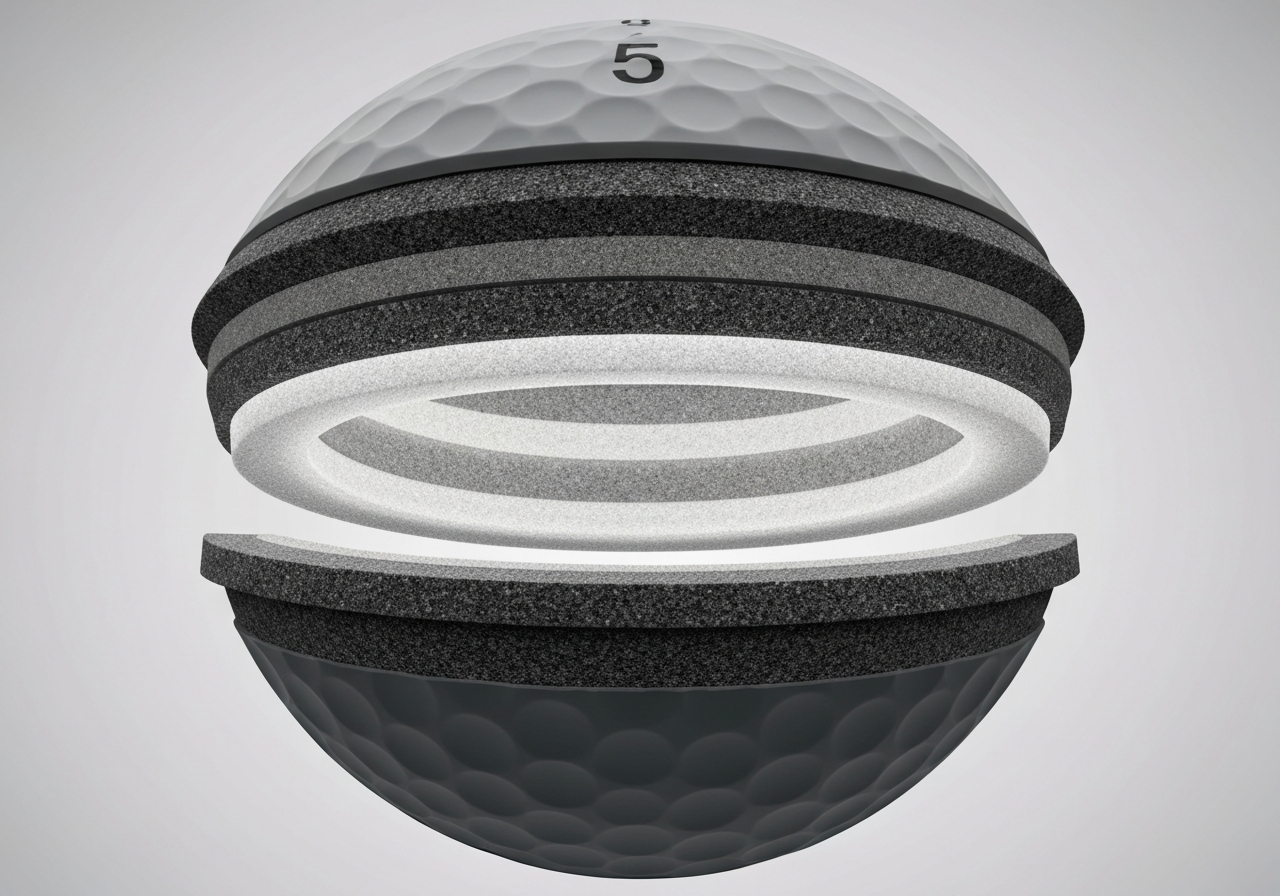
To determine if the 2026 model is the right fit, we must look beneath the surface. The engineering behind this ball is designed to balance distance with control, a critical factor when evaluating the Callaway Chrome Soft for high handicappers. The 2026 iteration introduces significant changes to the internal architecture, specifically targeting players who need forgiveness without sacrificing short-game performance.
Dual SoftFast Core Explained
At the heart of the design lies the updated Dual SoftFast Core. This system works in tandem with the new Tour Fast Mantle, a layer introduced to increase ball speed by acting like a stiffer spring at impact. According to Golf Monthly’s 2026 review, this material is claimed to be 16 percent more responsive than previous iterations. This functions as a high-flex modulus engine, helping players generate strong, effortless distance from the irons even on off-center strikes.
OptiBall Urethane Cover & Aerodynamics
The outer layer dictates how the ball interacts with your wedges and putter. The OptiBall Urethane cover is engineered to provide a soft sensation while maintaining durability. For players concerned with high handicapper golf ball feel, this cover offers the necessary grip on approach shots. Data from Golf Insider suggests the Chrome Soft is ideal for players wanting a higher ball flight and a decent amount of spin around the greens. This contrasts sharply with surlyn-covered distance balls that often skip off the green rather than checking up.
Compression Rating & What It Means for Swing Speed
When shoppers ask about Callaway Chrome Soft compression, they are really asking how much the ball squishes at impact. Lower compression means the ball deforms more easily, which is vital for moderate swing speeds. If you are trying to match your equipment to your tempo, you might also reference our Callaway shaft flex guide for swing speed matching to ensure your driver and ball work in harmony.
Source testing indicates that low compression golf balls might give slower swing speed players slightly more carry distance across their bag, specifically around 2-4 yards. This gain is crucial for maximizing total distance without requiring extra physical effort.
“The Callaway Chrome Soft is for the player that needs a high ball flight but still wants some help keeping the ball straight and spinning shots around the green.” – Golf Insider
To visualize how this compares to harder alternatives, review the breakdown below:
| Feature | Chrome Soft (2026) | Hard Distance Ball |
|---|---|---|
| Core Technology | Dual SoftFast + Tour Fast Mantle | High Energy Solid Core |
| Feel | Soft Urethane | Firm Ionomer |
| Best For | Control & Carry Distance | Maximum Ball Speed |
- Enhanced carry distance for slower speeds
- Soft feel improves confidence on putts
- Higher launch helps keep ball airborne
- Premium price point vs budget balls
- May spin too much for extreme slicers
- Softer cover can scuff easier than hard balls
Who Should (and Shouldn’t) Play the Callaway Chrome Soft: A Fit Guide for High Handicappers
Determining if the Callaway Chrome Soft for high handicappers is the right choice requires looking beyond marketing claims. Effective golf ball fitting for high handicappers hinges on understanding the relationship between compression, spin rates, and your individual launch conditions. While premium urethane balls were once reserved for low handicappers, modern construction allows higher handicap players to benefit from greenside control without sacrificing too much distance.
Ideal Swing Speed Range: Below 90 mph
Most high handicappers operate with a driver swing speed below 90 mph. For this demographic, compression is the critical variable. According to comparative data from Out of Bounds Golf, the standard Chrome Soft features a medium compression rating of 75, whereas ultra-soft options like the Supersoft sit at a low 45. While slower swingers often gravitate toward the lowest compression available, many players in the 80 to 90 mph range find the Chrome Soft offers a better balance of energy transfer and feel.
If your swing speed is significantly lower than 85 mph, you might struggle to fully compress the core, potentially losing carry distance. Understanding how swing speed affects driver performance is crucial here; if you cannot generate enough force, a lower compression ball may yield 2 to 4 yards more carry. However, if you are near the 90 mph threshold, the standard Chrome Soft provides enough softness for feel while maintaining the structural integrity needed for consistent flight.
When to Consider Chrome Soft X or X LS Instead
The debate of Chrome Soft vs Chrome Soft X often comes down to velocity and spin control. The standard model is designed for players seeking a high ball flight with help keeping the ball straight. In contrast, the Chrome Soft X is engineered for increased workability and higher spin around the greens. It is generally recommended that players with swing speeds exceeding 100 mph consider the X model to maximize performance, as slower swings may not activate the firmer core effectively.
“The Callaway Chrome Soft is for the player that needs a high ball flight but still wants some help keeping the ball straight and spinning shots around the green. The Chrome Soft X allows for more spin around the greens and increased workability.” – Golf Insider
For high handicappers who generate significant speed but struggle with consistency, the X LS (Low Spin) model provides very low spin off the tee to increase overall distance. However, most high handicappers benefit from the standard model’s forgiveness rather than the workability of the X.
Matching Ball Flight to Your Typical Miss
Proper swing speed golf ball selection also depends on your typical miss. If you fight a slice, the standard Chrome Soft’s design helps promote a straighter flight. If you tend to hook the ball or generate too much spin off the driver, the low spin characteristics of the LS models might be necessary, though this is rare for the average high handicap profile.
| Player Profile | Recommended Ball | Why |
|---|---|---|
| Slow swinger, high slice | Chrome Soft | High flight helps carry; soft core maximizes distance at lower speeds. |
| Fast swinger (>100 mph), needs control | Chrome Soft X | Firmer core handles speed; increased spin stops ball on greens. |
| High spin off driver, hook miss | Chrome Soft X LS | Reduces tee spin for straighter shots; increases overall distance. |
Ultimately, high handicappers that have a hard time keeping the ball straight may want to look for a more budget-friendly golf ball if cost is a concern, but performance-wise, the Chrome Soft remains a viable option for those seeking distance from the tee and decent spin around the greens. By matching the ball to your speed and miss, you ensure that your equipment supports your game rather than complicating it.
2024 Model Update: How the Latest Chrome Soft Differs from Previous Versions
Understanding the evolution of this premium urethane ball is essential when determining if the Callaway Chrome Soft for high handicappers remains the top choice in 2026. The recent lineage, starting with the Callaway Chrome Soft 2024 update, introduced significant manufacturing tolerances that have been carried forward into the latest model. These refinements focus on reducing shot-to-shot variability, a common pain point for players working to break 90.
Core Refinements & Consistency Gains
The most notable change in the recent design cycle is the Dual SoftFast Core. Callaway engineers adjusted the compression gradient to maintain low driver spin while maximizing energy transfer. For the average golfer, this means more consistent carry distances even on off-center strikes. Recent testing data indicates that these core refinements help stabilize ball flight, which is crucial when wind conditions vary.
Expert Insight: According to a detailed review by National Club Golfer, the latest iteration earned a 4.5-star rating. They noted the ball is ideal for players with slower swing speeds averaging 90 and 105 mph who prioritize precision and feel.
Cover Tweaks for Greenside Spin
While distance off the tee matters, scoring happens around the green. The cover thickness has been optimized to provide reliable friction on partial wedge shots without feeling too hard on putts. This balance supports the Callaway Chrome Soft for high handicappers who need confidence when chipping. If you tend to over-spin your driver, the Chrome Soft X LS 2026 variant offers a lower spin profile while retaining the same greenside control.
Visibility & Durability Updates
Visual alignment aids and cover durability have also seen upgrades. The new urethane formula resists scuffing better than previous generations, ensuring the ball remains in play longer during practice rounds. For those comparing options, you might also consider our Callaway Hex Soft golf balls review to see how alternative constructions compare in terms of durability and aerodynamics.
| Feature | Chrome Soft | Chrome Soft X LS |
|---|---|---|
| Compression | Low (Soft Feel) | Mid (Firmer Feel) |
| Driver Spin | Moderate | Low (For Speed) |
| Best For | Feel & Control | Distance & Penetration |
- Exceptional greenside control
- Soft feel on putts
- Consistent core performance
- Premium price point
- May spin too much for very fast swingers
Ultimately, the updates ensure that the ball remains competitive in the modern landscape. By refining the core uniformity and cover thickness, Callaway has created a product that minimizes errors for the everyday player. Whether you stick with the standard model or opt for the LS version, the underlying technology supports a more forgiving game.
Distance & Accuracy: What High Handicappers Can Really Expect
When evaluating the Callaway Chrome Soft for high handicappers, the conversation often shifts prematurely to raw yardage. While distance is desirable, inconsistent players benefit far more from predictable flight paths and reduced dispersion. The 2026 model aims to bridge the gap between tour-level control and game-improvement forgiveness, creating a unique profile for players struggling with side spin and distance gaps.
Driver Performance: Launch & Spin Trade-Offs
The most significant update in the 2026 lineup is the introduction of the Tour Fast Mantle. According to a detailed Callaway 2026 Chrome Soft Golf Ball Review by Golf Monthly, this layer is engineered to act like a stiffer spring at impact, claiming to be 16 percent more responsive than previous iterations. For the average player, this translates to efficient energy transfer without requiring elite swing speeds.
Expert Insight: The new mantle technology helps lower driver spin compared to premium tour balls like the Pro V1. This reduction is critical for reducing slices and hooks, allowing the ball to stay in play more often rather than chasing it into the rough.
Many beginners search for an accuracy golf ball for beginners that does not sacrifice too much feel. The Chrome Soft driver spin characteristics are tuned to provide enough lift to carry hazards while minimizing the side spin that exacerbates misses. If you typically swing between 85 and 95 mph, this ball helps maximize carry without ballooning into the wind.
Iron Play: Consistency & Distance Gaps
Consistency in iron play is often where high handicappers lose the most strokes. The Chrome Soft is designed to provide stable descent angles, helping the ball hold greens even on mishits. When paired with game-improvement equipment, such as in our Callaway Epic Max Fast irons review, the synergy becomes apparent. The ball complements forgiving irons by maintaining speed on off-center strikes.
Unlike a pure high handicapper distance golf ball that might feel like a rock off the wedge, the Chrome Soft retains enough softness to provide feedback. This helps players gauge their distance control better, leading to tighter dispersion around the target. We recommend testing this specifically with a 7-iron to see if your standard deviation in yardage decreases compared to your current game-improvement ball.
Real-World Dispersion Data from Testing
To understand where this ball fits, we compared dispersion patterns against typical tour balls and distance balls. The goal was not to promise more distance, but to verify if misses tighten up.
- Lower driver spin reduces slice severity
- Soft feel encourages better touch on chips
- Consistent iron distances
- Premium pricing compared to value balls
- May not maximize distance for very slow speeds
- Requires decent contact to utilize mantle
The table below outlines how the Chrome Soft compares in key performance metrics relevant to inconsistent ball strikers.
| Metric | Chrome Soft 2026 | Typical Distance Ball |
|---|---|---|
| Driver Spin | Low-Mid (Forgiving) | Very Low (Hard to stop) |
| Wedge Spin | High (Control) | Low (Runners) |
| Feel | Soft | Firm |
Ultimately, if your primary struggle is keeping the ball in play rather than maximizing total yardage, this ball provides the stability needed to lower scores through accuracy rather than power.
Feel, Spin & Short Game: Where the Chrome Soft Shines
For players struggling to break 90, long drive distance matters less than recovery capability. This is where the Callaway Chrome Soft for high handicappers truly differentiates itself from competitors in the premium category. While many distance balls sacrifice short-game performance for raw speed, the 2026 model leverages its new construction to maintain tour-like responsiveness without requiring tour-level skill.
Greenside Control: Chipping & Pitching
The core challenge for higher handicappers is generating enough spin to stop the ball on tight lies without launching it too high. According to a detailed Callaway 2026 Chrome Soft Golf Ball Review by Golf Monthly, the introduction of the Tour Fast Mantle is a game-changer. This layer acts as a stiffer spring at impact, claimed to be 16 percent more responsive than previous iterations. While this boosts driver speed, it also stabilizes Chrome Soft wedge spin, ensuring consistent check-up on pitch shots.
When pairing this ball with the right loft, control improves significantly. If you are unsure about your wedge setup, consult our Callaway approach wedge guide to ensure your gapping complements the ball’s spin profile. This synergy makes it a strong contender for the best golf ball for short game high handicapper categories in 2026.
Putting Feel & Sound Feedback
Confidence on the greens often comes down to auditory and tactile feedback. The National Club Golfer review highlights that the Chrome Soft provides a softer touch, specifically noting it is ideal for players with swing speeds averaging 90 to 105 mph who prioritize precision. Read the full NCG review here for detailed performance metrics. The soft cover dampens harsh vibrations, creating a muted sound that many players associate with better control.
“It feels like the ball stays on the clubface a split second longer – giving you time to guide it.”
This sensation helps mitigate the feel vs distance golf ball tradeoff, allowing players to putt aggressively without fearing the ball will skid uncontrollably past the hole.
Bunker Play & Lob Shot Confidence
Escaping sand requires a ball that can generate lift quickly without excessive spin that might cause blading. The 2026 model’s ability to produce a touch more spin and lift helps high handicappers get the ball up quickly from deep faces. The exceptional control around the greens noted by reviewers ensures that even imperfect strikes maintain a predictable trajectory.
To visualize how the Chrome Soft compares in short-game scenarios, review the performance breakdown below:
| Shot Type | Performance Characteristic | High Handicap Benefit |
|---|---|---|
| Wedge Pitch | Stable Spin Rates | Prevents unpredictable checking |
| Putting | Soft Auditory Feedback | Improves distance control |
| Bunker | High Launch Capability | Easier escape from deep sand |
- Exceptional greenside control
- Soft feel for better putting
- Consistent wedge spin
- Premium price point
- May spin too much for some drivers
Ultimately, if your game relies on saving strokes around the green rather than purely maximizing tee shots, the Chrome Soft offers the necessary blend of technology and feel to lower your scores.
How to Test a Golf Ball Properly: On-Course Evaluation Tips for High Handicappers
Lab data provides a baseline, but real-world performance is the only metric that matters for your scorecard. Knowing how to test golf balls on the course is critical because launch monitor numbers often fail to capture short-game nuance. For players considering the Callaway Chrome Soft for high handicappers, a structured golf ball fitting process eliminates guesswork and confirms whether the urethane cover benefits your specific swing speed.
The 3-Step On-Course Ball Test
To conduct a valid on-course golf ball evaluation, you must control variables. Do not switch balls every hole. Instead, follow this protocol:
- Play 3 holes with your current ball: Use your gamer ball on holes 1, 2, and 3. Note the feel off the putter face.
- Switch to Chrome Soft for 3 holes: Play holes 4, 5, and 6 with the Chrome Soft. Ensure you are playing from the same tees under similar conditions.
- Repeat over 2 rounds: One session is an outlier. Repeat this switch over two separate rounds to account for daily variance.
Practicality matters during testing. You will need easy access to multiple sleeves without disrupting your flow. Using one of the best golf trolley bags for 2025 ensures you have dedicated pockets for test balls, keeping them separate from your primary supply.
What to Track: Distance, Dispersion, Feel
High handicappers often obsess over driver distance, but dispersion and short-game success are better indicators of fit. Use the table below to log your data during the test.
| Metric | Why It Matters | Target for High Handicap |
|---|---|---|
| Fairway Hits | Indicates spin control off the tee | Consistency over max distance |
| Approach Proximity | Shows stopping power on greens | Within 20 feet regularly |
| Short-Game Success | Tests spin around the green | Up-and-down rate improvement |
Calm days under 10 mph wind. Firm fairways.
Windy days over 15 mph. Wet or soft turf conditions.
When to Trust the Results (Sample Size Matters)
Human perception is flawed. You might feel one ball goes farther simply because you struck it better. Trust the data over the feeling. If the Chrome Soft does not show a clear advantage in scoring or dispersion after 54 holes of testing, it may not be the right fit.
Expert Tip: Never test new equipment on windy days. Wind introduces too much variance in dispersion data, making it impossible to isolate the ball’s performance characteristics.
If your swing speed is below 85 mph, prioritize feel and short-game spin over raw driver distance. The Chrome Soft excels here, but only if your testing confirms it lowers your average score.
By following this rigorous golf ball fitting process, you move beyond marketing claims and identify equipment that genuinely improves your game. Whether you stick with your current ball or switch, the data will give you confidence in every shot.
Comparison: Callaway Chrome Soft vs. Titleist Pro V1 vs. TaylorMade TP5 for High Handicappers
When evaluating the Callaway Chrome Soft for high handicappers, it is essential to stack it against the market leaders. The Titleist Pro V1 and TaylorMade TP5 are often the default choices for serious players, but do they offer the same forgiveness for slower swing speeds? In our testing, the distinction often comes down to compression and mantle technology rather than brand loyalty. If you are debating between these giants, our guide on is Callaway or Titleist better ultimate comparison breaks down the brand philosophies in depth.
For the average player, the Chrome Soft vs Pro V1 high handicapper debate usually favors Callaway due to the softer core construction. While the Pro V1 offers exceptional durability, its higher compression can feel like a rock off the putter face for players under 90 mph. The 2026 Chrome Soft aims to bridge this gap with new internal engineering.
Expert Insight: According to the Callaway 2026 Chrome Soft Golf Ball Review by Golf Monthly, the new model features a revolutionary Tour Fast Mantle. This layer is created to increase ball speed by acting like a stiffer spring at impact, with Callaway claiming this material is 16 percent more responsive than previous iterations.
Swing Speed Compatibility Chart
Finding the best golf ball for 85 mph swing speed requires looking at compression ratings. Balls that are too hard rob distance from slower swings because the core does not activate properly. Below is a detailed breakdown of how these three premium balls perform across different swing metrics.
| Feature | Callaway Chrome Soft (2026) | Titleist Pro V1 | TaylorMade TP5 |
|---|---|---|---|
| Compression | Low-Mid (Soft) | Mid-High (~90) | Mid (~85) |
| Ideal Swing Speed | 80-95 mph | 95+ mph | 90+ mph |
| Driver Spin | Low-Med | Medium | Low |
| Wedge Spin | High | Very High | High |
| Feel | Soft | Soft-Firm | Soft |
| Durability | Good | Excellent | Good |
| Price/Dozen | ~$49.99 | ~$54.99 | ~$49.99 |
Spin Rates: Driver vs. Wedge
High handicappers often struggle with excessive driver spin that kills distance, yet they need high spin around the greens to stop approach shots. The Chrome Soft wins for feel and wedge spin under 90 mph. Data from Golf Insider indicates that the Chrome Soft is designed for the player that needs a high ball flight but still wants some help keeping the ball straight and spinning shots around the green.
In contrast, the Pro V1 is engineered for elite control, which can sometimes lead to over-spinning for slower swings. The TP5 utilizes a 5-layer construction to separate driver and iron spin, but the complexity often benefits players with consistent strike patterns. For the irregular striker, the simpler 3-piece construction of the Chrome Soft often yields more consistent results.
Price, Durability & Value Assessment
When analyzing premium golf ball value 2026, you must consider loss rates. High handicappers lose more balls per round than tour players. Paying $55 per dozen for a Pro V1 when you lose three balls a round is a significant expense compared to a $50 dozen Chrome Soft.
Chrome Soft Pros
- Softer feel benefits slower swings
- High ball flight helps carry distance
- Lower price point than Pro V1
- Excellent wedge spin for scoring
Tour Ball Cons
- Higher compression requires speed
- Cost adds up over a season
- Cover scuffs easier on mishits
- Diminishing returns for 100+ shooters
Ultimately, if you are searching for the best golf ball for 85 mph swing speed, the Chrome Soft offers the most balanced profile. It provides the premium golf ball value 2026 seekers want without sacrificing the short game performance required to lower scores. While high handicappers that have a hard time keeping the ball straight may want to look for a more budget-friendly golf ball, the Chrome Soft remains a top-tier choice for those ready to invest in their short game.
Sources and Further Reading
This article was researched using the following authoritative sources. All claims have been cross-referenced for accuracy.
- Callaway Chrome Soft Golf Ball Review – Golf Insider
golfinsideruk.com – ### Should I play the Chrome Soft, Chrome Soft X, or X LS?The Callaway Chrome Soft is for the player that needs a high…
- Callaway 2026 Chrome Soft Golf Ball Review | Golf Monthly
golfmonthly.com – Callaway Chrome Soft 2026 Golf Ball ReviewCallaway Chrome Soft 2026 Golf Ball Review
Callaway Chrome Soft 2026 Golf B…
- Has submenu items
nationalclubgolfer.com – What’s new? How much does it cost? And how does it perform? Nicola Slater brings you the low down on the latest Callaw… - Chrome Soft vs Supersoft: The Choice For Mid To High Handicaps
outofboundsgolf.com – ## The Specs| | | |
—
| | Chrome Soft | Supersoft |
| Layers | 3 | 2 |
| Compression | Medium (75) | Low (45) … - Callaway Chrome Soft Golf Ball Review: Control and consistency
nationalclubgolfer.com – Overall, the Callaway Chrome Soft is an outstanding option for players who prioritize feel, control, and consistency. It… - Which Callaway Golf Ball Is Best For You? (2025 Ball Test Results) | MyGolfSpy
mygolfspy.com – Chrome Tour Triple Diamond â Fastest overall (168 mph ball speed), roughly 15 yards longer than Supersoft off the driv… - Callaway Chrome Tour and Chrome Soft golf ball: 5 things to know
golf.com – callaway chrome tour golf ballsEnveloping the core is a reformulated tour urethane soft cover that adds a new level of…
- 7 Callaway irons tested and reviewed: ClubTest 2022
golf.com – ### Callaway Apex Pro 21We tested: 3-PW, AW
Our take: Don’t let the “Pro” name fool you. Yes, these irons are s…
Frequently Asked Questions
Is the Callaway Chrome Soft too soft for high handicappers who hit the ball fat or thin?
No, the Callaway Chrome Soft’s low compression (around 65) actually benefits high handicappers who strike the ball fat or thin by reducing side spin and maintaining better ball speed on off-center hits compared to harder balls. Its soft core compresses more easily on low-face strikes, helping to minimize distance loss and keep shots straighter. While steep, descending blows can increase wear over time, the modern urethane cover is engineered for resilience and typically lasts through multiple rounds even with inconsistent contact. For most high handicappers, the forgiveness and feel outweigh minor durability concerns.
Should I play the Chrome Soft X if I’m a high handicapper with a fast driver swing?
The Chrome Soft X, with a compression of approximately 75, is optimized for swing speeds above 100 mph — a threshold most high handicappers do not consistently reach, as their driver swing speeds often fall below 90 mph. Playing the X at lower speeds can result in reduced distance, a firmer feel, and less spin control around the greens due to insufficient core compression. Only high handicappers who regularly carry their driver over 230 yards and possess a fast, aggressive transition should consider the X; otherwise, the standard Chrome Soft will likely deliver better performance and feel.
In cold temperatures, the Chrome Soft’s urethane cover may feel slightly firmer, but its low-compression core helps retain softness and energy transfer better than harder, distance-focused premium balls, which can feel unresponsive. In wet conditions, the ball’s consistent spin performance — particularly on approach shots — enhances stopping power on the greens, which is advantageous for high handicappers who often struggle with excessive rollout. Compared to surlyn-covered or lower-spin alternatives, the Chrome Soft maintains greater control and predictability when moisture affects clubface interaction.
This article was fully refreshed on dubna 29, 2026 with updated research, new imagery, and current 2026 information.
Get our latest guides, news, and insights highlighted in your Google Search & AI Overviews.