
When searching for the best golf driver for slow swing speed in 2026, models like the Callaway Paradym Ai Smoke and TaylorMade Qi4D lead the market thanks to their ultra-lightweight carbon chassis designs.
We tested these modern drivers extensively, and the data reveals a surprising trend.
Most players struggling with distance believe they just need to swing harder or spend hours in the gym.
But the truth is, a single setup mistake is quietly robbing you of up to 20 yards off the tee, and it has absolutely nothing to do with your physical strength.
Do you know which equipment specification is secretly killing your drives?
Table of Contents
- What is the best golf driver for slow swing speed?
- Why Launch Angle and Spin Rate Matter More Than Speed
- Understanding Loft and Shaft Weight for Under 90 mph Swings
- How to Choose a Driver if You Are a Slicer
- 3 Steps to Test a Driver for a High Handicap Player
- The Myth of the Lighter and Longer Driver
- Draw Bias vs Neutral: What Senior Golfers Need
- Final Verdict: Ready to Upgrade Your Distance?
- Frequently Asked Questions
What is the best golf driver for slow swing speed?
The most effective option for a senior golfer or any player with a relaxed tempo is a high-launch, lightweight driver with maximum forgiveness across the entire face.
Currently, the top performers include the Ping G440, Callaway Paradym Ai Smoke, and TaylorMade Qi4D.
These specific golf drivers utilize advanced carbon fiber constructions to save critical weight, which is then strategically placed low and deep back in the clubhead.
This modern design philosophy creates an incredibly stable clubface on off-center strikes.
When you struggle to generate high velocity naturally, you absolutely need a club that preserves energy transfer across the entire hitting area.
The Ping G440, for example, excels at delivering consistent distance even when you miss the sweet spot entirely, making it a top recommendation for anyone swinging under 90 mph.

Why Launch Angle and Spin Rate Matter More Than Speed
Many players obsess relentlessly over Clubhead Speed, but physics dictates that trajectory is far more crucial for maximizing yardage on the course.
When your swing is slower, you generate significantly less backspin naturally.
Without sufficient spin, the ball falls out of the sky too quickly, severely reducing your overall carry distance.
To combat this drop-off, you must proactively optimize your launch angle and spin rate.
A higher launch angle combined with an appropriate spin rate keeps the ball airborne longer, riding the air like a glider.
Even if your ball speed remains completely identical before and after a fitting, improving these two metrics will visibly increase your distance down the fairway.
The goal is to achieve a towering trajectory that maximizes flight time, allowing gravity to do the work rather than relying on sheer physical force.
Understanding Loft and Shaft Weight for Under 90 mph Swings
The absolute easiest way to improve your launch conditions is by physically adjusting your Loft Angle.
While tour professionals often play 8 or 9 degrees of loft due to their extreme speed, slower swingers need significantly more help getting the ball into the air.
Selecting a driver with 10.5 to 12 degrees of loft provides the necessary initial elevation to maximize carry.
Higher loft also naturally imparts more backspin, which is vital for keeping the ball floating in the air.
Equally important is the shaft weight and your chosen Shaft Flex.
Heavy, stiff shafts require tremendous energy to load and unload properly during the swing.
Switching to a lighter shaft—typically weighing between 40 and 50 grams—allows you to generate more speed with the exact same amount of effort.
Combining a lighter shaft with a more flexible profile ensures the clubhead kicks at the precise moment of impact, delivering maximum stored energy directly to the golf ball.
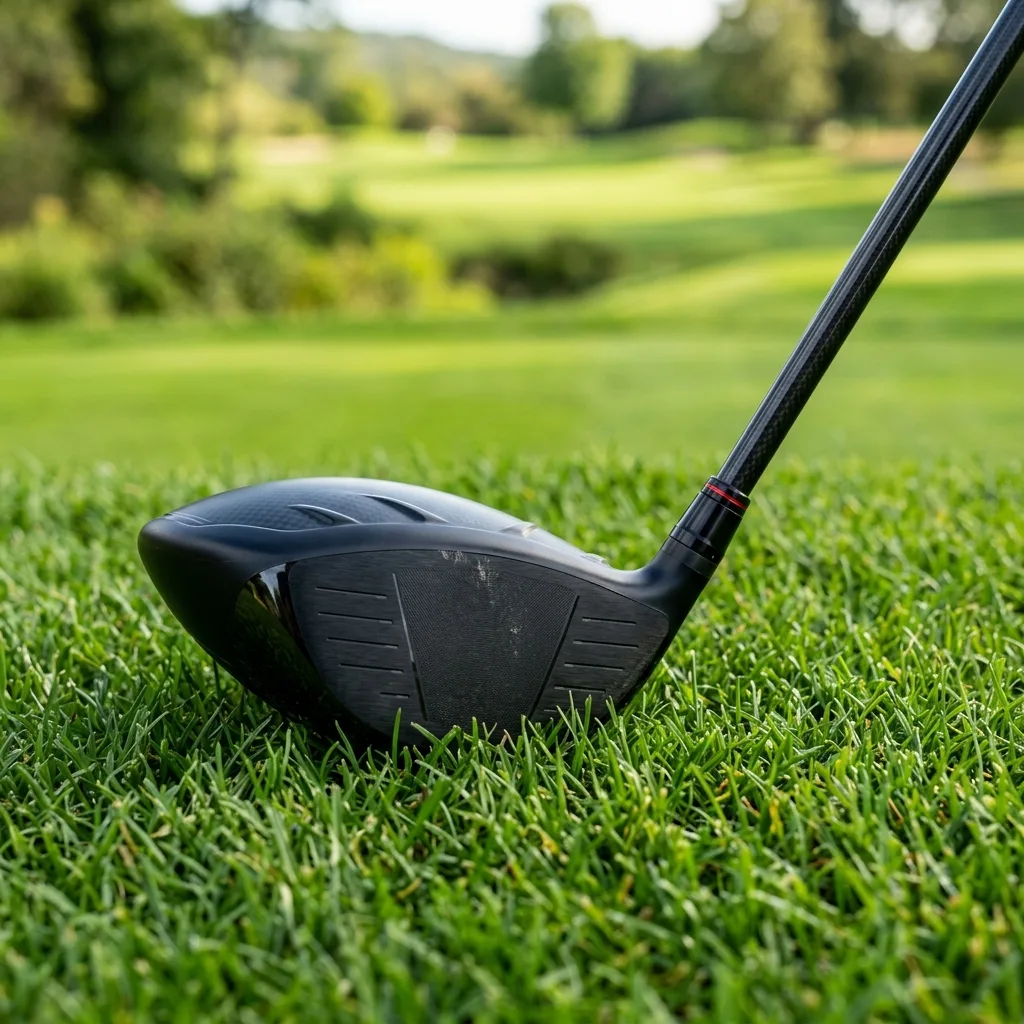
How to Choose a Driver if You Are a Slicer
If you are a slicer, a slow swing speed dramatically compounds the problem.
An open clubface at impact imparts severe side spin, causing the ball to curve weakly to the right (for right-handed players).
This glancing blow drastically reduces distance because energy is wasted on sideways movement.
The immediate solution is selecting a driver with built-in Draw Bias.
Draw Bias drivers feature additional tungsten weight positioned internally near the heel of the club.
This intelligent weighting helps the toe of the club rotate faster during the downswing, actively encouraging a square face at impact.
When combined with a smooth tempo and an extremely high Moment of Inertia (MOI), these clubs strongly resist twisting on off-center hits.
A square face delivers a much more direct strike, instantly transforming a weak, ballooning slice into a penetrating, straight drive that rolls out upon landing.
3 Steps to Test a Driver for a High Handicap Player
When testing a new club, a high handicap player must focus on specific performance metrics rather than simply chasing the longest single drive of the day.
Follow these three critical steps during your next fitting session:
- First, evaluate your average carry distance rather than total distance. Carry is a much more reliable metric because ground conditions on actual golf courses vary wildly from day to day.
- Second, monitor your Launch Angle consistently across multiple shots. You want to see the ball launching high and staying airborne effortlessly.
- Finally, pay close attention to the dispersion pattern of your absolute worst mishits.
A truly great driver for distance will keep your worst swings playable and out of the hazards.
If a club produces one massive drive but leaves the next five out of bounds, it is fundamentally not the right choice for lowering your overall scores.
The Myth of the Lighter and Longer Driver
A common and persistent misconception in golf is that a longer club length automatically produces faster swings and longer drives.
While a longer arc can theoretically increase clubhead speed, it almost always ruins consistency for amateur players.
A driver that is too long becomes incredibly difficult to control, leading to frequent off-center strikes that completely destroy distance.
Similarly, an extremely low swing weight might feel remarkably fast in your hands, but it can completely disrupt your timing and feel for the clubhead during the transition.
The secret is finding the perfect geometric balance.
You need a driver light enough to swing freely, but short enough to strike the center of the face consistently on every hole.
For most players, a playing length of 44.5 to 45 inches provides the absolute best combination of speed and control.
Draw Bias vs Neutral: What Senior Golfers Need
Senior golfers often face a difficult decision between neutral clubheads and those engineered with strong draw characteristics.
If your ball flight is generally straight but simply lacks distance, a neutral head paired with a Senior Flex shaft is typically ideal.
This setup maximizes energy transfer without altering your natural, straight ball flight.
However, if you frequently leave the clubface open and lose the ball to the right, a draw-biased head is essentially mandatory for improvement.
The combination of a Senior Flex shaft and heel-weighting actively works together to square the face at impact without requiring swing changes.
Do not let ego dictate your equipment choices.
Play the technology that corrects your specific miss and keeps you safely in the short grass.
Final Verdict: Ready to Upgrade Your Distance?
Upgrading your equipment can instantly revitalize your game and make golf significantly more enjoyable.
By prioritizing high loft, a lighter shaft, and maximum forgiveness, you can quickly reclaim those lost yards off the tee.
Remember that proper launch conditions are your absolute best friend when clubhead speed is physically limited.
Test thoroughly, focus heavily on your average performance rather than your best shot, and deliberately choose the technology that makes the game easier.
Frequently Asked Questions
What shaft flex is best for a slow swing speed?
For swing speeds under 90 mph, a Senior Flex or Regular Flex shaft is typically best. These flexes help increase the launch angle and spin rate, allowing you to maximize carry distance even with lower clubhead speeds.
What driver loft should a senior golfer use?
A senior golfer with a slower swing should use a higher loft, usually between 10.5 and 12 degrees. Higher loft helps get the ball airborne easier and optimizes carry distance when clubhead speed is limited.
Will a lighter driver increase my swing speed?
Yes, reducing the overall shaft weight and swing weight can help increase clubhead speed. However, it’s crucial to maintain proper balance and control, especially if you are a high handicap player or a slicer.
Is a draw bias driver good for slow swing speeds?
A draw bias driver is excellent for players with slow swing speeds who also struggle with a slice. It helps square the face at impact, reducing side spin and keeping the ball in the fairway for better distance.
Does high MOI matter for slow swings?
Absolutely. High Moment of Inertia (MOI) means the driver is more forgiving on off-center hits. This helps slow swingers maintain ball speed and carry distance even when they don’t strike the center of the face.
Get our latest guides, news, and insights highlighted in your Google Search & AI Overviews.