
You step onto the first tee, take a massive rip, and watch your ball climb endlessly into the sky. It drops straight down, leaving you 30 yards behind your playing partners.
That frustrating loss of distance happens because your clubhead speed generates excessive backspin. Most amateurs mistakenly blame their mechanics for this exact problem, spending hours tweaking their setup instead of checking their equipment specs.
But one hidden driver specification actually dictates whether your ball cuts through the wind or stalls mid-flight. Ignoring this single technical detail guarantees you will never maximize your true driving potential.
We tested the newest 2026 models to uncover the exact setup you need. Keep reading to discover the secret spec that fixes your launch window instantly.
Table of Contents
- What is the Best Golf Driver for High Swing Speed?
- Why Launch Angle and Low Spin Matter for 105+ MPH Swings
- Top 2026 Models: Ping G440 LST vs. Callaway Quantum Triple Diamond
- 3 Steps to Optimize Your Adjustable Hosel for a Penetrating Flight
- How to Choose the Right Stiff flex or Extra Stiff Shaft
- Myths About Smash Factor and Aggressive Swings
- Price vs. Performance: Are Boutique Brands Worth It?
- Final Verdict on Drivers for Fast Swingers
- Frequently Asked Questions
What is the Best Golf Driver for High Swing Speed?
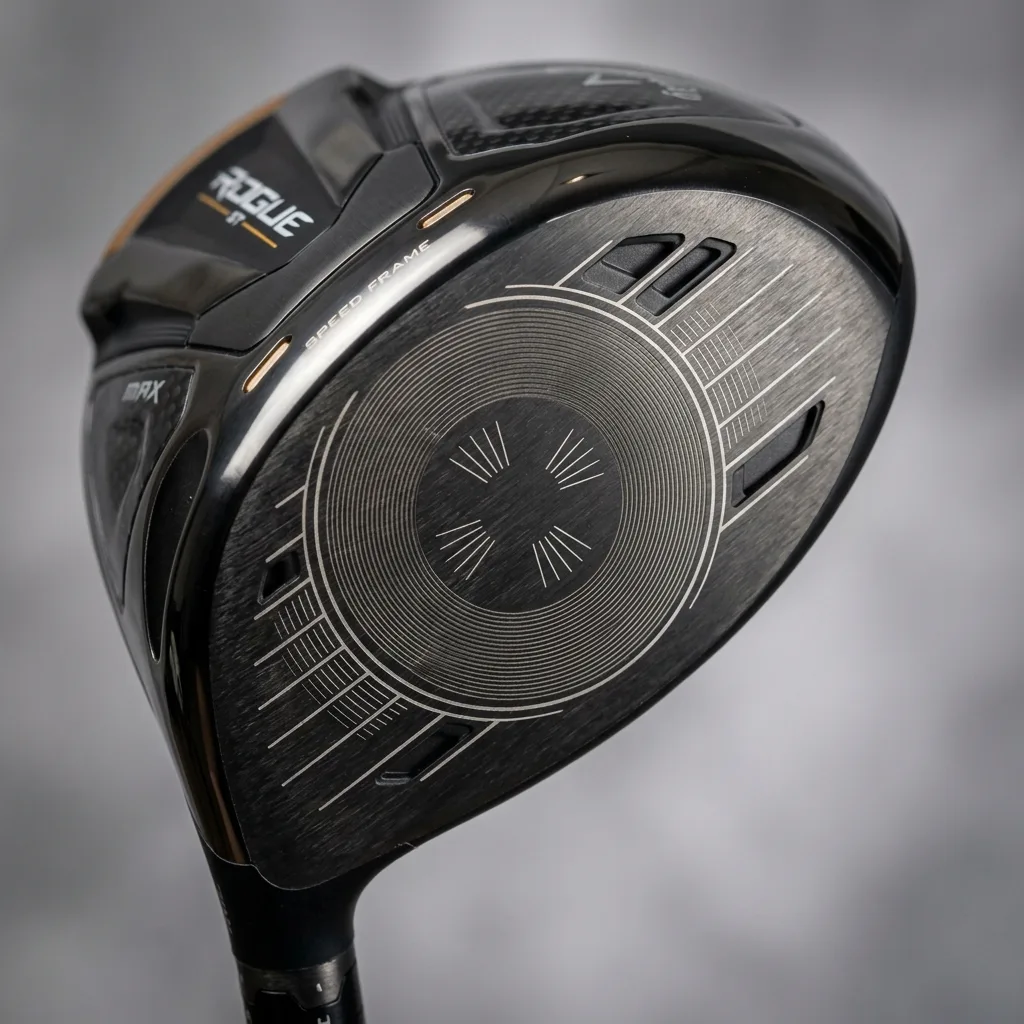
The best option for aggressive swingers always features a dedicated low spin profile. Manufacturers move the center of gravity forward and lower in these specific clubheads.
This forward weight placement drastically reduces backspin off the clubface. Less backspin prevents the ball from climbing too high and losing forward momentum. You get a hotter trajectory that hits the fairway and rolls out significantly further.
You also need a stiff flex shaft that matches this low-spin head design perfectly. Players exceeding 105 MPH must use a stiffer shaft to control the clubface at impact.
A shaft with too much flex will bend excessively during the downswing. This unwanted bending adds dynamic loft to the clubface right before striking the ball, which directly increases your spin rates and ruins your optimal launch conditions.
Combining a forward center of gravity with rigid shaft characteristics solves the distance problem completely.
Why Launch Angle and Low Spin Matter for 105+ MPH Swings
Generating a 105+ MPH swing requires incredible physical exertion and perfect timing. Many golfers focus on fueling up for a high-speed swing to maintain their power output. But all that power goes to waste if your launch angle sits too high.
Aggressive swings naturally compress the golf ball significantly more than slower swings. This massive compression produces extreme friction between the clubface and the ball cover. That friction creates a high spin rate, often exceeding 3000 RPM for fast swingers.
When your spin rate gets this high, the ball generates too much lift. This excess lift creates the dreaded ballooning effect that kills your total distance. The ball flies high, stalls in the air, and drops with zero roll.
Optimizing your launch angle to sit between 10 and 12 degrees fixes this issue. Pairing that lower trajectory with sub-2500 RPM spin rates unlocks massive distance gains immediately.
Top 2026 Models: Ping G440 LST vs. Callaway Quantum Triple Diamond
The 2026 equipment season brings incredible innovations for fast swingers seeking maximum distance.
The Ping G440 LST leads the pack with its radically redesigned carbon crown. Engineers shifted the internal weighting closer to the face to kill excess spin completely.
This LST model provides incredible forgiveness without sacrificing the desired flat, penetrating ball flight. It stays incredibly stable through the hitting zone, even on off-center strikes.
Callaway answers back aggressively with the Callaway Quantum Triple Diamond driver head. This compact, tour-inspired shape suits players who want maximum workability and ultra-low spin numbers.
The Triple Diamond uses a new face architecture to maintain ball speed everywhere. Meanwhile, the TaylorMade Qi4D LS offers another elite option for players chasing pure speed.
TaylorMade optimized the aerodynamics of the Qi4D LS to help you swing even faster. All three models deliver elite performance for anyone breaking the 105 MPH barrier.
3 Steps to Optimize Your Adjustable Hosel for a Penetrating Flight
Buying a premium driver only gets you halfway to maximizing your tee shots. You must utilize the adjustable hosel to fine-tune your specific launch conditions.
- Step 1: Lower the stated loft of the driver by at least one full degree. Delofting the clubhead naturally opens the face angle slightly at the address position. This simple adjustment reduces initial launch and strips away hundreds of RPMs of backspin.
- Step 2: Adjust the lie angle to a flatter setting if your hook misses remain. A flatter lie angle prevents the heel from digging and keeps the face square.
- Step 3: Slide the movable sole weights into the forward-most position available on the head. Moving weight forward guarantees a truly penetrating flight that cuts through heavy headwinds easily.
Dialing in these settings takes patience, much like packing healthy snacks for the golf course. Test these hosel changes on a reliable launch monitor to verify your new launch numbers.
How to Choose the Right Stiff flex or Extra Stiff Shaft
Your shaft acts as the transmission delivering power from your body to the clubhead. Fast swingers must choose between a standard Stiff flex or an Extra Stiff option.
If you consistently swing above 105 MPH, an Extra Stiff shaft generally performs better. The thicker walls of the X-Stiff profile resist the aggressive bending forces well. This rigidity ensures the clubhead returns to the ball completely square at impact.
You must also consider the torque rating of your chosen shaft model. Torque measures how much the shaft twists rotationally around its axis during the swing.
A high swing speed requires a low torque rating, typically under 3.5 degrees. Low torque prevents the clubface from twisting open or closed when striking the ball.
Upgrading from a standard Stiff flex shaft to a low-torque Extra Stiff tightens dispersion. You will hit more fairways simply by eliminating unwanted shaft deflection at impact.
Myths About Smash Factor and Aggressive Swings
Many golfers misunderstand the relationship between swinging hard and hitting the ball far. They believe an aggressive swing automatically guarantees longer drives down the middle. In reality, swinging out of your shoes often destroys your quality of strike.
A poor strike drops your smash factor drastically, costing you massive amounts of distance. Smash factor measures the exact efficiency of energy transfer from the club to ball. You calculate this metric by dividing ball speed by your total clubhead speed.
The theoretical maximum smash factor for a driver maxes out perfectly at 1.50. Swinging at 110 MPH with a terrible strike might yield a 1.35 efficiency rating. A smooth 105 MPH swing with center contact easily produces a 1.48 rating.
You need to prioritize center contact while maintaining energy during 18 holes to see gains. Never sacrifice your smash factor just to swing the club a few miles faster.
Price vs. Performance: Are Boutique Brands Worth It?
The driver market features several ultra-premium boutique brands promising revolutionary distance gains. Companies like PXG and AutoFlex charge massive premiums for their specialized heads and materials. You might wonder if spending over one thousand dollars actually improves your driving statistics.
For most amateur players, these boutique options provide very little measurable advantage over mainstream brands. Major manufacturers like TaylorMade and Ping invest millions of dollars into aerodynamic research annually. Their flagship low-spin models already utilize aerospace-grade titanium and advanced carbon fiber composites.
The performance gap between a properly fitted mainstream driver and a boutique option is small. Boutique brands often use unique manufacturing processes to save minimal amounts of weight. However, standard models provide more than enough adjustability to dial in your ball flight.
You will gain much more distance by investing that extra money into professional fitting. A certified fitter will match your exact swing dynamics to the perfect shaft.
Final Verdict on Drivers for Fast Swingers
Mastering the tee box with a fast swing requires the correct combination of equipment. You cannot expect to hit penetrating bombs if your equipment forces the ball to balloon. Upgrading to a modern low-spin head fundamentally changes how your ball interacts with the wind.
Pairing that head with a low-torque, Extra Stiff shaft gives you the required control. We highly recommend testing the newest 2026 models on a reliable launch monitor before purchasing. Pay close attention to your spin rates, aiming for that optimal 2200 RPM window.
Do not settle for anything less than a 1.45 efficiency rating on your solid strikes. Your raw power gives you a massive advantage over the golf course when harnessed correctly. View the current prices and availability of the best drivers for a quick swing in our e-shop.
Frequently Asked Questions
What makes a golf driver good for high swing speed?
A good driver for fast swings features a low spin profile, stiffer shaft (Stiff or Extra Stiff), and a clubhead design like the Ping G440 LST that promotes a penetrating flight and prevents ballooning.
Do I need an extra stiff shaft for 105+ MPH swing speed?
Yes, generally if your clubhead speed exceeds 105 MPH, an Extra Stiff (X-Stiff) shaft will provide better control, lower torque, and a more consistent smash factor compared to a standard stiff flex.
How does launch angle affect distance for aggressive swings?
Aggressive swings naturally generate more spin, which can cause the ball to balloon. A lower launch angle combined with a low spin driver head maximizes roll and overall distance.
Is the TaylorMade Qi4D LS good for fast swingers?
Yes, the LS (Low Spin) version of the Qi4D is specifically engineered for players with high swing speeds, offering forward CG to reduce spin and increase penetrating ball flight.
Why is my driver ballooning?
Ballooning happens when you generate too much backspin. This is often caused by a shaft that is too flexible or a driver head that isn’t optimized for low spin, reducing your total distance.
Get our latest guides, news, and insights highlighted in your Google Search & AI Overviews.