
✨ This article was AI edited. Editorial responsibility: GolfGearDirect.blog.

Moisture management becomes a critical factor during summer rounds. One drop of sweat can turn a 280-yard drive into a devastating snap hook.
Many players spend hundreds on a new shaft or clubhead, ignoring the only physical connection they have with the club.
Brands like Golf Pride engineer advanced textures to lock your hands in place, yet most amateurs play whatever stock rubber came off the rack.
But one specific grip modification—often overlooked by amateur players—can instantly neutralize unwanted wrist rotation and stop your slice cold. We reveal exactly what that is in the sizing section below.
Table of Contents
- What Are the best golf grips for driver in 2026?
- Top Driver Grips for Sweaty Hands and Moisture Management
- Why 360-Degree Grips Are Crucial for Adjustable Hosels
- How to Choose the Right Grip Size: Standard, Midsize, or Jumbo?
- Step-by-Step Guide to Regripping Your Driver at Home
- Corded vs. Rubber Grips: Which is Better for Your Driver?
- Common Myths About Driver Grips and Swing Weight
- Final Thoughts on Finding the best golf grips for driver
- Frequently Asked Questions
What Are the best golf grips for driver in 2026?
When you step onto the tee box, you need supreme confidence that your hands will not shift during a 105 mph swing.
Identifying the best golf grips for driver requires matching your grip texture and size to your specific swing flaws and environmental conditions. We found that players who struggle with clubface awareness benefit massively from ribbed or aligned options.
Whereas players looking to quiet their hands dominate with oversized profiles.
In our testing of the latest golf drivers, two clear winners emerged for completely different reasons.
The MCC Align dominates the market for players who want a firm, corded upper section combined with a responsive rubber lower section. The raised ridge on the back forces your fingers into the exact same position every time, ensuring your clubface squares up consistently.
On the other end of the spectrum, JumboMax has revolutionized how players approach the tee box. By dramatically increasing the diameter far beyond a standard grip, JumboMax physically restricts how much your wrists can hinge and roll, effectively neutralizing a slice.
We have seen players immediately hit straighter shots simply by swapping their standard grip for an oversized alternative.
Top Driver Grips for Sweaty Hands and Moisture Management
Playing in high humidity or dealing with naturally sweaty hands demands a grip built specifically for moisture management.
A standard rubber grip becomes dangerously slick when wet, forcing you to grip the club tighter. This increased grip tension travels up your forearms, restricting your shoulder turn and bleeding clubhead speed.
To combat this, you need materials engineered to wick away sweat or provide mechanical traction regardless of the conditions.
A full corded grip embeds cotton fibers directly into the rubber compound. As your hands sweat, these fibers absorb the moisture and provide a rough, abrasive texture that locks your fingers in place.
Players with high swing speeds who play in the rain or heat swear by full cord models, though they can be harsh on bare hands.
If you prefer a softer feel but still need extreme tackiness, the Winn Dri-Tac series offers a specialized polymer material. This synthetic compound remains incredibly tacky even during a downpour.
The trade-off is durability; a pure rubber grip will outlast a polymer wrap, but the polymer guarantees you will not launch your club down the fairway on a hot July afternoon.
Why 360-Degree Grips Are Crucial for Adjustable Hosels
Modern drivers allow you to tweak loft, lie, and face angle by loosening a screw and rotating the shaft.
While this adjustability is a massive advantage for dialing in your launch conditions, it creates a frustrating problem for your hands if you use a traditional grip.
Standard grips feature logos, alignment lines, or ribbed backings designed to sit perfectly square at address. When you rotate an adjustable hosel to add a degree of loft, that logo shifts to the side, and the ribbed alignment ridge moves out of place, making the club feel crooked and awkward.
This is exactly why the 360-degree grip was invented. A true 360-degree design, like the iconic Tour Velvet 360, features a completely uniform texture pattern all the way around the circumference with no logos or alignment markings on the upper section.
No matter how many times you spin the shaft to adjust your trajectory or face angle, the grip feels exactly the same in your hands.
If you frequently tinker with your driver settings to match varying course conditions, installing a 360-degree model is absolutely non-negotiable. It preserves the clean look at address and ensures your hand placement remains consistent, regardless of how you have configured the clubhead.

How to Choose the Right Grip Size: Standard, Midsize, or Jumbo?
The size of your grip dictates the biomechanics of your release through the impact zone.
Playing the wrong size can artificially induce hooks or slices, negating all the money you spent on a premium driver for distance.
A grip that is too small allows your hands to become overly active, causing the clubface to snap closed rapidly and resulting in a hook. Conversely, a grip that is too thick restricts wrist release, leaving the clubface wide open and producing a weak slice.
However, modern fitting philosophies have flipped this traditional logic on its head. Many instructors now intentionally prescribe midsize or jumbo grips to players struggling with a slice.
By occupying more space in the palm, an oversized grip prevents the golfer from strangling the club. The reduced grip pressure frees up the arms to swing faster, while the larger diameter physically quiets the wrists, stabilizing the clubface through the hitting zone.
If you wear an XL glove, you should be testing midsize grips as a baseline. If you battle a severe case of the “flip” at impact, upgrading to a jumbo profile might be the fastest fix in golf, offering a unique blend of stability and tackiness without requiring a swing overhaul.
Step-by-Step Guide to Regripping Your Driver at Home
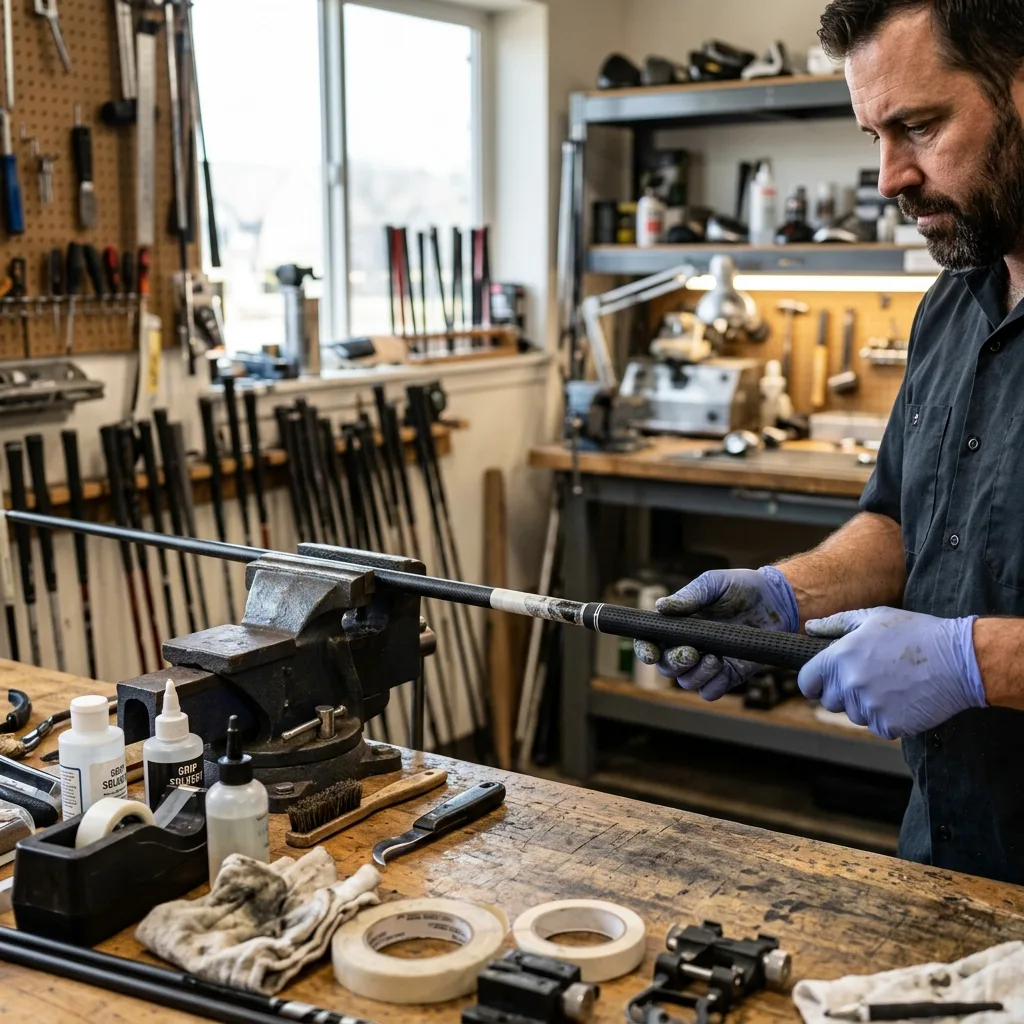
Regripping your clubs at home saves significant money over time and allows you to experiment with different textures and sizes without waiting for a pro shop.
To get started, you will need a hook blade utility knife, double-sided grip tape, grip solvent (or mineral spirits), a vise, and a rubber shaft clamp to protect the graphite.
First, secure the driver shaft in the vise using the rubber clamp, positioning it near the grip to prevent the shaft from flexing.
Carefully slice off the old grip with the hook blade, cutting away from your body. Peel off the old tape completely; applying new tape over old residue will create uneven lumps that you will feel through the swing.
Apply a fresh strip of double-sided tape, leaving a half-inch overhang at the butt end, and tuck that overhang inside the shaft opening to prevent water from entering.
Next, generously pour solvent inside the new wrap or rubber grip, cover both ends with your fingers, and shake vigorously to coat the interior. Pour the excess solvent over the tape on the shaft.
Quickly slide the new grip onto the shaft, pushing it all the way down until the butt end is fully seated. You have about thirty seconds to twist the grip and align any logos perfectly before the solvent evaporates and the glue sets.
Always double-check your swing weight preferences before starting, as adding heavier tape or larger grips alters the balance point of the club.
Corded vs. Rubber Grips: Which is Better for Your Driver?
The debate between corded and pure rubber compounds comes down to a trade-off between absolute traction and shock absorption.
Pure Rubber Grips
Pure rubber grips dominate the market because they are inexpensive, highly responsive, and offer excellent vibration dampening.
When you strike a ball off the toe or heel of your driver, a soft rubber compound absorbs the harsh frequencies before they travel up the graphite shaft into your hands. This makes rubber ideal for golfers with arthritis, joint pain, or those who practice hitting hundreds of drives on the range.
Corded Grips
Corded options sacrifice some of that soft feel in exchange for uncompromising all-weather performance.
By embedding cotton threads throughout the rubber, corded models create a gritty, abrasive surface. This texture physically bites into your golf glove, locking your hands into position. The stiffness of the corded material transmits more feedback to your hands, allowing elite players to feel exactly where on the clubface they struck the ball.
If you value vibration dampening and a plush feel, stick with rubber. If you demand maximum traction in humid conditions and want granular feedback on your strikes, corded is the superior choice.
Common Myths About Driver Grips and Swing Weight
One of the most persistent myths in golf equipment is that changing your grip size will ruin your driver’s swing weight and completely destroy the club’s feel.
Swing weight measures the balance point of the club, determining how heavy the clubhead feels during the swing. It is true that installing a heavier grip adds static weight to the butt end of the club, which artificially lowers the measured swing weight on a scale.
However, humans do not swing clubs on a scale.
When you install a heavy, oversized grip, the total static weight of the driver increases, but the mass of the clubhead remains exactly the same. Your hands are gripping the very spot where the weight was added.
Biomechanically, most golfers cannot feel a two- or three-point drop in swing weight caused entirely by grip mass.
Manufacturers like Lamkin have also developed proprietary lightweight rubber compounds that allow them to produce jumbo sizes that weigh exactly the same as a standard size.
This innovation allows you to increase the diameter to quiet your hands without altering the swing weight mathematics whatsoever.
Final Thoughts on Finding the best golf grips for driver
Dialing in your equipment requires looking beyond the shiny titanium clubhead and focusing on your only point of contact.
The best golf grips for driver provide the exact combination of size, texture, and moisture control necessary to execute aggressive, high-speed swings without fear of the club twisting at impact.
Whether you opt for a heavily corded model to combat humidity, a 360-degree design for your adjustable hosel, or an oversized profile to finally eliminate that destructive slice, upgrading your grip is the cheapest and fastest equipment fix in the game.
Take the time to analyze your specific swing flaws and environmental playing conditions. A simple change in grip diameter or material can instantly increase your driving accuracy, giving you shorter approach shots and lower scores.
Frequently Asked Questions
What is the best golf grip for a driver?
The best golf grip for a driver depends on your needs, but 360-degree grips like the Golf Pride Tour Velvet 360 are highly recommended for adjustable hosels. For sweaty hands, corded grips like the MCC Align provide superior moisture management and tackiness.
Does grip size matter on a driver?
Yes, grip size significantly impacts your driver swing. A standard size allows for more wrist release, while midsize or jumbo grips can help reduce wrist action, which is a trending strategy to stop a slice and improve driving accuracy.
Should I use a different grip on my driver?
Many golfers prefer a different grip on their driver to optimize performance. A 360-degree grip is ideal if you frequently adjust your hosel, while an oversized grip can help control swing weight and minimize unwanted wrist movement off the tee.
What grips do pros use on their drivers?
Tour professionals commonly use Golf Pride, Lamkin, and SuperStroke grips on their drivers. Corded grips are popular for traction, while players looking to quiet their hands are increasingly switching to JumboMax oversized grips for better control.
How do I choose a grip for sweaty hands?
For sweaty hands, the best choice is a fully corded or half-corded grip. These materials excel at moisture management, ensuring maximum tackiness and preventing the club from slipping during high-speed driver swings in hot or humid conditions.
Get our latest guides, news, and insights highlighted in your Google Search & AI Overviews.