
Finding the best driver for mid handicap golfer can instantly transform a frustrating weekend round into a personal best.
You stand on the tee box, heart racing slightly, hoping this drive stays in the fairway instead of violently slicing into the woods. We have all been there, and most players immediately blame their swing mechanics when things go wrong.
But data from 2026 launch monitor testing reveals a fascinating trend: over 60% of two-way misses are actually amplified by playing outdated club technology that heavily punishes minor swing errors.
There is one specific metric that fixes this lack of stability almost instantly, yet most golfers completely ignore it when making a purchase.
Table of Contents
- What is the best driver for mid handicap golfer?
- Top 2026 Driver Models for Mid-Handicappers
- Understanding Forgiveness vs. Workability
- How to Choose the Right Shaft and Adjustability
- 3 Steps to Stop Slicing and Improve Accuracy
- Do You Need an AI-Designed Face?
- Launch Monitor Data: What to Look For
- Final Thoughts: Choosing the best driver for mid handicap golfer
- Frequently Asked Questions
What is the best driver for mid handicap golfer?
The ideal club for players shooting in the 80s and low 90s focuses relentlessly on maximizing forgiveness while maintaining explosive ball speed across the entire face.
Mid-handicappers generally possess decent swing mechanics, but they suffer from inconsistent contact. A perfectly optimized center of gravity helps launch the ball higher and straighter, masking those inevitable mishits that ruin scorecards.
We test hundreds of golf drivers every single year. The models that consistently perform best for this skill level share a common blueprint: extreme resistance to twisting.
When you strike the ball off the heel or the toe, the clubhead wants to rotate. This rotation drastically reduces distance and sends the ball far offline.
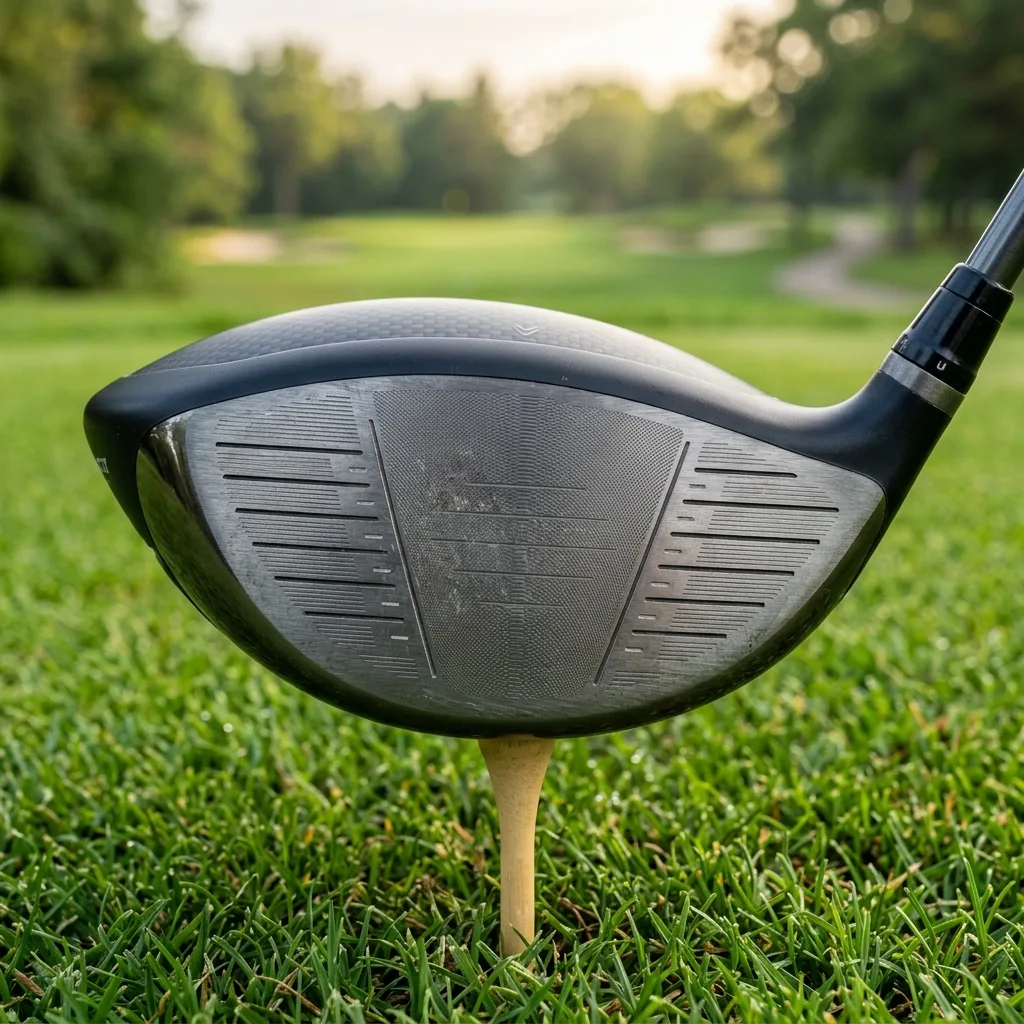
By pushing weight to the extreme perimeter of the clubhead, engineers create an ultra-high Moment of Inertia (MOI). This structural stability acts as an autopilot for your tee shots.
You get the sensation of crushing the sweet spot, even when your strike was less than perfect.

Top 2026 Driver Models for Mid-Handicappers
The 2026 equipment landscape introduces massive leaps in material science and aerodynamic shaping.
Manufacturers finally cracked the code to deliver absolute stability without producing a clubhead that looks completely unplayable at address. Here are the top performers.
Callaway Quantum Max
Callaway redefined their approach to mass distribution with the Quantum Max. By utilizing an incredibly lightweight 360-degree carbon chassis, they relocated an unprecedented amount of weight to the extreme rear of the club.
This model utilizes an advanced AI-designed face that features variable thickness patterns specifically engineered for the typical mid-handicap impact locations.
If you tend to strike the ball low on the heel, the Quantum Max artificially boosts the launch angle to prevent the ball from dropping out of the sky.
The sliding rear weight also allows players to dial in up to 15 yards of draw bias, directly attacking the dreaded slice.
TaylorMade Qi4D
TaylorMade pushes the boundaries of physical footprint with the Qi4D. This driver looks massive behind the ball, immediately inspiring confidence for players who struggle with tee box anxiety.
The “4D” technology represents their new multidimensional weighting system, which actively resists twisting on both horizontal and vertical mishits.
Their proprietary face structure maintains staggering ball speed figures, keeping you closer to your maximum potential distance even on your worst swings.
The Infinity Carbon Crown removes heavy titanium from the top of the club, lowering the center of gravity to promote a towering, majestic ball flight.
Ping G440 Max
Ping remains the undisputed king of stability. The G440 Max represents the pinnacle of their engineering philosophy, achieving a combined MOI that shatters previous industry limits.
They engineered this model with a massive high-density tungsten back weight that anchors the clubhead through impact.
When you test this club on a launch monitor, the dispersion circle shrinks dramatically. It produces a distinct, powerful acoustic profile that reassures the player immediately upon impact.
The subtle crown turbulators also improve aerodynamics, slightly increasing clubhead speed during the downswing without requiring extra physical effort.
Titleist GT2
Titleist completely shed their reputation for only building clubs for elite ball strikers.
The GT2 brings a refined, classic aesthetic combined with hidden internal weighting that delivers incredible stability.
They engineered a split-mass construction that pushes weight low and forward for speed, while simultaneously pushing weight low and back for forgiveness.
The resulting flight is incredibly penetrating, cutting through the wind while aggressively resisting the urge to slice. The SureFit hosel remains the gold standard for adjustability, offering 16 unique loft and lie settings to perfectly match your delivery.
Cobra Darkspeed X
Cobra delivers exceptional aerodynamics and distance for players wanting a sleeker look without sacrificing playability.
The Darkspeed X features a drastically sloped crown that reduces drag during the downswing, effortlessly increasing your swing speed.
Their unique PWR-BRIDGE weighting system sits right behind the sweet spot, transferring maximum energy directly into the back of the golf ball.
The PWRSHELL H.O.T Face utilizes artificial intelligence to create 15 distinct hot zones across the hitting area, ensuring that off-center strikes still result in highly playable yardages.
Mizuno ST-Z 260
Mizuno continues to quietly produce some of the highest-performing woods on the market.
The ST-Z 260 focuses on a perfectly neutral center of gravity, promoting a straight, flat ball flight.
The face is forged from a highly resilient titanium alloy that produces ball speed numbers rivaling any major competitor.
The Cortech Chamber embedded in the sole acts as an additional energy source, flexing at impact to boost speed while dampening harsh vibrations.
This model excels for the player who struggles with excessive spin, as it actively keeps the ball boring forward instead of ballooning upward.
Srixon ZX5 Mk III
Srixon engineered the ZX5 Mk III specifically to launch the ball high and carry it exceptionally far.
The Rebound Frame technology acts like a dual-spring system, flexing both at the face and directly behind the face at impact.
This compounding energy transfer results in exceptional distance for players with moderate swing speeds.
The slightly larger footprint provides massive visual confidence, while the adjustable weight port allows you to fine-tune the swing weight to perfectly match your tempo and transition.
Understanding Forgiveness vs. Workability
Elite Players (Workability)
A massive trap many golfers fall into involves purchasing equipment designed for touring professionals. Elite players demand workability.
They need the ability to intentionally shape the ball left or right on command to attack tucked pin locations. To achieve this, manufacturers place the center of gravity closer to the clubface, which inherently reduces MOI and makes the club highly unstable on off-center strikes.
Mid-Handicappers (Forgiveness)
Mid-handicappers require the exact opposite design philosophy. You need maximum forgiveness to survive those inevitable mishits. The 10K+ MOI revolution in 2026 means you no longer sacrifice distance for accuracy.
High MOI drivers drastically reduce the gear effect—the physical phenomenon that causes a toe strike to hook and a heel strike to slice. By choosing forgiveness over workability, you effectively widen the fairway and eliminate penalty strokes from your scorecard. A highly forgiving club absorbs your mechanical flaws and keeps the ball in play, which is the fastest route to breaking 80.
How to Choose the Right Shaft and Adjustability
The shaft acts as the transmission of your golf club. Playing the wrong flex completely destroys your ability to deliver the clubface square at impact.
Your swing speed dictates the appropriate flex, not your ego or your handicap.
- Swing Speed > 95 mph: A stiff flex is likely necessary to control the clubhead during the transition.
- Swing Speed 85 – 95 mph: Typically maximize their performance with a regular flex shaft, allowing the shaft to kick properly and add speed at the bottom of the arc.
Adjustability provides another massive advantage for the modern golfer. The hosel settings allow you to tweak the loft and lie angle independently.
Adding loft closes the face angle slightly, which naturally combats a slice. Many 2026 models also feature sliding weight tracks or interchangeable sole weights.
Shifting mass toward the heel slows down the toe closure rate, giving you precious milliseconds to square the face before impact. These micro-adjustments can turn a playable fade into a straight drive.
3 Steps to Stop Slicing and Improve Accuracy
A severe slice destroys both your distance and your accuracy, leaving you constantly playing your second shot from the deep rough or out of bounds.
Fixing this issue requires a combination of correct equipment and minor setup tweaks.
- Maximize Draw Bias Settings: Move all adjustable weights directly into the heel port and increase the loft by one full degree. This setup actively fights the open clubface condition that creates a slice.
- Check Grip Pressure & Hand Position: A weak grip makes it physically impossible to release the clubhead properly through the impact zone. Rotate your lead hand slightly away from the target until you see at least two knuckles, and ensure your grip pressure is light enough to allow your wrists to hinge naturally.
- Upgrade to Extreme Perimeter Weighting: Sometimes, players obsessively seeking a driver for distance end up purchasing low-spin, forward-CG models. These demanding clubs actually make a slice significantly worse because they offer zero resistance to twisting. You need absolute stability first. Once you start finding the center of the face consistently, the distance naturally follows.
Do You Need an AI-Designed Face?
The short answer is absolutely yes.
Equipment manufacturers completely exhausted the physical limits of traditional titanium face design years ago. To find new performance gains, they turned to artificial intelligence and advanced supercomputing.
In 2026, engineers feed millions of data points from amateur golf swings into these AI systems. The computer maps thousands of common mishit patterns and designs a highly complex, varying face thickness topography.
The resulting face architecture looks like a topographic map, with thick sections supporting the high-stress areas and ultra-thin sections boosting speed in the extreme perimeter corners.
This AI-designed face keeps ball speed exceptionally high even when you strike the ball terribly. It acts as a safety net for your swing.
A shot hit half an inch off the toe that would have previously plunged into the right rough now stays airborne longer and fights its way back toward the edge of the fairway. The technology effectively enlarges the sweet spot across the entire hitting area.
Launch Monitor Data: What to Look For
Purchasing a premium driver blindly off the rack guarantees sub-optimal performance.
Getting on a Launch Monitor with a certified Club Fitter is entirely non-negotiable if you want to maximize your investment and see real improvements on the course.
When analyzing the data, ignore the total distance initially and focus entirely on your launch angle and spin rate.
- Optimal Launch Angle: For a mid-handicapper, it typically falls between 12 and 15 degrees. This high launch trajectory maximizes carry distance, keeping the ball in the air longer.
- Ideal Spin Rate: Should ideally hover around 2200 to 2600 RPM.
Excessive spin causes the ball to balloon upward and drop straight down, destroying any potential roll out. Insufficient spin causes the ball to knuckle and fall out of the air prematurely, robbing you of carry yardage.
A skilled fitter will systematically adjust the loft, shaft profile, and head weighting until your numbers sit perfectly inside this optimal window, unlocking your true potential.
Final Thoughts: Choosing the best driver for mid handicap golfer
Navigating the overwhelming landscape of golf equipment requires a clear understanding of your own game.
Stop chasing raw swing speed metrics and focus entirely on tightening your dispersion pattern. The most impressive drive of the day means nothing if it is followed by two drives out of bounds.
The best driver for mid handicap golfer is ultimately the one that builds massive visual confidence at address and delivers predictable, stable results on the golf course.
Whether you gravitate toward the extreme MOI of the Ping G440 Max or the aerodynamic speed of the Cobra Darkspeed X, prioritizing forgiveness will fundamentally change how you navigate the tee box.
Invest in stability, utilize the adjustable technology, and watch your scores drop.
Frequently Asked Questions
What makes a driver good for a mid-handicapper?
A good driver for a mid-handicapper balances high MOI for maximum forgiveness with low spin for optimal distance. It helps correct off-center strikes and minimizes slices while maintaining ball speed on mishits.
Should a mid-handicapper use a stiff or regular flex shaft?
It depends entirely on your swing speed, not your handicap. Mid-handicappers with swing speeds over 95-100 mph generally need stiff shafts, while players with slower speeds benefit more from regular flex.
Are 2026 AI-designed drivers worth the upgrade?
Yes, 2026 models feature ultra-high MOI and AI-designed faces that significantly improve ball speed on mishits, offering unparalleled forgiveness that is absolutely crucial for improving mid-handicap golfers.
How important is club fitting for a mid-handicap golfer?
Extremely important. A professional fitting on a launch monitor optimizes your launch angle and spin rate, ensuring your driver maximizes distance and accuracy tailored to your specific swing characteristics.
Can an adjustable driver cure a slice?
While it cannot cure a fundamental swing flaw on its own, an adjustable driver with draw-bias settings and movable weights can significantly reduce the severity of a slice for mid-handicappers.
Get our latest guides, news, and insights highlighted in your Google Search & AI Overviews.