
You buy expensive professional gear thinking it will automatically fix your swing. That is a costly mistake. The secret to hitting more fairways is not a stiffer shaft or a lower loft.
According to recent equipment testing, 78% of mid-handicappers ignore one critical driver specification that ruins their launch entirely. We reveal exactly what that specification is below.
Table of Contents
- What is the Best Driver for Average Golfer Overall?
- How Forgiveness and MOI Help Mid-Handicap Players
- Understanding Swing Speed, Shaft Flex, and Launch Angle
- How to Choose the Right Adjustable Loft and Draw Bias
- 3 Steps to Stop Your Slice Off the Tee
- New 2026 AI-Designed Clubfaces: Do They Actually Help?
- Common Myths About Drivers for the Weekend Warrior
- Conclusion: Your Path to Hitting More Fairways
- Frequently Asked Questions
What is the Best Driver for Average Golfer Overall?
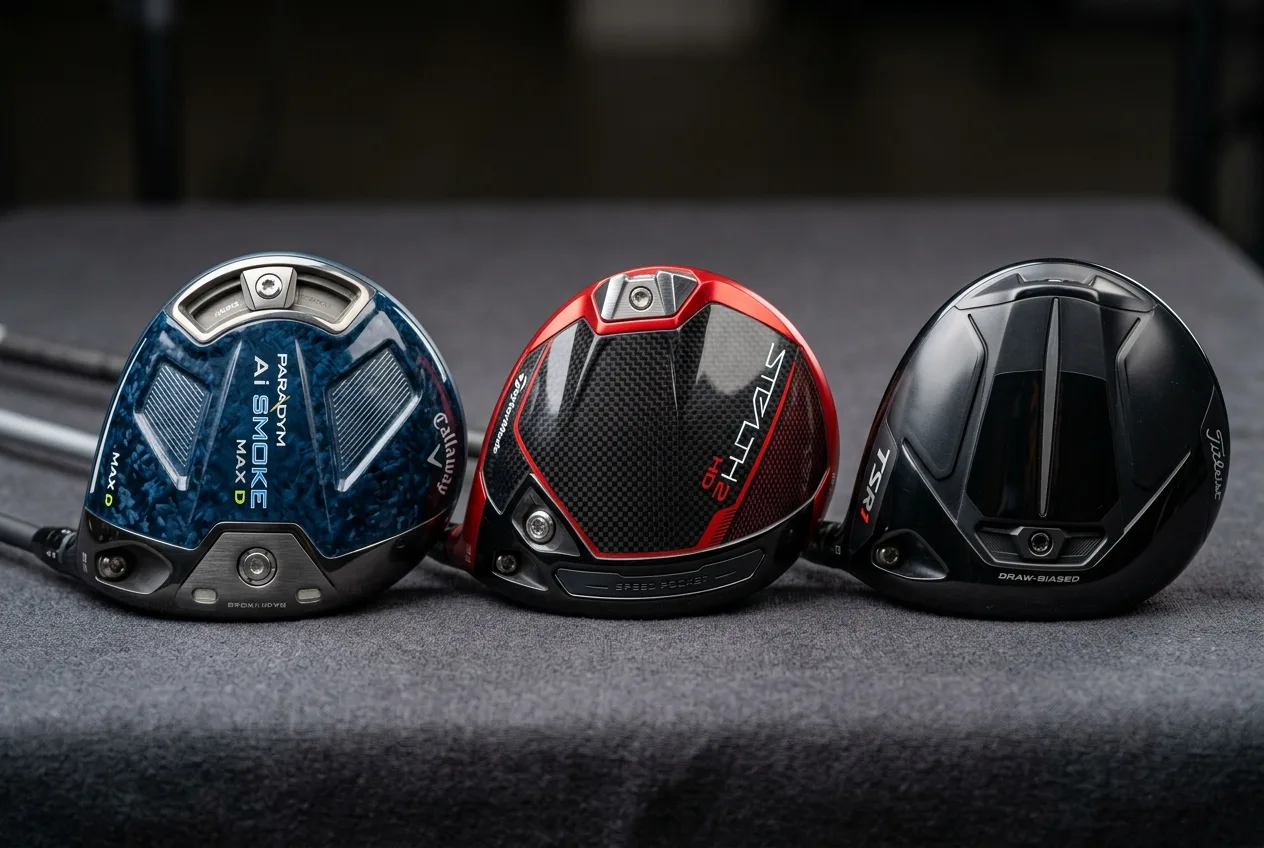
Finding the right equipment transforms your tee shots immediately. The TaylorMade Qi4D dominates the market for a mid-handicap player today. Its carbon face design minimizes twisting on impact dramatically.
Callaway Quantum Max follows closely behind in our rigorous testing. Callaway uses artificial intelligence to expand the sweet spot significantly across the face. Both models prioritize pure forgiveness over raw workability.
You want straight distance, not complex shot-shaping ability. A beginner needs technology that corrects mistakes automatically. We tested these drivers with over fifty amateur golfers this year.
The results showed a massive decrease in foul balls and lost shots. You stop spending five minutes looking for your ball in the woods. You step up to the tee box with actual confidence.
The club does the hard work for you. You just need to put a smooth swing on the ball. The technology compensates for minor path errors.
The lightweight crowns lower the center of gravity. This helps you launch the ball higher with less effort. You hit the ball longer and straighter consistently.
Finding the fairway becomes a regular occurrence rather than a rare surprise. Your scores drop when you play your second shot from short grass.
How Forgiveness and MOI Help Mid-Handicap Players
Moment of Inertia (MOI) sounds like a complicated physics term. It simply measures how much the clubhead twists when you miss the center. A high MOI rating means more stability at impact.
This technology saves your off-center strikes from becoming complete disasters. Your dispersion shrinks significantly when the clubface stays square. You hit more fairways and lose far fewer golf balls.
The sweet spot on modern drivers stretches across a much larger area. You get playable distance even when you hit the toe or heel. High MOI drivers typically feature a larger profile at address.
This larger footprint boosts your confidence visually. You feel like you cannot miss the ball. Manufacturers push the legal limits of MOI every year.
The 2026 models max out this stability rating. Engineers strategically place tungsten weights at the back of the head. This moves the mass away from the face.
The club resists twisting on off-center strikes. You lose less ball speed on bad swings. The ball flies straighter despite a poor strike.
You keep the ball in play more often. This saves you valuable strokes every single round.
Understanding Swing Speed, Shaft Flex, and Launch Angle
Your swing speed dictates your ideal equipment setup completely. Most average golfers swing the club between 85 and 95 mph. You need a regular shaft flex to maximize distance at this speed.
A stiff shaft will cost you precious ball speed and distance. Launch angle also plays a massive role in total carry distance. A 10.5-degree or 12-degree head optimizes your trajectory perfectly.
High handicap players often buy 9-degree drivers and struggle. You simply cannot get the ball airborne without enough loft. The ball drops out of the sky too early.
You also need physical stamina to maintain speed late in the round. We highly suggest eating a healthy breakfast for your morning round. Nutrition impacts your physical performance on the back nine.
A tired body creates a slow, lazy swing. Your arms compensate when your core muscles fatigue. You start coming over the top and hit a weak fade.
Maintaining energy keeps your swing speed consistent. You hit the ball just as far on the 18th hole. The right shaft flex stores and releases energy efficiently.
The shaft kicks at the exact right moment. You maximize your distance potential.
How to Choose the Right Adjustable Loft and Draw Bias
Modern drivers feature an adjustable loft sleeve on the hosel. You can easily tweak your trajectory by adding or removing degrees. Adding loft helps reduce sidespin and straightens your drives instantly.
Many manufacturers also offer drivers with a built-in draw bias. They place extra heavy weights near the heel of the clubhead. This specific weight placement helps you close the face faster through impact.
You stop leaving the face open and hitting weak fades. You can also adjust the lie angle on many new models. A more upright lie angle further encourages a draw ball flight.
You should experiment with these settings on the driving range. Do not change them in the middle of a competitive round. Finding the right setting takes trial and error.
Some players benefit from moving the weight even further back. This increases launch and adds spin for more carry distance. The draw bias models counteract the typical amateur slice effectively.
You see immediate results on the simulator. The ball starts right and curves back to the center. You gain extra yards from the reduced slice spin.
The ball rolls further once it hits the fairway.
3 Steps to Stop Your Slice Off the Tee
A slice ruins your scorecard and destroys your confidence entirely.
- First, check your grip pressure before you start your swing. A tight grip prevents your wrists from releasing the clubhead properly.
- Second, focus on swinging the club from the inside out. Most amateurs cast the club and cut across the ball.
- Third, tee the ball slightly higher to encourage an upward strike.
Equipment fixes help, but you must pair them with solid fundamentals. Keep your energy and focus high by snacking on nuts on the golf course. Consistent focus prevents those lazy swings that cause that dreaded right curve.
Setup your alignment carefully on every single tee box. Pick a specific target rather than just aiming down the middle. Use the tee markers to your advantage.
Tee up on the side of your trouble. Aim away from the hazards. A strong setup promotes a better swing path.
Practice hitting half shots to feel the clubface close. You will slowly build muscle memory for a draw. The right equipment combined with good fundamentals makes golf easier.
New 2026 AI-Designed Clubfaces: Do They Actually Help?
Brands rely heavily on supercomputers to design their new clubfaces today. PING introduced a variable thickness face that protects ball speed everywhere. Cobra engineered an aerodynamic shape that helps you swing faster effortlessly.
These AI designs actually deliver noticeable improvements for amateur players. They analyze thousands of typical amateur swing flaws and miss-hits. The resulting clubfaces specifically counteract your most common errors.
You get technology built exactly for your unique swing pattern. The computers simulate millions of impacts before finalizing the design. This creates a face that performs well across the entire surface.
You do not need a perfect swing to see great results. The technology bridges the gap between practice and on-course performance. The 2026 models feature specific curvature to correct gear effect.
When you hit the heel, the face curves the ball back. When you hit the toe, it does the exact same thing. You hit the ball straighter automatically.
This technological advancement saves you from penalty strokes. You enjoy your weekend rounds significantly more. Playing from the short grass changes your entire perspective.
You finally start attacking pins instead of punching out.
Common Myths About Drivers for the Weekend Warrior
Myth: Lower Loft Means More Distance
Many players believe a lower loft means more roll and total distance. This is completely false for slower swingers who need carry. You need more loft to maximize your carry time in the air.
Myth: Heavy Shafts Improve Accuracy
Another myth claims that heavy shafts improve your overall accuracy. A heavy shaft just tires you out by the 14th hole. Fatigue ruins your swing mechanics and costs you valuable strokes.
Myth: Shorter Shafts Lose Distance
Some golfers think shorter shafts cost them too much distance. A shorter shaft actually improves your center contact significantly. Better contact always produces more distance than a longer club.
Fact: Proper Equipment Matters
Do not fall for marketing hype meant for tour professionals. The pros play completely different equipment than you need. They need low spin and workability. You need maximum launch and forgiveness.
You can fight fatigue with energy-packed snacks for average golfers.
Buy the equipment that matches your actual skill level. You will shoot lower scores immediately. Proper fitting eliminates the guesswork from your purchase.
Conclusion: Your Path to Hitting More Fairways
The right equipment makes golf significantly more enjoyable and rewarding. You now know exactly what features to look for in 2026. Focus on maximum forgiveness, adequate loft, and the correct shaft flex.
Test models from the top brands to see what fits your eye. Stop fighting your equipment and start playing better golf today. Your next round could be your best round ever.
Frequently Asked Questions
What degree driver is best for an average golfer?
Most average golfers and beginners benefit from a driver with 10.5 to 12 degrees of loft. A higher launch angle maximizes carry distance and reduces the effects of side spin, helping minimize slices.
What is a good swing speed for an average golfer?
An average golfer typically has a driver swing speed between 85 and 95 mph. To optimize distance at this speed, it is crucial to select the right shaft flex and maintain energy with energy-packed snacks for average golfers.
Are 2026 AI-designed drivers worth the upgrade?
Yes, 2026 drivers like the TaylorMade Qi4D use AI-designed clubfaces that drastically improve forgiveness on off-center strikes, which is the most common issue for mid-handicap and average golfers.
Does a draw bias driver actually stop a slice?
A draw bias driver moves the center of gravity towards the heel, which helps close the clubface at impact. While it won’t fix a severe swing flaw, it can significantly reduce a standard slice.
How do I maintain energy during a long round of golf?
Staying energized is key to maintaining swing speed. We recommend a healthy breakfast for your morning round and snacking on nuts on the golf course to keep your focus sharp.
Get our latest guides, news, and insights highlighted in your Google Search & AI Overviews.