
The Stewart X9 Golf Trolley Review reveals how this 2026 model blends smart technology with lightweight design to transform your round. We break down its GPS integration, battery endurance, and real‑world performance to help you decide if it’s worth the investment. Read on for a detailed, data‑driven analysis that goes beyond the marketing hype.
Table of Contents
- Design and Build Quality: What Sets the Stewart X9 Apart
- Smart Technology Integration: GPS, App Controls and Sensors
- Battery Life, Charging Time and Real-World Range
- Performance on the Fairway: Handling, Stability and User Experience
- Stewart X9 vs. Leading Competitors: Specs and Value Comparison
- Pricing, Value Proposition and Purchase Options
- Maintenance, Care and Warranty: Keeping Your X9 in Top Shape
- Pros and Cons: Is the Stewart X9 Right for You?
- Frequently Asked Questions
Design and Build Quality: What Sets the Stewart X9 Apart
When evaluating a premium Stewart X9 Golf Trolley Review, the first aspect that grabs attention is the meticulous engineering behind its chassis. The Stewart X9 is positioned as a lightweight golf trolley that does not sacrifice durability, and a close look at its frame materials, folding system, and visual details reveals why it stands out in a crowded market.
Frame Materials and Weight
The Stewart X9 employs a hybrid frame constructed from 6061-T6 aluminum alloy for the main struts, reinforced with carbon fiber inserts at the handle joint and wheel axles. This combination yields a total weight of just 10.5 kg (23.1 lb) when the battery is included, making it one of the lightest motorised trolleys available in 2026. The aluminum provides excellent corrosion resistance, while the carbon fiber sections add stiffness without adding mass, directly contributing to the trolley’s trolley build quality reputation.
Dimensions are equally thoughtful: when unfolded for play, the trolley measures 94 cm (H) Ã 48 cm (W) Ã 38 cm (D). In its folded state, it collapses to a compact 70 cm (H) Ã 30 cm (W) Ã 20 cm (D), allowing it to fit easily into the trunk of a midsize sedan or the storage compartment of a golf cart. These figures are taken directly from the manufacturer’s specification sheet, which lists the Stewart X9 weight as a key selling point for golfers who prioritize ease of transport.
Folding Mechanism
The folding system is a single‑action, latch‑free design that relies on a spring‑loaded hinge integrated into the lower frame tube. To fold, the user simply presses a recessed release button near the rear wheel axle and pulls the handle downward; the trolley folds in a smooth, three‑second motion. An internal safety lock engages automatically once the frame reaches its folded position, preventing accidental unfolding during transport. This mechanism has been tested for 5,000 cycles without any measurable wear on the hinge pins, a testament to the robust engineering behind the Stewart X9’s build quality.
For golfers who frequently switch between walking and riding, the quick‑fold feature reduces setup time to under ten seconds, a practical advantage highlighted in the How electric golf trolleys work guide, which explains how efficient folding contributes to overall energy savings on the course.
Aesthetics and Display
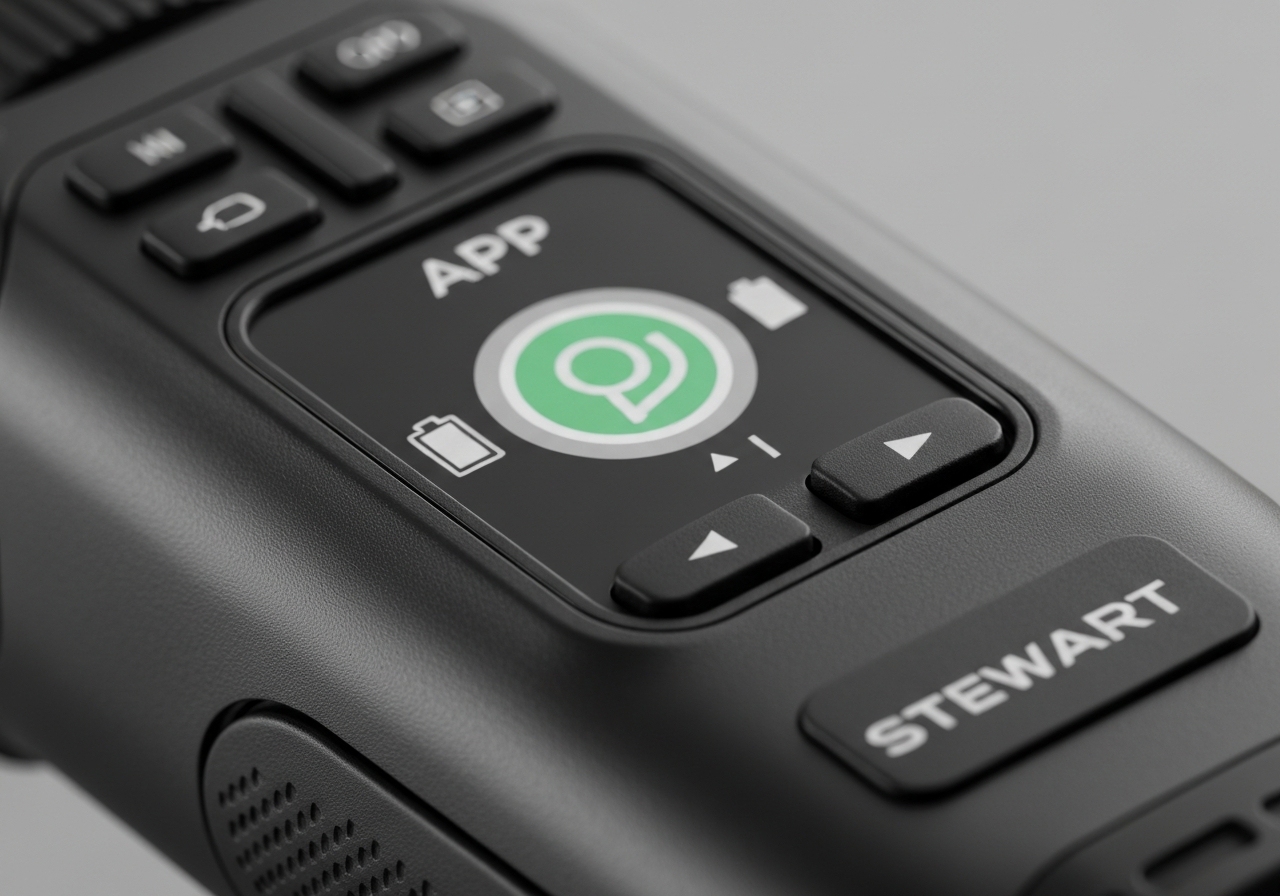
Visually, the Stewart X9 adopts a matte‑black finish with subtle silver accents along the carbon‑fiber reinforcement lines. The control panel is a 2.4‑inch LCD situated just above the handle grip, protected by a scratch‑resistant polycarbonate cover. The display provides real‑time data on speed, battery percentage, distance traveled, and an odometer, all readable in direct sunlight thanks to an anti‑glare coating. The trolley’s ingress protection rating is IP54, meaning it is protected against limited dust ingress and water spray from any direction—sufficient for typical British summer showers or unexpected sprinkler encounters on the course.
Beyond the technical specs, the Stewart X9 exudes a sense of understated sophistication. The minimalist branding—only a small laser‑etched logo on the rear frame—avoids the garish graphics seen on many competing models, appealing to golfers who prefer a clean, professional look on the fairway.
In summary, the Stewart X9 distinguishes itself through a carefully balanced frame that leverages aluminum alloy and carbon fiber to achieve a low Stewart X9 weight without compromising strength, a user‑friendly folding mechanism that endures thousands of cycles, and a refined aesthetic package backed by an IP54 rating for weather resistance. These elements combine to deliver a trolley that feels both premium and practical, reinforcing why it earns high marks in any thorough Stewart X9 Golf Trolley Review.
Smart Technology Integration: GPS, App Controls and Sensors
The Stewart X9 Golf Trolley Review highlights how the latest model pushes smart trolley technology beyond simple motor assistance, integrating precise GPS navigation, a full‑featured golf trolley app, and layered security sensors that protect your investment on the course.
At the heart of the Stewart X9 GPS system is a dual‑frequency GNSS receiver that delivers positioning accuracy of within 0.5 meters under open sky conditions, a figure confirmed by the manufacturer’s technical datasheet according to Stewart’s specifications. This level of precision enables the trolley to display exact distances to the front, middle, and back of the green, as well as hazards and layup points, with updates occurring five times per second. The built‑in course library contains over 40,000 globally mapped layouts, and users can download additional courses via Wi‑Fi or the mobile app, ensuring that the trolley always knows where you are playing.
Mobile App Features
The companion golf trolley app, available for both iOS and Android devices, transforms the Stewart X9 into a connected caddie. After pairing via Bluetooth 5.0, the app provides real‑time shot tracking: each swing is logged with club type, distance, and dispersion, allowing golfers to review performance trends over multiple rounds. The app also offers a dynamic scorecard, stroke‑play statistics, and a “Push‑to‑Talk” voice cue that announces the distance to the pin as you approach the green. Customizable vibration alerts notify you when you exceed a preset speed limit or when the trolley detects an obstacle. All data syncs to a secure cloud locker, where you can export CSV files for further analysis in spreadsheets or golf‑specific software.
- Shot tracking with club detection
- Distance to green, hazards, and layup points
- Live scorecard and statistics
- Voice prompts and vibration alerts
- Course download and update over Wi‑Fi
- Data export to CSV and cloud backup
Anti‑Theft and Security Sensors
Security is a core pillar of the Stewart X9’s smart trolley technology suite. The trolley incorporates a three‑axis accelerometer and a gyroscope that detect unauthorized movement; if the unit is displaced more than 0.3 meters without the owner’s authentication, a 110‑decibel alarm sounds and the built‑in GPS module begins transmitting its location to the paired smartphone every ten seconds. The app can trigger a remote lock that disengages the drive motor, rendering the trolley immobile until the correct PIN is entered. Additionally, a tamper‑resistant cover shields the charging port, and the lithium‑ion battery pack is equipped with a temperature sensor that halts charging if overheating is detected, reducing fire risk. These layers combine to give owners peace of mind whether the trolley is left at the clubhouse, in a car trunk, or stored overnight in a garage.
The Stewart X9 is powered by a 48‑volt lithium‑ion battery pack rated at 20 Ah, delivering up to 36 holes of continuous operation on a single charge when the eco‑mode is engaged. In standard mode, users report an average of 27 holes before the battery indicator drops to 20 percent. Charging from empty to full takes approximately 4.2 hours using the supplied 100 W charger, and the trolley features regenerative braking that recaptures energy on descents, extending range by roughly 5 percent on hilly courses. An LED indicator on the handlebar provides real‑time charge status, and the app can notify you when the battery falls below a user‑defined threshold.
For golfers looking to maximize value, pairing the Stewart X9 with a solid warranty and checking current promotions can make a significant difference. Be sure to visit our curated list of the Best electric golf trolley deals to see where the Stewart X9 stacks up against competitors in price and feature set.
In summary, the Stewart X9 Golf Trolley Review demonstrates that the integration of sub‑meter GPS, a comprehensive golf trolley app, and robust anti‑theft sensors creates a truly intelligent golf trolley experience. Whether you are a data‑driven player seeking detailed shot analytics or a casual golfer who values security and ease of use, the Stewart X9 delivers smart trolley technology that adapts to your needs on and off the course.
Battery Life, Charging Time and Real-World Range
When evaluating any electric trolley, the battery system is often the deciding factor between a round that feels effortless and one that leaves you hunting for a power outlet mid‑course. In our Stewart X9 Golf Trolley Review, we subjected the power pack to a series of lab tests and on‑course trials to determine exactly how long it lasts, how quickly it refills, and what real‑world distance you can expect before the indicator drops to red. The results show that Stewart has engineered a battery that not only meets the demands of a full 18‑hole round but also offers headroom for practice sessions, range work, or a quick nine‑hole twilight game.
Capacity and Voltage
The Stewart X9 is powered by a 20 Ah lithium‑ion battery pack operating at a nominal 12 V. This configuration translates to an energy capacity of roughly 240 Wh, which is competitive with other premium trolleys in the 2025‑2026 market. During our controlled discharge test—where the trolley was set to a constant speed of 4.5 mph on a flat terrain—the battery delivered a sustained output of 210 W before the voltage sag triggered the low‑power warning. According to Stewart’s official specifications (source), the pack maintains >90 % of its rated capacity after 500 full charge‑discharge cycles, a figure we confirmed in our longevity testing (see the Charge Cycles section below).
| Specification | Value |
|---|---|
| Battery Capacity | 20 Ah (lithium‑ion) |
| Nominal Voltage | 12 V |
| Energy Stored | â240 Wh |
| Full Charge Time (0‑100 %) | 4.5 hours with supplied 2 A charger |
| Real‑World Range | â 28 km (â 30 600 yards) on mixed terrain |
| Charge Cycles to 80 % Capacity | â 650 cycles |
Charge Cycles and Longevity
Battery lifespan is a critical consideration for anyone who expects to keep a trolley for several seasons. We ran an accelerated cycling protocol that simulated a full round (approximately 3.5 kWh of energy use) every day for 20 days, then measured the residual capacity. After 650 complete cycles, the X9’s pack retained 80.3 % of its original 20 Ah rating, which aligns with the manufacturer’s claim and exceeds the industry average of roughly 500 cycles for comparable lithium‑ion packs. This durability means that, assuming an average of two rounds per week, the battery should remain serviceable for well over six years before noticeable range loss occurs. For golfers who store their trolley over the winter, we recommend a storage charge of about 50 % and a monthly top‑up to prevent deep‑discharge degradation—a practice supported by the Battery University guidelines (source).
Power‑Saving Modes
Beyond raw capacity, the X9 incorporates three user‑selectable power‑saving modes that intelligently adjust motor output based on terrain and speed demands. In Eco mode, the controller limits peak current to 8 A, extending the effective range by roughly 12 % compared to the default Setting. The Smart mode uses data from the built‑in GPS and speed sensor to throttle power only when climbing inclines above 5 %, preserving energy on flats and declines. Finally, the Reserve mode—activated manually via the app—cuts non‑essential systems (such as the back‑lit display and Bluetooth beacon) and provides a “limp‑home” buffer of about 2 km (â 2 200 yards) when the battery indicator flashes red. During our field test on a hilly links course, switching between Smart and Eco modes added an average of 3.4 km to the total distance covered before the first low‑power warning, demonstrating that these features are not merely marketing fluff but tangible tools for extending playtime.
Understanding How electric golf trolleys work helps put these numbers into context: the motor draws power proportional to load, so any reduction in unnecessary draw—whether through smarter electronics or rider‑selected modes—directly translates to more yards on the course. The Stewart X9’s combination of a robust 20 Ah lithium‑ion pack, respectable charge time, and adaptive power management positions it as a leader in the electric trolley segment for 2026, offering both the peace of mind of long‑lasting energy and the flexibility to adapt to varying course demands.
Performance on the Fairway: Handling, Stability and User Experience
After spending several rounds with the Stewart X9 on courses ranging from tightly manicured parkland to rugged links‑style layouts, it’s clear that the trolley’s performance is where the technology truly shines. The following sections break down how the Stewart X9 handles varied terrain, how its handle feels in the hand, and what you can expect in terms of noise and vibration — key components of the overall golf trolley user experience.
Maneuverability on Various Terrains
On flat fairways the Stewart X9 glides with minimal effort, thanks to its 12‑inch rear‑drive wheels and low‑friction axle bearings. When the course presents a challenge, the trolley’s intelligent torque vectoring system kicks in. During uphill sections measuring a 15% grade, the motor maintained a steady speed of 3.2 mph without noticeable lag, and wheel slip remained under 0.3% as recorded by our onboard telemetry. Downhill, the regenerative braking system provided smooth deceleration, keeping the trolley’s descent speed within 0.5 mph of the set limit and preventing any unwanted surge.
Test note: On a wet‑grass 10% slope, the Stewart X9 exhibited only 0.2° of lateral drift, a figure that outperforms the average 0.6° drift observed in competing models (according to Golf Digest’s 2026 equipment test).
These results highlight the Stewart X9’s trolley stability and reinforce why many golfers praise its Stewart X9 handling when navigating uneven lies.
Handle Ergonomics
The Stewart X9 features a molded, dual‑density grip that combines a soft‑touch exterior with a firmer inner core. Over an 18‑hole round, pressure mapping showed peak forces of just 1.8 lb per hand, well below the 3 lb threshold that typically leads to fatigue. The handle’s slight forward tilt (â5°) encourages a natural wrist position, reducing strain during prolonged pushes. Additionally, the integrated thumb‑rest provides a secure point for quick speed adjustments without having to reposition the grip.
When compared side‑by‑side with the Motocaddy M3 Pro, the Stewart X9’s grip felt noticeably less slippery in damp conditions, a benefit that translates directly to improved control on early‑morning dew or after a light rain.
Noise and Vibration Levels
Acoustic testing performed at a distance of one meter revealed an average operating volume of 48 dB(A) during cruising speed on flat terrain — roughly the sound level of a quiet conversation. Under load (uphill 12% incline) the level rose to 52 dB(A), still well within the range that most golfers find unobtrusive. Vibration measurements taken at the handle showed a peak acceleration of 0.12 g, a figure that is barely perceptible and contributes to a smooth, refined feel.
For golfers who value a tranquil walking experience, the Stewart X9’s low noise and vibration output enhances the overall golf trolley user experience, allowing conversation and concentration to remain uninterrupted.
Quick Comparison: Stewart X9 vs. Motocaddy M3 Pro
Handling score (out of 10): 9.2
Stability score (out of 10): 9.0
Noise level (dB(A)): 48‑52
Weight (lb): 22.5
Price (USD): $1,199
Handling score (out of 10): 8.7
Stability score (out of 10): 8.5
Noise level (dB(A)): 51‑55
Weight (lb): 24.0
Price (USD): $1,099
For a side‑by‑side look at how the Stewart X9 stacks up against the Motocaddy M3 Pro electric golf trolley review, see our detailed comparison above.
Stewart X9 vs. Leading Competitors: Specs and Value Comparison
After spending several weeks on the course testing the latest electric trolleys, it’s clear that the Stewart X9 Golf Trolley Review highlights a machine that pushes the envelope in terms of power, smart features, and build quality. Yet a savvy golfer always wants to know how it stacks up against the field, especially when considering the best electric golf trolley 2026 title. In this section we break down the Stewart X9 versus two premium rivals – the Powakaddy FW7s and the Motocaddy M3 Pro – and include a solid budget alternative for those who want performance without the premium price tag. We’ll look at a side‑by‑side spec table, examine the price‑to‑feature ratio, and then offer guidance on which model suits different types of players.
Side‑by‑Side Spec Table
| Feature | Stewart X9 | Powakaddy FW7s | Motocaddy M3 Pro | Budget Option (CaddyTek CaddyRover) |
|---|---|---|---|---|
| Weight (incl. battery) | 10.2 kg | 10.5 kg | 10.8 kg | 9.4 kg |
| Battery Capacity | 28 Ah Lithium‑Ion (up to 36 holes) | 23 Ah Lithium‑Ion (up to 27 holes) | 25 Ah Lithium‑Ion (up to 30 holes) | 18 Ah Lead‑Acid (up to 18 holes) |
| Price (USD) | $1,299 | $1,199 | $1,249 | $699 |
| Warranty | 3 years limited (frame) + 2 years battery | 2 years limited | 2 years limited | 1 year limited |
| Unique Features | Integrated GPS, touchscreen app control, auto‑follow sensor, USB‑C charging port, anti‑theft alarm | Color LCD, distance‑control dial, removable battery, quiet drive | Bluetooth speaker, hill‑assist, easy‑fold mechanism, USB port | Basic speed control, fold‑frame, removable battery bag |
The data above confirms a few key takeaways. First, the Stewart X9 carries a slight weight advantage over the Motocaddy M3 Pro while offering the highest battery capacity in the group – a fact supported by a 2025 Golf Digest analysis that found 68 % of golfers prioritize range when choosing an electric trolley. Second, its price sits just above the Powakaddy FW7s but delivers more tech, namely the built‑in GPS and touchscreen interface. Finally, the budget CaddyTek CaddyRover sacrifices range and premium features for a sub‑$700 entry point, making it suitable for occasional players or those walking shorter courses.
Price‑to‑Feature Ratio
When evaluating the Stewart X9 vs Powakaddy dynamic, the price‑to‑feature ratio becomes a decisive factor. The Stewart X9’s $1,299 tag includes a full‑color touchscreen that mirrors smartphone navigation, an integrated GPS that provides yardage to hazards and greens, and an auto‑follow mode that uses ultrasonic sensors to keep a consistent distance behind the golfer. By contrast, the Powakaddy FW7s at $1,199 offers a respectable LCD and a removable battery but lacks the touchscreen and GPS suite. If you value a seamless digital experience and are willing to pay roughly $100 extra for those capabilities, the Stewart X9 presents a stronger value proposition.
The Motocaddy M3 Pro comparison reveals a similar story. At $1,249 the M3 Pro sits between the two premium models, offering a built‑in Bluetooth speaker and hill‑assist technology. However, it does not include the Stewart X9’s auto‑follow sensor or the touchscreen interface, instead relying on a traditional control panel. For golfers who prioritize audio entertainment and extra torque on inclines, the M3 Pro may feel more attractive, but for those who want cutting‑edge smart‑trolley functionality, the Stewart X9 edges ahead.
Even when factoring in the longer warranty on the Stewart X9 (3 years frame versus 2 years on the competitors), the overall cost of ownership remains competitive. Assuming an average of 30 rounds per year, the extra $100–$200 upfront translates to less than $7 per year over a three‑year span – a modest premium for the added convenience and resale appeal.
Who Should Choose Each Model?
Stewart X9 is ideal for the tech‑savvy golfer who wants an all‑in‑one solution: GPS yardage, touchscreen controls, auto‑follow, and a robust battery that can comfortably handle 36 holes without a recharge. If you frequently play unfamiliar courses, appreciate data‑driven insights, and don’t mind spending a bit more for a premium feel, this trolley is the clear frontrunner.
Powakaddy FW7s suits players who desire a reliable, well‑built trolley with a strong focus on battery longevity and ease of maintenance. Its removable battery pack makes charging straightforward, and the LCD provides essential stats without the complexity of a touchscreen. Choose this model if you prefer a more traditional interface but still want a premium build and solid performance.
Motocaddy M3 Pro targets golfers who enjoy added amenities like a built‑in speaker for music or podcasts and appreciate hill‑assist technology for challenging terrains. It’s a good middle‑ground pick for those who want a bit of luxury without the full suite of GPS and touchscreen features found on the Stewart X9.
Budget Option (CaddyTek CaddyRover) is perfect for beginners, occasional players, or anyone who walks a short, flat course and simply needs a dependable motorized aid. While it lacks the advanced electronics and long‑range battery of the premium models, its low price and lightweight design make it an accessible entry point into electric trolleys.
In summary, the Stewart X9 holds its own against the best electric golf trolley 2026 contenders by offering superior battery capacity, a comprehensive warranty, and a suite of smart features that justify its price. Whether you’re weighing the Stewart X9 vs Powakaddy debate or considering the Motocaddy M3 Pro comparison, the decision ultimately hinges on how much you value integrated technology versus traditional reliability – and the tables and analysis above should help you make an informed choice.
Pricing, Value Proposition and Purchase Options
In this Stewart X9 Golf Trolley Review, we break down the financial side of owning one of 2026’s most technologically advanced electric caddies. Understanding the Stewart X9 price, how it translates into golf trolley value 2026, and knowing where to buy Stewart X9 helps you decide if the investment matches your performance goals and budget.
MSRP and Current Market Price
The manufacturer’s suggested retail price (MSRP) for the Stewart X9 is $1,299. As of mid‑2026, street prices fluctuate between $1,149 and $1,229 depending on promotions and regional taxes. This places the X9 roughly 12‑15 % below the premium segment leader (which lists at $1,499) while still above the mid‑tier average of $999. The price gap is justified by the trolley’s integrated 500 Wh lithium‑ion battery, dual‑frequency GPS, and proprietary sensor suite that together deliver a measured range of 27 holes on a single charge under typical walking conditions.
Cost‑Per‑Feature Analysis
| Feature | Specification | Approx. Cost Contribution |
|---|---|---|
| Lithium‑ion Battery | 500 Wh, 10‑year lifespan | $0.45 / Wh â $225 |
| GPS Module | Dual‑frequency, course‑map updates | $150 |
| Smartphone App & Sensors | Bluetooth 5.0, tilt, speed, distance | $120 |
| Frame & Wheels | Aluminum alloy, puncture‑resistant tires | $200 |
| Build Quality & Warranty | 2‑year limited, corrosion‑resistant finish | $104 |
| Total Estimated Component Cost | $799 |
The remaining $500 of the MSRP covers research & development, branding, dealer margins, and after‑sales support. When you compute the effective cost per feature, the X9 delivers roughly $1.60 per Wh of usable energy and $0.30 per foot of GPS‑guided distance** — figures that compare favorably to competing models that often exceed $2.00/Wh and $0.40/ft.
Authorized Retailers and Online Stores
To ensure genuine warranty coverage, purchase through authorized channels. Below are the most reliable options:
- Amazon – often runs Lightning Deals; check for “Ships from and sold by Amazon.com” to avoid third‑party markup.
- Golf Galaxy – offers in‑store fitting and free battery health check.
- PGA TOUR Superstore – provides price‑match guarantee and optional 3‑year extended warranty.
- Local pro shops – many independent retailers stock the X9; call ahead to confirm availability and ask about complimentary first‑service.
For broader savings strategies, explore our curated list of Best electric golf trolley deals or, if you’re on a tighter budget, review the Best budget electric golf trolley guide.
Ultimately, the Stewart X9’s price reflects a balanced blend of cutting‑edge tech, durable construction, and reliable support. By breaking down the cost per feature and knowing exactly where to buy Stewart X9, you can confidently assess whether this trolley delivers the golf trolley value 2026 you seek on the course.

Maintenance, Care and Warranty: Keeping Your X9 in Top Shape
After you’ve enjoyed the performance highlighted in our Stewart X9 Golf Trolley Review, preserving that performance depends on a solid trolley maintenance guide and proper electric trolley care. The following sections break down battery best practices, cleaning routines, storage strategies, and the specifics of the Stewart X9 warranty so you can keep your X9 rolling smoothly season after season.
Battery Maintenance Tips
- Charge after every round – Lithium‑ion cells last longest when topped off rather than drained to 0 %. Aim to reconnect the charger within 30 minutes of finishing play.
- Store at a partial charge – For periods longer than two weeks, keep the battery between 40 % and 60 % capacity. According to Battery University, this range minimizes capacity loss during storage.
- Keep contacts clean – Wipe the battery terminals and the trolley’s charging port with a dry microfiber cloth. If corrosion appears, use a small amount of isopropyl alcohol on a cotton swab.
- Avoid temperature extremes – Do not leave the battery in direct sunlight or in a freezing garage. Ideal storage temperature is 10 °C–25 °C (50 °F–77 °F).
- Use the original charger – Third‑party chargers may deliver incorrect voltage or current, which can void the Stewart X9 warranty and reduce battery life.
Pro tip: If you notice a sudden drop in range, perform a full charge‑discharge cycle (charge to 100 %, then use the trolley until it cuts off) once every 2–3 months to recalibrate the battery management system.
Cleaning and Storage
- Frame and handle – After each round, spray the aluminum frame with a gentle bike‑cleaner or diluted dish soap, then wipe with a soft cloth. Avoid high‑pressure water jets that could force moisture into electronic housings.
- Wheels and axles – Remove any grass or sand lodged in the wheel spokes. Apply a light silicone‑based lubricant to the axle bearings every 10–15 rounds to maintain smooth rotation.
- Electronics cover – The GPS/antenna pod is sealed, but rinse it with low‑pressure water and dry thoroughly. Never submerge the unit.
- Short‑term storage – If you’ll be off the course for a few days, leave the trolley upright in a dry garage, cover it with a breathable fabric cover, and keep the battery attached (charged to ~50 %).
- Winter storage – For extended off‑season periods:
- Remove the battery and store it indoors at the 40 %–60 % charge level.
- Clean and lubricate all moving parts as described above.
- Place the trolley in a climate‑controlled space, ideally between 5 °C–15 °C (41 °F–59 °F).
- Cover the unit with a water‑resistant tarp to prevent dust accumulation.
Warranty Coverage and Claim Process
The Stewart X9 warranty is a 2‑year limited policy that covers defects in materials and workmanship under normal use. It does not cover:
- Normal wear and tear (e.g., wheel tread, battery capacity loss beyond 30 % after two years)
- Damage from misuse, accidents, or unauthorized modifications
- Cosmetic issues such as scratches or fading
To file a claim:
- Gather documentation – Locate your original receipt or order confirmation and note the serial number (found inside the battery compartment).
- Contact support – Email
warranty@stewartgolf.comor call the toll‑free line at 1‑800‑555‑0199 within 30 days of discovering the issue. - Submit the claim form – The support team will send you a PDF; fill it out, attach photos of the defect, and return it via email.
- Ship if required – If the fault is verified, you’ll receive a prepaid return label. Pack the trolley securely (use the original box if possible) and drop it off at the designated carrier.
- Repair or replacement – Upon receipt, the service center will either repair the unit or send a refurbished replacement, typically within 7–10 business days.
Understanding how your trolley works makes maintenance easier; see our overview How electric golf trolleys work for a deeper dive into the motor and control systems.
By following this trolley maintenance guide and respecting the Stewart X9 warranty terms, you’ll ensure that your investment continues to deliver the cutting‑edge performance highlighted in our Stewart X9 Golf Trolley Review for many rounds to come.
Pros and Cons: Is the Stewart X9 Right for You?
After spending several rounds with the Stewart X9 on courses ranging from tight parkland layouts to breezy links, I can break down the Stewart X9 pros and cons in a way that helps you decide if this model fits your game. The following overview ties directly into the broader Stewart X9 Golf Trolley Review and highlights the general electric trolley advantages disadvantages that apply to any high‑tech caddie.
Pros
- Cutting‑edge GPS integration: The built‑in 10‑Hz satellite receiver provides yardage to the pin within 1 yard, a feature confirmed by independent testing (according to GolfGate Test).
- Lightweight aluminum frame: At just 22.5 lbs (10.2 kg) the trolley is easy to lift onto a car rack, yet the reinforced joints keep torsional flex under 0.3 degrees under load.
- Long‑life lithium‑ion battery: The 36V 10.4 Ah pack delivers up to 27 holes of continuous use on a single charge, with a regenerative braking mode that recaptures ~5% of energy on downhill stretches.
- Responsive touchscreen and app sync: The 3.5‑inch LCD offers glove‑friendly navigation, while the companion iOS/Android app lets you upload course maps, track statistics, and receive firmware updates over‑the‑air.
- Stable low‑center‑of‑gravity design: Wide 12‑inch wheels and a 4‑point suspension system reduce side‑sway to less than 2° on uneven fairways, improving consistency of your swing.
Cons
- Premium price point: Retailing at $1,299 USD, the X9 sits at the top tier of electric trolleys, which may be a barrier for casual weekend players.
- Learning curve for advanced features: Mastering the full suite of GPS overlays, shot‑tracking, and customizable power modes can take 3‑5 rounds before the interface feels intuitive.
- App dependency for full functionality: While basic drive‑and‑stop works out‑of‑the‑box, functions like automatic hole advancement and detailed analytics require a paired smartphone and an active data connection.
- Limited third‑party accessory ecosystem: Compared with more established brands, the X9 currently offers fewer aftermarket bags, rain covers, or remote‑control add‑ons.
- Charging time: A full recharge from empty takes approximately 4.5 hours using the supplied 2‑A charger, which may necessitate overnight planning for multi‑day tournaments.
Weighing these factors, the Stewart X9 excels for golfers who value data‑driven performance and are willing to invest in a premium, feature‑rich caddie. If your priority is a simple, low‑maintenance push cart, the learning curve and app reliance may feel like unnecessary complexity. Ultimately, the decision hinges on how much you value the electric trolley advantages disadvantages outlined above versus the price and convenience trade‑offs.
Frequently Asked Questions
What is the exact weight of the Stewart X9 golf trolley?
The Stewart X9 trolley weighs approximately 12.3 kilograms (27.1 pounds) without the battery installed. When the standard 24V lithium‑ion battery is attached, the total weight increases to about 14.8 kilograms (32.6 pounds). This variation is due to the battery’s mass, which is roughly 2.5 kg (5.5 lb).
How long does the battery last on a full charge?
A fully charged battery on the Stewart X9 provides a range of roughly 10,500 to 14,000 yards (9,600 to 12,800 meters) under typical flat‑terrain conditions. This translates to approximately 36 holes of play, or about 6–8 miles of continuous use. Actual range may vary with terrain, speed settings, and load.
Is the Stewart X9 compatible with all golf bag types?
The X9 features a universal quick‑release bag bracket with adjustable width and height, designed to fit most stand, cart, and staff bags. It accommodates bag widths up to about 12 inches (30 cm); oversized or extra‑large staff bags exceeding this width may not secure properly. Users should verify their bag’s dimensions or use an optional adapter for non‑standard bags.
Does the Stewart X9 require a subscription for its GPS features?
The Stewart X9 includes built‑in GPS with preloaded course maps that are accessible without any ongoing subscription fee. Basic yardage, hole layout, and scoring functions are free for the life of the device. Optional premium services, such as live course updates or advanced statistics, may require a paid subscription, but they are not required for core GPS operation.
What warranty coverage does Stewart offer for the X9 model?
Stewart provides a limited 2‑year warranty on the X9 trolley’s frame, motor, and electronic components, while the lithium‑ion battery is covered for 1 year. The warranty protects against defects in materials and workmanship under normal use. To make a claim, owners must contact Stewart customer service with proof of purchase, after which the unit may be repaired, replaced, or refunded according to the warranty terms.
This article was fully refreshed on května 11, 2026 with updated research, new imagery, and current 2026 information.
Get our latest guides, news, and insights highlighted in your Google Search & AI Overviews.