
✨ This article was AI edited. Editorial responsibility: GolfGearDirect.blog.
If you are searching for the best golf irons for low handicappers, you already know the ultimate struggle: finding the perfect balance between maximum workability and crucial forgiveness on off-center strikes. For decades, the undisputed badge of honor for a scratch golfer or a 0-5 handicap was a pristine set of pure, unforgiving muscle back blades.
You wanted the instant feedback, the buttery feel at impact, and the ultimate shot shaping control that only a traditional forged club could deliver. Better players accepted the fact that a slight mishit would sting the hands and fall short of the green, treating it as the necessary cost of doing business on the golf course.
But the landscape of golf equipment has fundamentally shifted. We tested the newest 2026 releases using Trackman data, and we found a startling reality.
Advanced golfers are actively losing strokes by stubbornly sticking to vintage blade designs. The data shows that the slight mishits—the ones that feel perfectly fine off the clubface—are dropping out of the sky 10 to 15 yards short of the target.
We identified a completely new category of irons that fixes this exact issue without sacrificing the look and feel better players demand. However, there is one critical specification you must check before making the switch, or you risk completely ruining your launch angle. We reveal this hidden detail in the sections below.
Table of Contents
- What Are The Best Golf Irons For Low Handicappers?
- Blades vs. Players Distance Irons: The 2026 Shift
- Top Models Analyzed: Titleist T150, Callaway Apex Ai150 & TaylorMade P770
- How to Choose: Turf Interaction, Offset, and Topline
- Optimizing Shafts for Low Handicap Swing Speeds
- Common Mistakes When Upgrading Your Irons
- Do You Really Need Forged Irons?
- Final Thoughts on Golf Irons for Low Handicappers
- Frequently Asked Questions
What Are The Best Golf Irons For Low Handicappers?
The most effective golf irons for low handicappers in 2026 belong firmly in the players distance irons category. Based on extensive launch monitor testing and elite player feedback, the top performers are the Titleist T150, the Callaway Apex Ai150, and the Srixon ZXi7.
These models have successfully bridged the massive gap between traditional blades and game improvement cavity backs. They offer the compact footprint that a low handicap player demands at address, combined with hollow-body or multi-material constructions that deliver unprecedented ball speeds.
When you evaluate your entire bag, you dedicate significant time to testing different golf drivers to maximize your distance off the tee. You should apply that exact same level of scrutiny to your iron play.
Modern players distance irons incorporate high-density tungsten weighting and variable face thickness. This means that when you strike the ball slightly toward the toe or heel, the drop-off in ball speed is minimal.
You still get the feedback necessary to know you missed the center, but your ball still reaches the front edge of the green instead of splashing into the front bunker. For a 3-handicap looking to break par, that specific margin of error is exactly what saves rounds. The era of playing unforgiving equipment just to prove your ball-striking prowess is officially over.
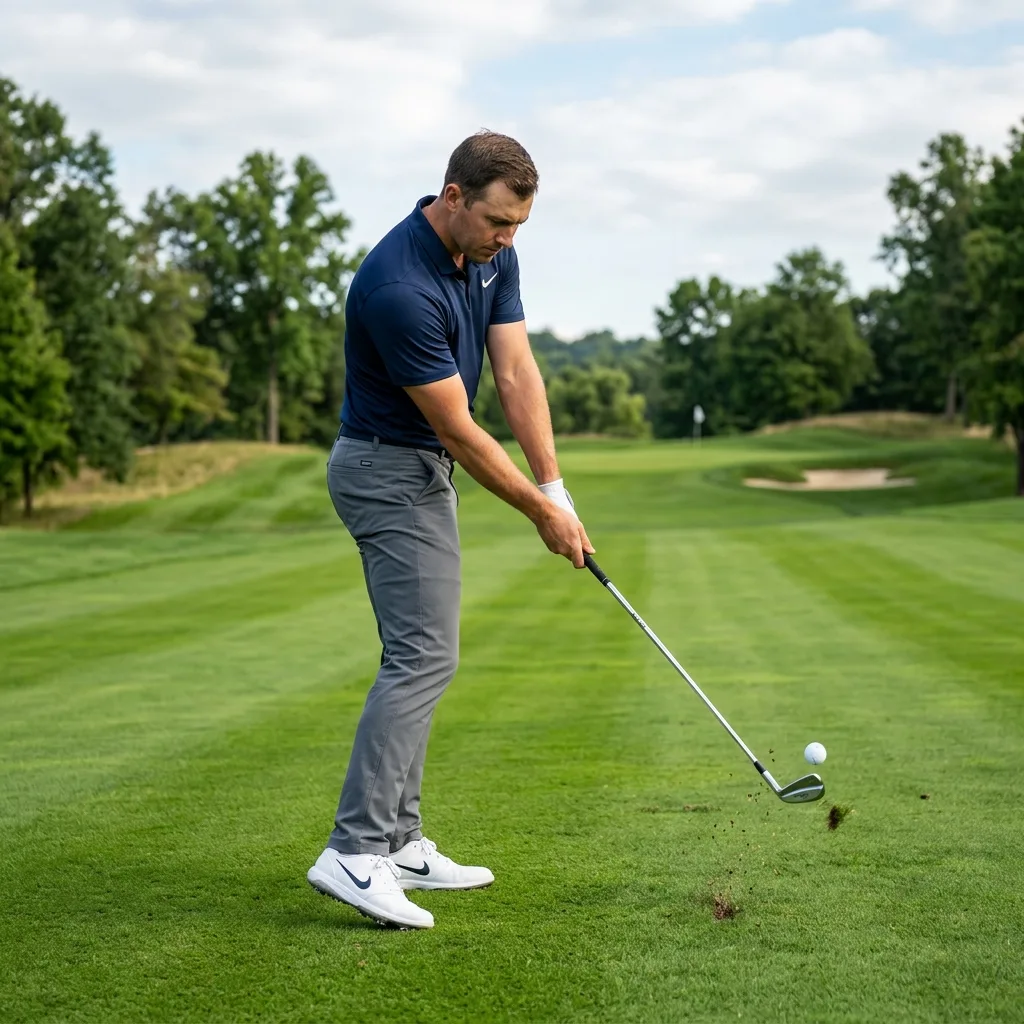
Blades vs. Players Distance Irons: The 2026 Shift
Pure Blades
The debate between pure blades and modern cavity backs used to be incredibly straightforward. You played blades if you wanted ultimate workability, and you played cavity backs if you needed help getting the ball airborne.
Consider what happens when you miss the sweet spot on a traditional muscle back. The gear effect drastically alters your spin axis, and the lack of perimeter weighting means the clubhead twists violently at impact. Your beautifully shaped draw turns into a weak, diving hook.
Players Distance Irons
The 2026 shift has completely rewritten these rules. Today, the best players irons deliver the aesthetic of a blade with the hidden horsepower of a game improvement club. Engineers have figured out how to hide extreme forgiveness inside a remarkably small package.
Modern players distance irons utilize advanced internal geometry to stabilize the clubhead on these slight mishits. Much like upgrading to a modern driver for distance, upgrading your irons provides a wider functional hitting area.
You retain the ability to hit a low punch fade or a high drawing approach shot, but your misses are far more playable. The penalty for imperfection has been drastically reduced, which directly translates to more greens in regulation and lower scores for single-digit handicappers.
Top Models Analyzed: Titleist T150, Callaway Apex Ai150 & TaylorMade P770
Diving directly into the data, three models stand out as the undisputed leaders for the 0-5 handicap bracket. These manufacturers have invested heavily in pushing the boundaries of material science to give elite players the perfect combination of aesthetics and performance.
Testing these clubs side-by-side reveals exactly how far the technology has progressed.
First, the Titleist T150 offers an evolution in feel and precision. Titleist engineered this iron specifically for the player who loved the T100 but needed a slightly lower center of gravity and stronger lofts.
The result is a penetrating ball flight that cuts through the wind, paired with exceptional spin control that allows you to stop the ball on a dime on firm summer greens. The sound at impact is remarkably solid, mimicking a single-piece forged iron perfectly.
Next, the highly anticipated Callaway Apex Ai150 leverages artificial intelligence to optimize the face architecture for every individual iron in the set. The long irons are designed to launch high and maximize carry distance, while the scoring irons prioritize a lower, more controllable launch angle.
This progressive design ensures that your 4-iron stops quickly on long par 3s, while your 9-iron does not balloon out of control when hitting into the wind.
Finally, the TaylorMade P770 remains a powerhouse in this category. For 2026, TaylorMade refined the internal SpeedFoam technology to enhance acoustic feedback while maintaining explosive ball speeds.
The P770 provides a slightly thinner sole than its predecessor, improving versatility from tight lies without sacrificing the forgiveness that makes hollow-body construction so incredibly popular among elite amateurs. These three options dominate the market for very good reasons.
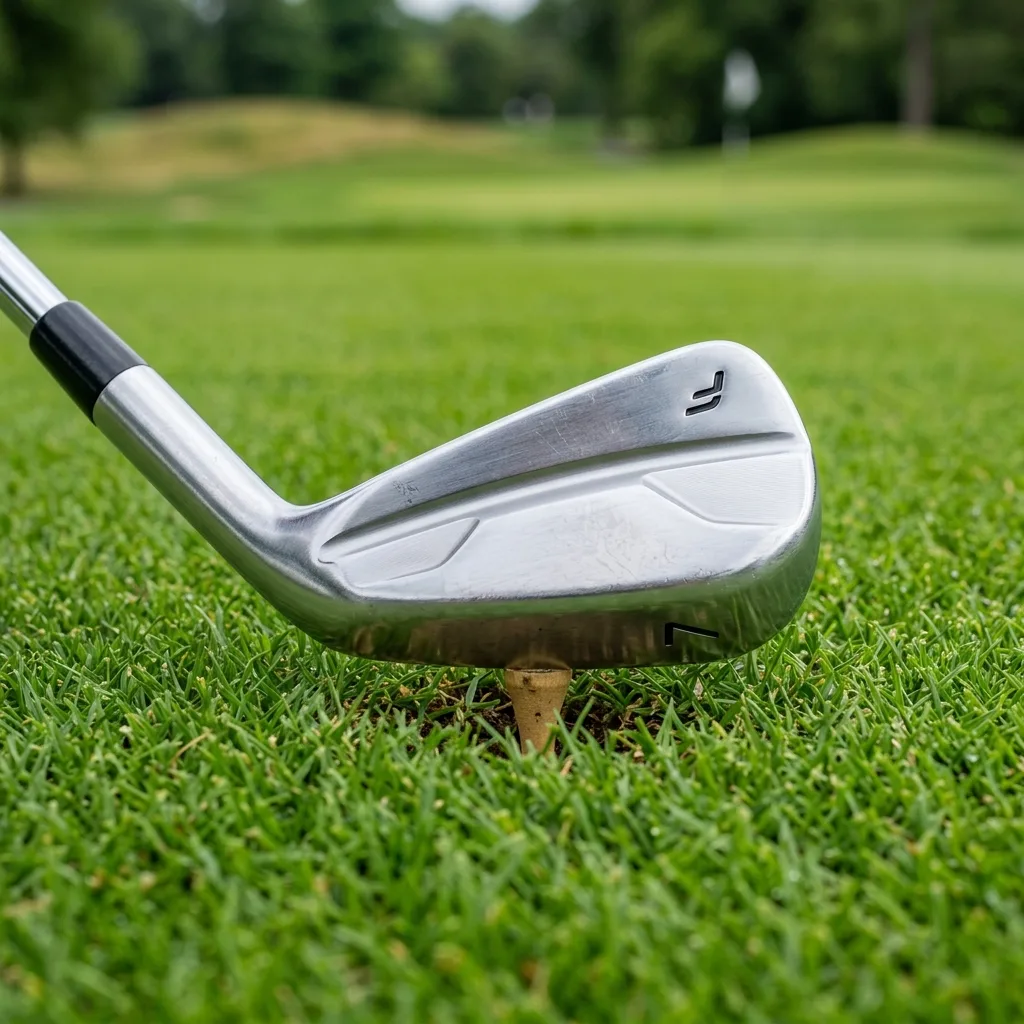
How to Choose: Turf Interaction, Offset, and Topline
Visual appeal and ground mechanics are non-negotiable for a skilled ball striker. When a low handicapper sets a club behind the ball, the profile must inspire confidence rather than distraction.
This is why a thin topline is absolutely critical. A bulky top edge looks clunky and gives the impression of a shovel, which ruins the aesthetic experience of setting up to a precise approach shot.
Similarly, minimal offset is a mandatory requirement. Offset was originally designed to give the golfer more time to square the clubface, which helps high handicappers slice the ball less. For a 2-handicap who naturally squares the face, excessive offset causes the leading edge to dig too early and often results in a severe hook.
You need the hosel and the leading edge to align naturally, allowing for clean, crisp contact and pure ball striking.
Beyond visuals, turf interaction is the silent killer of good iron shots. If the sole is too wide or lacks the proper camber, the club will bounce off firm turf, resulting in thin, bladed shots. Conversely, if the leading edge is too sharp without enough bounce, the club will dig trenches in soft conditions.
The premier players distance irons of 2026 have meticulously milled soles that glide through the turf efficiently, taking shallow, dollar-bill-sized divots that signify a perfectly compressed golf ball. Matching the sole grind to the type of grass you primarily play on is the secret weapon to consistent ball striking.
Optimizing Shafts for Low Handicap Swing Speeds
Purchasing the perfect iron heads is only half the equation. If you fail to pair those heads with the correct shafts, you will never unlock their full potential.
Low handicap golfers typically possess higher swing speeds and more aggressive transition tempos. This requires a shaft profile that can handle the increased load without buckling or causing inconsistent face delivery at impact. You cannot overlook this critical component.
Heavier, stiffer steel shafts, such as the Dynamic Gold X100 or KBS Tour 130X, have long been the gold standard for players seeking maximum feedback and dispersion control. However, modern manufacturing has introduced ultra-stable composite and lightweight steel options that reduce fatigue while maintaining incredibly tight tolerances.
Your goal during a fitting should be finding a shaft that allows you to feel the location of the clubhead throughout the entire swing.
When you execute complex shot shaping—like a high, soft cut over a bunker—the shaft must respond predictably. If the tip section is too soft, your launch will be erratic; if it is too stiff, the iron will feel completely dead and unresponsive.
Elite players must test different shaft profiles on a launch monitor to verify that their spin rates and descent angles remain perfectly optimized. Matching the kick point of the shaft to your natural release pattern is the difference between hitting it close and missing the green entirely.
Common Mistakes When Upgrading Your Irons
The most frequent error advanced golfers make is letting their ego dictate their equipment choices. Many players believe that reaching a scratch handicap mandates a transition into pure muscle back blades.
This is a massive trap. We have seen countless elite amateurs switch to blades for the aesthetic appeal, only to watch their handicap creep upward because they lost the forgiveness of their previous cavity back set.
Even touring professionals are actively putting cavity back long irons into their bags because the benefits are simply too vast to ignore.
Another critical mistake is failing to verify lie angles dynamically. You might swing a standard 7-iron perfectly on a strike board, but your dynamic delivery on grass could be entirely different.
If your lie angles are off by even one degree, your turf interaction will suffer, and your directional control will evaporate. Many players also make the mistake of overlooking premium Japanese forgings like the Mizuno Pro series because they assume they are purely traditional blades.
Mizuno has adapted brilliantly, offering players distance models that blend legendary feel with modern speed. Finally, ignoring the gapping at the bottom of your bag is a severe oversight.
Modern players distance irons often feature stronger lofts. If your new pitching wedge is 44 degrees, but your gap wedge remains 52 degrees, you have created an unplayable 8-degree yardage gap that will cost you heavily on crucial scoring shots.
Do You Really Need Forged Irons?
For decades, the word “forged” was synonymous with quality in the golf industry. Better players insisted on forged irons because the carbon steel provided a soft, responsive feel that cast stainless steel simply could not replicate.
If you wanted the ultimate sensory experience and precise distance control, you played forged clubs. The forging process, striking a solid billet of 1025 carbon steel, aligns the grain structure of the metal to provide unmatched feedback.
However, the technology behind cast irons has advanced exponentially. Brands are now using specialized dampening polymers, hollow-body foams, and multi-material badges to tune the acoustic frequencies of cast clubs.
Remember, what you interpret as “feel” in a golf shot is actually just the sound vibrations traveling up the shaft to your hands. While a pure, one-piece forged blade still offers the most direct feedback, modern multi-material irons have closed the gap remarkably well.
Many Tour professionals now play irons that feature cast hollow bodies because the performance benefits—higher launch, more ball speed, increased stability—far outweigh any negligible differences in impact sensation.
The debate should no longer focus solely on the manufacturing process, but rather on how the final product performs dynamically on the golf course. Focusing strictly on trackman metrics rather than the manufacturing process is the smartest way to build your bag.
Final Thoughts on Golf Irons for Low Handicappers
Making the transition to a new set of irons is a major decision for any serious golfer. The best golf irons for low handicappers available today are engineering marvels that refuse to compromise.
They give you the sleek, intimidating look of a traditional blade while secretly providing the launch conditions and forgiveness of a game improvement club. The industry has reached a point where you no longer have to sacrifice performance for aesthetics.
You no longer have to accept harsh penalties for slight mishits. By embracing players distance technology, ensuring your turf interaction matches your swing style, and getting properly fitted for the correct shafts, you can immediately lower your scoring average.
Your equipment should work with you, not against you. Take the time to test these new models on a launch monitor, analyze your dispersion circles, and let the data guide your final decision. The game is incredibly difficult; do not make it harder by playing the wrong equipment.
Frequently Asked Questions
What are the most forgiving irons for a low handicapper?
The most forgiving irons for low handicappers are modern players distance irons like the TaylorMade P770 and Titleist T150. They offer the thin topline and minimal offset preferred by better players, combined with advanced cavity back technology for improved launch angle and spin control on off-center strikes.
Should a 5 handicap play blades or cavity backs?
Most 5 handicaps will benefit significantly more from cavity backs or players distance irons rather than pure blades. Modern cavity backs provide the necessary workability and turf interaction while offering crucial forgiveness that helps maintain consistent distance and accuracy during a round.
How important is turf interaction for low handicap irons?
Turf interaction is critical for low handicappers as it dictates strike quality and distance control. A narrower sole with appropriate bounce ensures the clubhead moves efficiently through the turf, providing the precise feedback and shot shaping capabilities required by skilled golfers.
What is the difference between players irons and players distance irons?
Players irons prioritize maximum workability, traditional feel, and consistency, typically featuring a forged muscle back or shallow cavity. Players distance irons maintain the compact profile but incorporate hollow body construction or advanced face technologies to increase ball speed and launch angle.
Does offset matter for a low handicap golfer?
Yes, minimal offset is highly preferred by low handicap golfers. It allows for a more natural transition from hosel to leading edge at address, promoting better workability and preventing the tendency to hook the ball, which is common with game improvement irons.
Get our latest guides, news, and insights highlighted in your Google Search & AI Overviews.