
Determining the correct golf driver shaft length for height eliminates wild slices on the golf course. If you consistently struggle with inaccurate drives, the problem often lies in your equipment rather than your swing mechanics.
Many players grab golf drivers straight off the retail shelf, assuming the manufacturer’s default specifications will suit their physique perfectly.
However, matching your club exclusively to how tall you stand is a massive mistake. A hidden fitting metric that most amateurs completely ignore is quietly sabotaging their tee shots—and it determines whether you launch a booming drive down the fairway or slice it out of bounds.
Table of Contents
- What Is the Ideal Golf Driver Shaft Length for Height?
- Why Wrist-to-Floor Measurement Matters More Than Height
- The Trade-Off: Swing Weight vs. Smash Factor
- How to Measure Your Static and Dynamic Fitting Metrics
- Adjusting Your Off-the-Rack Standard Length Driver
- Why PGA Tour Pros Play Shorter Custom Shafts
- Common Myths About Distance vs Accuracy
- Finding the Exact Golf Driver Shaft Length for Height
- Frequently Asked Questions
What Is the Ideal Golf Driver Shaft Length for Height?
When looking at basic sizing charts, a player between 5’9″ and 6’0″ typically gets prescribed a 45.5-inch driver. This measurement has become the industry’s off-the-rack standard.
Brands push longer clubs because a longer swing arc can theoretically generate more Clubhead speed, promising maximum potential yardage off the tee.
However, these baseline charts are fundamentally flawed and misleading. Two players standing exactly 6’0″ can have wildly different arm lengths and posture styles.
Relying strictly on your overall height to dictate your equipment setup completely ignores your unique body geometry and natural setup position.

Why Wrist-to-Floor Measurement Matters More Than Height
The absolute secret to proper driver fitting lies entirely in your arms. Your Wrist-to-floor measurement is vastly more important than how tall you are overall.
This static measurement accounts for the natural hang of your hands when you properly address the golf ball.
If you have short arms relative to your height, you actually need a longer club to reach the ball comfortably. Conversely, if you have long arms, a standard length driver forces you to crowd the ball uncomfortably.
Ignoring this crucial measurement guarantees a poor setup, leading directly to weak strikes. Proper posture ultimately dictates your entire backswing sequence.
The Trade-Off: Swing Weight vs. Smash Factor
Altering your equipment introduces immediate physics challenges. When you shorten a club, you drastically reduce its Swing weight.
A club that feels too light can instantly destroy your tempo, causing your hands to rapidly outpace your body through the critical impact zone.
However, playing a shorter club dramatically improves your Smash factor. A shorter shaft makes it significantly easier to strike the absolute middle of the face consistently.
You trade a fraction of potential speed for a massive upgrade in energy transfer efficiency. Efficient strikes always outpace faster, glancing blows on the golf course.
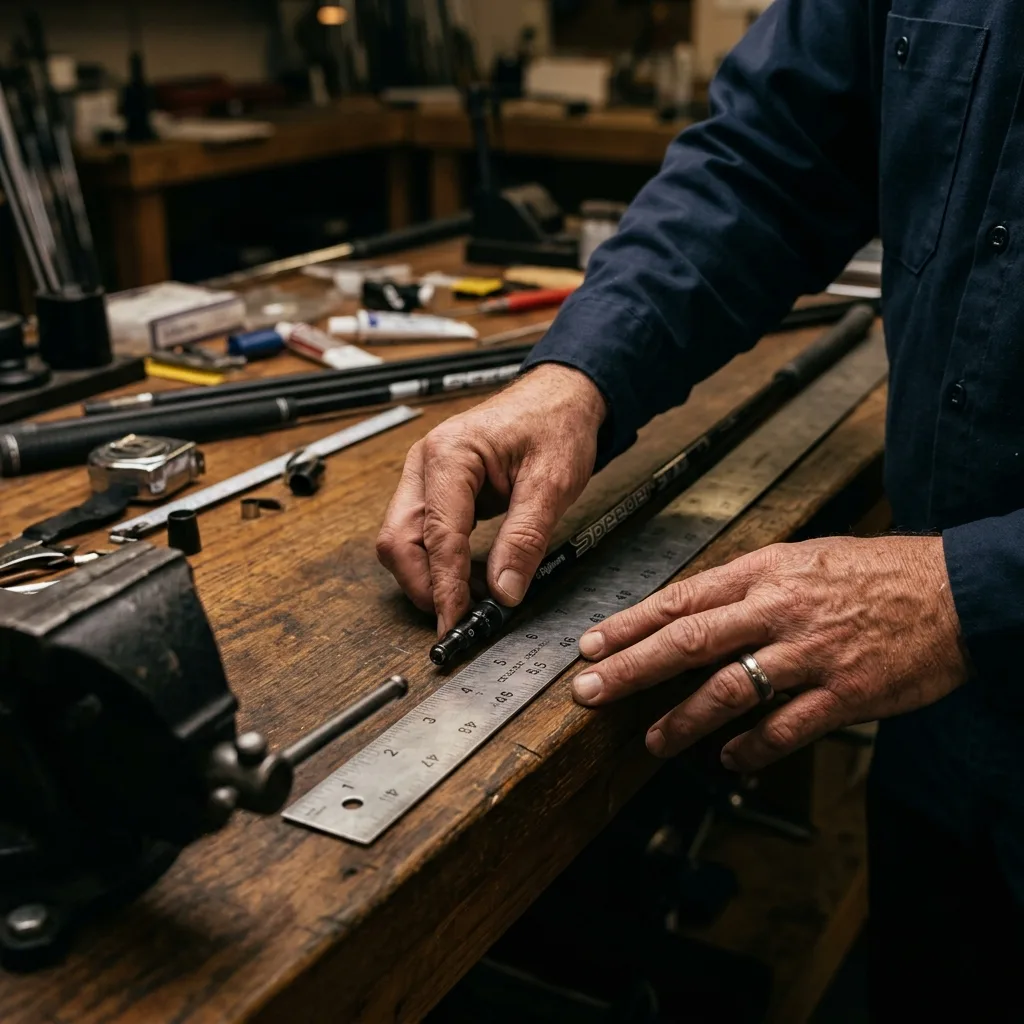
How to Measure Your Static and Dynamic Fitting Metrics
Taking your static measurements is only the very first step. You must strictly combine those physical numbers with a comprehensive dynamic fitting session.
Observing exactly how the club behaves while you are swinging at full speed reveals the undeniable truth about your swing mechanics.
Get on a Launch monitor with an experienced professional club fitter. They will mathematically track your overall dispersion (how tightly your shots group together).
This data conclusively proves whether a specific club length actually tightens your shot pattern on the course. A tighter spread means fewer lost balls and lower scores.
Adjusting Your Off-the-Rack Standard Length Driver
If your current driver is significantly too long, you can easily modify it rather than immediately buying a new one. A professional club builder can simply trim half an inch from the butt end of the grip.
Just remember that cutting the shaft makes the clubhead feel noticeably lighter.
To restore the proper feel, you must precisely add mass back to the clubhead. Apply Lead tape directly to the sole of the club.
Alternatively, modern clubheads feature adjustable weights to fine-tune the overall balance, ensuring optimal center contact without buying a brand new driver for distance. Proper swing weighting keeps timing completely synchronized.
Why PGA Tour Pros Play Shorter Custom Shafts
The clear trend on the professional PGA Tour is moving rapidly toward much shorter drivers, with many top players opting for 44.5 inches.
These elite professionals heavily prioritize extreme precision. They use a custom shaft tailored exactly to their unique mechanics and transition forces.
They understand that consistently finding Center face contact yields far better scoring opportunities than swinging wildly with an overly long club. Finding the fairway sets up much easier approach shots to the green.
Common Myths About Distance vs Accuracy
The biggest recurring myth in modern golf is that a longer shaft automatically equates to longer drives. The distance vs accuracy debate is routinely misunderstood by enthusiastic amateurs constantly chasing speed.
Swinging a 46-inch club might add two extra miles per hour of clubhead speed, but striking the ball off the toe severely loses energy.
A 44.5-inch club swung slightly slower but struck perfectly in the center will fly further and much straighter every single time. Extreme accuracy breeds supreme confidence on the tee box.
Finding the Exact Golf Driver Shaft Length for Height
Your height is only one piece of the complex fitting puzzle. To truly optimize your tee game, you must carefully evaluate your specific arm length, dynamic swing characteristics, and impact efficiency.
Focus heavily on achieving consistent center contact. When you find the exact driver length that allows you to strike the middle of the face consistently, your scores will drop significantly.
A customized fit transforms the hardest club in the bag into a highly reliable weapon, leaving generic standards permanently behind.
Frequently Asked Questions
Does a longer driver shaft hit further?
While a longer driver shaft can potentially increase your swing speed, it frequently decreases your ability to hit the sweet spot. This ultimately results in less overall yardage and a significantly wider spread of missed fairways for the vast majority of amateur players.
What driver length does Tiger Woods use?
Tiger Woods typically plays a driver measuring exactly 44.5 inches. Like many elite touring professionals, he highly prioritizes precise ball striking and control over the theoretical maximum speed offered by longer standard-length clubs.
How do I measure my wrist-to-floor length?
Stand completely straight with your arms hanging naturally by your sides while wearing your normal golf shoes. Have a friend measure the exact distance from the main crease of your wrist straight down to the ground.
Can I just cut down my current driver shaft?
Yes, you can easily trim your existing shaft. However, shortening the club alters its balance, making the head feel noticeably lighter. You will likely need to add heavy tape or swap out sole weights to effectively restore the original swing weight, or explore options for a driver for distance.
How tall should you be to use a 45.5 inch driver?
A 45.5-inch driver serves as the default length for many popular brands. While players over six feet tall might fit this spec well on paper, dynamic fittings often reveal that they perform much better with slightly shorter setups that prioritize control.
Get our latest guides, news, and insights highlighted in your Google Search & AI Overviews.