
✨ This article was AI edited. Editorial responsibility: GolfGearDirect.blog.
Looking for the best golf ball drawing ideas and techniques to upgrade your sketchbook? We’ve broken down everything from simple beginner outlines to advanced 3D shading techniques so you can master the dimples and shadows. Here are 10 unique styles that actually look realistic!
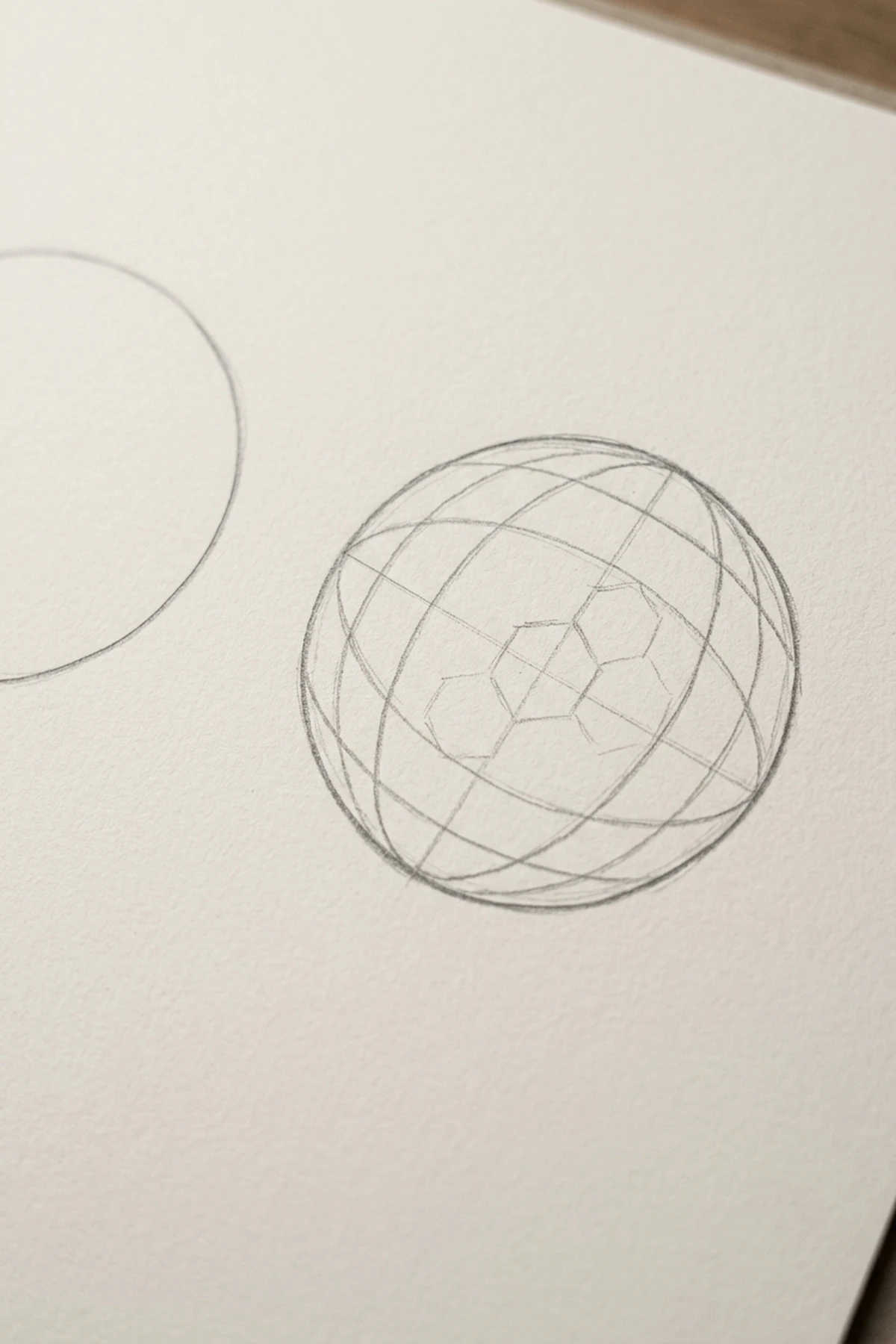
⚡ Quick Answer: A realistic golf ball drawing requires mastering spherical shading and accurately placing elliptical dimples along a curved grid. If you’re a beginner, start with simple vector line art or a kawaii cartoon style before moving on to graphite gradients and specular highlights. The key to making it pop is using a kneaded eraser to create bright reflections and deepening the shadow cores for true 3D depth.
Table of Contents
- Aerodynamic Boundary Layer Physics & Dimple Pattern Geometry
- 1. Classic 3D Graphite Pencil Golf Ball
- 2. Minimalist Vector Line Art Golf Ball
- 3. Realistic Golf Ball Resting on a Tee
- 4. Cute Kawaii Style Cartoon Golf Ball
- 5. Vintage Ink & Stippling Golf Ball Illustration
- Golf Ball with Golf Club & Green Landscape
- Custom DIY Sharpie Art on a Physical Golf Ball
- Curved Perspective Grid Dimple Technique
- Cross-Hatched Shading & Gradient Depth Drawing
- High-Contrast Glossy Specular Highlight Sketch
- Frequently Asked Questions
Aerodynamic Boundary Layer Physics & Dimple Pattern Geometry
When sketching or rendering a golf ball, understanding the functional physics behind dimple geometry transforms a flat circle into a realistic three-dimensional object. A standard conforming golf ball features between 332 and 432 dimples arranged in precise geometric patterns (dodecahedral or icosahedral lattices) with depths varying between 0.007 and 0.010 inches.
In fluid mechanics, dimples trip the laminar boundary layer into a turbulent state at high Reynolds numbers (Re ~ 100,000). The turbulent boundary layer remains attached to the sphere’s surface longer, drastically shrinking the turbulent low-pressure wake behind the ball. This drops the drag coefficient (Cd) from approximately 0.50 (for a smooth sphere) down to 0.25—allowing a golf ball to travel more than double the distance of an un-dimpled sphere.
| Dimple Pattern Type | Total Dimple Count | Aerodynamic Characteristics | Key Brand Example |
|---|---|---|---|
| Hexagonal (HEX Aerodynamics) | 332 (100% surface coverage) | Eliminates flat spaces; optimized low-speed lift | Callaway Chrome Soft & Supersoft |
| Spherically Tiled Tetrahedral | 388 (Pro V1) / 348 (Pro V1x) | Penetrating trajectory; consistent high-speed flight | Titleist Pro V1 series |
| Seamless Tour Flight Dimples | 322 (Sub-dimple depths) | Shallow overall depth promotes steep descent angle | TaylorMade TP5 & TP5x |
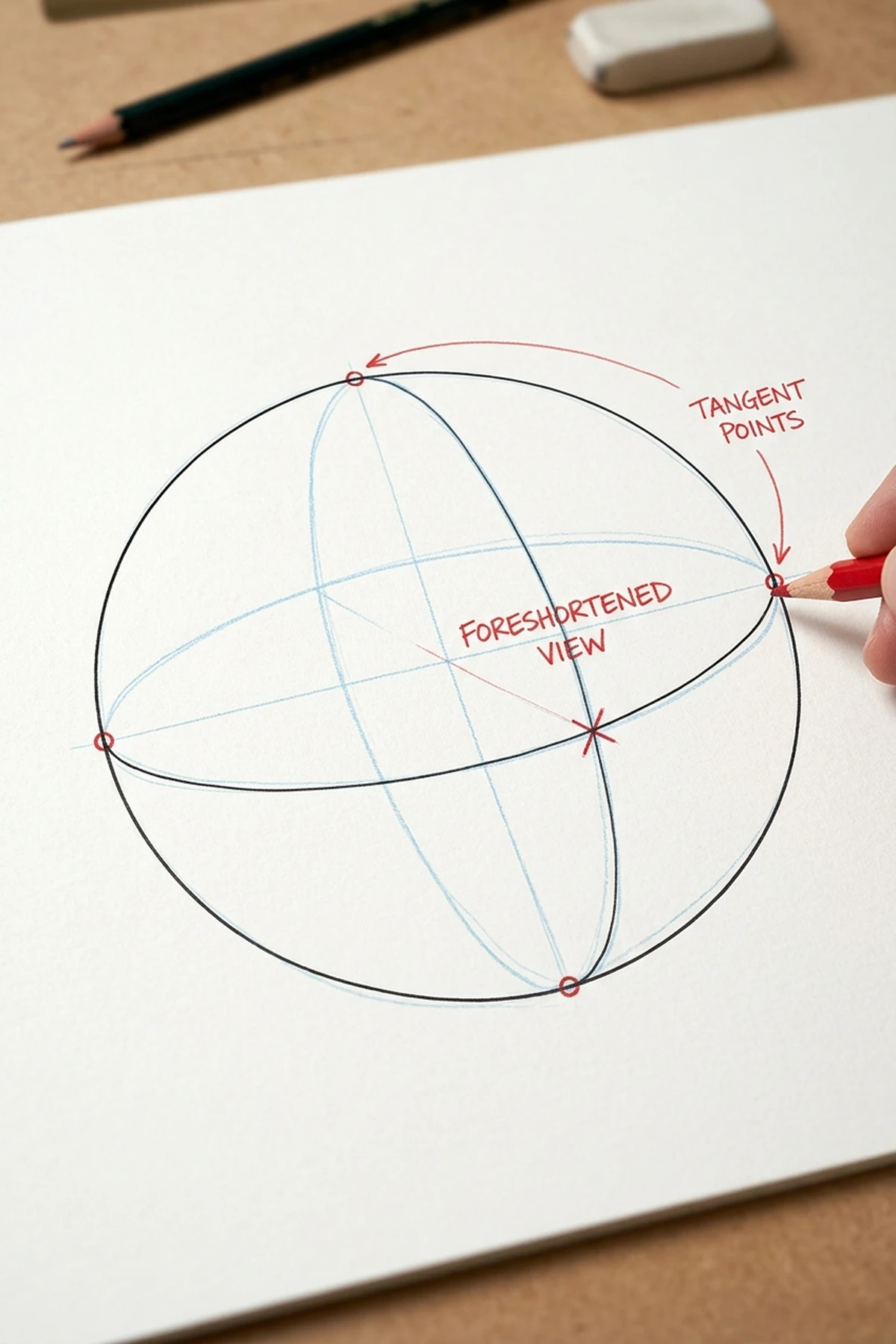
Illustration Tip: Because dimples are spherical indentations, dimples positioned near the equator of your sphere appear nearly circular, while dimples near the outer silhouette foreshorten into narrow ellipses following the curvature of the outer sphere contour.
Related In-Depth Guide
Callaway Supersoft vs Chrome Soft: Detailed Dimple & Performance Comparison →
Curious how HEX aerodynamic dimple patterns perform in real golf shots? Read our head-to-head comparison testing ball speed, driver backspin, and greenside stopping power across moderate and high swing speed players.
Read our comprehensive ball speed & dimple flight analysis →
| # | Style | ⏱️ Difficulty | 🎯 Best For |
|---|---|---|---|
| 1 | Classic 3D Graphite Pencil Golf Ball | Beginner | First-time sketchers learning sphere shading |
| 2 | Minimalist Vector Line Art Golf Ball | Beginner | Digital illustrators & icon designers |
| 3 | Realistic Golf Ball Resting on a Tee | Intermediate | Golf enthusiasts & sports artist portfolios |
| 4 | Cute Kawaii Style Cartoon Golf Ball | Beginner | Kids, doodles, & bullet journal accents |
| 5 | Vintage Ink & Stippling Golf Ball Illustration | Advanced | Retro print art & detailed ink sketches |
| 6 | Golf Ball with Golf Club & Green Landscape | Intermediate | Complete golf course scenery compositions |
1. Classic 3D Graphite Pencil Golf Ball
⏱️ Difficulty: Beginner | 🎯 Best For: First-time sketchers learning sphere shading | ✨ Style & Medium: Graphite Pencil on Bristol Paper
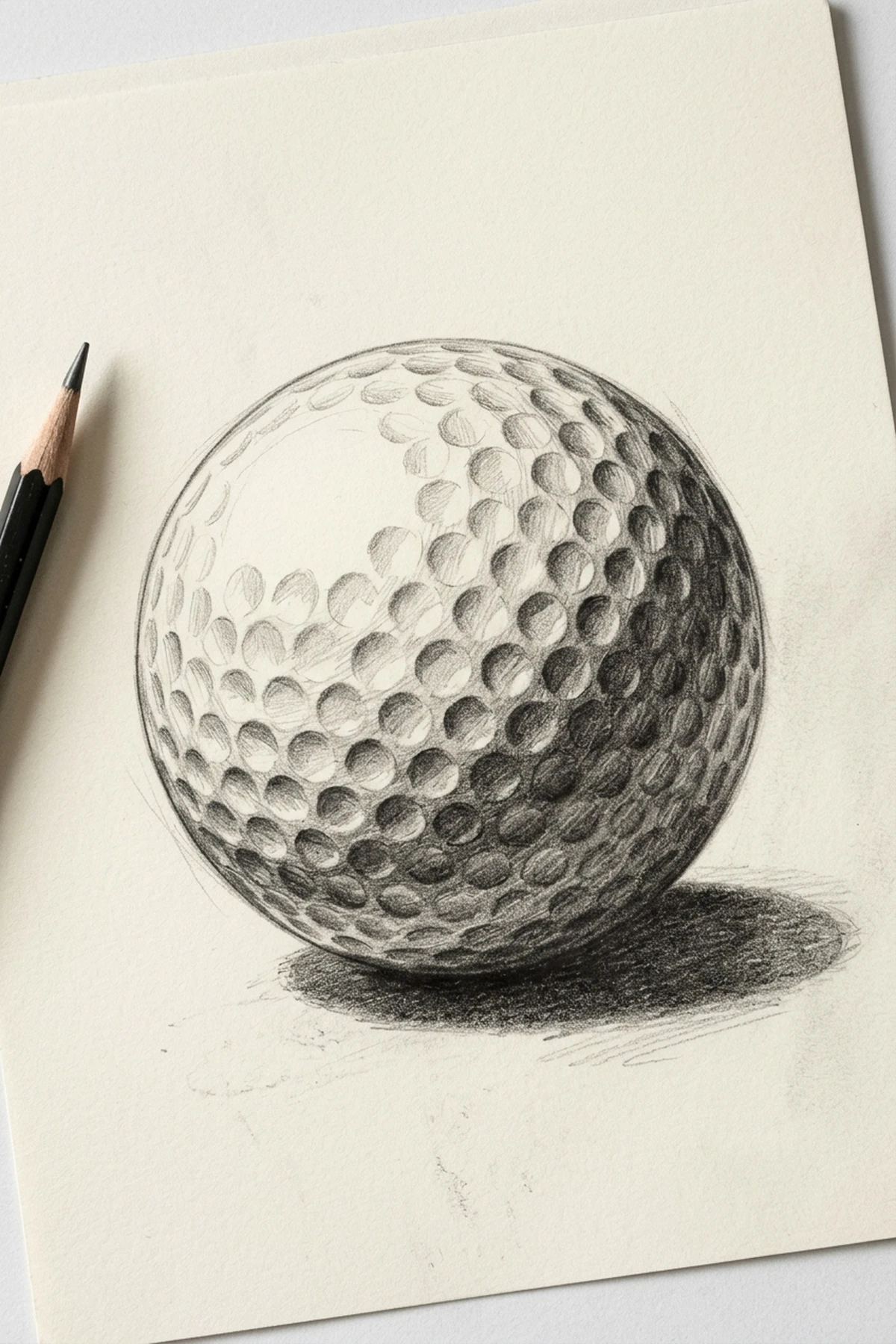
This approach is extremely beginner friendly because you only need a few basic supplies to create a convincing, realistic sphere. Grab some high-quality Prismacolor Premier Graphite Pencils and sketch on a smooth surface like Strathmore 300 Series Bristol Paper for best results.
To establish the golf ball’s volume, start with a light circular outline and map out the dimples before laying down the heavy shadows. A Kneaded Eraser is absolutely invaluable here for lifting graphite out of the dimples to keep your highlights incredibly bright.
The result is a highly professional looking piece that builds your fundamental shading skills over time. Keep practicing this core technique until your sphere looks so real it might just roll right off the sketchbook page.
2. Minimalist Vector Line Art Golf Ball
⏱️ Difficulty: Beginner | 🎯 Best For: Digital illustrators & icon designers | ✨ Style & Medium: Clean Vector Pen Tool / Fine Liner
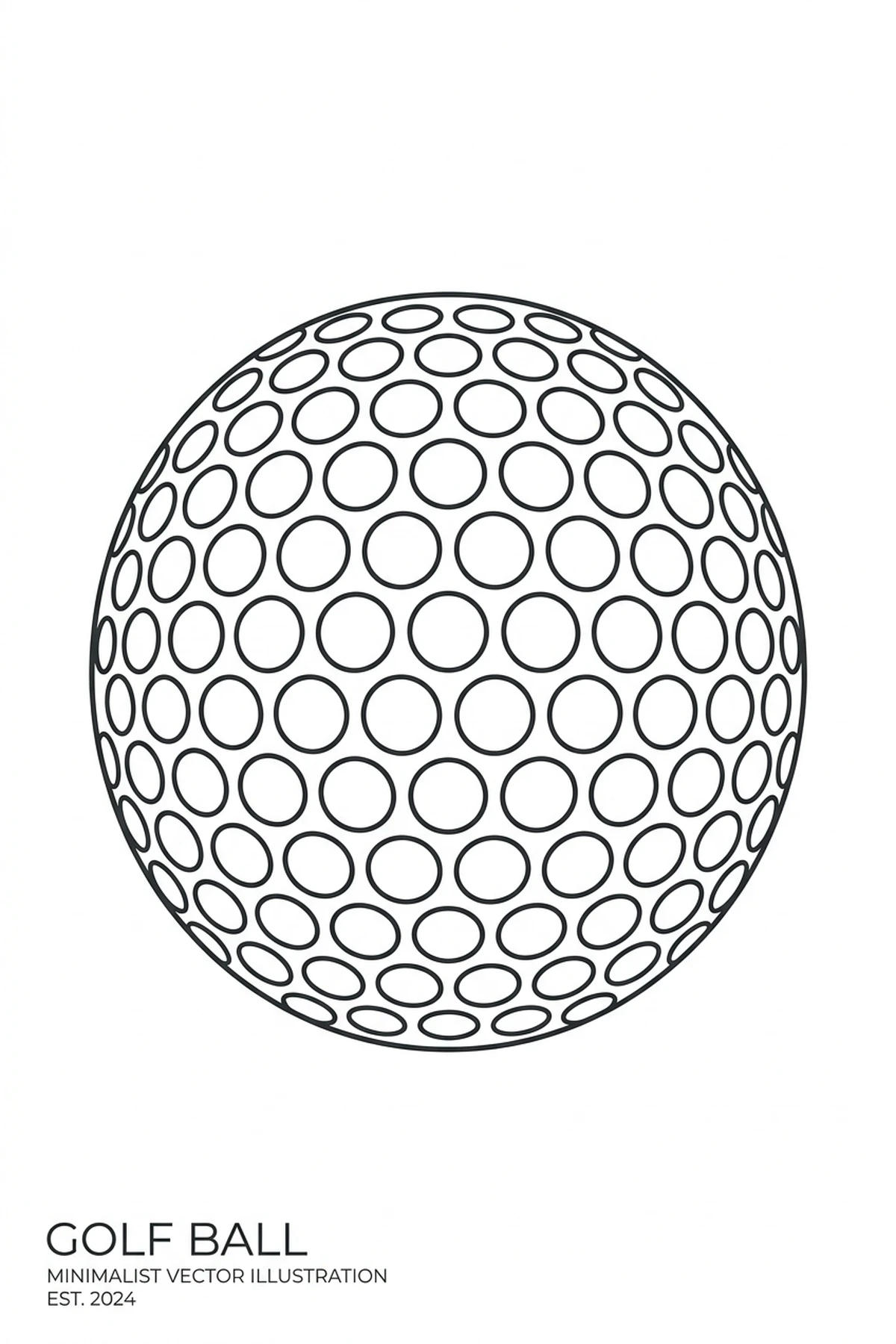
Here is a major trend alert for modern digital illustrators and designers who love clean, bold graphics. A minimalist line art approach completely strips away complex shading in favor of simple geometric precision.
If you are drawing on paper, a Circle Template Stencil is an absolute must to guarantee a perfectly round perimeter. The secret is using varied line weights—a thicker outline for the ball itself and ultra-thin, subtle crescents to delicately suggest the dimples.
This sleek, minimalist aesthetic works perfectly for modern branding, sports logos, or trendy apparel designs. It is a wonderfully fast, highly scalable technique that communicates the core idea instantly with absolutely zero fuss.
3. Realistic Golf Ball Resting on a Tee
⏱️ Difficulty: Intermediate | 🎯 Best For: Golf enthusiasts & sports artist portfolios | ✨ Style & Medium: Graphite Shading & Blending Stump
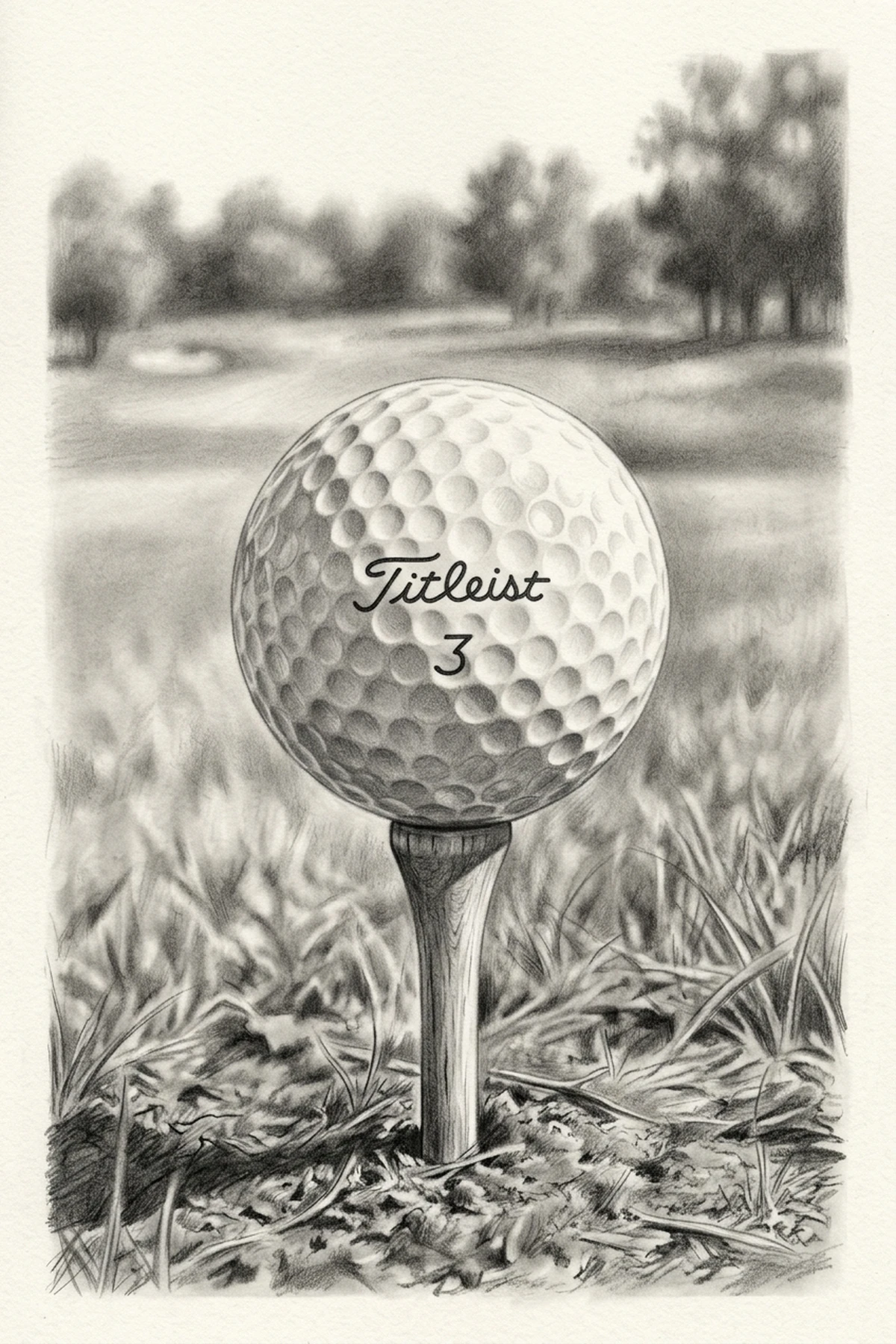
This particular composition is an absolute expert pick for anyone looking to create dynamic, authentic sports illustrations. By illustrating a recognizable model like the classic Titleist Pro V1 perched on a tee, you instantly add an immediate sense of scale and realism.
To easily avoid the common mistake of Flat Contour Dimple Placement, ensure the dimples near the edge wrap naturally with the curvature. Use Paper Blending Stumps (Tortillons) to carefully soften the graphite within each dimple, which maintains the illusion of depth.
This highly professional setup ultimately proves you understand how objects interact with both light and gravity. If you are designing sports gifts, this pairs nicely with some DIY golf ball bouquet ideas for a highly creative presentation.
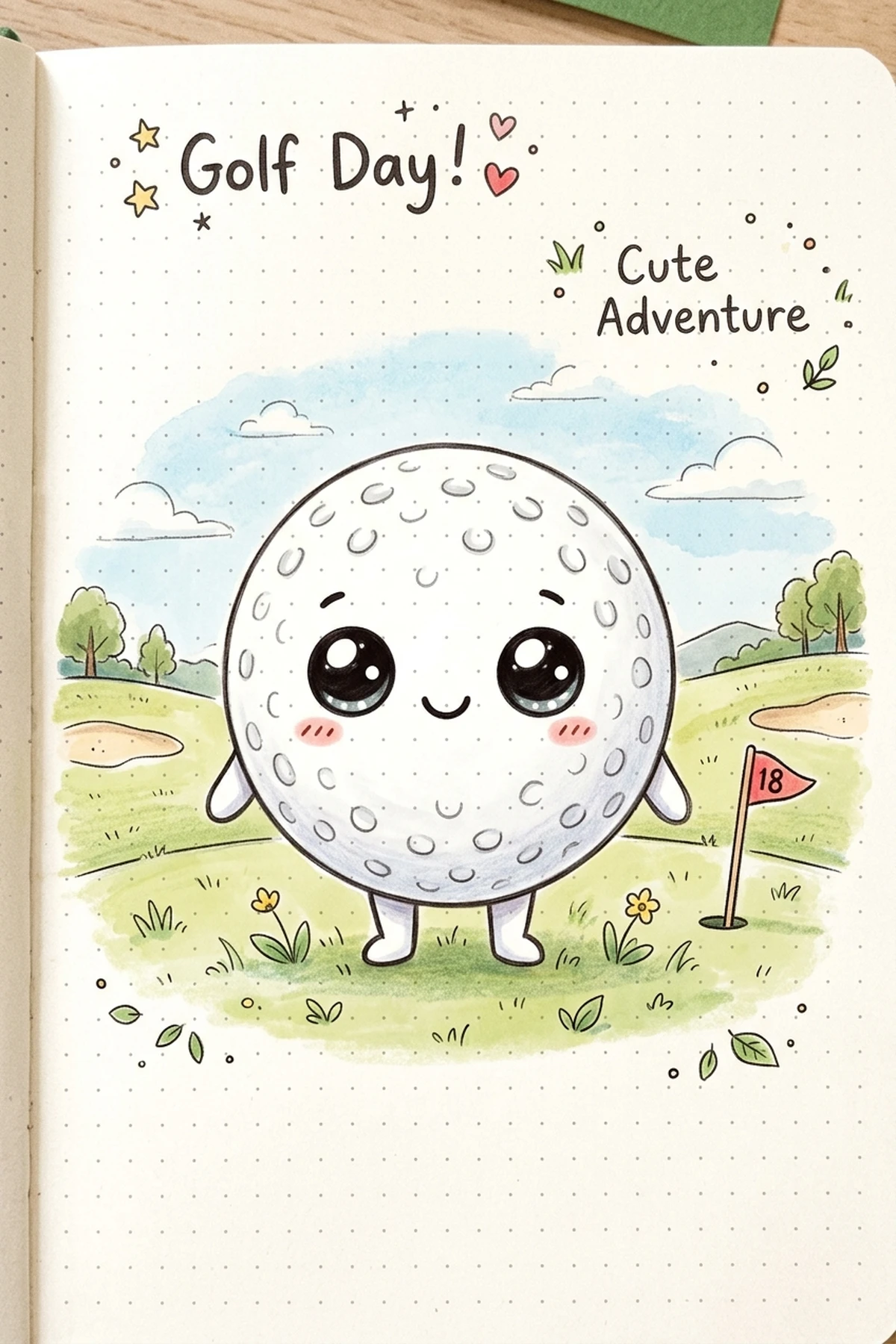
4. Cute Kawaii Style Cartoon Golf Ball
⏱️ Difficulty: Beginner | 🎯 Best For: Kids, doodles, & bullet journal accents | ✨ Style & Medium: Cartoon Ink & Vibrant Markers
If you need a brilliant time-saver that still packs tons of vibrant personality, the charming kawaii aesthetic is your best friend. Start by drawing a simple circle and immediately bring it to life with wide, adorable cartoon eyes and a happy smile.
Faber-Castell Pitt Artist Pens are absolutely perfect for laying down crisp, bold ink lines that will not smudge during coloring. Instead of drawing every single dimple, just add a few playful crescent marks around the outer edges to playfully suggest the golf ball texture.
This delightful style is a wonderful cultural nod to Japanese cute art that easily brightens up any notebook or greeting card. It is absolutely guaranteed to bring a warm smile to anyone’s face in just a matter of minutes.
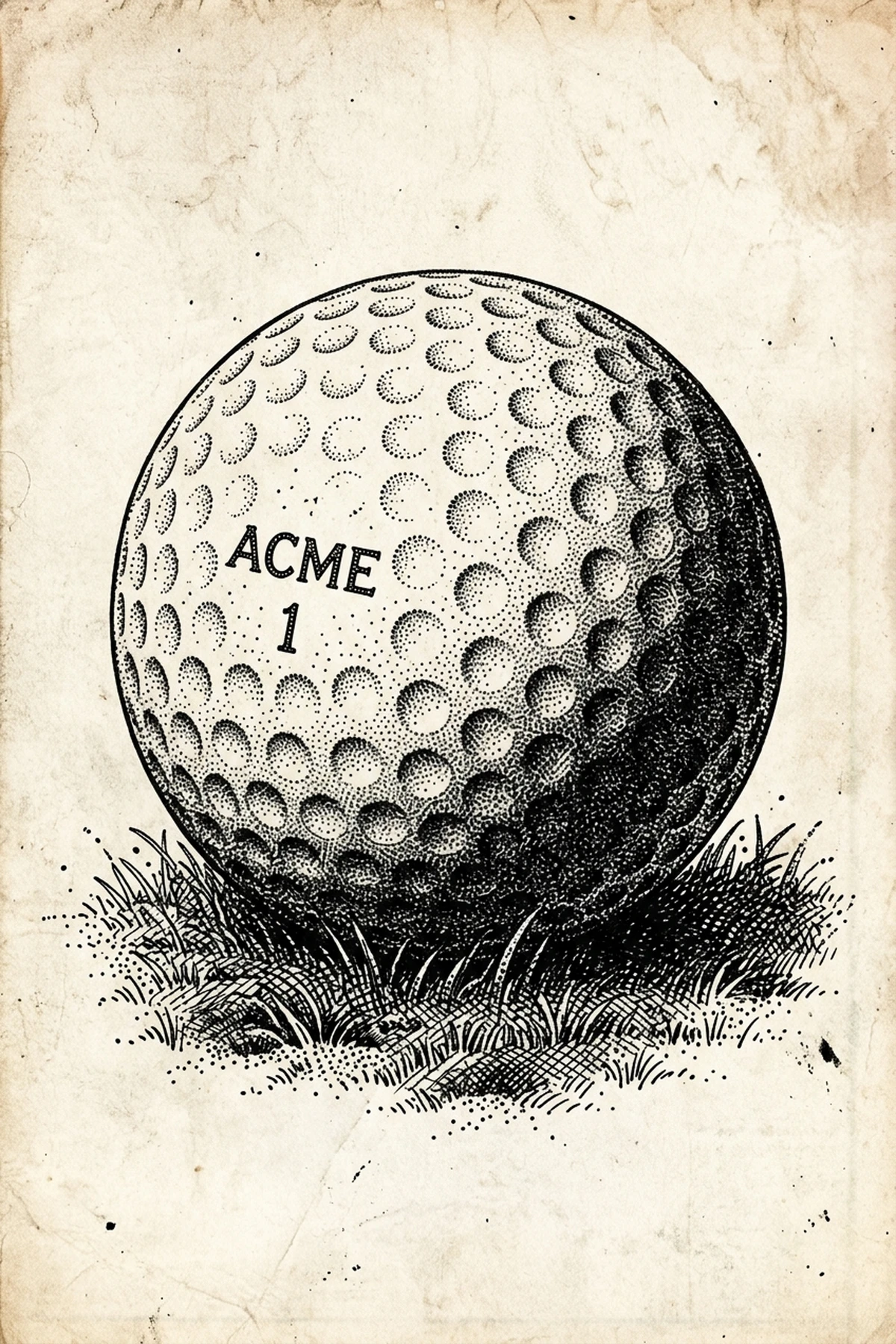
5. Vintage Ink & Stippling Golf Ball Illustration
⏱️ Difficulty: Advanced | 🎯 Best For: Retro print art & detailed ink sketches | ✨ Style & Medium: Fine Line Pen Ink & Stippling
This methodical method is a true hidden gem for dedicated artists who deeply appreciate old-school, scientific-style illustrations. Using Sakura Pigma Micron Fine Line Pens, you can manually build up incredible texture and rich tone entirely out of tiny, distinct dots.
The intense patience required for Stippling & Dot Shadowing ultimately pays off with a gorgeously nostalgic, print-ready aesthetic. You map out the spherical volume by densely packing dots in the shadowed areas while intentionally leaving the brightest highlight completely bare.
The final finished piece carries a heavy professional weight, deeply reminiscent of classic newspaper advertisements and antique encyclopedias. Simply frame this complex illustration, and it instantly becomes an engaging conversation starter in any room.
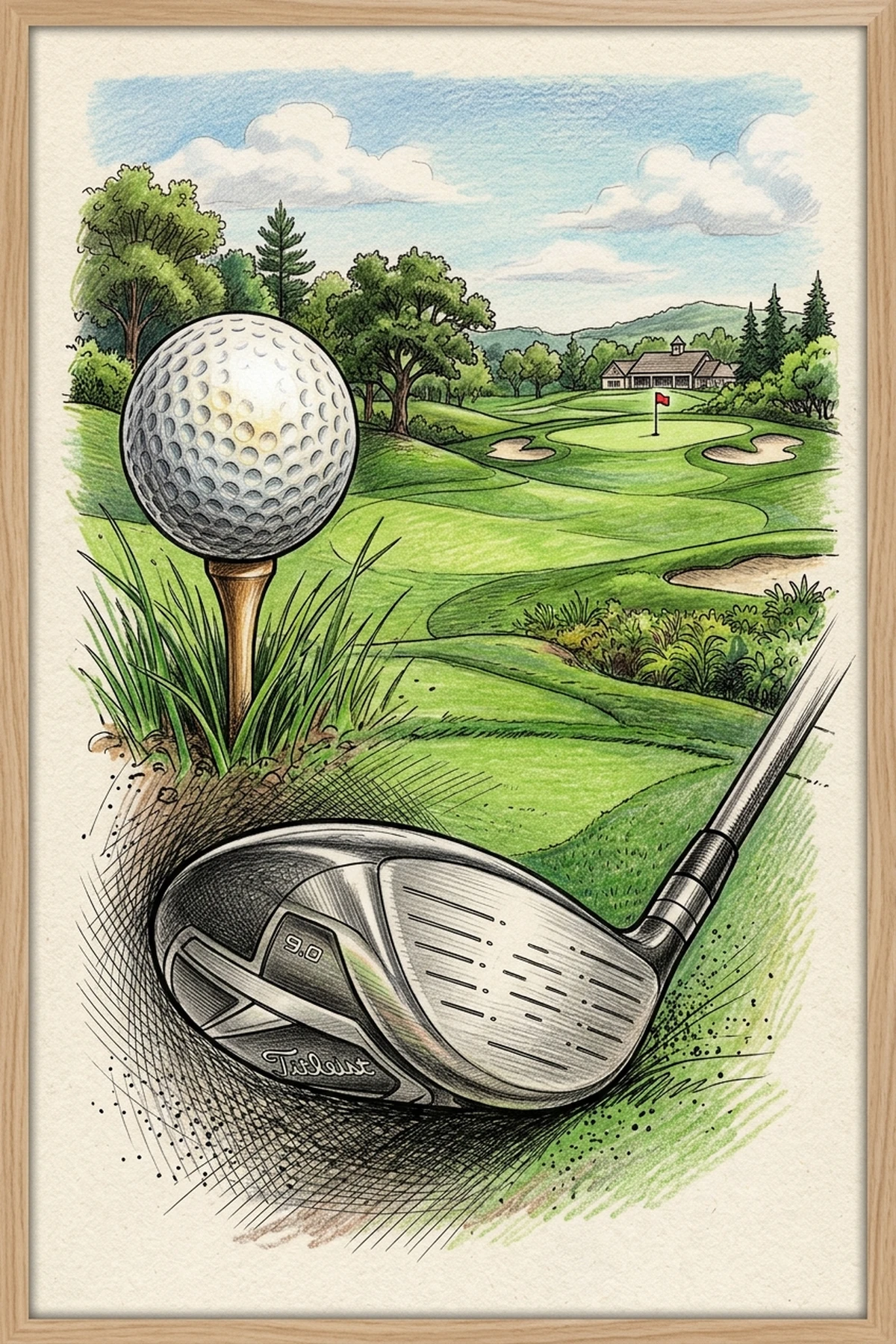
Golf Ball with Golf Club & Green Landscape
⏱️ Difficulty: Intermediate | 🎯 Best For: Complete golf course scenery compositions | ✨ Style & Medium: Mixed Media Colored Pencil & Ink
If you’re looking for a clever budget swap to elevate your sketchbook, combining a simple sphere with a lush green landscape is incredibly effective. You don’t need expensive materials to frame your golf ball drawing against an iron head and a sweeping fairway.
Start by outlining the ball and the club face using standard black ink, then block in the grass using any basic colored pencils you have on hand. If you’re interested in more creative golf ball bouquet crafts, you can apply these same vibrant shading tricks.
This DIY approach allows you to experiment with mixed media on a small scale before tackling larger scenes. By keeping the background slightly softer and out of focus, the main subject really pops off the page.
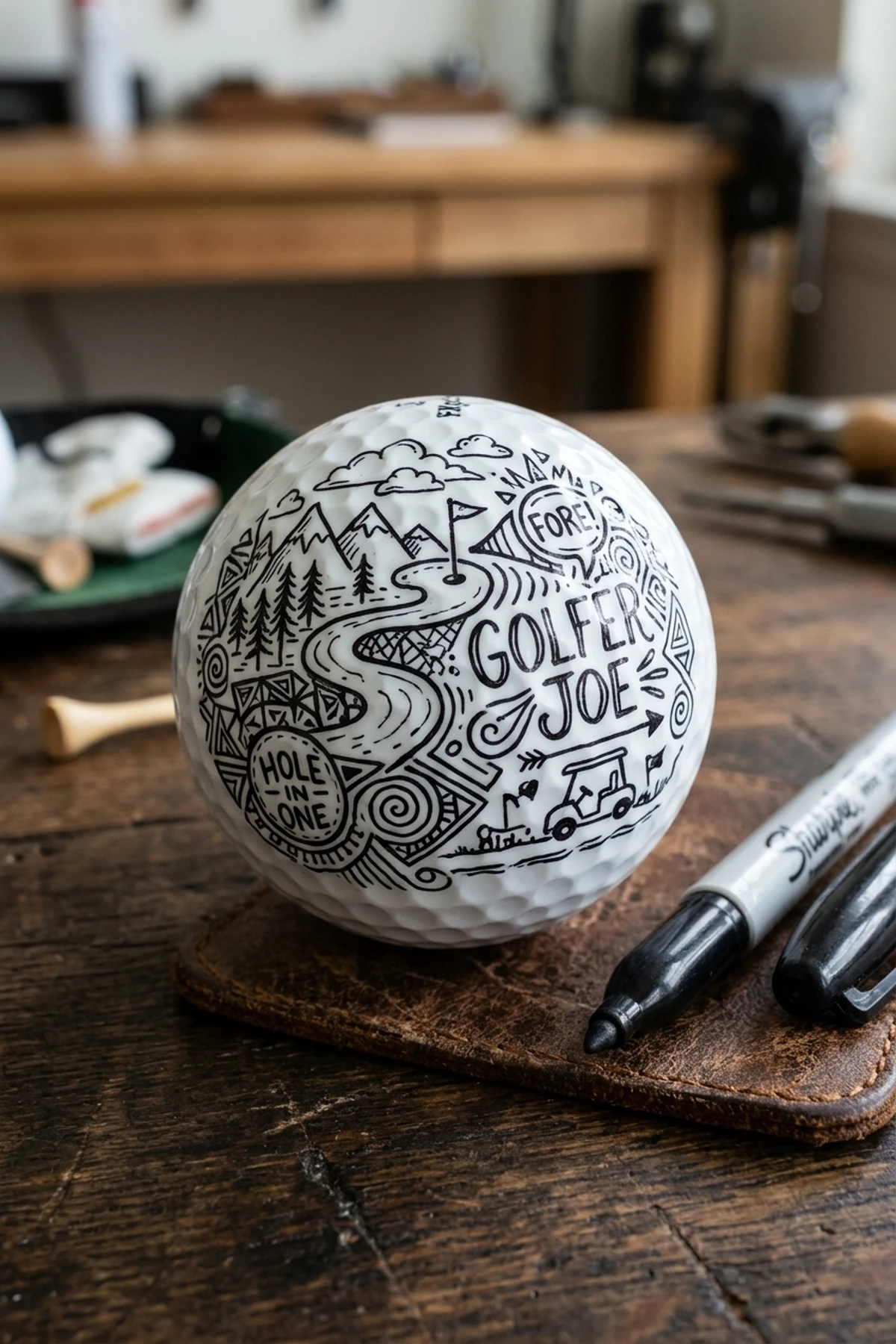
Custom DIY Sharpie Art on a Physical Golf Ball
⏱️ Difficulty: Beginner | 🎯 Best For: Custom ball identifiers & golf gift ideas | ✨ Style & Medium: Permanent Sharpie Markers on Golf Ball Surface
There is a massive trend alert right now for personalizing your gear directly, rather than just sketching on paper. Grabbing a set of Sharpie Fine Point Markers and drawing directly onto the urethane cover creates a fantastic, functional piece of art.
When applying ink to a spherical surface, it helps to rest the ball in a small cup or egg carton to keep it steady. Stick to vibrant primary colors and avoid overly intricate details, as the dimples will naturally break up very fine lines.
This hands-on DIY project is the ultimate way to mark your ball for tournament play or create a memorable gift for a fellow golfer. It turns an ordinary piece of equipment into a completely unique, personalized keepsake.
Curved Perspective Grid Dimple Technique
⏱️ Difficulty: Intermediate | 🎯 Best For: Artists struggling with realistic dimple alignment | ✨ Style & Medium: Guideline Sketching & Elliptical Geometry
Our absolute expert pick for rendering accurate dimples involves mapping out a Curved Elliptical Perspective Grid before you even think about shading. Many artists struggle because they draw perfect circles straight across the sphere, which destroys the illusion of 3D volume.
By establishing wrapping guidelines first, every depression naturally follows the curvature of the object. To execute this properly, lightly sketch intersecting ellipses that mimic the latitude and longitude lines of a traditional globe.
Mastering this professional mapping strategy is the absolute secret to achieving photorealism in spherical textures. If you want to understand how dimple design affects real-world ball flight, check out our analysis of low spin golf balls for driver. It completely eliminates the guesswork and elevates your technical drafting skills to the next level.
Cross-Hatched Shading & Gradient Depth Drawing
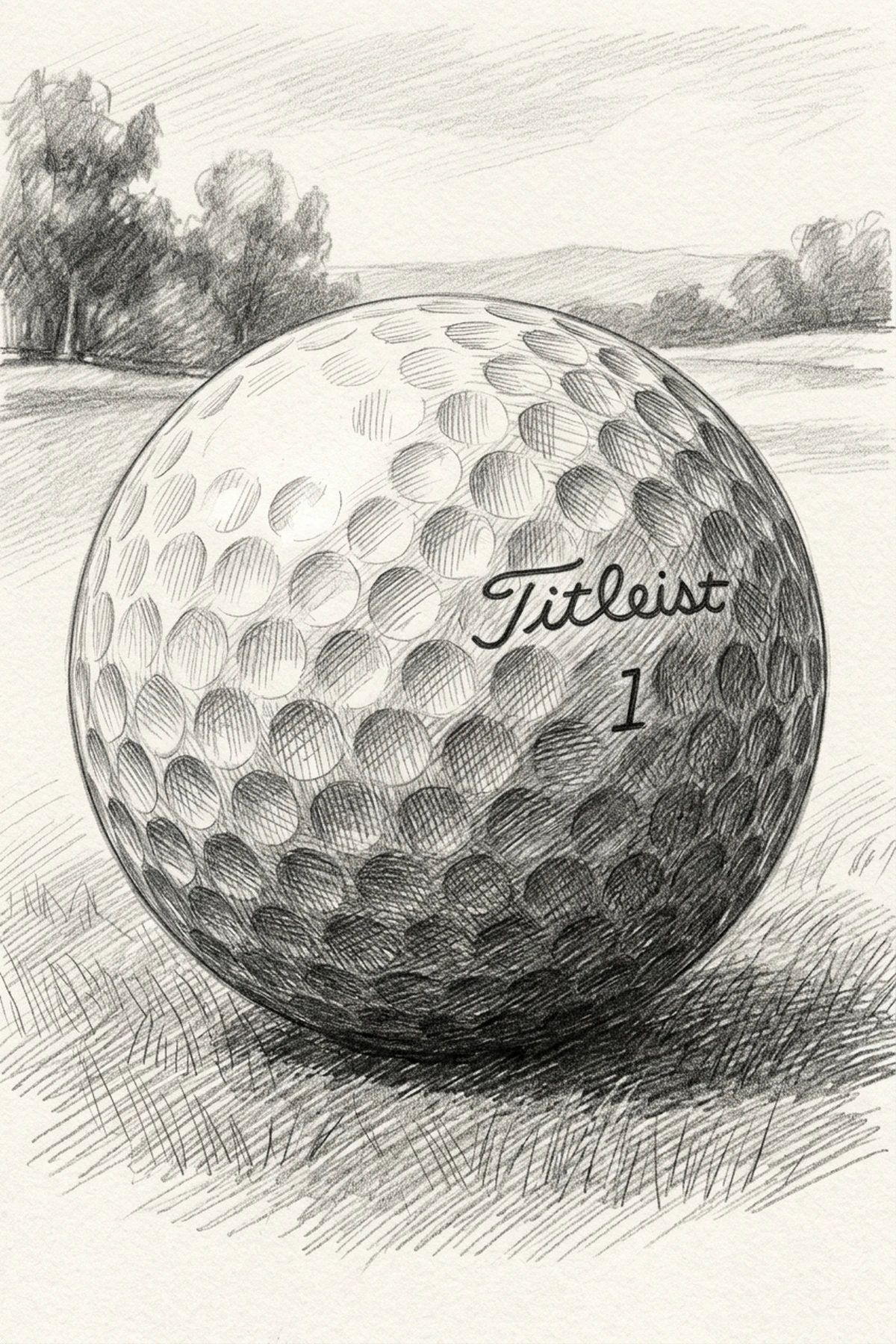
⏱️ Difficulty: Intermediate | 🎯 Best For: Building rich textural contrast & depth | ✨ Style & Medium: Layered Cross-Hatching & Gradient Pencils
Despite its complex appearance, Cross-Hatching & Gradient Shading is surprisingly beginner friendly when broken down into manageable layers. You simply use intersecting sets of parallel lines to gradually build up the core shadow and cast shadow.
Start with widely spaced lines for the lighter midtones, then add perpendicular layers in the darkest crevices to deepen the contrast. Ensure your strokes follow the round form of the ball to reinforce its three-dimensional shape.
This minimalist approach to rendering volume relies entirely on precise line density rather than heavily blended gradients. It produces a striking, deeply graphic look that feels incredibly modern and meticulously refined.
High-Contrast Glossy Specular Highlight Sketch
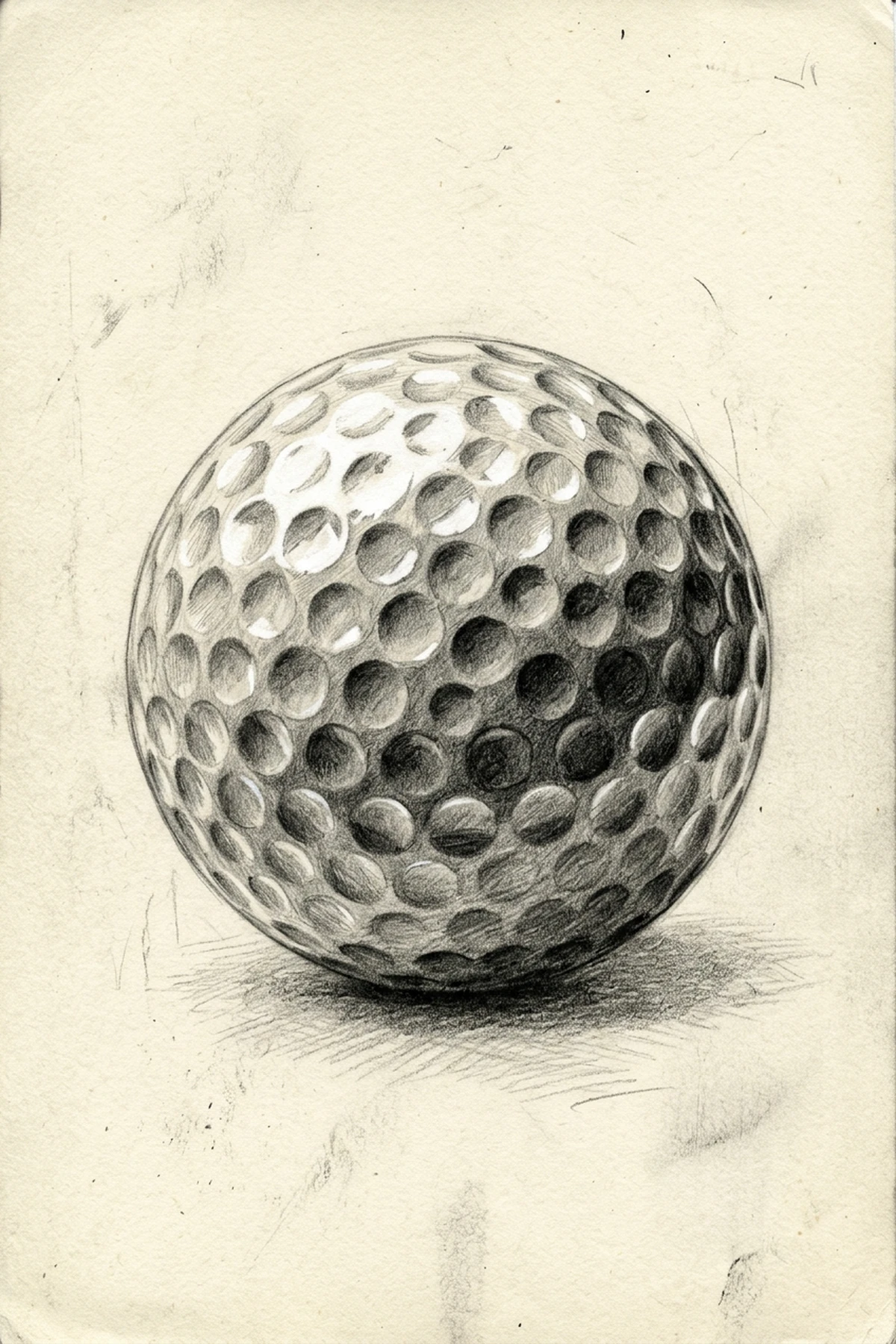
⏱️ Difficulty: Advanced | 🎯 Best For: Photo-realistic 3D sphere highlights | ✨ Style & Medium: Kneaded Eraser & Dark Graphite Recesses
The true hidden gem of photorealistic rendering is mastering the delicate balance between pure white reflections and deep shadows. By focusing heavily on the Specular Highlight & Gloss Speculars, you can make the urethane cover look wet, shiny, and incredibly realistic.
Be extremely careful to avoid Over-Darkening Dimple Recesses in the brightly illuminated zones, as this will flatten the glossy effect immediately. Instead, concentrate your darkest graphite applications near the core shadow and the bottom edge where ambient occlusion occurs.
This maximalist dedication to extreme tonal ranges results in a drawing that practically jumps right off the page. Just like mastering proper golf ball placement for driver, precision in shading requires patience and a fearless application of dark values, but the hyper-realistic payoff is truly unmatched.
Frequently Asked Questions
How do you draw golf ball dimples realistically?
To avoid flat contour dimple placement, use a curved elliptical perspective grid around the sphere. The dimples should look like flattened ovals near the edges and true circles in the center, which adds convincing 3D volume to your golf ball drawing.
What is the best pencil for a realistic golf ball sketch?
Using a high-quality graphite set like Prismacolor Premier Graphite Pencils on smooth Strathmore 300 Series Bristol Paper works best. You’ll want softer leads for deep shadow cores and harder leads for subtle gradient shading.
How do you make a golf ball look shiny?
Creating a glossy specular highlight is key for that premium urethane cover look. Use a kneaded eraser to gently lift graphite from the brightest reflection points, ensuring high contrast against the over-darkened dimple recesses nearby.
Can I use ink for a golf ball illustration?
Yes! Sakura Pigma Micron Fine Line Pens are excellent for creating a vintage ink look. You can use stippling and dot shadowing techniques to build up gradients without relying on smooth pencil blends, which gives the drawing a bold, graphic texture.
What’s the easiest way to blend shadows on a 3D sphere?
Paper blending stumps (tortillons) are perfect for smoothing out cross-hatching and gradient shading on your golf ball drawing. They help create seamless transitions from the highlight down to the core shadow and reflected light.
Get our latest guides, news, and insights highlighted in your Google Search & AI Overviews.