
Maintaining your golf trolley’s battery is essential for reliable performance on the course, and knowing how to test a 12V golf trolley battery can prevent unexpected failures and extend its lifespan. Whether you’re using a traditional lead-acid or modern lithium-ion system, proper testing ensures optimal charge, detects early signs of degradation, and helps you make informed decisions about maintenance or replacement. This 2026-updated guide walks you through safe, step-by-step procedures using a multimeter, load tester, and hydrometer—tailored to your battery type—so you can keep your trolley running smoothly round after round.
Table of Contents
- Understanding Battery Types in Modern Golf Trolleys: Lead-Acid vs. Lithium-Ion
- Essential Tools and Safety Precautions for Battery Testing
- Step-by-Step Voltage Test: Measuring State of Charge
- How to Load Test Your Golf Trolley Battery (Lead-Acid Only)
- Using a Hydrometer: Checking Electrolyte Health (Flooded Lead-Acid Only)
- When to Replace vs. Recondition Your Golf Trolley Battery
- Best Practices for Ongoing Battery Maintenance
- Sources and Further Reading
- Frequently Asked Questions
Understanding Battery Types in Modern Golf Trolleys: Lead-Acid vs. Lithium-Ion
Before you grab your multimeter to test 12V golf trolley battery performance, identifying your power source is critical. The battery chemistry differences between traditional lead-acid and modern lithium units dictate specific testing protocols, voltage baselines, and maintenance schedules. Understanding how electric golf trolleys work begins with knowing exactly what powers them, as applying the wrong testing method can yield inaccurate health readings or even damage the cells.
Flooded Lead-Acid
The traditional lead-acid golf trolley battery remains common in entry-level carts. These units require regular maintenance, specifically regarding electrolyte levels. According to the Golf Cart Maintenance: Complete Year-Round Care Guide (2026), you must always check water levels AFTER a full charge cycle. Charging causes electrolyte expansion, and adding water before charging can cause overflow and acid damage. Visual inspection should also look for cracks, bulging, or leaking, while terminal conditions must be checked for corrosion returning. These batteries allow for specific gravity checks using a hydrometer, a test unavailable to sealed units.
Sealed Lead-Acid (SLA)
Sealed Lead-Acid batteries, including AGM and Gel types, offer a maintenance-free alternative to flooded models. Because the casing is sealed, an SLA battery cannot use a hydrometer for testing. You must rely entirely on voltage readings and load tests to determine state of charge. While they do not require water top-ups, they are sensitive to overcharging. Visual checks for cable inspection should look for fraying, cracking, or loose connections, as poor connectivity often mimics battery failure in SLA systems.
Lithium-Ion (LiFePO4)
Modern carts increasingly utilize a lithium-ion golf trolley battery, specifically Lithium Iron Phosphate (LiFePO4). These units operate at a higher nominal voltage, typically sitting between 12.8V and 13.2V when full. Unlike lead-acid counterparts, lithium batteries do not require load or hydrometer testing to assess basic health. They maintain a flatter discharge curve, meaning voltage stays consistent until the battery is nearly depleted. This chemistry offers superior lifespan and depth of discharge but requires a compatible charger to manage the Battery Management System (BMS).
| Feature | Flooded Lead-Acid | Sealed Lead-Acid (SLA) | Lithium-Ion (LiFePO4) |
|---|---|---|---|
| Full Charge Voltage | 12.6V – 12.8V | 12.8V – 13.0V | 12.8V – 13.2V |
| Testing Method | Multimeter + Hydrometer | Multimeter + Load Test | Multimeter + BMS Data |
| Maintenance | High (Water Levels) | Low (Visual Only) | None |
| Avg. Lifespan | 300-500 Cycles | 500-800 Cycles | 2000+ Cycles |
“For accurate voltage readings, batteries must remain idle (no charging, no discharging) for 24 hrs. If a battery registers below the 10% row values after a full charge + idle time, then battery(ies) need to be replaced.” – Golf Cart Tires Supply
Whether you are maintaining a legacy cart or upgrading to lithium, recognizing these distinctions ensures you apply the correct diagnostic approach. Always perform a visual inspection for terminal corrosion and cable fraying before connecting testing equipment. By matching your testing method to your battery chemistry, you extend the life of your equipment and ensure reliable power on the course.
Essential Tools and Safety Precautions for Battery Testing
Before you attempt to test 12V golf trolley battery units, proper preparation is non-negotiable. While 12 volts may seem low compared to household mains, golf batteries deliver high amperage capable of causing severe burns or starting fires if short-circuited. Understanding the right battery testing tools and adhering to strict safety precautions golf trolley battery protocols ensures you protect both yourself and your equipment from unnecessary damage.
Digital Multimeter
A digital multimeter is the cornerstone of diagnostic work. You must set the device to DC Voltage (VDC) rather than AC. Accuracy is paramount here. According to industry experts at Golf Cart Tire Supply, for accurate voltage readings, batteries must remain idle (no charging, no discharging) for 24 hours. If you test immediately after a round or a charge, surface charge will give you a false positive reading, masking underlying capacity issues.
Load Tester
While a multimeter checks static voltage, a load tester simulates the demand placed on the battery during actual use. This is considered the most accurate way to get a real health test of your battery capacity and strength. A battery might show 12.6 volts at rest but drop precipitously under load, indicating a failed cell. This step is essential when learning how to test battery safely and effectively without relying solely on voltage metrics.
Hydrometer (Flooded Lead-Acid Only)
If you own a traditional wet-cell battery, a hydrometer measures the specific gravity of the electrolyte solution. This tool is incompatible with sealed AGM or lithium-ion batteries. It allows you to check the charge state of individual cells, helping you identify imbalances that a terminal voltage test might miss. Never use this tool on lithium packs, as they do not contain liquid electrolyte accessible for testing.
Protective Gear
Personal Protective Equipment (PPE) is your first line of defense. Acid spills can cause permanent eye damage, and high-current short circuits can melt metal jewelry instantly. Ensure you are equipped with the following before touching any terminals:
Protect eyes from acid splashes and potential sparks during terminal contact.
Acid-resistant gloves prevent chemical burns and reduce shock risk from high amps.
To streamline your diagnostic process, refer to the table below for a quick comparison of necessary equipment:
| Tool | Primary Use | Battery Type |
|---|---|---|
| Digital Multimeter | Static Voltage Check | All Types |
| Load Tester | Capacity Under Stress | Lead-Acid / Lithium |
| Hydrometer | Electrolyte Specific Gravity | Flooded Lead-Acid Only |
Regular maintenance goes hand in hand with testing. Incorporating these checks into your routine aligns with golf trolley maintenance best practices, ensuring your equipment remains reliable throughout the season. By respecting the risks and using the correct instruments, you extend the lifespan of your power source and avoid costly replacements.
Step-by-Step Voltage Test: Measuring State of Charge
To accurately test 12V golf trolley battery health, you must move beyond simple visual inspections and perform a precise electrical assessment. A reliable voltage test 12V battery procedure provides the clearest indicator of remaining capacity and overall cell health. Whether you are troubleshooting a sudden loss of power on the 15th hole or performing seasonal maintenance, understanding how to check battery voltage correctly prevents premature replacement costs and ensures consistent performance on the course.
Preparing the Battery
Before attaching any tools, the battery must reach a stable state. Surface charge can skew readings immediately after charging or use. Allow the battery to rest for at least 4 to 6 hours without any load or charging input. This ensures you are measuring the resting voltage golf trolley battery systems rely on for accurate state-of-charge calculations.
Expert Note on Temperature: Voltage readings fluctuate with heat. For every 1 degree F below 80 degrees F, subtract 0.01V from your target reading to compensate. Conversely, according to Interstate Batteries, precise charging voltage adjustments require adding 0.0028 volts per cell for every degree F below 77 degrees F.
Inspect the terminals before testing. Loose connections cause voltage drops that mimic a failing battery. Ensure terminal nuts are tightened to the manufacturer specification, typically around 95 to 105 inch-pounds for 5/16 inch studs. Clean any corrosion with a wire brush to guarantee a solid contact point for your multimeter probes.
Connecting the Multimeter
Set your digital multimeter to DC Voltage (V with a straight line), selecting the 20V range for optimal precision. Follow this strict sequence to ensure safety and accuracy:
- Turn on the multimeter and verify the display is active.
- Touch the red probe firmly to the positive (+) terminal.
- Touch the black probe firmly to the negative (-) terminal.
- Hold steady for 5 seconds until the reading stabilizes.
- Remove the black probe first to avoid accidental shorting if the red probe touches metal.
Interpreting Resting Voltage
Once you have secured your reading, compare it against the standard voltage states below. These thresholds help you decide whether to recharge, replace, or investigate further. For a deeper dive into power systems, see our guide on understanding golf trolley battery voltage.
| Battery Type | Fully Charged | Critical/Deep Discharge |
|---|---|---|
| Lead-Acid (AGM/Sealed) | 12.6V – 12.8V | < 12.0V (Risk of sulfation) |
| Lithium-Ion (LiFePO4) | 12.8V – 13.2V | < 10.0V (BMS shutdown) |
Consistent monitoring allows you to catch degradation early. If a fully charged battery drops below 12.4V within an hour of resting, internal cell damage is likely present, and replacement should be considered before your next tournament.
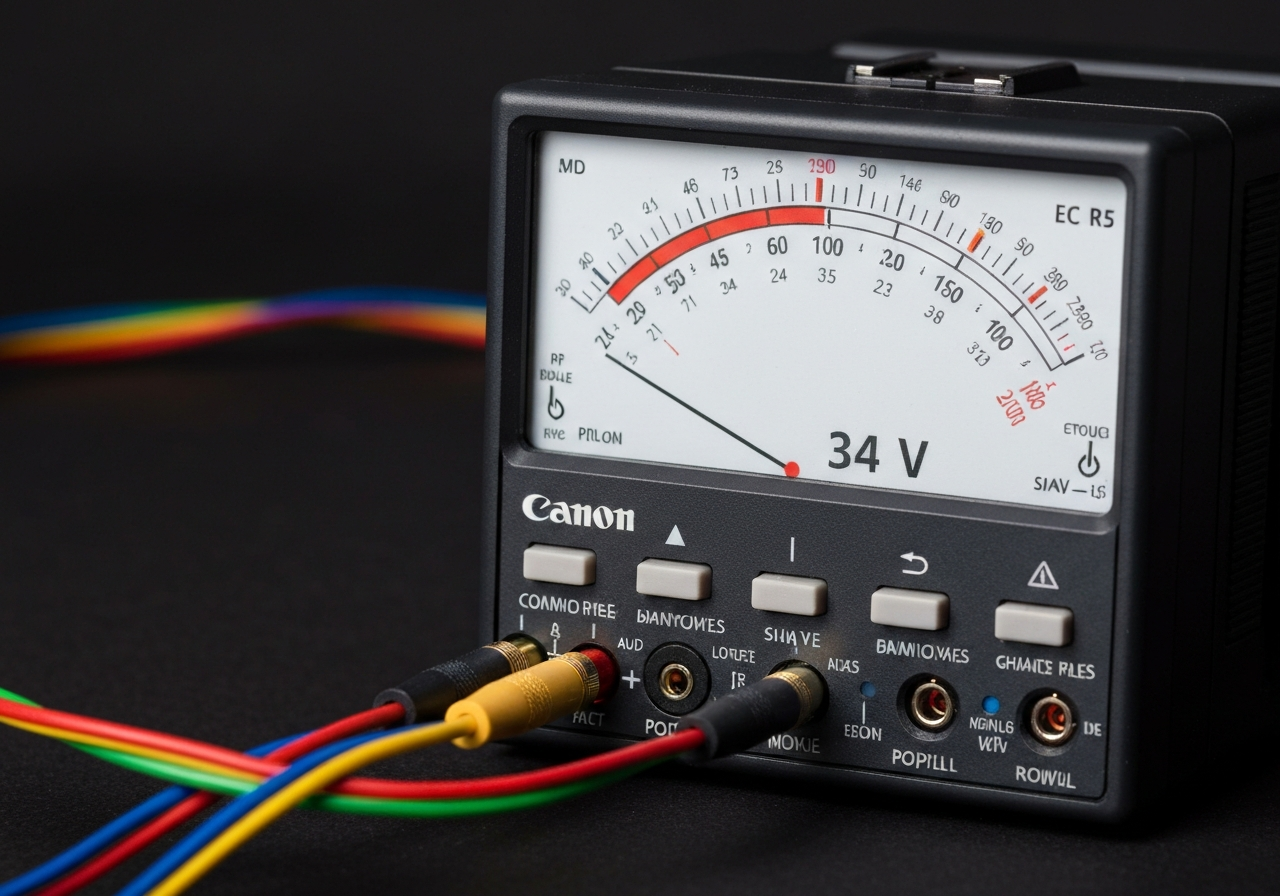
How to Load Test Your Golf Trolley Battery (Lead-Acid Only)
While a static voltage check tells you the state of charge, it does not reveal capacity under stress. A battery can read 12.7 volts while sitting idle yet fail immediately when asked to power a motor up a hill. To truly test 12V golf trolley battery health, you must simulate the demand of moving 18 holes. This process is known as a load test, and it is the definitive method for diagnosing weak cells in lead-acid chemistry.
Unlike lithium units, traditional lead-acid and AGM batteries suffer from internal resistance increases as they age. A load test forces the battery to deliver current, exposing this resistance. If you are unsure whether your battery is nearing the end of its lifecycle, consider that flooded lead-acid batteries typically last 3 to 5 years, while AGM options may reach 4 to 7 years, according to DC Direct. Testing helps you maximize this lifespan before replacement becomes necessary.
Finding CCA Rating
The first step in any battery load test procedure is identifying the Cold Cranking Amps (CCA) rating. This figure represents the current a battery can deliver at 0 degrees Fahrenheit for 30 seconds while maintaining at least 7.2 volts. For golf trolleys, this number indicates the maximum burst power available. You will usually find the CCA rating golf battery specification printed on the top label or side casing of the unit.
If the label is worn or illegible, do not guess wildly. For typical 12V golf trolley batteries, a safe estimate is 25 Amps. Using a conservative estimate prevents overstressing an already weakened battery during the diagnostic process. Always ensure your load tester is calibrated and capable of handling the specific amperage required for your unit.
Applying the Correct Load
Once you have the CCA figure, you can begin the load test golf trolley battery sequence. The industry standard requires you to apply a load equal to 50% of the CCA rating for exactly 15 seconds. For example, if your battery is rated at 100 CCA, you should apply a 50 Amp load. If you are using the 25A safe estimate, apply a 12.5A load.
Expert Tip: Maintain the load for the full 15 seconds. Dropping the load early can give a false positive reading because the voltage has not had time to stabilize under stress.
Connect the load tester clamps securely to the terminals, ensuring positive to positive and negative to negative. Engage the load switch and watch the voltmeter closely. If you need more detailed equipment recommendations, consult our golf trolley battery load testing guide for compatible tools.
Interpreting Recovery Voltage
The most critical metric during this test is the voltage reading at the 15-second mark. A healthy battery must not drop below 9.6 volts under load. If the voltage dips lower than this threshold, the battery likely has sulfated plates or a dead cell and should be replaced. After removing the load, allow the battery to rest for 5 minutes. The voltage should recover to at least 12.4 volts. If it remains low, the battery cannot hold a charge.
| Voltage Under Load | Battery Health Status | Action Required |
|---|---|---|
| Above 9.6V | Healthy | Continue Use |
| 9.0V – 9.5V | Weak | Recharge and Retest |
| Below 9.0V | Failed | Replace Immediately |
By following this protocol, you ensure your trolley remains reliable throughout the season. Regular testing prevents mid-round failures and helps you plan replacements before your equipment lets you down on the course.
Using a Hydrometer: Checking Electrolyte Health (Flooded Lead-Acid Only)
While voltage meters provide a surface-level reading, a hydrometer test golf battery procedure offers a deeper look into the chemical health of each individual cell. It is critical to understand that this method applies exclusively to wet cell batteries. If you own a sealed unit, you cannot access the electrolyte. For a breakdown on the differences between these chemistries, see our guide on flooded vs sealed lead-acid batteries.
When to Use a Hydrometer
You should perform a flooded lead-acid battery test using a hydrometer when voltage readings are inconclusive or when diagnosing a weak cell that drags down the entire pack. This tool measures the specific gravity golf trolley battery electrolyte, which correlates directly to the state of charge. Unlike a multimeter, which might show a healthy voltage on a surface-charged battery, a hydrometer reveals sulfation or water loss inside the cells. This is an essential step when you test 12V golf trolley battery units that have seen multiple seasons of heavy use.
Drawing and Reading Electrolyte
Safety is paramount when handling sulfuric acid. Before removing caps, ensure the trolley is powered down. Safety protocols similar to those outlined by Tara Electric Vehicles emphasize turning off power and wearing rubber gloves and safety goggles before interacting with battery terminals. Follow these steps for accurate readings:
- Squeeze the hydrometer bulb before inserting the tip into the cell.
- Release the bulb slowly to draw electrolyte until the float rises freely.
- Hold the device vertically at eye level to read the scale where the liquid surface meets the float.
- Return the electrolyte to the same cell after recording the value.
Expert Insight: A healthy specific gravity reading should fall between 1.265 and 1.299. If any cell reads below 1.200, it indicates a significant discharge or potential cell failure requiring replacement.
Temperature Correction
Electrolyte density changes with heat. Hydrometers are calibrated to 80°F (27°C). If your battery is hotter or colder, you must adjust the reading to ensure accuracy when you test 12V golf trolley battery performance. Add 0.004 to the reading for every 10°F above 80°F, and subtract 0.004 for every 10°F below.
| Specific Gravity | State of Charge | Action Required |
|---|---|---|
| 1.265 – 1.299 | 100% Charged | None |
| 1.225 – 1.265 | 75% Charged | Recharge |
| Below 1.200 | Discharged/Failed | Replace Battery |

When to Replace vs. Recondition Your Golf Trolley Battery
Knowing when to replace golf trolley battery units is critical for maintaining consistent performance on the course. After you test 12V golf trolley battery systems, the data will dictate whether a simple recharge suffices or if retirement is necessary. Misinterpreting these signs can lead to stranded trolleys mid-round or unnecessary expenditure on new hardware.
Voltage-Based Replacement Criteria
Accurate diagnosis requires patience. According to industry standards outlined in How to Test Golf Cart Batteries 2025, batteries must remain idle for 24 hours with no charging or discharging before taking final voltage readings. If a battery registers below the 10% row values after a full charge and idle time, it needs replacement.
Expert Insight: For a standard 12V lead-acid battery, a resting voltage below 12.0V indicates significant degradation. If the reading drops below 11.89V (approximately 40% charge) even after charging, the cells are likely damaged beyond repair.
Use the following reference chart to evaluate your state of charge after the 24-hour rest period:
| % of Charge | 12V Battery Voltage | Action Required |
|---|---|---|
| 100% | 12.73V | Healthy |
| 50% | 12.10V | Recharge Immediately |
| 0% (Dead) | 11.89V or lower | Replace |
Load Test Failure Signs
Voltage at rest tells only half the story. The most definitive signs battery needs replacement appear under load. When you engage the trolley motor or apply a carbon pile tester, a healthy 12V lead-acid battery should maintain voltage above 9.6V. If the voltage collapses below 9.6V under load, the internal resistance is too high to deliver power efficiently.
For lithium-ion variants, the threshold is stricter. Replace lithium units if they consistently read below 10.0V or fail to hold a charge after a full cycle. Unlike lead-acid, lithium chemistry does not tolerate deep discharge recovery well.
Reconditioning Options
Before purchasing new power, consider if battery reconditioning golf trolley units is viable. This process is exclusively for sulfated lead-acid batteries. If sulfation is caught early, a desulfator device or an equalizing charge (if permitted by the manufacturer) can dissolve lead sulfate crystals and restore capacity.
Reconditioning possible via desulfation or equalizing charge. Cost-effective if plates are intact.
Cannot be reconditioned. Replace when degraded to avoid safety risks or BMS failure.
Ultimately, if reconditioning fails to restore voltage above 12.0V at rest, retirement is the only safe option to protect your trolley motor from insufficient power delivery.
Best Practices for Ongoing Battery Maintenance
Proper golf trolley battery maintenance is the single most effective method to ensure your equipment lasts beyond the standard warranty period. While testing reveals the current health of your power source, consistent care prevents premature degradation. Many golfers overlook simple habits that can significantly impact performance over a season.
Regular Voltage Checks
Monitoring voltage is not just a one-time diagnostic task. You should perform voltage checks every 4 to 6 weeks during the off-season to prevent deep discharge. Allowing a battery to sit below 12.0V for extended periods causes sulfation in lead-acid models, which permanently reduces capacity. When you test 12V golf trolley battery voltage routinely, you catch drainage issues early.
Expert Insight: Consistent voltage monitoring combined with terminal cleaning can extend battery life by 20 to 30%. Neglecting connections increases resistance, generating heat that damages internal components.
Physical inspection is equally critical. According to Big Horn Golfer, terminal connections should be cleaned quarterly using a wire brush to remove oxidation. Applying a small amount of terminal protection solution after cleaning minimizes the risk of corrosion returning, ensuring optimal electrical connections.
Proper Charging Habits
To learn how to extend battery life, you must adopt disciplined charging routines. Always recharge your battery immediately after every round, regardless of how many holes you played. Deep cycles strain chemical structures, particularly in older lead-acid units. Avoid leaving the battery on the charger indefinitely unless you are using a certified smart charger with a float mode. Continuous trickle charging from non-smart units can boil electrolytes and warp internal plates.
For more tips on maximizing your equipment investment, see our guide on how to extend golf trolley battery life while selecting budget-friendly hardware.
Storage Guidelines
Finding the best way to store golf battery units depends heavily on chemistry. Storing a battery at 100% charge in a hot garage can degrade lithium cells, while storing at 0% kills lead-acid batteries. Aim for a cool, dry environment with stable temperatures between 50 and 70 degrees Fahrenheit.
Refer to the table below for specific state-of-charge recommendations during long-term storage:
| Battery Type | Ideal Storage Charge | Max Storage Temp |
|---|---|---|
| Lead-Acid (Wet/AGM) | 50% to 70% | 75°F (24°C) |
| Lithium-Ion (LiFePO4) | 40% to 60% | 85°F (29°C) |
- Charge after every use
- Check terminals quarterly
- Store in climate control
- Leave on charger indefinitely
- Store fully depleted
- Expose to direct sunlight
Sources and Further Reading
This article was researched using the following authoritative sources. All claims have been cross-referenced for accuracy.
- Golf Cart Maintenance: Complete Year-Round Care Guide (2026)
golfcartsearch.com – Visual inspection: Look for cracks, bulging, or leaking
Terminal condition: Check for corrosion returning
Cable inspec… - How to Test Golf Cart Batteries | GCTS
golfcarttiresupply.com – Read Time: 1 minuteGot a golf cart that’s running out of juice faster than you’d like? It might be time to check tho…
- How to Test Golf Cart Batteries | GCTS
golfcarttiresupply.com – Read Time: 1 minuteGot a golf cart that’s running out of juice faster than you’d like? It might be time to check tho…
- How to Test Golf Cart Batteries 2025
golfcarttiresupply.com – For accurate voltage readings, batteries must remain idle (no charging, no discharging) for 24 hrs.
If a battery regis… - Golf Cart Battery Installation and Maintenance | Interstate Batteries
interstatebatteries.com – Terminal Torque specification: 5/16” Stud = 95-105 inch-pounds (not foot-pounds)
Equalization should be done every 4-… - Golf Cart Batteries: Types, Lifespan & Maintenance Guide – DC Direct
dcdirect.com.au – 3–5 years for flooded lead-acid batteries
4–7 years for AGM or gel batteries
10–20 years for lithium-ion batteri… - How to Test Golf Cart Batteries 2025
golfcarttiresupply.com – Read Time: 1 minuteGot a golf cart that’s running out of juice faster than you’d like? It might be time to check tho…
- Installing Golf Cart Batteries: A Step-by-Step DIY Guide – Tara Electric Vehicles
taraelectricvehicles.com – 8. Secure and test: Make sure all cables are tight. Power on the cart and take a test drive. […] 1. Turn off the golf …
Frequently Asked Questions
Can I use a car battery load tester on my golf trolley battery?
Yes, you can use a car battery load tester on a golf trolley battery as long as it supports 12V systems and you adjust for the lower cold cranking amps (CCA) typical of these batteries, which usually range from 20 to 40A. For accurate testing, apply a load equal to 50% of the battery’s CCA rating for 15 seconds—so if the CCA is unknown, start with a 25A load as a safe baseline. Always ensure the tester’s probes make solid contact and that the battery is fully charged before testing to avoid misleading results.
How often should I test my golf trolley battery?
You should check the voltage of your golf trolley battery every 4 to 6 weeks during periods of storage or frequent use to monitor its state of charge. Perform a full load test every 2 to 3 months, or sooner if you notice a significant drop in runtime or power output. It’s also essential to test the battery both before putting it into long-term storage and immediately after removing it from storage to ensure it remains healthy and functional.
Is it safe to leave my golf trolley battery on the charger all the time?
It is only safe to leave your golf trolley battery on the charger continuously if you are using a smart, automatic charger that switches to float or maintenance mode once the battery is fully charged. Older or manual chargers lack this feature and can overcharge the battery, leading to electrolyte loss in flooded lead-acid types or degradation and safety risks in lithium-ion batteries. Always follow the manufacturer’s specific charging guidelines to maximize battery lifespan and ensure safe operation.
This article was fully refreshed on dubna 29, 2026 with updated research, new imagery, and current 2026 information.
Get our latest guides, news, and insights highlighted in your Google Search & AI Overviews.