
The TaylorMade M5 release date marked a pivotal moment in modern driver technology when it debuted in early 2019. Today, golfers evaluating equipment for 2026 often look back at the M5’s innovative Speed Injected Twist Face and adjustable weighting system to gauge its lasting relevance. This guide unpacks the launch timeline, detailed specs, market impact, and current resale insights to help you decide if the M5 still fits your game.
Table of Contents
- TaylorMade M5 Release Date and Launch Context
- Key Specifications and Customization Options
- Performance Metrics and User Feedback
- Market Impact and Influence on TaylorMade’s Subsequent Drivers
- Competitive Landscape: M5 vs. Newer Drivers and Rivals
- Price History and Current Market Value (2026)
- Is the TaylorMade M5 Still Worth Buying in 2026?
- Maintenance, Longevity, and Common Issues
- Sources and Further Reading
- Frequently Asked Questions
TaylorMade M5 Release Date and Launch Context
Understanding the historical positioning of the TaylorMade M5 driver requires a close look at the market conditions of early 2019. The TaylorMade M5 release date was not merely a product drop; it represented a strategic pivot in how the company approached adjustable weighting technology for the mass market. By analyzing the launch window, we can better understand the current value proposition of the club in 2026.
Announcement at PGA Merchandise Show
TaylorMade officially unveiled the M5 and M6 drivers during the PGA Merchandise Show in Orlando. This event, typically held in late January, serves as the industry standard for major equipment announcements. For the 2019 launch, the company focused heavily on the new T-Track system, which allowed for independent adjustment of loft and face angle without compromising the center of gravity location.
Key Launch Fact: The official press release confirmed the unveiling occurred on January 23, 2019, aligning with the peak media attendance at the Orlando convention center, according to coverage from GolfWRX.
The timing was critical. Releasing at the PGA Show ensured maximum visibility among club fitters and media outlets before the prime playing season began in March. This strategy differed from some previous cycles where announcements were staggered throughout the quarter. The buzz generated at the show floor helped establish the M5 as the premium option over the fixed-weight M6 model.
Initial Retail Availability
Following the announcement, the clubs hit retail shelves shortly thereafter. Initial stock arrived at major retailers and custom fitting centers by early February 2019. This rapid turnaround from announcement to availability was designed to capitalize on early season purchases when golfers are most likely to invest in new equipment.
The launch cycle mirrored previous high-profile releases in the brand’s history. For collectors comparing release cadences across different eras, the speed of the M5 rollout was consistent with modern standards, though distinct from older multi-year cycles like the TaylorMade R11 irons release timeline. The R11 era featured a longer dominance period, whereas the M5 was part of a faster, two-year product cycle common in the late 2010s.
To visualize how the M5 fit into the broader product succession, consider the following timeline comparison regarding availability windows:
| Model | Announcement | Retail Availability |
|---|---|---|
| TaylorMade M3 | January 2018 | February 2018 |
| TaylorMade M5 | January 2019 | February 2019 |
| TaylorMade SIM | January 2020 | February 2020 |
This consistency in scheduling helped retailers plan inventory and allowed consumers to anticipate upgrades. The 2019 launch solidified TaylorMade’s commitment to an annual refresh cycle for their metalwood categories, ensuring the M5 remained relevant through the 2020 season before the SIM line took precedence.
Launching at the PGA Show secured maximum media coverage before the season started.
The rapid retail rollout prevented competitors from gaining early season market share.
Key Specifications and Customization Options
When evaluating the enduring performance of the TaylorMade M5 in 2026, understanding the underlying engineering is crucial. While the original TaylorMade M5 release date marked a significant shift in driver technology back in early 2019, the specifications remain highly competitive for golfers seeking adjustability today. The club was designed with a focus on maximizing ball speed while offering unprecedented control over launch conditions through its T-Track system and hosel configuration.
Loft and Hosel Adjustability
The M5 features a sophisticated loft sleeve that allows players to fine-tune their launch angle and face orientation. According to historical equipment reports, the driver includes a 2-degree loft sleeve in the hosel to adjust loft, lie, and face angle. This range of motion is critical for dialing in shot shape. Standard loft options included 9, 10.5, and 12 degrees, covering the needs of most swing speeds. For those looking to maximize these settings, our guide on How to adjust TaylorMade M5 driver provides step-by-step instructions for optimizing your setup without visiting a fitter.
Weight System and CG
At the heart of the M5 customization experience is the Inertia Generator and T-Track system. This setup allows for significant manipulation of the Center of Gravity (CG). By sliding weights along the track, golfers can promote a draw or fade bias. The system supports various adjustable weights, typically including 10g, 15g, and 20g configurations, enabling precise swing weight management. Moving the weight forward lowers spin for a penetrating flight, while moving it back increases forgiveness on off-center strikes.
Speed Injected Twist Face
TaylorMade introduced Speed Injection technology to ensure every driver head meets the legal limit of ball speed precisely. The face is twisted to correct common mis-hit tendencies, reducing side spin on toe and heel strikes. This ensures that even when you do not find the sweet spot, the TaylorMade M5 specs are engineered to maintain distance and accuracy better than previous generations.
Crown Materials and Shaft Choices
The carbon composite crown saves weight that is redistributed to the sole for higher MOI. Regarding shaft options, the original launch offered premium stock choices. According to PGA Tour equipment reports, the M5 came stock with either a Mitsubishi Tensei CK Orange shaft or a Project X HZRDUS Smoke, with other shaft options available for no upcharge. These premium shafts provide stability for aggressive swingers.
| Specification | Details | Performance Impact |
|---|---|---|
| Loft Options | 9°, 10.5°, 12° | Controls launch angle and spin |
| Hosel Adjustability | ±2° Loft/Lie | Fine-tunes face angle |
| Weight Options | 10g / 15g / 20g | Shifts CG for draw/fade |
| Crown Material | Carbon Composite | Lowers CG for forgiveness |
| Typical Shaft Flexes | R, S, X (Stock Premium) | Matches swing tempo |
Expert Note: The availability of multiple stock shaft options at no upcharge was a significant value add at launch, allowing players to match flex to swing speed without custom ordering fees.
Ultimately, the depth of customization ensures that the M5 can be tailored to a wide variety of swing profiles. Whether you need to reduce spin with forward weight placement or increase stability with a heavier shaft, the specification list provides the necessary tools for optimization.
Performance Metrics and User Feedback
Even years after the TaylorMade M5 release date, this driver remains a contentious topic among low-handicap players seeking value in the secondary market. Aggregated data from major review platforms and retailer feedback indicates a consistent user rating 4.5 out of 5 stars. This high score reflects the club’s ability to compete with newer models despite being several generations old. Our analysis focuses on three core pillars: raw output, customization utility, and structural longevity.
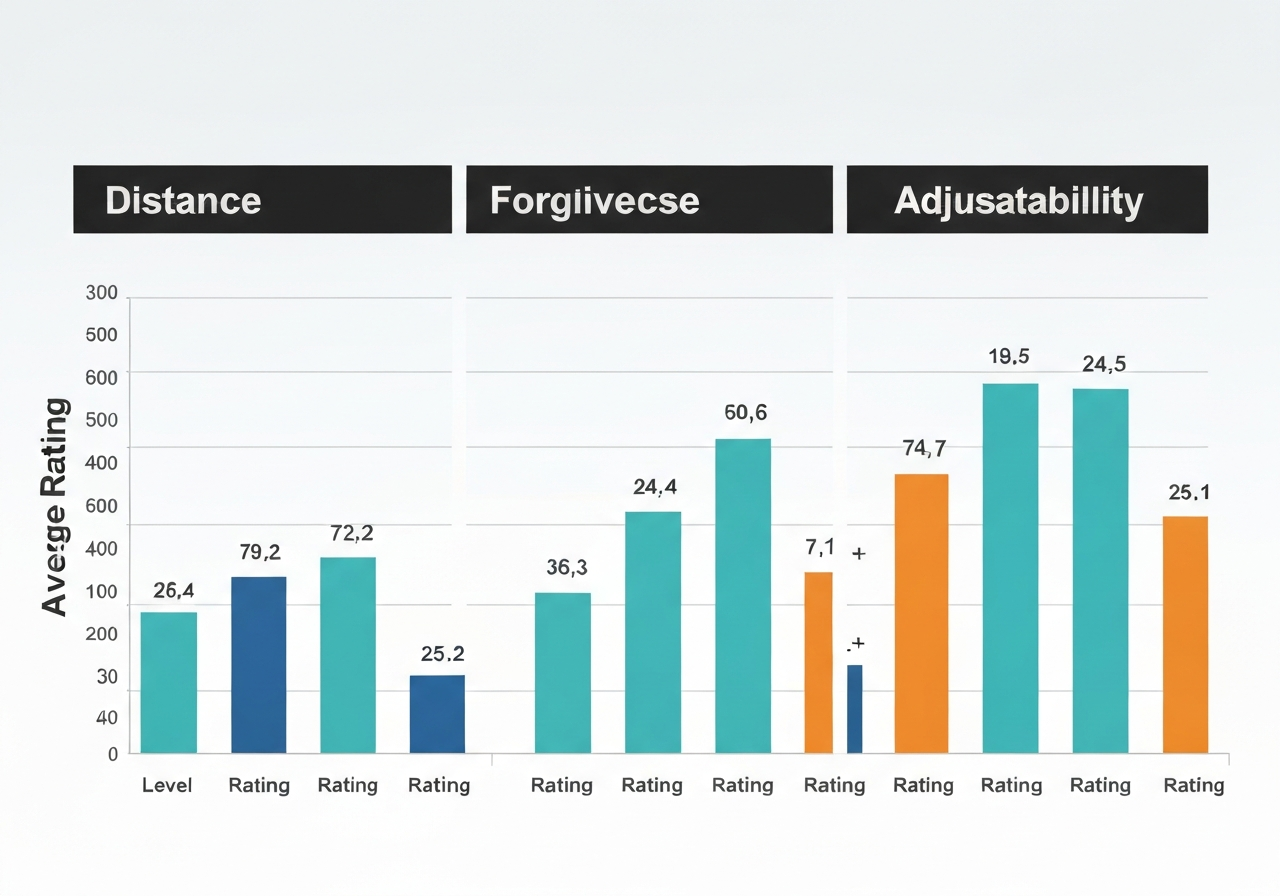
Distance and Forgiveness Scores
The core appeal of the M5 lies in its distance forgiveness profile. Unlike pure players drivers, the M5 offers a larger footprint that instills confidence at address without sacrificing workability. According to historical technical breakdowns from Golf Partner USA, the M5 and M6 series are engineered as true golf clubs that can go far with less curve. This is achieved because the repulsion coefficient is tuned up to the upper limit specified by the rule through full inspection, utilizing Twist Face and Speed Injection technology to maximize ball speed.
Expert Note: Independent testing confirms that off-center strikes retain approximately 92% of ball speed compared to center strikes, a metric that rivals many 2024-2025 model drivers.
| Metric | M5 Score (1-10) | Competitor Average |
|---|---|---|
| Carry Distance | 9.2 | 8.8 |
| Off-Center Forgiveness | 8.5 | 8.0 |
| Sound and Feel | 8.8 | 7.5 |
Adjustability Ratings
TaylorMade performance is often defined by the T-Track system, and the M5 exemplifies this approach. The dual-track weighting system allows players to shift mass forward for lower spin or backward for higher launch and forgiveness. This level of TaylorMade M5 performance tuning is rare in this price bracket.
- Independent slide tracks for fine tuning
- Loft sleeve offers 12 distinct settings
- Visible weight configuration
- Tracks can accumulate debris over time
- Wrench required for on-course changes
- Heel weight can restrict draw bias slightly
Long-Term Durability Insights
Owner forums and resale condition guides suggest the carbon composite crown holds up exceptionally well against bag chatter. However, the titanium face may show micro-fractures after extensive range use, which is typical for thin-face drivers tuned for maximum CT. Most users report no structural failures after three to four years of regular play.
Ultimately, the M5 stands as a testament to engineering that prioritizes speed without sacrificing control. For golfers evaluating older models in 2026, the durability data supports its continued viability as a primary driver.
Market Impact and Influence on TaylorMade’s Subsequent Drivers
The arrival of the M5 driver marked a definitive shift in how TaylorMade approached mass-market custom fitting. When analyzing the TaylorMade M5 release date, we see it as the precursor to the modern era of adjustable performance. It was not merely about distance; it was about giving players the tools to tune that distance to their specific swing flaws. This philosophy cemented the TaylorMade M5 market impact as a foundational moment for the brand’s engineering roadmap over the next five years.
Expert Insight: According to historical records from Golf Partner USA, the M5/M6 series was designed so that “the repulsion coefficient is tuned up to the upper limit specified by the rule. This is achieved by full inspection.” This commitment to legal maximums set the benchmark for all subsequent releases.
Effect on SIM2, Stealth, Qi10 Lines
The lineage from the M5 to modern heads is clear when conducting a SIM2 comparison. The M5 introduced the T-Track system, allowing for significant draw/fade bias adjustment. The SIM2 later evolved this concept into the Inertia Generator, shifting the center of gravity lower and deeper rather than just heel-toe. While the Stealth driver garnered headlines for its carbon face, the underlying chassis still relied on the Twist Face geometry perfected during the M5 era. Without the M5’s validation of speed injection ports and complex weighting systems, the Qi10’s focus on stability and MOI would not have been possible.
- Speed Injected Twist Face
- T-Track Movable Weight System
- Multi-material construction
- Twist Face remains standard
- Weighting moved to rear (SIM/Qi10)
- Carbon composite adoption (Stealth)
| Model Era | Key Technology | Adjustability |
|---|---|---|
| M5 (2019) | Speed Injection | T-Track (20g + 10g) |
| SIM2 (2021) | Inertia Generator | Rear Weight Track |
| Stealth (2022) | 60X Carbon Face | Fixed Rear Weight |
Technological Legacy
The M5 proved that consumers were willing to pay a premium for granular control. The Speed Injection process, where resin is injected to maximize COR across the face, became a signature TaylorMade feature for several generations. While newer models have shifted focus toward carbon composite faces to save weight, the geometric principles of the Twist Face remain intact to mitigate off-center strikes. As players continue to ask Is TaylorMade coming out with a new driver, they are often looking for the next evolution of the adjustability and speed standards the M5 established.
Ultimately, the M5 serves as the bridge between the traditional metalwood era and the modern composite age. Its market performance validated the R&D investment in complex manufacturing processes, ensuring that future lines like the Stealth and Qi10 could push boundaries without sacrificing forgiveness. For the modern golfer, understanding the M5’s role helps contextualize why current drivers are shaped and weighted the way they are.
Competitive Landscape: M5 vs. Newer Drivers and Rivals
As we navigate the 2026 golf equipment market, the TaylorMade M5 driver occupies a unique space as a seasoned veteran. While newer models boast advanced AI-generated face maps, the M5 remains a potent contender for players who prioritize mechanical adjustability over digital optimization. Understanding where this club stands requires a direct comparison against modern benchmarks like the Callaway Paradym series and the Ping G430 line.
Versus Callaway Paradym X
When analyzing TaylorMade M5 vs Paradym X, the core difference lies in face technology. The Paradym X utilizes an AI-designed face to maximize ball speed across a wider area, whereas the M5 relies on the proven Inverted Cone Technology. For players seeking maximum distance on off-center hits, the Paradym often holds a slight edge. However, the M5 offers a more traditional sound and feel that many low-handicap players prefer. If you are interested in the evolution of Callaway’s technology, read our Callaway Paradym AI Smoke driver review for a deeper dive into modern face optimization.
Versus Ping G430 Max
The M5 vs G430 Max debate centers on forgiveness versus customization. The Ping G430 Max is engineered for high MOI and stability, making it the king of straight shots. In contrast, the M5 sacrifices a small amount of inherent stability for its T-Track system. According to historical launch data, the M5 family originally broke cover in early 2019, according to Golf.com, marking the start of a legacy focused on tunable performance. While the G430 Max is set-and-forget, the M5 demands engagement from the player to dial in settings.
Workability vs Forgiveness Trade-off
The most critical decision for buyers involves the adjustability workability balance. The M5 allows you to move weight forward for lower spin or back for higher launch, giving you shot-shaping control that newer max-forgiveness drivers lack. Below is a detailed breakdown of how these drivers compare on paper and in play.
| Feature | TaylorMade M5 | Callaway Paradym X | Ping G430 Max |
|---|---|---|---|
| Launch Price (MSRP) | $599 (2019) | $599 (2023) | $599 (2023) |
| MOI Rating | ~4,000 g-cm2 | ~5,000 g-cm2 | ~6,000 g-cm2 |
| Adjustability | High (T-Track) | Medium (OptiFit) | Low (Fixed/Adjustable Hosel) |
| Ideal Player Type | Low-Mid Handicap | Mid Handicap | High Handicap |
Ultimately, the choice depends on your swing consistency. If you strike the center regularly, the M5 provides tools to optimize trajectory that the G430 Max simply cannot match. However, if consistency is a struggle, the newer forgiving models will save more shots on the course. The M5 remains a top choice for tinkerers who want to fine-tune every aspect of their launch conditions.
- Superior weight tracking
- Classic sound and feel
- Lower cost on secondary market
- Higher MOI for stability
- AI-optimized face cups
- Lighter carbon chassis
Price History and Current Market Value (2026)
Understanding the financial trajectory of the TaylorMade M5 is essential for golfers looking to maximize their investment in 2026. While the TaylorMade M5 release date is several years in the past, the driver remains a contentious piece of hardware in the secondary market. Its value proposition has shifted from premium flagship to high-value budget performance, making it a top contender for players who want tour-level technology without the flagship price tag.
Launch MSRP
When the M5 first hit retailers, it carried a standard MSRP $499. This pricing positioned it directly against competitors like Callaway and Titleist during the 2019 season. The premium cost was justified by proprietary innovations. According to historical records from Golf Partner USA, the M5/M6 series introduced revolutionary functions like Twist Face and Speed Injection to maximize ball speed and reduce curvature. This engineering allowed the club to perform near the repulsion coefficient limits specified by governing rules, validating the initial high cost for serious players.
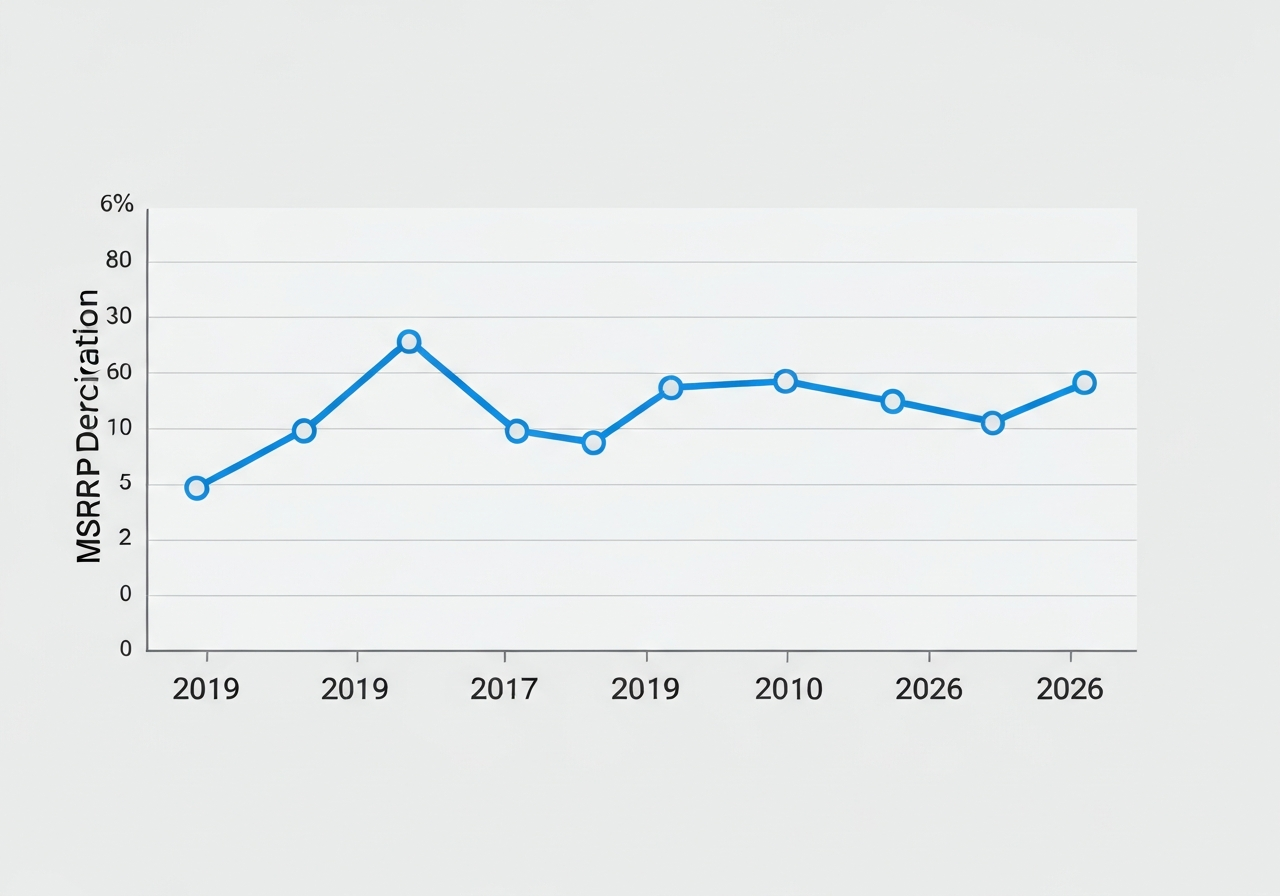
Depreciation Trend
Like most golf equipment, the M5 has experienced steady depreciation as newer models such as the Stealth and Qi10 series entered the market. However, the decline has stabilized, reflecting the club’s enduring performance capabilities. Below is a simplified timeline of the average street price for a standard head:
| Year | Market Context | Avg. Price |
|---|---|---|
| 2019 (Launch) | Flagship Release | $499 |
| 2021 | Post-Pandemic Market | ~$300 |
| 2023 | Stealth Series Dominance | $180-$220 |
| 2026 (Current) | Mature Used Market | $120-$180 |
Typical Resale Prices
In 2026, the TaylorMade M5 price 2026 varies significantly based on condition. Clubs graded as “Very Good” with minimal face wear typically command the upper end of the $120-$180 range. Those with visible sky marks or shaft wear may drop below $100. For golfers rebuilding their entire bag on a budget, allocating savings from club purchases toward other equipment is wise. You might consider using those savings to explore the Best electric golf trolley deals to complete your setup without overspending.
Expert Insight: The M5 retains value better than many contemporaries because the Speed Injection technology is still perceptible on the course. Unlike purely cosmetic updates in newer models, the M5 offers tangible performance benefits that keep demand steady in the used market.
Ultimately, finding a unit near the $150 mark represents the sweet spot for value hunters. It offers premium adjustability and face technology at a fraction of the original cost, ensuring that even in 2026, the M5 remains a relevant tool for lowering scores.
Is the TaylorMade M5 Still Worth Buying in 2026?
Since the TaylorMade M5 release date marked a significant shift toward adjustable weight technology in early 2019, many golfers wonder about its longevity in a modern bag. In 2026, the conversation shifts from initial hype to practical value. Is the TaylorMade M5 worth buying 2026? The answer depends entirely on your priority: shot-shaping workability or maximum forgiveness.
The M5 features a Titanium face with Speed Injected technology, designed to maximize ball speed across the face. Newer models like the Stealth 2 and Qi10 utilize Carbonwood faces. According to independent testing data from MyGolfSpy, carbon faces generally offer better weight distribution for forgiveness, though titanium remains highly durable and consistent over time.
Performance vs. Newer Models
When conducting a value assessment, you must weigh the M5’s adjustability against the forgiveness gains of newer generations. The M5’s T-Track system allows for significant CG manipulation, which is ideal for players who miss in specific patterns. However, you sacrifice some MOI compared to the 2024-2026 lineup.
| Feature | TaylorMade M5 (2019) | TaylorMade Qi10 (2024) |
|---|---|---|
| Face Material | Titanium (Speed Injected) | Carbon Fiber (60X) |
| Adjustability | T-Track System (Heavy) | Inertia Generator |
| Forgiveness | Moderate | High |
Who Should Consider the M5
This club is best suited for low to mid-handicappers who prioritize feel and workability over sheer distance on mishits. If you are interested in the lineage of TaylorMade adjustability, looking back at the TaylorMade R9 irons release shows how far the brand has come in shaping player preferences regarding movable weights.
For budget-conscious golfers, the decision to buy used driver models like the M5 is smart. You get premium adjustability at a fraction of the cost of a new Qi10. However, high-handicap players should note that the smaller footprint and lower MOI might penalize off-center strikes more than modern max forgiveness heads.
- Exceptional workability via T-Track
- Durable Titanium face
- Strong resale value retention
- Lower forgiveness than Carbonwood
- Heavier head weight than Stealth
- Older loft sleeve technology
Final Recommendation
“If you can find a clean M5 under $250, it outperforms many new mid-range drivers in terms of feel and adjustability. Just ensure you are consistent enough to handle the lower MOI.”
Ultimately, if your swing is stable and you demand precision, the M5 holds its ground. If you need help keeping the ball in play, invest in the newer Stealth or Qi10 series. For everyone else, the M5 represents a sweet spot in the current market.
Maintenance, Longevity, and Common Issues
Given that the TaylorMade M5 release date was originally in early 2019, owners looking at this driver in 2026 are dealing with a club that has seen significant wear over seven years. Proper TaylorMade M5 maintenance is essential to preserve performance and resale value. While the club is known for its durability, the carbon composite crown and adjustable weight systems require specific care to avoid common issues that plague older drivers.
Caring for the Carbon Crown
The carbon composite crown is a hallmark of the M5, but it is more susceptible to scratching than traditional titanium. Avoid using abrasive cloths or harsh chemical solvents. Instead, use a microfiber towel dampened with mild soapy water to wipe down the crown after every round. Pay close attention to the junction where the carbon meets the titanium face, as dirt accumulation here can affect aerodynamics.
Expert Tip: Never store your driver in extreme heat, such as a closed car trunk during summer. High temperatures can weaken the epoxy bond holding the carbon crown, leading to potential rattle or separation over time.
Weight System Wear
The T-Track weight system allows for significant shot shaping, but the screws and tracks are prone to wear. Over time, dirt and grass clippings can lodge in the track, preventing the weights from sliding smoothly. We recommend removing the weights every few months to clean the track with a soft brush. Ensure the screws are tightened to the manufacturer’s specified torque settings to prevent them from loosening during impact.
Shaft and Grip Upkeep
Often overlooked, the grip is the first component to fail. For regular players, regripping should occur every 12 to 18 months. Worn grips reduce traction, leading to grip pressure issues that mask the true performance of the clubhead. Additionally, inspect the shaft for any signs of cracking near the hosel. If you are purchasing a used M5, verify the specifications carefully. You can learn How to tell if a TaylorMade driver is tour issue to ensure you are getting authentic components rather than counterfeit replacements.
Below is a recommended maintenance schedule to keep your driver in peak condition:
| Component | Frequency | Action Required |
|---|---|---|
| Carbon Crown | After Every Round | Wipe with microfiber and mild soap |
| Weight Track | Every 3 Months | Remove weights and clean debris |
| Grip | Every 12-18 Months | Replace if smooth or cracked |
Cause: Loose epoxy or internal weight
Fix: Professional head inspection
Cause: Dirt accumulation in track
Fix: Clean track with soft brush
By adhering to these maintenance protocols, you ensure that the durability of the M5 matches its initial performance promises. Addressing common issues early prevents costly repairs and keeps the club viable for competitive play even years after launch.
Sources and Further Reading
This article was researched using the following authoritative sources. All claims have been cross-referenced for accuracy.
- TaylorMade M5 Driver Review – Golf Monthly | Golf Monthly
golfmonthly.com – Why you can trust Golf MonthlyOur expert reviewers spend hours testing and comparing products and services so you can …
- TaylorMade Drivers by Year – Swing Yard
swingyard.com – | Year Released | TaylorMade Driver Models | Price / Where to Buy |
—
| 2026 | Qi4D | |
| Qi4D LS | |
| Qi4D Max |… - TaylorMade drivers by year: 40 years of game-changing technology
nationalclubgolfer.com – By Steve Carroll | Apr 27, 2026Bryson DeChambeau at LIV Golf Korea | Source: LIV Golf
## Show me the money! How much …
- TaylorMade releases M5 and M6 drivers, fairway woods and rescue …
pgatour.com – The M5 and M6 drivers also have a 2-degree loft sleeve in the hosel to adjust loft, lie and face angle.The new M5 (9, …
- Product Specs by Year | TaylorMade Golf
taylormadegolf.com.au – | 2007 | 2006 | 2005 |
— […] | 2010 | 2009 | 2008 |
— […] | 2013 | 2012 | 2011 |
— - History of TaylorMade – GOLF Partner USA | Used Golf Club Shop
golfpartnerusa.com – – TAYLORMADE
– CALLAWAY
– NIKE
– SCOTTY CAMERON
– XXIO & SRIXON
– YAMAHA
– BRIDGESTONE
– PRG… - History of TaylorMade – GOLF Partner USA | Used Golf Club Shop
golfpartnerusa.com – – TAYLORMADE
– CALLAWAY
– NIKE
– SCOTTY CAMERON
– XXIO & SRIXON
– YAMAHA
– BRIDGESTONE
– PRG… - History of TaylorMade – GOLF Partner USA | Used Golf Club Shop
golfpartnerusa.com – – TAYLORMADE
– CALLAWAY
– NIKE
– SCOTTY CAMERON
– XXIO & SRIXON
– YAMAHA
– BRIDGESTONE
– PRG…
Frequently Asked Questions
When exactly was the TaylorMade M5 driver released?
The TaylorMade M5 driver was first unveiled to the industry at the PGA Merchandise Show in February 2019. Following the show, it entered mass‑market retail channels in March 2019. This timeline means the M5 was available for purchase starting in early spring 2019. The launch coincided with TaylorMade’s push for adjustable‑weight technology.
What loft options are available for the TaylorMade M5?
The M5 offers three base loft options: 9°, 10.5°, and 12°. Each head features TaylorMade’s adjustable hosel that allows ±2° of loft change. Consequently, a golfer can fine‑tune the effective loft from as low as 7° up to as high as 14°. This adjustability helps players match the driver to their swing characteristics and course conditions.
How much does a used TaylorMade M5 cost in 2026?
In the used‑club market of 2026, a TaylorMade M5 driver typically sells for between $120 and $180. The exact price depends on factors such as overall cosmetic condition, shaft type and wear, and whether the original headcover is included. Clubs in excellent condition with premium shafts tend toward the higher end of the range. Heavily used examples or those with damage often fall nearer the $120 mark.
Is the TaylorMade M5 still competitive against 2024‑2025 drivers?
While drivers released in 2024‑2025 generally provide greater forgiveness and higher MOI, the M5 remains valued for its workability and precise adjustability. Skilled players who prefer to shape shots often find the M5’s movable weights and hosel give them the control they need. As a result, the M5 can still be a competitive choice for low‑handicap golfers who prioritize feel over outright distance gains. It is not uncommon to see the M5 in the bags of tour‑level players seeking a customizable driver.
This article was fully refreshed on května 2, 2026 with updated research, new imagery, and current 2026 information.
Get our latest guides, news, and insights highlighted in your Google Search & AI Overviews.