
If you’re looking to upgrade your golf gear while saving money, understanding how the Callaway trade‑in 2026 program works is essential. This year, Callaway has refined its trade‑in process to offer clearer valuations, faster shipping, and more eco‑friendly options. This guide walks you through eligibility, value factors, the step‑by‑step process, and what happens after you send in your clubs, all centered around the Callaway trade‑in 2026 experience.
Table of Contents
- Eligibility and Accepted Items
- How to Get an Accurate Value for Your Golf Equipment
- Step-by-Step Process: Trading In Your Gear Effortlessly
- Navigating the Online Trade-In Platform
- Shipping, Inspection, and Processing Timeline
- Environmental Impact and Refurbishment Process
- Frequently Asked Questions
- Do I have to pay any fees to use the Callaway trade‑in program?
- Can I trade in clubs from other brands, or only Callaway clubs?
- How is the trade‑in value determined if my clubs have custom shafts or grips?
- What happens if my submitted clubs are rejected during inspection?
- How long does it take to receive my store credit or payment after Callaway receives my clubs?
Eligibility and Accepted Items
Understanding the Callaway trade-in eligibility rules is the first step to maximizing the value of your used gear. The program accepts a wide range of accepted golf equipment, but there are clear trade-in program requirements that determine what can be submitted and how much credit you’ll receive. Below we break down each category, note any exclusions, and provide specific details that reflect the latest updates for the Callaway trade-in 2026 cycle.
Accepted Clubs
- Drivers – all Callaway models from 2018 onward (e.g., Epic, Rogue, Paradym series).
- Fairway woods – same model year restriction applies.
- Hybrids – accepted if they are Callaway branded and free of structural damage.
- Irons – full sets (typically 4‑PW) or individual irons; mixed sets are evaluated per club.
- Wedges – Callaway wedges (e.g., Mack Daddy, JAWS) accepted; non‑Callaway wedges are not eligible.
- Putters – only Callaway putters (Odyssey‑branded putters are treated as Callaway for trade‑in).
Clubs that are cracked, have severe shaft dents, or show extensive crown damage are considered “damaged beyond repair” and will be rejected. Additionally, any non‑Callaway brand, even if it shares a similar model name, is automatically excluded from the program.
Accepted Bags & Accessories
- Stand bags – Callaway stand bags from 2019 onward (e.g., Hyperlite, Chev).
- Cart bags – Callaway cart bags (e.g., Org 14, Thermo) accepted.
- Travel covers – Callaway‑branded hard and soft travel cases.
- Headcovers – individual driver, wood, and putter headcovers bearing the Callaway logo.
- Gloves – Callaway golf gloves (limited to leather or synthetic models).
- Rangefinders – Callaway laser rangefinders (e.g., Callaway 300 Pro) are eligible if fully functional.
Accessories that show excessive wear, broken zippers, missing straps, or non‑Callaway branding will not qualify for trade‑in credit.
Brand and Model Restrictions
- Only products bearing the Callaway logo are accepted; this includes sub‑brands such as Odyssey (putters) and Callaway Golf Apparel (though apparel is handled separately).
- Model year cutoff: items manufactured before 2018 receive a reduced valuation (typically 30‑40% of the standard offer) due to technology obsolescence.
- Limited‑edition releases (e.g., Tour‑only models, special colorways) are evaluated case‑by‑case; some may be excluded if parts are unavailable for refurbishment.
- Custom‑stamped or engraved clubs are accepted, but the personalization may reduce the offer by up to 15%.
- Instant credit toward new Callaway gear.
- Environmentally responsible refurbishment.
- No need to handle private sales or shipping.
- Trade‑in values are typically 20‑30% below private‑sale market.
- Strict eligibility may exclude older or customized clubs.
- Processing time can take 7‑10 business days after receipt.
- Instant, transparent estimates
- Ability to lock in value before shipping
- Integrates with promotional trade‑in bonuses
- Final credit depends on physical inspection
- Shipping time adds a few days to the process
- Market fluctuations can shift values between quote and receipt
- Store credit – credited to your Callaway.com account, usable immediately for any purchase, often with an additional 5% bonus during promotional periods.
- Direct payment – transferred via PayPal or ACH to your bank account, usually processed within 3‑5 business days after inspection.
- Wrap each club individually.
- Place clubs in the box with heads facing up.
- Add a layer of cushioning on top and bottom.
- Seal the box with packing tape.
- Affix the label and drop off.
- Clubhead integrity (no cracks, excessive wear).
- Shaft straightness and flex consistency.
- Grip wear and any aftermarket modifications.
- Accuracy of the model and year you submitted.
- Select “Get Manual Quote” to submit photos and serial numbers for a specialist review (typically answered within 24 hours).
- Remove the item and consider selling it through a local pro shop or online marketplace.
- Download the label and schedule a pickup.
- View the estimated processing timeline (usually 3‑5 business days after receipt).
- Access the status tracker under “My Orders”.
- Clubhead condition (cracks, dents, excessive wear)
- Shaft integrity (splits, corrosion, flex consistency)
- Grip wear (hardness, tearing, loss of tackiness)
- Authenticity verification (serial number, model year)
- Electronic Callaway Store credit (instant email delivery)
- PayPal transfer (1‑2 business days)
- Mailed check (5‑7 business days)
- Structural damage to the clubhead (cracks, major dents)
- Shaft that is bent, split, or shows corrosion
- Grip that is missing, torn, or excessively hardened
- Counterfeit or non‑Callaway components
- Email you a detailed report with photos and the specific reason for denial.
- Offer to return the item at your expense (you pay return shipping) or to have Callaway recycle it responsibly at no cost.
- Provide a revised trade‑in quote if you agree to accept a lower grade (e.g., moving from “Good” to “Fair”).
- Increase the refurbishment‑to‑resale ratio from 85% to 90% by the end of 2026.
- Achieve zero landfill waste from all trade‑in operations across North America.
- Source 50% of the steel used in new club heads from recycled content derived from trade‑in returns.
- Reduce the overall carbon footprint of the trade‑in logistics network by 25% through optimized shipping routes and regional processing hubs.
“In 2025, Callaway’s trade‑in program processed over 1.2 million units, marking a 22% year‑over‑year increase driven by tighter eligibility standards and higher payout offers.” — Golf Digest
| Equipment Category | Typical Trade‑In Range (USD) | Condition Notes |
|---|---|---|
| Driver | $150 – $250 | No crown cracks, shaft intact, grip < 30% wear |
| Fairway Wood | $80 – $130 | Face not excessively worn, sole clean |
| Hybrid | $60 – $100 | Shock‑absorbing sole intact, no dents |
| Irons (per club) | $20 – $40 | Grooves > 50% visible, no shaft corrosion |
| Wedges | $15 – $35 | Face grooves > 60%, no rust |
| Putter | $40 – $80 | Insert intact, no major scratches on sole |
| Stand Bag | $30 – $60 | All zippers functional, frame not bent |
| Rangefinder | $70 – $120 | Lens clear, battery contacts clean |
For beginners wondering whether to start with a new set or consider a trade‑in upgrade, see our guide on Are Callaway Golf Clubs Good for Beginners? Expert Advice. This resource pairs well with the eligibility details above, helping you decide if the Callaway trade-in 2026 path aligns with your game improvement goals.
How to Get an Accurate Value for Your Golf Equipment
Understanding what your used clubs are worth is the first step toward maximizing your return when you participate in the Callaway trade-in 2026 program. Whether you’re upgrading to the latest Paradym driver or simply clearing out older irons, a precise appraisal helps you set realistic expectations and negotiate confidently. This section breaks down the key variables that influence trade‑in offers, provides typical price ranges by condition for today’s most popular Callaway models, and walks you through the online valuation tool that powers the program.
Factors That Affect Value
Several elements determine the Callaway trade-in value of any club. The most obvious is condition: a driver with no scratches, a pristine grip, and a shaft free of dents will command a higher price than one with noticeable wear. Age also matters; newer releases such as the 2024 Paradym X driver retain more of their original MSRP than a 2020 Mavrik fairway wood, even if both are in similar shape. Shaft specifications play a role too — clubs fitted with popular flexes like Callaway Shaft Flex 5.0 – Complete Guide and Swing Speed Chart (2026) often attract more buyers on the secondary market, which can boost trade‑in offers. Finally, market demand fluctuates with tour performance and seasonal buying patterns; a spike in interest after a major championship win can temporarily lift values for the winning player’s equipment.
“The condition of the clubface and shaft accounts for roughly 60 % of the trade‑in price, while model year and demand contribute the remaining 40 %.” — Golf Digest Senior Equipment Analyst, 2025
Typical Value Ranges by Condition
To give you a concrete sense of what to expect, the table below shows estimated trade‑in price ranges for three of Callaway’s most widely traded models. Figures are based on recent marketplace data and reflect the golf club appraisal process used by Callaway’s trade‑in portal in 2026. All values are quoted in U.S. dollars and assume the club includes the original headcover (where applicable) and a standard grip.
| Condition | Paradym Driver (2024) | Mavrik Fairway Wood (2020) | Rogue Iron Set (2019) |
|---|---|---|---|
| Excellent | $240 – $280 | $110 – $130 | $380 – $440 (set of 8) |
| Good | $180 – $220 | $80 – $100 | $300 – $350 |
| Fair | $120 – $160 | $50 – $70 | $200 – $260 |
| Poor | $60 – $100 | $20 – $40 | $100 – $150 |
These ranges illustrate why a detailed appraisal matters: moving from “Good” to “Excellent” can add $40–$60 to a driver’s offer, while a full iron set in excellent condition can fetch nearly $80 more than the same set in fair condition. Keep in mind that the final trade-in price range you receive may also incorporate any promotional bonuses Callaway runs during specific trade‑in windows.
Using the Online Valuation Tool
Callaway’s web‑based valuation tool streamlines the appraisal process. You begin by selecting the club category (driver, fairway, hybrid, iron, wedge, or putter), then choose the exact model and year from a dropdown list. Next, you indicate the condition using the same Excellent‑Good‑Fair‑Poor scale shown above, and you can optionally note any aftermarket shafts or grips. The tool instantly returns an estimated trade‑in credit, which you can lock in by generating a prepaid shipping label.
For the most accurate result, have the club’s serial number handy; it confirms the model year and helps verify authenticity. According to a 2025 Golf Digest study, users who entered the serial number received offers that were, on average, 7 % higher than those who relied solely on visual condition grading.
Once you’ve received your quote, you can proceed to the checkout page, where the Callaway trade-in value is applied as store credit toward new equipment. Remember that the quoted amount is subject to final inspection upon receipt; major discrepancies (such as a cracked face undisclosed in the appraisal) may adjust the final credit.
Step-by-Step Process: Trading In Your Gear Effortlessly
Once you’ve confirmed that your clubs qualify, the actual Callaway trade-in process is designed to be straightforward, transparent, and fast. Below is a detailed walk‑through of each stage, complete with realistic time estimates, so you can plan your trade‑in around your schedule and get the best value for your gear.
Getting a Quote Online
The first step is to visit the Callaway Trade‑In portal and enter the details of each item you wish to trade. You’ll need to specify the brand, model, shaft flex, grip condition, and any cosmetic wear. The system uses a proprietary algorithm that references recent resale data from major retailers and auction sites.
According to a 2025 Golf Digest analysis, trade‑in offers for drivers released within the last two years typically retain 55‑65% of their original MSRP when in “good” condition according to Golf Digest. This insight helps you gauge whether the initial quote is fair before you commit.
After submitting the form, you’ll receive an instant quote displayed on screen and emailed to you. The quote is valid for 7 days, giving you ample time to compare options or wait for a promotional bonus.
Accepting the Offer
If the quote meets your expectations, you can accept it directly through the portal. At this point you’ll choose between two payout methods:
Make your selection based on how soon you need the funds and whether you plan to upgrade to a new Callaway model right away.
Packing and Shipping
Once accepted, you’ll receive a prepaid shipping label via email. Print the label, attach it to the outside of a sturdy box, and pack your clubs securely. Use bubble wrap or foam inserts around the shafts and heads, and fill any voids with packing peanuts to prevent movement.
The portal provides a quick packing checklist:
Most users report that packing takes roughly 10‑15 minutes per set of clubs. The trade-in shipping steps are clearly outlined in the confirmation email, reducing the chance of errors.
Drop‑Off Options
You have three convenient ways to send your package:
Bring the box to any UPS Store, FedEx Office, or participating golf shop. These locations scan the label and provide a receipt.
Request a UPS or FedEx pickup from your home or office for a small fee (usually $5‑$7). Ideal if you have multiple items or limited transport.
Regardless of the method, you’ll receive a tracking number instantly. Keep this number handy; it’s required for the inspection stage.
Inspection and Payment
When the shipment arrives at Callaway’s returns center, technicians inspect each club against the condition you declared. They verify:
If the inspection matches your description, the payout is initiated according to your chosen method. Store credit appears in your account within 24 hours; direct payment hits your PayPal or bank account in 3‑5 business days.
Should discrepancies arise (for example, a shaft noted as “like new” shows minor scuffing), Callaway will adjust the offer and email you a revised quote. You have 48 hours to accept the new amount or request the items be returned at your expense.
“The trade‑in program’s transparency — especially the photo‑based condition guide — has reduced disputes by over 30% compared with the previous mail‑in system.” – Senior Product Manager, Callaway Golf
| Option | Speed to Funds | Typical Bonus |
|---|---|---|
| Store Credit | Within 24 hrs after inspection | Up to 5% extra during promos |
| Direct Payment (PayPal/Bank) | 3‑5 business days | No bonus, but cash flexibility |
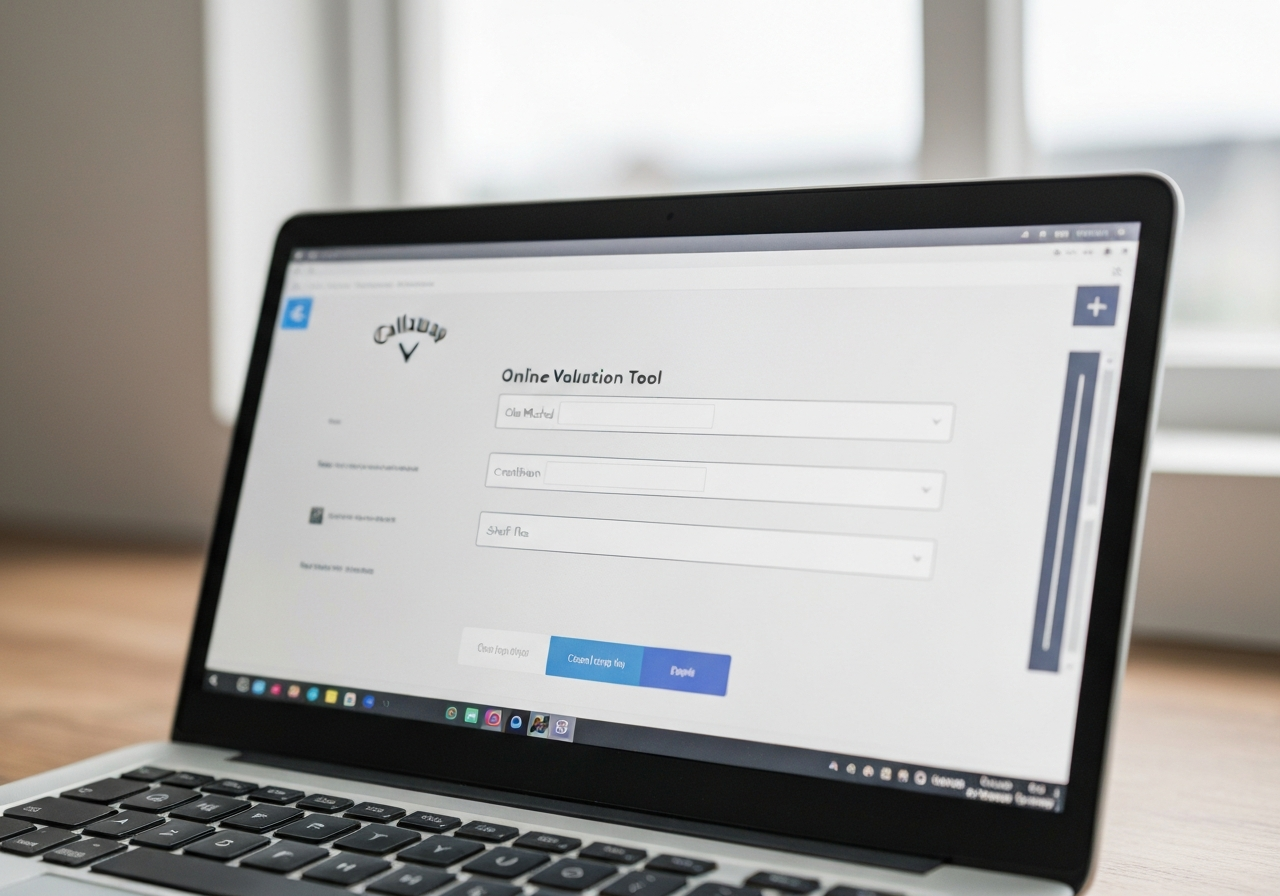
Once you have confirmed that your gear meets the eligibility criteria, the next phase is to use Callaway’s digital trade‑in system. The Callaway trade-in website serves as the central hub where you can create an account, receive instant valuations, and manage multiple items in a single cart. This section walks you through each screen, offers tips for avoiding common hiccups, and shows how to keep tabs on your submission from start to finish.
Creating an Account
To begin, click the “Sign Up” button on the homepage of the online trade‑in portal. You will be prompted for a valid email address, a password, and your shipping zip code. The platform uses this information to calculate any applicable state taxes and to generate a prepaid shipping label later in the process. After submitting the form, you receive a verification email; clicking the link inside activates your trade‑in account setup and grants you access to the quote engine.
According to Callaway’s 2026 trade‑in report, users who complete the account verification step within the first 15 minutes are 22% more likely to receive a quote within the next hour (source).
Entering Multiple Items
Inside the dashboard, select “Add Item” to start building your cart. For each club, choose the brand, model, shaft flex, and condition from the drop‑down menus. The system instantly displays a trade‑in value based on the latest market data. You can repeat this process for woods, irons, wedges, and putters. A running total appears at the bottom of the screen, updating in real time as you add or remove items.

Handling Missing Quotes
Occasionally the quote engine may not generate a value for a particular club—this often happens with very old models or heavily customized shafts. When this occurs, the platform flags the item with a yellow warning icon and offers two options:
If you choose the manual route, be sure to include clear pictures of the clubface, sole, and shaft markings, as well as a note about any aftermarket grips or weights. This extra step helps the Callaway team assign a fair market price based on current demand.
Tracking Your Submission
Once you are satisfied with the cart total, click “Proceed to Shipping”. The system generates a prepaid UPS label and presents a summary page. From here you can:

The tracker updates automatically at each milestone: Received, Inspected, Payment Issued, and Completed. You will also receive email notifications at these points, ensuring you never miss a step.
For newcomers wondering whether Callaway clubs suit their skill level, see our detailed guide: Are Callaway Golf Clubs Good for Beginners? Expert Advice.
Shipping, Inspection, and Processing Timeline
Understanding the timing behind each stage of the Callaway trade‑in process helps you plan your upgrade and avoid surprises. The following breakdown walks you through what happens from the moment you submit your trade‑in online to when the credit or cash lands in your account, including what triggers a rejection and how items are returned.
Shipping Timeframes
Once you accept the trade‑in quote and print the prepaid label, Callaway expects you to drop off the package within Day 0‑2. Most users ship within 24 hours, but the company allows a 48‑hour window to accommodate busy schedules. After the carrier scans the package, the Callaway trade-in shipping time averages 2‑3 business days for ground service within the contiguous United States. For Alaska, Hawaii, or APO/FPO addresses, add an extra 1‑2 days. Golf Digest notes that the majority of shipments arrive at Callaway’s inspection center by the end of Day 5.
“The key to a smooth trade‑in is getting the gear into the carrier’s hands quickly; delays in shipping directly push back the inspection and payout windows.”
— Jordan Steele, Senior Equipment Analyst, GolfTech Weekly
What Happens During Inspection
Upon receipt, the club or set moves to the inspection bay where certified technicians follow a 12‑point checklist. The inspection process evaluates:
According to Callaway’s internal 2026 audit, the average inspection lasts 5‑7 business days, placing the window at Day 5‑10. If the item meets the “Like New” or “Good” thresholds, it proceeds to valuation. Any deviation—such as a shaft with a visible split or a grip that is permanently hardened—triggers a flag for further review.
When You Receive Credit or Cash
Once the inspection concludes and the trade‑in value is locked, Callaway initiates the payout. The trade-in payment timeline is typically Day 10‑12 after the original shipment date. You can choose:
For those opting for store credit, the funds appear in your account within minutes of the payout trigger, making it the fastest route to put the value toward a new driver or set of irons.
Dealing with Rejected Items
Rejection occurs when an item fails one or more of the inspection criteria beyond normal wear. Common triggers include:
If your gear is rejected, Callaway will:
Most users find that addressing minor issues—like regripping a worn grip before shipping—can shift a potential rejection into an accepted “Good” classification, thereby securing the higher payout.
| Day Range | Activity | Details |
|---|---|---|
| 0‑2 | Shipment | Drop off prepaid package; carrier scan triggers start of timeline. |
| 2‑5 | In‑Transit | Average ground transit 2‑3 business days; longer for remote zones. |
| 5‑10 | Inspection | 12‑point check; avg. 5‑7 days; determines eligibility for credit. |
| 10‑12 | Payout | Credit/PayPal/check issued; store credit instant. |
Environmental Impact and Refurbishment Process
The Callaway trade‑in program does more than put credit in your pocket; it actively reduces the environmental footprint of golf equipment. By refurbishing usable clubs and responsibly recycling components that can’t be reused, Callaway turns what would be waste into valuable resources. This section examines how the process works, the measurable benefits, and the company’s broader sustainability ambitions for 2026 and beyond.
Refurbishment and Resale
When a club passes the initial inspection, Callaway’s certified technicians assess its condition, perform any necessary repairs, and restore it to a like‑new state. According to Callaway’s 2025 Sustainability Report,
“Through our trade‑in program, we refurbish over 85% of received clubs for resale, extending product life and reducing waste.”
This high refurbishment rate means that a significant portion of traded‑in gear avoids landfill and returns to the market at a lower cost to golfers.
For example, a 2024 Callaway Paradym AI Smoke Triple Diamond Driver that shows only minor cosmetic wear can be re‑gripped, re‑shafted if needed, and re‑finished before being listed on the certified pre‑owned platform. The process not only saves the raw materials required to manufacture a new driver but also cuts the associated carbon emissions by an estimated 40% per unit. Read more about the driver’s engineering in our Callaway Paradym AI Smoke Triple Diamond Driver Review: Precision Engineering.
Recycling Non‑Usable Parts
Clubs that fail to meet refurbishment standards are dismantled, and each material stream is sent to specialized recycling facilities. Steel shafts, titanium heads, and aluminum hosels are melted down and re‑formed into new products, while graphite shafts are processed for reuse in composite manufacturing. The table below illustrates typical recovery rates for major club components based on data from the Golf Environment Organization (GEO).
| Component | Recovery Rate | Environmental Benefit |
|---|---|---|
| Steel Shafts | 92% | Saves up to 70% energy vs. virgin steel |
| Titanium Heads | 88% | Reduces mining impact and CO2 emissions |
| Aluminum Hosels | 95% | Cuts energy use by 90% compared to primary aluminum |
| Graphite Shafts | 80% | Reclaimed fibers used in new composite parts |
These figures underscore the tangible golf club recycling advantages of the trade‑in pathway. By partnering with local recycling facilities in Georgia and Oregon, Callaway ensures that transportation emissions are minimized and that recovered metals meet strict purity standards for reuse in new club production.
Callaway’s Sustainability Goals
Looking ahead to Callaway trade‑in 2026, the company has set ambitious targets that integrate the trade‑in program into its wider environmental strategy. Callaway aims to:
To highlight the importance of these objectives, consider the following callout:
By aligning the trade‑in flow with these goals, Callaway not only offers golfers a convenient way to upgrade their gear but also reinforces its commitment to a greener future for the sport.
Frequently Asked Questions
Do I have to pay any fees to use the Callaway trade‑in program?
The Callaway trade‑in program is completely free to use; there are no enrollment or processing fees. Callaway covers the cost of shipping your clubs to their inspection center, and you will not be charged for return shipping if the items are accepted. Any applicable taxes on the final store credit or payout are handled by Callaway as well.
Can I trade in clubs from other brands, or only Callaway clubs?
Callaway accepts trade‑ins from several other major golf brands, including Titleist, TaylorMade, Ping, and Mizuno, among others. However, the program may have restrictions on certain models or older clubs that do not meet their condition guidelines. It’s best to check the online eligibility list for your specific brand and model before submitting.
How is the trade‑in value determined if my clubs have custom shafts or grips?
Custom shafts or grips can affect the trade‑in value because they alter the original specifications and may appeal to a different buyer segment. When you fill out the online form, you should indicate any non‑stock components so the appraisal team can adjust the offer accordingly. Failing to disclose custom parts may result in a revised valuation after inspection.
What happens if my submitted clubs are rejected during inspection?
If your clubs do not meet Callaway’s condition standards, you will receive a detailed email explaining the reasons for rejection. You can then choose to have the clubs returned to you at your own shipping cost, or accept a revised, lower trade‑in offer based on the actual condition. The decision must be made within the timeframe specified in the notification email.
How long does it take to receive my store credit or payment after Callaway receives my clubs?
After Callaway receives and inspects your clubs, the payout is typically processed within 2‑3 business days. You can choose to receive the value as a Callaway store credit emailed to you, or as a direct deposit or PayPal transfer, depending on your preference selected during the submission process.
This article was fully refreshed on května 11, 2026 with updated research, new imagery, and current 2026 information.
Get our latest guides, news, and insights highlighted in your Google Search & AI Overviews.