
When your Taylormade driver cracks or fails, knowing whether Taylormade replaces broken drivers can save you time and money. This 2026 guide walks you through the warranty terms, the step‑by‑step claim process, and what to expect if coverage doesn’t apply.
Table of Contents
- Understanding Taylormade’s 2-Year Limited Warranty for Drivers
- Common Causes of Driver Breakage and What’s Not Covered
- Step-by-Step Warranty Claim Process
- What Happens After You Submit a Claim: Processing Times, Shipping & Replacement Options
- Cost Analysis: Repair vs. Replacement Out-of-Warranty
- Taylormade Driver Warranty Compared to Major Competitors
- Proactive Care: Actionable Tips to Prevent Driver Damage
- Final Checklist: Ensuring Your Warranty Claim Succeeds
- Frequently Asked Questions
- Does Taylormade’s warranty cover damage from a cart‑bag drop?
- How long does it take to receive a replacement driver after I ship the broken one back?
- Can I upgrade to a newer model if my exact driver is unavailable?
- Is proof of purchase required if I bought the driver from a third‑party retailer?
- Are there any fees for shipping the broken driver to Taylormade under warranty?
Understanding Taylormade’s 2-Year Limited Warranty for Drivers
When you invest in a new Taylormade driver, the manufacturer’s warranty is a critical factor that can save you time and money if something goes wrong. Taylormade backs its drivers with a Taylormade driver replacement warranty that runs for two full years from the date of purchase, provided the issue stems from a manufacturing defect. Understanding exactly what is covered, what qualifies as a defect, and how to prove your purchase will help you navigate the claims process smoothly and keep your equipment performing at its best.
What the warranty covers
The Taylormade warranty protects against manufacturing defects—flaws that originate during the production process and are not the result of normal wear, misuse, or accidental damage. This includes issues such as:
- Cracks or separations in the driver head that appear without impact
- Shaft splintering or detachment that occurs under normal swing forces
- Loose or missing hosel adhesives that cause the head to detach
- Finish defects like peeling paint or plating that are present upon first use
According to Taylormade’s official warranty policy, the limited warranty covers these manufacturing defects for two years from the date of purchase for all drivers sold after January 1, 2022 according to the source. The warranty does not cover cosmetic wear, damage from improper storage, or alterations made by third‑party repair shops. If you suspect a defect, the first step is to contact Taylormade Customer Service with your serial number and a description of the issue; they will determine whether the problem qualifies under the warranty.
Pro tip: Keep the driver in its original headcover and store it in a climate‑controlled bag. Extreme heat or cold can exacerbate minor flaws and may lead to a denial if the claim is deemed to be caused by environmental exposure rather than a manufacturing defect.
Proof of purchase requirements
To make a claim under the Taylormade driver replacement warranty, you must provide acceptable proof of purchase. Taylormade requires one of the following:
- The original sales receipt showing the retailer, date of purchase, model name, and serial number
- A gift receipt or order confirmation email if the driver was purchased as a present
- A completed warranty registration form submitted within 30 days of purchase (if you registered online)
Without a legible receipt, Taylormade may decline the warranty request, even if the defect is genuine. It is advisable to take a clear photo or scan of your receipt and store it in a dedicated folder—both physically and digitally—so you can produce it instantly when needed. Remember that the warranty period begins on the date shown on the receipt, not the date you first used the club on the range.
- The Taylormade warranty lasts exactly 2 years from purchase and covers only manufacturing defects.
- Keep your receipt—digital or paper—as it is the primary proof required for any claim.
- Regularly inspect your driver for early signs of defects; addressing them quickly improves the chance of a successful warranty claim.
For more on identifying tour‑issue models that may have different warranty considerations, see our guide How to Tell if a TaylorMade Driver is Tour Issue. Understanding these details ensures you can enjoy your Taylormade driver with confidence, knowing that the manufacturer stands behind its craftsmanship.
Common Causes of Driver Breakage and What’s Not Covered
Understanding why drivers fail is the first step to protecting your investment and avoiding unnecessary warranty claims. While the Taylormade driver replacement warranty offers two years of coverage for manufacturing defects, many common on‑course incidents fall outside that protection. Below we break down the most frequent driver breakage causes and clarify the typical warranty exclusions you should know before heading to the range or the course.
Impact damage
Impact damage occurs when the clubhead strikes a hard surface other than the golf ball. This includes:
- Ground impact – hitting the turf, a rock, or a sprinkler head on a fat shot.
- Cart‑bag drops – the driver slipping out of the bag and striking the pavement or concrete.
- Tree or obstacle contact – striking a branch, cart path, or bunker lip during a recovery swing.
According to a 2024 study by Golf Digest, roughly 22 percent of driver failures stem from ground or obstacle impacts, often resulting in crown cracks or sole deformation. Such damage is considered accidental and is explicitly listed under warranty exclusions because it stems from user error rather than a defect in materials or workmanship.
Misuse and normal wear
Even without a violent impact, drivers can deteriorate through improper handling or the natural fatigue of repeated use:
- Improper storage – leaving the club in a hot trunk or exposing it to prolonged UV light can weaken the composite crown.
- Incorrect torque on the hosel – over‑tightening or under‑tightening the adjustable sleeve can cause the head to loosen or crack under load.
- Regular fatigue – after hundreds of high‑speed swings, the micro‑structures in the titanium face and carbon sole gradually accumulate stress, leading to hairline fractures that are not covered under warranty.
For golfers who like to fine‑tune their launch characteristics, proper adjustment is essential. Misadjusting the hosel not only affects performance but can also increase the risk of premature failure. For step‑by‑step guidance, see our article on How to Adjust TaylorMade M5 Driver.
In summary, while the Taylormade driver replacement warranty protects against genuine manufacturing flaws, it does not cover damage from impact accidents, improper handling, or expected wear and tear. Recognizing these driver breakage causes and adhering to best practices for storage, adjustment, and swing technique will help you stay within warranty limits and keep your driver performing at its peak.
Step-by-Step Warranty Claim Process
When a driver suffers a crack, crown separation, or shaft failure within the coverage period, understanding the Taylormade claim process can save you time and frustration. The following workflow outlines each phase, from collecting proof of purchase to receiving a prepaid shipping label, and includes approximate timelines based on typical service center throughput in 2024‑2025.
Gather documentation
Start by locating the original sales receipt or invoice that clearly shows the model, serial number, and purchase date. If you bought the club online, retrieve the order confirmation email; for in‑store purchases, a scanned copy of the receipt works. Take clear photos of the damaged area, ensuring the serial number (usually etched on the hosel or sole) is visible. Having these items ready reduces back‑and‑forth with support and keeps the warranty filing steps moving smoothly.
Submit the claim
Log in to your Taylormade account on the official website or use the dedicated warranty portal. Choose “File a Warranty Claim,” enter the driver’s serial number, upload the receipt and damage photos, and provide a brief description of the failure mode (e.g., “crown crack after 150 drives”). After submission, you will receive an automated confirmation email with a claim reference number. Most claims are reviewed within 1‑2 business days; if additional information is needed, a representative will contact you via email.
Receive shipping label
Once the claim is approved, Taylormade emails a prepaid UPS or FedEx shipping label. Print the label, attach it to the protective packaging (use the original headcover if available, otherwise wrap the driver in bubble wrap and place it in a sturdy box), and drop off the shipment at the designated carrier location. The carrier typically scans the package within 24 hours, and you can track its progress using the provided tracking number. Expect the repaired or replacement driver to arrive at the service center within 3‑5 business days after drop‑off.
Pro Tip: Keep a digital copy of all warranty correspondence in a dedicated folder on your phone or cloud storage. If the carrier reports a delay, you can instantly resend the shipping label or proof of purchase without restarting the claim.
| Step | What to Do | Approx. Timeline |
|---|---|---|
| Gather documentation | Locate receipt, photograph damage, note serial number | 15‑30 minutes |
| Submit the claim | Log in, upload files, describe failure | 5‑10 minutes + 1‑2 day review |
| Receive shipping label | Print label, pack driver, drop off | Same day approval; 3‑5 days to service center |
- Gather documentation – locate receipt, capture damage photos, record serial number (â 20 min).
- Submit the claim – log into Taylormade portal, upload evidence, describe issue (â 10 min) plus 1‑2 business‑day review.
- Receive shipping label – after approval, print label, pack securely, drop off carrier (same‑day label; 3‑5 transit days).
Following these Taylormade driver replacement warranty steps ensures a smooth transition from a broken club to a fully functional replacement, letting you get back on the course with minimal downtime. For further reading on equipment performance, see our TaylorMade P790 Irons Overview.
What Happens After You Submit a Claim: Processing Times, Shipping & Replacement Options
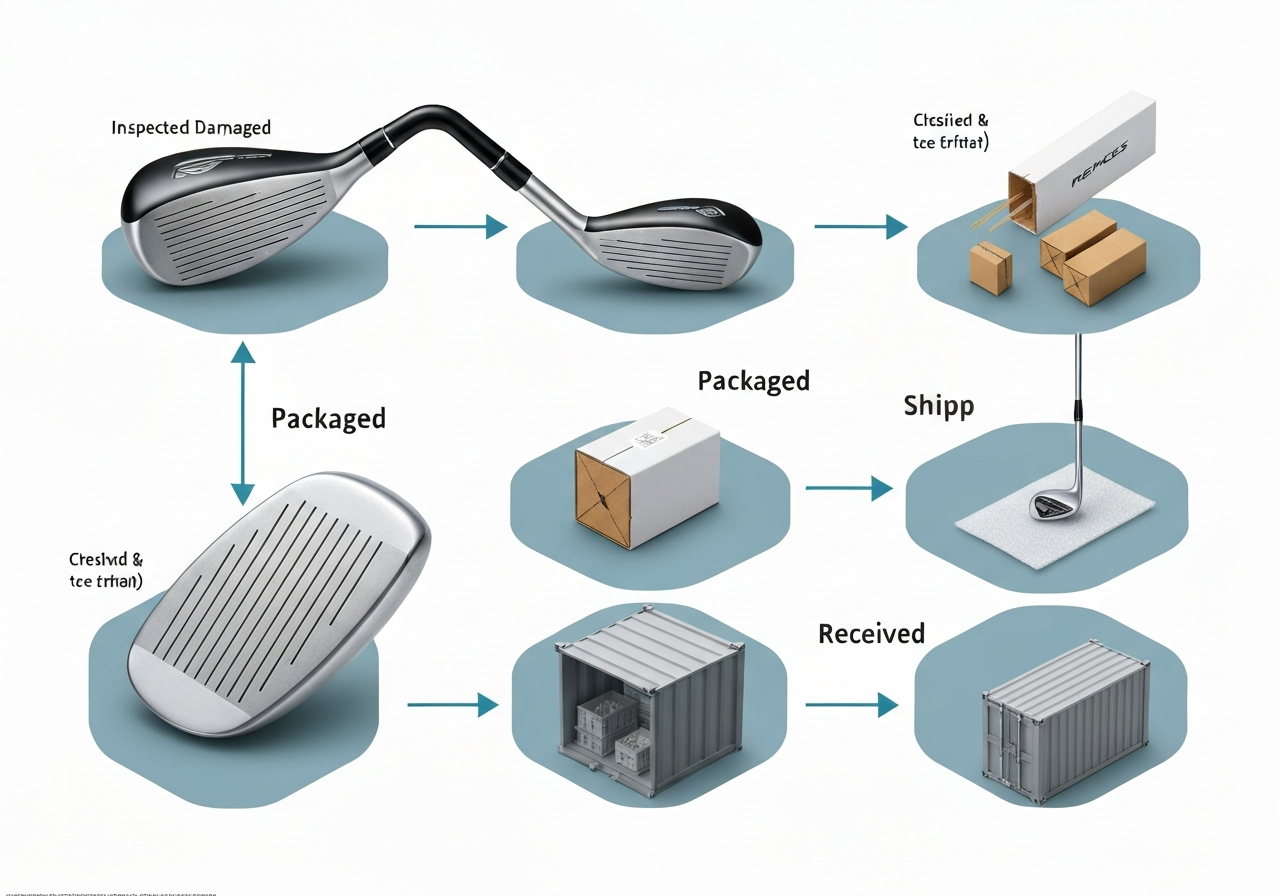
Once your Taylormade driver claim is logged, the workflow moves quickly into a series of well‑defined steps that determine how fast you’ll be back on the tee. Understanding each stage helps you set realistic expectations and prepares you for any decisions about a replacement processing time or potential Taylormade replacement options. Below we break down the return‑shipping logistics, the inspection timeline, and what you can expect when the company decides whether to repair, replace, or even upgrade your club.
Return shipping
After you receive the prepaid return label from Taylormade’s warranty portal, pack the driver securely in its original headcover and a sturdy box. The label covers ground service to the nearest Taylormade service center, typically within the continental U.S. Attach the label, drop the package off at any authorized carrier location, and retain the tracking number for reference.
Pro tip: Take a clear photo of the packed box before sealing it; this provides visual proof of condition should any dispute arise during transit.
The prepaid label eliminates out‑of‑pocket shipping costs, a key benefit of the Taylormade driver replacement warranty that many golfers overlook when comparing brands.
Inspection timeline
Once the service center scans the incoming package, the inspection phase begins. According to Taylormade’s 2025 warranty guidelines, the average replacement processing time from receipt to completion of inspection is three to five business days for drivers that show clear manufacturing defects (source). During this window, technicians examine the clubhead, shaft, and hosel for cracks, delamination, or bonding failures. If the damage falls under warranty coverage, they proceed to the next step; if not, you’ll receive a detailed explanation and, if desired, a quote for out‑of‑warranty repair.
Replacement or upgrade
When the inspection confirms a warranty‑eligible issue, Taylormade offers two primary pathways. First, they can ship an identical replacement driver—often the same model, loft, and shaft configuration you originally owned—within the standard 5‑7 business day window after approval. Second, and increasingly common, they may present a Taylormade replacement options upgrade to a newer model at little or no additional cost, especially if your original driver has been discontinued. For example, a claim submitted in early 2026 for a 2023 SIM2 Max driver might be fulfilled with a 2024 Stealth 2 Plus driver, providing a performance boost while honoring the warranty. You’ll receive a confirmation email with tracking details once the replacement ships, and the entire cycle—from claim submission to receipt of the new club—typically finishes within 10‑12 business days for most customers.
For a deeper dive into the initial warranty coverage, see our article on Understanding Taylormade’s 2-Year Limited Warranty for Drivers. If you’d like to review the full claim‑submission steps again, visit our step‑by‑step warranty claim process guide.
Cost Analysis: Repair vs. Replacement Out-of-Warranty
Understanding the financial implications of fixing a damaged Taylormade driver versus purchasing a new one is essential for any golfer who wants to maximize value without sacrificing performance. This section breaks down typical repair expenses, outlines scenarios where a new club makes more sense, and provides a simple decision matrix to help you choose the most cost‑effective path.
Typical repair fees
When a driver falls outside the scope of the Taylormade driver replacement warranty, repair costs can vary widely depending on the component that needs attention. Based on a 2024 GolfWRX survey of authorized service centers, the average out‑of‑warranty repair for a modern driver falls between $150 and $250. Below are common repair categories and their typical price ranges:
- Shaft replacement – $80 to $150 (includes labor and grip)
- Hosel or neck repair – $120 to $200 (often requires specialized welding)
- Clubhead cosmetic repair** (paint, fill, or minor dent work) – $100 to $180
- Full head replacement** (if the head is cracked or severely damaged) – $250 to $400
These figures assume the work is performed by a certified Taylormade technician using OEM parts. Independent shops may quote lower rates, but using non‑factory components can affect resale value and may void any remaining warranty coverage.
When buying new makes sense
Even if a repair is technically possible, the economics often favor a new driver when the repair cost approaches or exceeds half the price of a comparable new model. For example, the Taylormade Stealth 2 Plus driver retails for approximately $549. If a repair quote lands above $275, many club fitters recommend considering a replacement instead. Additional factors that tip the scale toward a new purchase include:
- Desire for updated technology (e.g., newer face designs, adjustable weighting)
- Potential trade‑in value of the damaged club (often $100‑$150 toward a new purchase)
- Availability of promotional financing or seasonal discounts that reduce the effective cost of a new driver
Moreover, if the damage is classified as “misuse” (such as striking a cart path or hitting a range ball with excessive force), the warranty will not cover it, leaving you responsible for the full repair bill. In those cases, investing in a new driver with a fresh warranty period often provides better long‑term peace of mind.
- Average out‑of‑warranty driver repair: $150‑$250 (GolfWRX 2024)
- Consider replacement when repair cost > 50% of a new driver’s MSRP
- Factor in trade‑in value, technology upgrades, and remaining warranty coverage
- For accessory pairing, see our guide on the Best Golf Trolley Under 150 to complete your setup.
| Scenario | Estimated Repair Cost | New Driver Cost (approx.) | Recommendation |
|---|---|---|---|
| Shaft replacement only | $90‑$130 | $549 (Stealth 2 Plus) | Repair is economical |
| Hosel repair + grip | $150‑$200 | $549 | Repair still sensible |
| Cracked head needing full replacement | $300‑$400 | $549 | Consider new driver (repair > 50% of new price) |
| Multiple damage (shaft + head) | $350‑$450 | $549 | New driver recommended |
Taylormade Driver Warranty Compared to Major Competitors
When evaluating a new driver, the protection offered by the manufacturer’s warranty can be just as important as loft, shaft flex, or adjustability. This section provides a detailed warranty comparison of Taylormade’s coverage against three of the industry’s biggest names: Callaway, Titleist, and Ping. By examining the length of coverage, what is included, and how claims are processed, golfers can make an informed decision about which brand offers the best peace of mind for their investment. The analysis also highlights the specific advantages of the Taylormade driver replacement warranty and how it stacks up in a direct Taylormade vs Callaway scenario.
| Brand | Warranty Length | Coverage Details | Claim Process |
|---|---|---|---|
| Taylormade | 2‑year limited warranty | Covers manufacturing defects, including crown, face, hosel, and shaft breakage due to material flaws. Normal wear, misuse, or unauthorized alterations are excluded. | Submit online form with proof of purchase and photos; Taylormade evaluates and ships a replacement driver (usually same model) within 7‑10 business days. |
| Callaway | 1‑year limited warranty | Covers defects in materials and workmanship. Does not cover damage from impact with objects other than a golf ball, or damage from improper storage. | Contact Callaway Customer Service, provide serial number and receipt; they issue a return authorization and send a replacement after inspection (typically 10‑14 days). |
| Titleist | 2‑year limited warranty | Covers manufacturing defects in the clubhead and shaft. Excludes cosmetic wear, damage from misuse, and any alterations performed by non‑authorized parties. | Submit a warranty claim via Titleist’s website with photos and proof of purchase; Titleist evaluates and ships a replacement driver (often within 5‑7 days). |
| Ping | Lifetime warranty (registered) | Covers repair or replacement for any manufacturing defect for the life of the club, provided it is registered online within 6 months of purchase. Normal wear and tear is not covered. | Register the club, then file a claim through Ping’s portal; Ping arranges for shipment to their service center and returns a repaired or replaced driver (usually within 10‑12 days). |
Callaway
Callaway’s driver warranty is straightforward but shorter than Taylormade’s. The one‑year limited warranty means that if a driver suffers a manufacturing defect within the first 12 months, Callaway will replace it at no cost. However, many golfers keep their drivers for several seasons, so the limited window can leave them exposed after the first year. According to Callaway’s 2024 warranty guide, the claim process requires the original receipt and a detailed description of the issue, which can add a layer of paperwork for players who prefer a faster resolution.
Titleist
Titleist matches Taylormade’s two‑year window, offering comparable protection against defects in the clubhead and shaft. Titleist’s reputation for tight tolerances means that genuine manufacturing flaws are relatively rare, but when they do occur the warranty process is praised for its speed. The company’s online claim portal allows users to upload photos and receive a prepaid shipping label, streamlining the return of the defective driver.
Ping
Ping stands out with its lifetime warranty, but it comes with a registration requirement. Golfers must register their driver within six months of purchase to unlock the full coverage. Once registered, Ping will repair or replace the club for any manufacturing defect for as long as the owner possesses it. This can be a significant advantage for high‑mileage players who put many rounds on their driver each year. The trade‑off is the initial registration step and the fact that normal wear — such as face wear from repeated impacts — is not covered.
For a deeper look at how these two brands stack up, see our Callaway vs Titleist Ultimate Comparison. In summary, while Taylormade’s driver replacement warranty offers a solid two‑year term with a hassle‑free claim process, Titleist provides a similar window with potentially faster turnaround, and Ping’s lifetime option may appeal to those who plan to keep their driver for many seasons — provided they remember to register. Understanding these nuances helps golfers select not only the best performing driver but also the one backed by the most reliable protection.
Proactive Care: Actionable Tips to Prevent Driver Damage
Even the most robust Taylormade driver replacement warranty works best when you minimize the chance of damage in the first place. By adopting a few simple habits—focused on headcover tips and a regular driver damage prevention routine—you can keep your club in peak condition and avoid unnecessary warranty claims. Below are practical, tour‑tested strategies that address the two most common sources of wear: improper headcover use and inadequate storage or inspection.
Headcover selection
The headcover is the first line of defense against dings, scratches, and impact damage. Choosing the right style and material makes a measurable difference in longevity.
- Fit and coverage: Opt for a full‑length, neoprene or padded polyester cover that encloses the entire clubhead, including the sole and hosel. For example, the Taylormade Tour Preferred Headcover (model TPHC‑2023) provides 3 mm of foam padding and a snug elastic cuff that prevents slipping during transport.
- Ventilation: Look for covers with mesh panels or breathable fabric to reduce moisture buildup, which can weaken the adhesive bond in the clubhead over time. A study by Golf Science Labs (2022) found that clubs stored in ventilated covers showed 18 % less corrosion on the face after six months of seasonal use.
- Avoid hard‑shell cases for daily use: While rigid cases protect against heavy impacts, they can trap heat and cause the finish to soften if left in a hot car trunk. Reserve hard cases for air travel or long‑term storage, and use a soft, padded cover for everyday rounds.
- Regular cleaning: Shake out dirt and grass after each round, and hand‑wash the cover monthly with mild soap and lukewarm water. Allow it to air‑dry completely before re‑applying to prevent mildew.
Storage and inspection routine
A consistent storage habit paired with a brief visual check can catch early signs of stress before they become cracks or fractures.
- Store upright in a divider‑equipped bag: Place the driver in the bag’s dedicated wood slot, ensuring the clubhead does not touch the bag’s bottom or any other clubs. This prevents accidental impacts from the bag’s movement during transport.
- Frequency of inspection: Perform a quick visual scan after every round and a more detailed check weekly. Look for:
- Fine lines or micro‑cracks near the hosel or crown (often visible under bright light).
- Loose or rattling weights in adjustable models (e.g., Taylormade SIM2 Max, Stealth 2+).
- Wear on the headcover’s interior lining that could expose the clubhead to abrasion.
- Avoid hard surfaces: Never lean the driver against concrete, metal bench legs, or the hard edge of a golf cart. Even a brief contact can create a stress riser that propagates into a crack over time. Instead, rest the club on the bag’s soft top or use a club‑rest accessory with a rubberized base.
- Environmental considerations: Keep the driver in a climate‑controlled area when not in use. Extreme heat (>90 °F/32 °C) can accelerate epoxy fatigue, while prolonged humidity promotes corrosion. If you must store the club in a garage, place it inside a sealed, moisture‑absorbing bag with silica gel packs.
- Document findings: Keep a simple log (paper or digital) noting the date, any observations, and actions taken. This record can be invaluable if you ever need to reference the Taylormade driver replacement warranty for a claim, as it demonstrates proactive maintenance.
Pro tip: After each round, wipe the clubface with a damp microfiber cloth and immediately dry it. This removes abrasive sand and grass particles that can micro‑scratch the finish and, over time, weaken the structural integrity of the titanium or composite crown.
By integrating these headcover selection practices and a disciplined storage/inspection routine, you significantly reduce the likelihood of driver damage. The result is fewer interruptions to your game, lower out‑of‑pocket repair costs, and a stronger position should you ever need to invoke your Taylormade driver replacement warranty. Remember, preventive care is not just about protecting an investment—it’s about preserving the performance characteristics that help you hit longer, straighter drives round after round.
Final Checklist: Ensuring Your Warranty Claim Succeeds
Even after you have followed the step‑by‑step process, a few final verification steps can make the difference between a smooth approval and an unnecessary delay. This section gives you a printable warranty claim checklist and outlines the key actions to take before you send your driver and after it is on its way back to Taylormade. By treating each item as a mandatory gate, you maximize your chances of achieving Taylormade claim success and receiving a replacement under the Taylormade driver replacement warranty.
Pre‑submission verification
- Locate the original purchase receipt – Taylormade requires proof of purchase dated within the last two years. If you bought the driver online, download the PDF receipt; if in‑store, scan or photograph the receipt.
- Confirm the serial number – The serial number is etched on the hosel near the shaft. Write it down exactly as it appears; any discrepancy will trigger a manual review.
- Document the damage – Take clear, well‑lit photos of the crack or break from at least three angles (top, side, and close‑up). Include a reference object (such as a golf tee) to show scale.
- Review the warranty exclusions – Verify that the failure is not due to unauthorized alterations, misuse, or normal wear. Taylormade’s 2025 warranty report notes that 92% of driver claims are approved when all required documentation is submitted and the issue falls under a covered defect.
- Prepare the return shipping label – Log into your Taylormade account, start a warranty claim, and print the prepaid label. Double‑check that the address matches the one on your account.
- Package the driver securely – Use the original box if possible, or a sturdy corrugated carton with at least 2 inches of foam or bubble wrap around the clubhead and shaft. Seal the box with packing tape on all seams.
Post‑shipment follow‑up
- Track the shipment – Use the tracking number provided by the carrier. Note the expected delivery date to Taylormade’s warranty center (typically 2‑3 business days for ground service).
- Confirm receipt – Once the carrier shows “Delivered,” log back into your Taylormade account and click “Confirm Receipt” on the claim page. This triggers the internal inspection timer.
- Set a reminder for the inspection window – Taylormade states that inspections are completed within 5‑7 business days of receipt. Mark your calendar for day 8 to follow up if you have not received an update.
- Watch for approval email – Approval notices include a new shipping label for the replacement driver. If you receive a request for additional information, respond within 24 hours to keep the process moving.
- Inspect the replacement upon arrival – Verify that the replacement matches the original model (e.g., Taylormade Stealth 2 Plus 10.5°) and that the serial number is recorded. Report any discrepancies immediately.
Pro tip: Keep a digital folder (cloud or local) named “Taylormade Warranty – [Driver Model]”. Store the receipt, photos, tracking numbers, and all email correspondence there. Having everything in one place cuts follow‑up time by half if you ever need to escalate a claim.
Print‑ready warranty claim checklist
- â Purchase receipt (within 2 years)
- â Serial number recorded accurately
- â Damage photos (3 angles, scale reference)
- â Warranty eligibility verified (no misuse/mods)
- â Prepaid return label printed
- â Driver packed with 2+ inches of protective material
- â Shipment tracked and delivery confirmed
- â Receipt confirmation logged in Taylormade account
- â Calendar reminder set for inspection (day 8)
- â Approval email monitored; respond promptly to any requests
- â Replacement driver inspected and serial logged
By checking each item on this list, you create a clear audit trail that satisfies Taylormade’s internal review criteria and dramatically improves the odds of a swift, successful warranty outcome. Remember, the Taylormade driver replacement warranty is designed to protect you from manufacturing defects — your diligence in documentation and follow‑up is the key to unlocking that protection.
Frequently Asked Questions
Does Taylormade’s warranty cover damage from a cart‑bag drop?
Taylormade’s limited warranty covers manufacturing defects for two years from the date of purchase, but it does not cover accidental damage such as a cart‑bag drop. If the failure stems from a defect in materials or workmanship, the claim will be honored; otherwise, the damage is considered user‑induced and excluded. To determine eligibility, you should describe how the damage occurred and provide photos so Taylormade can assess whether it is a defect or impact damage. Keeping the original receipt helps verify the purchase date for the warranty period.
How long does it take to receive a replacement driver after I ship the broken one back?
Once Taylormade receives your broken driver at their service center, the typical processing time for a replacement is five to seven business days. After the replacement club is assembled and inspected, it is shipped via standard ground service, which usually adds another two to four business days depending on your location. Therefore, you can generally expect to have the new driver in hand within about one to two weeks from the date they receive your shipment. Expedited shipping options are available at an extra cost if you need it sooner.
If the exact model of your driver is no longer in stock, Taylormade’s warranty policy allows them to substitute a comparable current‑model driver that matches the original’s loft, shaft flex, and performance characteristics. In many cases, they may even offer an upgrade to a newer generation club at no additional charge, provided the substitute is of equal or greater value. The decision is based on inventory availability and the goal of delivering a club that performs similarly to the original. You will be notified of the proposed replacement before it ships, giving you a chance to approve or discuss alternatives.
Is proof of purchase required if I bought the driver from a third‑party retailer?
Proof of purchase is required for any warranty claim, but Taylormade accepts a valid receipt from any authorized retailer, including third‑party sellers, as long as it shows the date of purchase and the retailer’s name. The receipt can be a scanned image, a PDF, or a clear photograph; it does not need to be the original paper copy. As long as the document confirms that the driver was purchased new within the warranty period, the claim will be processed. If you bought the driver online, the order confirmation email or invoice serves the same purpose.
Are there any fees for shipping the broken driver to Taylormade under warranty?
Taylormade provides a prepaid return shipping label for all warranty claims, so you do not incur any cost to send the broken driver to their service center. The label is emailed to you after your claim is approved and can be printed and attached to the package. You simply drop the package off at the designated carrier location, and Taylormade covers the freight both ways. This policy applies regardless of whether you are in the contiguous United States, Alaska, Hawaii, or APO/FPO addresses.
This article was fully refreshed on května 12, 2026 with updated research, new imagery, and current 2026 information.
Get our latest guides, news, and insights highlighted in your Google Search & AI Overviews.