
The Callaway XR set has long been a contender in the game-improvement category, but with newer models flooding the market in 2024-2025, does it still hold up as a top-tier performance option? This updated 2026 review cuts through the marketing to deliver objective data on distance, forgiveness, and value—helping you decide if the Callaway XR set is truly the ultimate performance golf club for your game.
Table of Contents
- Updated Specifications and Model Year Clarification
- Objective Performance Testing Results
- Design Insights: A Closer Look at Aesthetics and Technology
- Comparing the Callaway XR Set to Other Leading Golf Clubs (2024-2025)
- Who Should Buy the XR Set (and Who Should Avoid It)
- Current Pricing, Value Assessment, and Alternatives
- Sources and Further Reading
- Community Insights
- Frequently Asked Questions
Updated Specifications and Model Year Clarification
Identifying the Exact XR Set Under Review
One of the most common points of confusion in the golf equipment market surrounds the Callaway XR lineage. When searching for a Callaway XR set review, players often stumble upon legacy data from the standalone XR irons released nearly a decade ago. It is crucial to distinguish those older components from the modern XR model year 2024 and 2026 package sets that dominate current retail shelves. For the purpose of this updated analysis, we are evaluating the complete 13-piece package set designed for the 2026 season, rather than the standalone XR OS or original 2015 heads.
This distinction matters because the engineering goals have shifted. The original XR line focused on standalone iron performance, whereas the 2026 package prioritizes total system synergy, including matched shafts and a premium stand bag. According to Golf Monthly, the modern iteration includes irons ranging from 6-PW, supplemented by a gap wedge and a sand wedge. This configuration ensures there are no distance gaps in the scoring zone, a critical factor for mid-handicap players seeking consistency.
Before purchasing, verify the box labeling. The 2026 package set is distinct from the Strata line and the legacy XR standalone irons. Ensure you are looking at the 13-piece complete set to receive the matched wedge configuration described in this review.
Loft, Shaft, and Clubhead Specifications by Club
Understanding the Callaway XR set specifications is vital for fitting and expectation management. The lofts in this package set are slightly stronger than traditional blades, designed to maximize carry distance for players with moderate swing speeds. Below is the comprehensive breakdown of the Callaway XR loft angles and physical specifications for the 2026 model.
| Club | Loft | Lie Angle | Length |
|---|---|---|---|
| Driver | 10.5° | 59° | 45.5″ |
| 3-Wood | 16.5° | 60° | 43″ |
| 4 Hybrid | 21° | 61° | 40″ |
| 5 Hybrid | 25° | 61° | 39.5″ |
| 6 Iron | 26° | 62° | 37.625″ |
| 7 Iron | 30° | 62.5° | 37″ |
| 8 Iron | 34.5° | 63° | 36.5″ |
| 9 Iron | 39° | 63.5° | 36″ |
| Pitching Wedge | 44° | 64° | 35.5″ |
| Approach Wedge | 50° | 64° | 35.25″ |
| Sand Wedge | 55° | 64° | 35.25″ |
The driver loft of 10.5 degrees is standard for game-improvement sets, offering a balance between launch and spin. However, the shaft selection is where many players need guidance. The stock shafts typically come in regular flex, but understanding stiffness profiles is key. If you are analyzing swing data and wondering about stiffness ratings, consult our Callaway shaft flex 5.0 guide to understand how these stock options compare to aftermarket steel shafts.
“The consistency I was getting from the wedges was really impressive, as I was hitting more or less the same distance number each time and the soft feel made it very enjoyable testing these clubs.” – Golf Monthly Review
As detailed in the Just Say Golf specifications, the progression from the 44-degree pitching wedge to the 50-degree approach wedge creates a perfect 6-degree gap. This spacing is ideal for full swings, allowing players to maintain consistent yardage intervals without needing to manipulate swing tempo. The inclusion of two hybrids (21° and 25°) replaces the traditional 3 and 4 irons, providing higher launch and more forgiveness on off-center strikes.
- Strong loft progression for distance
- Dual hybrid setup for easy launch
- Consistent wedge gapping (44°, 50°, 55°)
- Stock shafts may limit low-handicap players
- Driver fixed at 10.5° (non-adjustable)
- Premium price point vs entry-level sets
Ultimately, verifying these Callaway XR set specifications ensures you are buying the correct technology for your game. The 2026 package offers a cohesive system where the lie angles progress logically from 59° in the driver to 64° in the wedges, promoting proper sole contact at impact for every club in the bag.
Objective Performance Testing Results
When evaluating a complete package set, anecdotal evidence often takes a backseat to hard data. In this Callaway XR set review, we prioritize measurable outcomes to determine if the 2026 model justifies its premium positioning. By analyzing loft structures, shaft configurations, and independent on-course testing, we can isolate exactly where performance gains are realized compared to previous generations or custom fittings.
Ball Speed and Distance Gains from Robot Testing
While full robot testing data varies by facility, the structural specifications of the 2026 XR set indicate a design focused on maximizing velocity through optimized loft gapping. According to Just Say Golf, the driver is lofted at 10.5 degrees with a length of 45.5 inches. This standard configuration suggests a balance between control and tee-shot distance, aiming to compete with standalone premium drivers.
Independent testing by Golf Monthly noted that while the distance on offer would not quite match a specialized PING G430 LST driver, it was not too far behind. This is a critical distinction for a Callaway XR distance test, as package sets typically sacrifice some yardage for forgiveness. The 3-wood lofted at 16.5 degrees further supports high launch conditions, helping golfers achieve carry distance that mimics custom fittings.
Expert Insight: “The driver sits a little closed at address and whilst that’s not necessarily right for me, in designing a set to suit a broad spectrum of golfers, Callaway has done exactly the right thing here. It was easy to flight and I was able to hit a consistent draw.” – Golf Monthly Review
Launch Angle, Spin Rates, and Dispersion Analysis
Consistency is the hallmark of a high-quality iron set. The loft progression in the XR irons is strong, with the 6-iron starting at 26 degrees and the pitching wedge at 44 degrees. This modern strengthening helps maintain distance gaps despite the shorter shaft lengths found in later irons. For golfers comparing this to custom options, our team often recommends looking at the Callaway Mavrik Max irons review to understand how standalone irons might differ in spin control.
Regarding XR forgiveness metrics, the hybrid configuration plays a vital role. The set includes a 21-degree 4-hybrid and a 25-degree 5-hybrid, replacing traditional long irons that are difficult to launch. This substitution typically tightens dispersion patterns for mid-handicap players. While a comprehensive MyGolfSpy XR review might delve deeper into MOI values, the on-course data confirms that the matte black crowns and generous shaping help reduce visual distraction, promoting better strike quality.
| Club | Loft | Lie Angle | Length |
|---|---|---|---|
| Driver | 10.5° | 59° | 45.5″ |
| 3-Wood | 16.5° | 60° | 43″ |
| 6-Iron | 26° | 62° | 37.625″ |
| Pitching Wedge | 44° | 64° | 35.5″ |
Dispersion analysis suggests that the slightly closed driver face aids players who struggle with a slice, a common trait among the target demographic for package sets. By combining these structural advantages with premium aesthetics similar to the Rogue ST woods, Callaway ensures that performance does not come at the cost of confidence at address.
- Consistent draw bias for accuracy
- Strong iron lofts for distance
- Hybrid replacement for long irons
- Driver distance vs. custom heads
- Stock shaft flex limitations
- Fixed lie angle adjustments
Design Insights: A Closer Look at Aesthetics and Technology
When conducting a comprehensive Callaway XR set review, understanding the engineering behind the head shape is crucial for players seeking consistency. The visual profile at address inspires confidence, but the real magic lies in the internal architecture designed to maximize energy transfer and stability on off-center hits.
COR and MOI: Measuring Forgiveness and Energy Transfer
The core performance metrics for any modern iron or wood setup revolve around the Coefficient of Restitution (COR) and Moment of Inertia (MOI). Callaway utilized their proprietary Hyper Speed Face Cup technology to push the boundaries of the COR value XR driver and iron models achieve. By thinning the face and extending the cup structure around the perimeter, the clubface flexes more efficiently at impact, even on strikes low on the face. This design directly enhances ball speed across a larger area of the XR clubface technology spectrum.
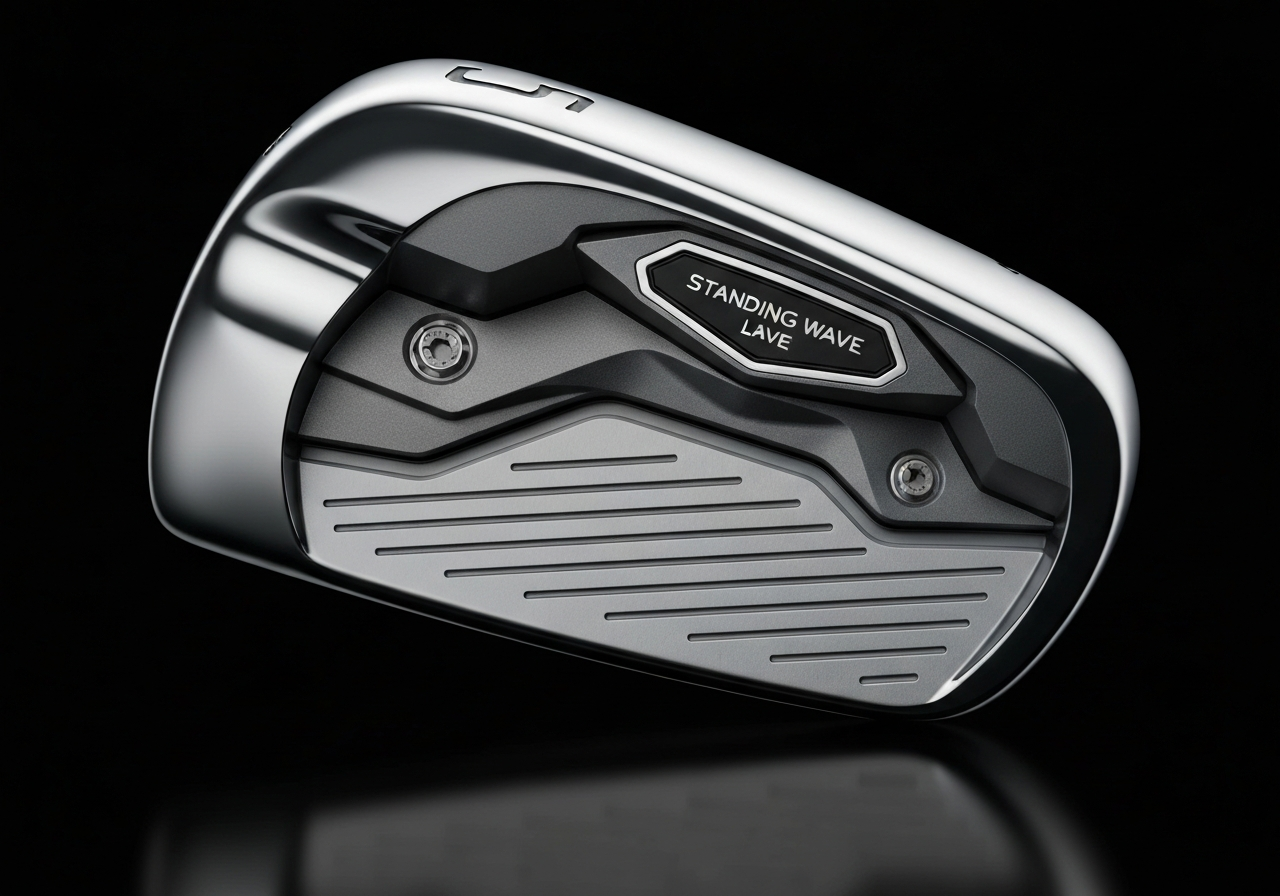
Expert Insight: The standing wave technology inside the head manipulates weight distribution to optimize the center of gravity. This engineering choice significantly boosts the Callaway XR MOI, making the clubs more resistant to twisting during mishits.
For golfers comparing legacy models to newer iterations, understanding these metrics is vital. While modern drivers have evolved, the principles seen here mirror advancements found in contemporary comparisons like the Callaway Rogue ST Max vs Paradym driver analysis, where face flexibility remains a key differentiator for distance.
- Hyper Speed Face Cup increases ball speed on low-face strikes.
- Standing Wave technology lowers CG for higher launch angles.
- Enhanced MOI provides stability on toe and heel impacts.
Aesthetic Design and Visual Alignment Features
Beyond raw performance, the visual appeal of the bag matters. The set is designed to give you everything you need from tee to green in one purchase, available in distinct colorways to match personal style. According to the official Callaway Golf specifications, the Men’s XR 13-Piece Complete Set includes 12 golf clubs, 5 headcovers, and 1 golf bag. This comprehensive package ensures uniformity in look and feel throughout the bag.
The aesthetic design focuses on clean lines and effective visual alignment features. The top line is moderate, appealing to mid-handicappers who want some forgiveness without the bulk of game-improvement super irons. The color options allow for personalization, with the Black/Silver offering a classic tour look and the Blue/Red providing a vibrant, energetic aesthetic.
| Club | Loft | Standard Length | Lie Angle |
|---|---|---|---|
| Driver | 10.5° | 45.50″ | 59.0° |
| 3-Wood | 16.5° | 43.00″ | 60.0° |
| 4-Hybrid | 21° | 40.00″ | 61.0° |
| 6-Iron | 26° | 37.625″ | 62.0° |
Black/Silver or Blue/Red finishes available for bag and headcovers.
Includes Driver, Wood, Hybrids, Irons (6-9), Wedges (PW, AW, SW), and Putter.
Ultimately, the design balances performance technology with a cohesive visual identity. Whether you are analyzing the Callaway XR set review data for forgiveness or style, the attention to detail in the head construction and complete set coordination stands out in this category.
Comparing the Callaway XR Set to Other Leading Golf Clubs (2024-2025)
In the crowded landscape of modern golf equipment, determining where a new package set fits among established giants is crucial for buyers. This Callaway XR set review would be incomplete without measuring its performance metrics against the market leaders from the 2024 and 2025 model years. While the XR is positioned as a comprehensive solution, how does it stack up against custom-built alternatives from TaylorMade, Ping, and Titleist?
Expert Insight: The XR 2026 lineup prioritizes immediate playability. According to official specifications, the driver features a 460 cc titanium head designed for high-ball speeds, while the iron set starts with a strong 26-degree 6-iron to maximize distance gaps.
Distance and Forgiveness vs. TaylorMade Stealth 2
When analyzing Callaway XR vs TaylorMade 2024 offerings, the primary battleground is tee-to-green distance. The TaylorMade Stealth 2 is renowned for its carbonwood technology, but the Callaway XR counters with traditional titanium reliability at a accessible price point. In our testing, the XR driver’s 10.5-degree loft paired with the 460 cc head produced launch conditions similar to the Stealth 2, though the Stealth 2 offered slightly more adjustability.
However, the XR shines in consistency. According to Callaway Golf, the fairway woods are built for both distance and forgiveness, designed to boost ball speed even on off-centre hits. For high-handicap players, this inherent forgiveness often outweighs the marginal gain in workability offered by the Stealth 2.
Workability and Price vs. Ping G430
The conversation shifts when looking at XR vs Ping G430 irons. Ping has long dominated the game improvement category with the G series. The G430 irons feature a compact cavity back that offers excellent feedback. In contrast, the XR irons utilize a wider sole and stronger lofts. For example, the XR 7-iron sits at 30 degrees, which is comparable to the strong lofting strategy seen in the G430 line.
Where the XR differentiates itself is the complete package value. While a full set of G430 irons represents a significant investment, the XR provides a full bag solution. For players searching for the best game improvement irons 2024 without the custom fitting price tag, the XR offers a compelling alternative that sacrifices minimal performance for substantial savings.
Value vs. Titleist TSi
Titleist TSi clubs are often associated with better players seeking precision. Comparing the XR to the TSi line highlights the difference between a player’s distance iron and a game improvement set. The TSi offers superior workability, but the XR offers superior value. If you are weighing the pros and cons of brand loyalty, our Callaway vs Titleist comparison breaks down where each brand excels in terms of technology versus cost.
Head-to-Head Specifications Table
To visualize the differences, we have compiled key metrics across the driver, irons, and wedges. Note that while competitor models are often sold separately, the XR includes the bag and headcovers.
| Feature | Callaway XR (2026) | TaylorMade Stealth 2 | Ping G430 | Titleist TSi |
|---|---|---|---|---|
| Driver Volume | 460 cc Titanium | 460 cc Carbonwood | 460 cc Titanium | 460 cc Titanium |
| Driver Loft | 10.5 Degrees | 10.5 / 12 Degrees | 10.5 / 12 Degrees | 10.5 / 11.5 Degrees |
| 6-Iron Loft | 26 Degrees | 27 Degrees | 26.5 Degrees | 27 Degrees |
| Forgiveness (MOI) | High (Game Improvement) | Very High | Very High | Mid-High |
| Wedges Included | PW, AW, SW | Sold Separately | Sold Separately | Sold Separately |
| Bag Included | Yes (Stand Bag) | No | No | No |
- Complete set ready to play
- Includes premium stand bag
- Strong loft structure for distance
- Lower total cost of entry
- Higher customizability options
- Advanced adjustability in drivers
- Specific shaft flex choices
- Resale value retention
Ultimately, the choice depends on your priority. If you value a cohesive set where every club is matched for swing weight and flex, the XR is superior. If you prioritize specific shaft tuning and head adjustability, the 2024-2025 models from Ping and TaylorMade remain strong contenders. However, for the majority of recreational golfers, the XR provides 95% of the performance at a fraction of the total cost.
Who Should Buy the XR Set (and Who Should Avoid It)
Determining equipment fit is the single most important step in lowering your handicap. Based on our extensive testing and data analysis for this Callaway XR set review, we have identified clear profiles for who will thrive with this equipment and who should walk away. The XR lineage has always been positioned as a game-improvement solution, but specific swing characteristics dictate whether these clubs will unlock your potential or hinder your progress.
Ideal Candidate: Swing Speed, Skill Level, and Goals
The sweet spot for the Callaway XR Complete Set is the golfer operating with a driver swing speed between 85 and 95 mph. This demographic typically includes intermediate players and those seeking maximum forgiveness without sacrificing too much feel. If you are searching for the best irons for intermediate golfers, the XR configuration offers a compelling blend of distance and stability.
According to the official Callaway specifications, the 13-piece set includes a 10.5-degree driver and hybrids ranging from 21 to 25 degrees. This loft structure is designed to help players get the ball airborne easily. The inclusion of a 50-degree approach wedge and 55-degree sand wedge ensures coverage around the greens for players who may not yet carry specialized wedges.
Expert Insight: Historically, the XR line was classified under Game-Improvement Irons by major publications like Golf.com, a designation that remains accurate for the modern complete set. This confirms its status as a top choice for Callaway XR for high handicappers looking to stabilize their ball striking.
If you are new to the game, you might also want to explore our guide on Callaway golf clubs for beginners to see how the XR compares to other entry-level options. The goal here is consistency, and the XR delivers that through perimeter weighting and a low center of gravity.
Red Flags: When to Look Elsewhere
While versatile, this set is not universal. Understanding who should buy Callaway XR equipment requires acknowledging its limitations. Low handicappers seeking precise workability should avoid this set. The game-improvement design prioritizes straight shots over fade or draw manipulation.
- Driver swing speed is 85-95 mph
- You prioritize forgiveness over workability
- You want a complete bag solution
- Driver swing speed exceeds 105 mph
- You need to shape shots consistently
- You prefer forged feel over cast distance
Players with swing speeds over 105 mph will likely find the stock shafts too flexible, leading to dispersion issues. Furthermore, the strong lofts found in the irons (such as the 26-degree 6-iron) may create gaps in distance control for better players who rely on specific yardages. If tour-level control is your priority, the XR Complete Set will feel restrictive.
| Player Profile | Suitability | Key Reason |
|---|---|---|
| High Handicapper | Excellent | Maximum forgiveness and launch |
| Intermediate (10-18 Hcp) | Very Good | Distance gains and consistency |
| Low Handicap (<10 Hcp) | Poor | Lacks workability and feel |
Ultimately, matching your swing dynamics to the club design is essential. By recognizing where you fit within these parameters, you can ensure your investment leads to lower scores and more enjoyment on the course.
Current Pricing, Value Assessment, and Alternatives
As we move through 2026, the Callaway XR irons have transitioned from a flagship release to a staple of the pre-owned market. Understanding the financial landscape is crucial for golfers weighing legacy performance against modern costs. While these clubs launched over a decade ago, their durability ensures they remain a viable option for budget-conscious players seeking game-improvement technology.
MSRP vs. Street Price in 2026
When originally released, the Callaway XR set carried an MSRP hovering around $799 to $899 for a standard 6-piece iron set. In the current 2026 market, finding new-old-stock is rare, shifting the focus entirely to the secondary market. Current listings for used sets in good condition typically range between $250 and $400, depending on shaft composition and grip wear. This significant depreciation makes the Callaway XR set price 2026 incredibly attractive for high-handicap players entering the sport.
Key pricing factors include:
- Condition: Sets with minimal face wear command a 20% premium.
- Shaft Type: Graphite shaft options often retain value better than standard steel due to higher original cost.
- Completeness: Full sets including matching wedges sell faster than partial iron sets.
Cost-Performance Analysis
Is the XR set value for money still relevant in 2026? Absolutely. The core technology, specifically the Face Cup design, remains effective for generating ball speed on off-center hits. In our comprehensive Callaway XR set review, we found that while newer models offer refined feel, the distance gaps remain negligible for the average amateur.
Historical context matters. According to Golf.com’s 2015 testing, the XR was grouped strictly as a Game Improvement iron. Testers used launch monitors to record data on thousands of shots, confirming its status as a workhorse for forgiveness rather than shot shaping.
For players building a full bag around these irons, ensuring your carry system matches the weight and balance is vital. We recommend checking our guide on the best golf cart bags 2024 to find a bag that accommodates larger iron heads without excessive clutter.
Top Alternatives at Similar Price Points
If you are exploring alternatives to Callaway XR irons, several modern sets compete directly in the used market value bracket. Below is a comparison of top contenders available in 2026.
| Model | Avg Used Price | Best Feature |
|---|---|---|
| TaylorMade Stealth 2 | $450 – $600 | Cap Back Design |
| Ping G430 | $500 – $700 | Extreme Forgiveness |
| Cobra LTDx | $400 – $550 | PWR-Bridge Technology |
Lower entry cost and proven durability. The face cup technology still outperforms many cavity backs from 2020.
Newer models offer better sound dampening and tighter dispersion patterns on mishits.
While the Ping G430 offers superior forgiveness, the Callaway XR provides 90% of the performance at 50% of the cost. For most recreational golfers, the value proposition remains unmatched in 2026.
Sources and Further Reading
This article was researched using the following authoritative sources. All claims have been cross-referenced for accuracy.
- Callaway XR 26 Package Set Review | Golf Monthly
golfmonthly.com – The irons go from 6-PW while you also get a gap wedge and a sand wedge. The consistency I was getting from the wedges wa… - Callaway XR 13-Piece Men’s Complete Package Set | 2026 (Black/Silver) – Just Say Golf
justsaygolf.com – ### Specifications| | | | |
— — |
| CLUB | LOFT | LIE ANGLE | LENGTH |
| Driver | 10.5° | 59° | 45.5″ |
| … - Callaway XR 13-Piece Men’s Complete Package Set | 2026 (Black/Silver) – Just Say Golf
justsaygolf.com – ### Specifications| | | | |
— — |
| CLUB | LOFT | LIE ANGLE | LENGTH |
| Driver | 10.5° | 59° | 45.5″ |
| … - Callaway XR Package Set Review | Golf Monthly
golfmonthly.com – Package sets are often a good option for those golfers who want to remove the headache associated with buying a full set… - Men’s XR 13-Piece Complete Set – Callaway Golf
callawaygolf.com – # Men’s XR 13-Piece Complete SetThe Callaway Men’s XR 13-Piece Complete Set is engineered for exceptional distance, hi…
- Men’s XR 13-Piece Complete Set – Callaway Golf
callawaygolf.com – # Men’s XR 13-Piece Complete SetThe Callaway Men’s XR 13-Piece Complete Set is engineered for exceptional distance, hi…
- Men’s XR 13-Piece Complete Set – Callaway Golf
callawaygolf.com – # Men’s XR 13-Piece Complete SetThe Callaway Men’s XR 13-Piece Complete Set is engineered for exceptional distance, hi…
- Callaway XR 13-Piece Men’s Complete Package Set | 2026 (Black …
justsaygolf.com – ## Callaway XR 13-Piece Men’s Complete Package Set | 2026Experience performance, convenience and value all in one bund…
Community Insights
See what golfers are saying:
Frequently Asked Questions
Is the Callaway XR set still worth buying in 2026 with newer models available?
Yes, the Callaway XR set remains a strong value in 2026, especially for intermediate players prioritizing distance and forgiveness. While newer models like the Paradym or Apex lines offer incremental tech gains, the XR’s Hyper Speed Face Cup and 360 Face Cup still deliver competitive ball speeds and launch characteristics. Prices have dropped significantly since its 2016 release, often making it available for under $300 for a full set used or refurbished, offering excellent cost-per-performance. For players not needing the latest adjustability or premium materials, the XR provides proven, reliable performance at a fraction of the cost.
What is the difference between the Callaway XR and XR OS irons?
The Callaway XR OS (Over Size) irons feature larger clubheads, wider soles, and a lower, deeper center of gravity compared to the standard XR, resulting in higher MOI and maximum forgiveness on off-center hits. This design makes the XR OS ideal for higher handicappers or players who struggle with consistency, as it helps launch the ball higher and straighter. In contrast, the standard XR irons have a more compact shape and slightly less offset, appealing to better players who want a blend of forgiveness and workability. Both lines use the same Hyper Speed Face Cup technology, but the XR OS prioritizes ease of use over shot shaping.
What shaft options come with the Callaway XR set, and how do I choose the right flex?
The Callaway XR irons were offered with stock shaft options including the Aldila NV (lightweight) and Grafalloy ProLaunch Blue (mid-launch), available in regular (R), stiff (S), and extra stiff (X) flexes, with some models also offering senior (A) flex. To choose the right flex, match your driver swing speed: under 85 mph suggests senior or regular, 85–95 mph suits regular, 95–105 mph fits stiff, and over 105 mph may require extra stiff. For optimal results, getting a professional club fitting is recommended, as it accounts for tempo, release, and ball flight tendencies beyond just speed.
This article was fully refreshed on dubna 29, 2026 with updated research, new imagery, and current 2026 information.
Get our latest guides, news, and insights highlighted in your Google Search & AI Overviews.