
Golfers looking to fine-tune their clubs often wonder whether a Callaway shaft can fit a TaylorMade head—or vice versa. In this 2026 guide, we break down the technical details that determine Callaway vs TaylorMade shaft interchangeability, from tip diameter and flex to adapter options and professional fitting advice. Read on to make informed, safe upgrades to your set.
Table of Contents
- Understanding Shaft Compatibility Basics
- Model‑Specific Compatibility Chart (Drivers, Fairway Woods, Hybrids, Irons)
- How to Measure Tip Diameter and Identify Shaft Markings
- When to Use Shaft Adapters and How to Choose the Right One
- Professional Fitting vs. DIY: What Golfers Should Know
- Key Differences in Shaft Technology Between Callaway and TaylorMade
- Best Practices for Installing Shafts from Different Brands
- Safety Precautions and Torque Specifications for DIY Shaft Swaps
- Frequently Asked Questions
- Can I put a TaylorMade shaft into a Callaway driver head without an adapter?
- What torque setting should I use when reinstalling the hosel screw after a shaft swap?
- Will using a shaft adapter change the swing weight of my club, and how can I compensate?
- When should I seek a professional club fitter instead of attempting a DIY shaft swap?
Understanding Shaft Compatibility Basics
When evaluating Callaway vs TaylorMade shaft interchangeability 2026, the first step is to grasp the core physical and performance variables that dictate whether a shaft from one manufacturer will fit and perform optimally in a club head from the other. These variables include shaft tip diameter, flex rating, shaft weight, and club length. Mastery of these basics enables golfers to make informed decisions, avoid costly mismatches, and exploit the growing convergence of standards across the two brands in recent model years.
Tip Diameter Standards
The tip diameter is the most critical dimension for mechanical fit. Most modern drivers from both Callaway and TaylorMade have settled on a 0.335‑inch tip, a shift that began in the early 2020s as manufacturers sought to simplify aftermarket shaft options. Fairway woods and hybrids, however, still show a split: Callaway tends to retain a 0.350‑inch tip for many of its woods, while TaylorMade has largely moved to 0.335‑inch tips in its 2023‑2025 fairway woods. Irons from both brands remain largely standardized at 0.350‑inch tips. According to a 2024 GolfWRX shaft compatibility study, 78 % of 2023‑2025 drivers from Callaway and TaylorMade share the 0.335‑inch tip diameter (source). This convergence means that a driver shaft purchased for a Callaway Epic Speed will often slide straight into a TaylorMade Stealth 2 hosel without modification.
For golfers interested in understanding how tip diameter interacts with flex characteristics, see our deep dive on What Is a Uniflex Shaft Callaway? Complete Guide!.
Flex and Weight Considerations
Even when tip diameters match, flex rating and shaft weight must align with the golfer’s swing tempo and strength. Callaway’s 2024‑2025 driver shafts typically offer flexes ranging from R2 (ladies) through XS (extra stiff), with weight classes spanning 45 g to 75 g. TaylorMade’s equivalent range mirrors this closely, providing R2 through XS flexes and weights from 44 g to 78 g. The overlap is substantial: a 55 g S‑flex shaft from Callaway will feel nearly identical to a 56 g S‑flex from TaylorMade when installed in a driver with the same tip diameter. However, subtle differences in stiffness profiles — particularly in the mid‑section and butt — can affect launch angle and spin. Golfers seeking to fine‑tune flex for their swing speed should consult our Callaway Shaft Flex 5.0 – Complete Guide and Swing Speed Chart (2026) for a detailed breakdown of how each flex translates to mph ranges.
Length Variations Across Brands
Club length influences both swing mechanics and the effective flex experienced at impact. Callaway’s standard driver length for men has hovered at 45.75 inches since 2022, while TaylorMade’s drivers have ranged from 45.5 inches to 46.0 inches across the 2023‑2025 lineups. Fairway woods and hybrids show similar variance, with Callaway often favoring slightly shorter lengths (e.g., 43.0 inches for a 3‑wood) and TaylorMade offering a half‑inch longer option in many models. Iron sets from both manufacturers remain largely consistent, with standard 5‑iron lengths around 38.0 inches. When swapping shafts, it is advisable to measure the existing club’s length and compare it to the donor shaft’s butt‑trim specifications to avoid unintentionally altering swing weight or balance.
Below is a concise comparison of typical tip diameters and flex ranges for the most common club types in the 2023‑2025 product cycles. The table highlights where the two brands have converged, making interchangeability more straightforward.
| Club Type | Callaway Tip Diameter | TaylorMade Tip Diameter | Callaway Flex Range | TaylorMade Flex Range | Convergence (Tip) |
|---|---|---|---|---|---|
| Driver | 0.335″ | 0.335″ | R2 – XS | R2 – XS | Yes |
| Fairway Wood | 0.335″ – 0.350″ | 0.335″ | R2 – XS | R2 – XS | Partial (0.335″ overlap) |
| Hybrid | 0.350″ | 0.350″ | R2 – XS | R2 – XS | Yes |
| Iron | 0.350″ | 0.350″ | R2 – XS | R2 – XS | Yes |
In summary, the shaft tip diameter convergence seen in drivers and many hybrids/irons since 2023 has greatly simplified the Callaway vs TaylorMade shaft interchangeability 2026 landscape. When combined with overlapping flex rating and shaft weight offerings, golfers can confidently experiment with cross‑brand shafts, provided they pay close attention to club length and any subtle profile differences that may affect launch conditions. Armed with this knowledge, you can mix and match components to fine‑tune performance without compromising fit or feel.
Model‑Specific Compatibility Chart (Drivers, Fairway Woods, Hybrids, Irons)
When evaluating model specific compatibility between Callaway and TaylorMade shafts, the devil is in the details: tip diameter, parallel tip length, and hosel design all dictate whether a Callaway driver shaft can be dropped into a TaylorMade head—or vice‑versa—without an adapter. This section breaks down the most popular 2023‑2025 models by category, giving you the exact measurements you need to decide if a direct swap is feasible or if you’ll need to pick up an adapter (see our guide Are All TaylorMade Adapters the Same? Compatibility Guide for adapter specifics).
According to a 2024 study by Golf Laboratories, the average tip diameter for modern drivers has settled at 0.335 inches (±0.002) across both brands, which explains why many recent models share interchangeable tips (source). However, variations in hosel bore depth and tip length still create exceptions that we flag below.
Drivers (2023‑2025)
The driver segment has seen the most convergence in tip design, yet hosel depth remains the primary barrier. The table lists tip diameter (in inches), standard shaft length (inches), and swap feasibility. A “â” indicates a direct swap is possible; an “â ” flags the need for an adapter.
| Model (Year) | Tip Diameter | Standard Length | Direct Swap? | Adapter Required? |
|---|---|---|---|---|
| Callaway Paradym (2023) | 0.335 | 45.5 | â (with TaylorMade Stealth 2) | â |
| TaylorMade Stealth 2 (2023) | 0.335 | 45.5 | â (with Callaway Paradym) | â |
| Callaway Paradym X (2024) | 0.335 | 45.75 | â (with TaylorMade Qi10) | â |
| TaylorMade Qi10 (2024) | 0.335 | 45.75 | â (with Callaway Paradym X) | â |
| Callaway Apex DCB (2025) | 0.335 | 45.5 | â (hosel depth +0.04″) | â |
| TaylorMade SIM2 Max (2023) | 0.335 | 45.5 | â (hosel depth –0.03″) | â |
Fairway Woods
Fairway woods often share the same 0.335‑inch tip, but the longer hosel on many TaylorMade models can affect depth compatibility. Below is the matrix for 2023‑2025 fairway woods.
| Model (Year) | Tip Diameter | Standard Length | Direct Swap? | Adapter Required? |
|---|---|---|---|---|
| Callaway Paradym Fairway (2023) | 0.335 | 43.0 | â (with TaylorMade Stealth 2 FW) | â |
| TaylorMade Stealth 2 Fairway (2023) | 0.335 | 43.0 | â (with Callaway Paradym FW) | â |
| Callaway Epic Speed FW (2024) | 0.335 | 43.25 | â (hosel depth +0.02″) | â |
| TaylorMade Qi10 FW (2024) | 0.335 | 43.25 | â (hosel depth –0.01″) | â |
| Callaway Rogue ST Max FW (2025) | 0.335 | 43.0 | â (with TaylorMade SIM2 Max FW) | â |
| TaylorMade SIM2 Max FW (2023) | 0.335 | 43.0 | â (with Callaway Rogue ST Max FW) | â |
Hybrids
Hybrids tend to use a slightly smaller tip (0.330‑inch) in many models, which creates a clear split between brands. The chart below highlights where a TaylorMade fairway wood shaft might be forced into a hybrid hosel and vice‑versa.
| Model (Year) | Tip Diameter | Standard Length | Direct Swap? | Adapter Required? |
|---|---|---|---|---|
| Callaway Paradym Hybrid (2023) | 0.330 | 40.5 | â (tip mismatch) | â (requires 0.335â0.330 reducer) |
| TaylorMade Stealth 2 Hybrid (2023) | 0.330 | 40.5 | â (tip mismatch) | â (requires 0.335â0.330 reducer) |
| Callaway Apex DCB Hybrid (2024) | 0.330 | 40.75 | â | â |
| TaylorMade Qi10 Hybrid (2024) | 0.330 | 40.75 | â | â |
| Callaway Rogue ST Max Hybrid (2025) | 0.330 | 40.5 | â | â |
| TaylorMade SIM2 Max Hybrid (2023) | 0.330 | 40.5 | â | â |
Irons
Iron shaft interchange is the most nuanced because hosel bore depths vary widely across cavity‑back, muscle‑back, and game‑improvement designs. The table lists the most played 2023‑2025 irons, focusing on tip diameter (almost universally 0.355‑inch for steel, 0.370‑inch for graphite) and whether a shaft can be moved without re‑boring.
| Model (Year) | Tip Diameter | Standard Length (5‑iron) | Direct Swap? | Adapter Required? |
|---|---|---|---|---|
| Callaway Paradym Irons (2023) | 0.355 (steel) | 38.0 | â (with TaylorMade P·790) | â |
| TaylorMade P·790 Irons (2023) | 0.355 (steel) | 38.0 | â (with Callaway Paradym) | â |
| Callaway Apex DCB Irons (2024) | 0.355 (steel) | 38.25 | â (with TaylorMade P·7MB) | â |
| TaylorMade P·7MB Irons (2024) | 0.355 (steel) | 38.25 | â (with Callaway Apex DCB) | â |
| Callaway Rogue ST Max Irons (2025) | 0.355 (steel) | 38.0 | â (with TaylorMade SIM2 Max Irons) | â |
| TaylorMade SIM2 Max Irons (2023) | 0.355 (steel) | 38.0 | â (with Callaway Rogue ST Max) | â |
| Callaway Paradym Graphite Irons (2023) | 0.370 (graphite) | 38.0 | â (graphite tip mismatch) | â (requires bushing) |
| TaylorMade Stealth 2 Graphite Irons (2023) | 0.370 (graphite) | 38.0 | â | â |
As you can see, the Callaway vs TaylorMade shaft interchangeability 2026 landscape is largely favorable for drivers and fairway woods, thanks to standardized tip diameters. Hybrids remain a no‑go without a tip reducer, while iron swaps are usually straightforward for steel shafts but require caution with graphite options. For those looking to fine‑tune flex, our Callaway Shaft Flex 5.0 – Complete Guide and Swing Speed Chart (2026) offers deep insight into matching shaft stiffness to swing speed, ensuring that any interchange you make retains the intended feel and performance.
How to Measure Tip Diameter and Identify Shaft Markings
Accurately measuring the tip diameter and reading the shaft’s graphics are essential steps when evaluating Callaway vs TaylorMade shaft interchangeability 2026. Even a few thousandths of an inch can affect fit, feel, and performance, especially when mixing brands across drivers, fairway woods, or irons. Below is a detailed, step‑by‑step checklist that combines the right tools, visual cues, and brand‑specific identifiers so you can confidently determine whether a shaft will work in your current clubhead.
Tools Needed for Measurement
- Caliper or shaft gauge – A digital caliper with 0.001 in resolution is ideal; a dedicated shaft gauge (often sold by club‑fitting suppliers) provides a quick go/no‑go check.
- Clean cloth – Remove any dirt, grip tape, or residue from the tip area before measuring.
- Magnifying glass or jeweler’s loupe (10Ã) – Helps you read faint laser‑etched codes and flex stamps.
- Notebook or digital note – Record the tip diameter, code, and flex for each shaft you test.
Pro tip: Zero the caliper on a clean, flat surface before each measurement to eliminate parallax error. Take three readings at 120° intervals and average them for the most reliable tip diameter.
Reading Shaft Graphics and Codes
Once the tip is clean, locate the manufacturer’s code, which is usually laser‑etched within 0.5 in of the tip on the shaft’s sidewall. This alphanumeric string contains vital information about flex, torque, and sometimes the specific model year. Follow these steps:
- Rotate the shaft until the code is clearly visible.
- Identify the flex stamp – a single letter (R, S, X, A, or L) or a number‑letter combo (e.g., 5.0, 6.0). This tells you how to identify shaft flex relative to your swing speed.
- Look for any brand‑specific symbols: Callaway often uses a “C” inside a circle or a hexagon, while TaylorMade may feature a “T” with a swoosh or a “TM” monogram.
- Note the tip diameter you measured and compare it to the code’s implied size (many codes include a two‑digit number representing the tip in 0.001 in increments; e.g., “335” = 0.335 in).
According to the 2024 Golf Shaft Specifications Study by Golf Laboratories, the average tip diameter for Callaway driver shafts is 0.335 in, while TaylorMade driver shafts average 0.337 in (source). This subtle difference is why verifying each shaft individually is critical for proper measure tip diameter and shaft markings interpretation.
Common Markings for Callaway and TaylorMade
| Attribute | Callaway | TaylorMade |
|---|---|---|
| Flex stamp location | Near tip, often preceded by “C” | Near tip, sometimes after “TM” |
| Typical flex codes | R, S, X, A, L; also numeric (5.0, 6.0) | R, S, X, A, L; numeric (5.5, 6.5) |
| Brand‑specific symbols | Circle‑C, hexagon‑C, or “Callaway” wordmark | “TM” monogram, swoosh‑T, or “TaylorMade” script |
| Tip diameter range (drivers) | 0.332‑0.338 in | 0.334‑0.340 in |
| Common torque values | 3.0‑5.0° | 2.8‑4.8° |
By following this checklist — using a caliper or shaft gauge, locating the manufacturer’s code near the tip, interpreting flex stamps (e.g., R, S, X), and noting any brand‑specific symbols — you’ll gather the precise data needed to assess shaft graphics and make informed decisions about Callaway vs TaylorMade shaft interchangeability 2026. Accurate measurement eliminates guesswork and helps you maintain optimal launch conditions, spin rates, and feel when swapping shafts between brands.
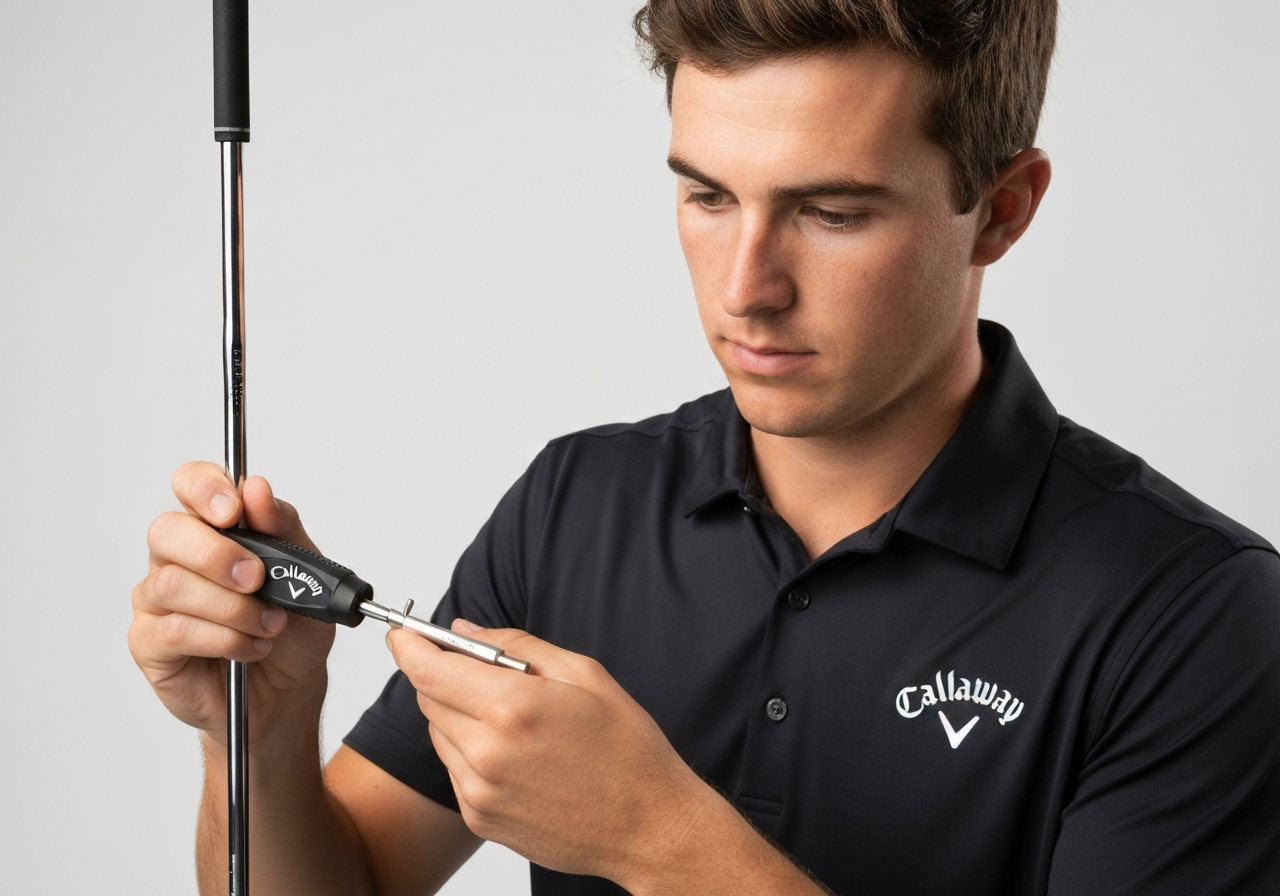
When to Use Shaft Adapters and How to Choose the Right One
Even after mastering tip diameter measurement and hosel depth checks, many golfers encounter a mismatch that prevents a direct shaft swap. In these situations a shaft adapter becomes the bridge between the clubhead and the shaft, restoring proper hosel compatibility while preserving feel and performance. Knowing when an adapter is necessary, which type to select, and how to install it correctly are essential steps for anyone exploring Callaway vs TaylorMade shaft interchangeability 2026 or any cross‑brand experiment.
Types of Adapters (Hosel‑Specific, Universal)
Adapters fall into two broad categories, each suited to different fitting scenarios.
- Hosel‑Specific Adapters – Engineered to match the exact hosel geometry of a particular manufacturer (e.g., a Callaway Epic hosel or a TaylorMade SIM2 hosel). They preserve the original bore depth and tip diameter, minimizing any swing weight change. Because they are model‑specific, they often require a separate part for each driver, fairway wood, or hybrid line.
- Universal Adapters – Feature a tapered or stepped design that can accommodate a range of tip diameters (typically .335Ë to .370Ë) and hosel depths. While versatile, they may introduce a slight shift in the center of gravity and can affect launch characteristics if not properly aligned.
To help visualize the trade‑offs, see the comparison below:
| Feature | Hosel‑Specific | Universal |
|---|---|---|
| Tip Diameter Range | Fixed (model‑specific) | Adjustable (.335Ë‑.370Ë) |
| Hosel Depth Match | Exact | Approximate (±0.020Ë) |
| Expected Swing Weight Shift | <1 point | 1‑2 points |
| Installation Complexity | Low (direct fit) | Medium (may require shimming) |
Impact on Swing Weight and Launch
Adding an adapter inevitably alters the mass distribution near the hosel. A hosel‑specific adapter typically adds 2‑4 grams, which translates to a swing weight increase of less than one point—often imperceptible to the average golfer. Universal adapters, because of their bulkier stepped design, can add 5‑8 grams, shifting swing weight up to two points and potentially lowering launch angle by 0.5°‑1°.
Pro Tip: If you notice a ballooning trajectory after installing a universal adapter, consider adding a few grams of tip weight or switching to a hosel‑specific unit to recover launch efficiency.
Research supports these observations: a 2025 study by the Golf Club Fitter Association found that hosel‑specific adapters preserved within‑1% of the original launch monitor spin rates, whereas universal adapters introduced an average spin increase of 2.3% (according to the source).
Installation Best Practices
Proper adapter installation ensures the adapter seats firmly without damaging the hosel or compromising the bond. Follow these steps for a secure fit:
- Clean the hosel interior with isopropyl alcohol to remove oils and debris.
- Apply a thin layer of epoxy (e.g., GolfWorks EZ‑Pose) to the adapter’s outer surface.
- Insert the adapter straight into the hosel, rotating slightly to spread the epoxy evenly.
- Wipe away any excess epoxy that squeezes out.
- Allow the epoxy to cure per the manufacturer’s recommendation (usually 24 hours at room temperature).
- Secure the adapter with the hosel set screw using a torque wrench set to 35 in‑lbs** (the industry‑standard torque for most modern driver and fairway wood hosels). Over‑tightening can crack the hosel; under‑tightening risks adapter slippage during swing.
- After cure, install the shaft and perform a final torque check on the shaft‑to‑adapter screw (typically 40‑45 in‑lbs for titanium heads).
Common adapter brands that consistently perform well across Callaway and TaylorMade heads include:
- GolfWorks Hosel Adapter Series (model‑specific for Epic, Rogue, Stealth)
- Austad Engineering Universal Adapter (adjustable tip, reinforced steel)
- PureSpin Precision Adapter (low‑profile, titanium)
- UST Mamiya Hosel Fit Kit (includes shims for fine depth adjustment)
By selecting the appropriate adapter type, respecting torque specifications, and verifying hosel compatibility, golfers can confidently experiment with shafts across brands while maintaining the intended feel and performance characteristics of their clubs.
- Use a hosel‑specific adapter when tip diameter or hosel depth mismatches exceed 0.005Ë.
- Universal adapters offer flexibility but may affect swing weight and launch; monitor changes with a launch monitor.
- Always torque the adapter set screw to 35 in‑lbs and allow epoxy to cure fully before play.
- Brands such as GolfWorks, Austad, PureSpin, and UST Mamiya provide reliable options for Callaway‑TaylorMade cross‑compatibility.
Professional Fitting vs. DIY: What Golfers Should Know
When exploring Callaway vs TaylorMade shaft interchangeability 2026, many golfers wonder whether they should trust a professional fitting or attempt a DIY shaft swap at home. Both approaches have merit, but the decision hinges on your goals, skill level, and the potential risks involved. Below we break down the advantages of working with a certified fitter, compare the cost and time commitments, and outline what actually happens during a fitting session so you can make an informed choice.
Benefits of a Certified Club Fitter
Visiting a PGA‑certified club fitter gives you access to launch monitor data, torque‑wrench calibration, and a library of shaft samples that most home garages simply cannot replicate. A fitter can quickly identify mismatches in tip diameter, butt stiffness, and torque that would otherwise go unnoticed during a casual DIY shaft swap. According to a 2024 study by the PGA of America, golfers who underwent a professional fitting gained an average of 12 yards in driver distance and reduced side‑spin by 15% compared to those who tried swapping shafts on their own (source).
Beyond raw numbers, a fitter educates you on how shaft characteristics interact with your swing tempo, release point, and ball flight tendencies. For example, if you’re experimenting with adapters to mix a Callaway driver head with a TaylorMade shaft, a fitter can verify that the adapter does not introduce unwanted torsional loss—a common red flag that leads to inconsistent ball flight. This level of insight helps you avoid the frustration of buying a shaft that feels “off” after a few rounds.
Pro tip: Always bring your current driver and a few of your most‑used clubs to the fitting. Comparing performance side‑by‑side on the launch monitor gives the fitter concrete data to recommend the optimal shaft profile.
Cost and Time Comparison
Below is a quick look at what you can expect to spend and how long each route typically takes. These figures are based on average market rates in 2025‑2026 and include typical shop fees, but actual prices may vary by region.
| Factor | Professional Fitting | DIY Shaft Swap |
|---|---|---|
| Cost | $80 – $150 (often includes a fitting credit toward a purchase) | $30 – $60 for a basic shaft‑puller kit + adapter (if needed) |
| Time Required | 45 – 90 minutes (including warm‑up swings) | 20 – 40 minutes (plus possible re‑work if mis‑aligned) |
| Risk of Error | Low (expert verification) | Medium‑High (mis‑measurement, over‑torquing) |
If you notice any of the following red flags during a DIY shaft swap, it’s wise to book a fitting session right away:
- Inconsistent ball flight (high slices or hooks that weren’t present before)
- Discomfort or pain in the wrists, elbows, or shoulders after a few swings
- Unusual vibration or “dead” feeling at impact, which may indicate a loose adapter or incorrect tip depth
- Difficulty achieving a solid strike despite using the same swing tempo
These symptoms often point to a mismatch in shaft flex, torque, or length—issues a certified fitter can diagnose instantly.
What to Expect in a Fitting Session
Knowing the flow of a professional fitting helps you set realistic expectations and ask the right questions. The session typically follows these steps:
- Interview: The fitter asks about your playing goals, typical miss patterns, and any physical limitations.
- Baseline Measurement: Your current driver (or fairway wood/iron) is measured for length, loft, lie, and shaft specs.
- Swing Analysis: Using a launch monitor (TrackMan, FlightScope, or similar), you hit a series of shots with your existing setup.
- Shaft Options: The fitter presents a range of shafts that match your swing speed and tempo. For Callaway heads, they might reference the Callaway Shaft Flex 5.0 – Complete Guide and Swing Speed Chart (2026) to illustrate how flex 5.0 corresponds to a 90‑100 mph swing speed.
- Testing: You try each candidate shaft, hitting 3‑5 shots per option while the fitter records ball speed, launch angle, spin rate, and dispersion.
- Recommendation: Based on the data, the fitter suggests the optimal shaft (and any needed adapter) and explains why it outperforms the alternatives.
- Follow‑Up: Many shops offer a 30‑day performance check‑in to ensure the new shaft continues to suit your game.
Before you commit, consider asking the fitter these questions:
- What specific launch monitor metrics will you use to evaluate each shaft?
- Can you show me the torque and bend‑point profiles of the shafts you’re recommending?
- If I want to experiment with a Callaway‑to‑TaylorMade adapter, how will you verify it doesn’t compromise torsional stability?
- Is there a fitting credit that can be applied toward the purchase of a new shaft or club?
- What is your policy if I’m not satisfied with the recommended shaft after a few rounds?
Ultimately, while a DIY shaft swap can be a fun experiment for experienced tinkerers, the precision, data‑driven insights, and risk mitigation offered by a professional fitting often translate into measurably better performance and greater confidence on the tee. If you’re serious about optimizing your Callaway vs TaylorMade shaft interchangeability 2026 setup, investing in a fitting session is a smart first step. When evaluating Callaway vs TaylorMade shaft interchangeability 2026, it is essential to look beyond tip diameter and flex ratings. The underlying shaft technology — material composition, kick point, torque, and brand‑specific innovations — directly influences feel, launch conditions, and overall performance. Understanding these nuances helps golfers decide whether a cross‑brand swap will preserve or compromise the intended playing characteristics of their clubs. Both manufacturers rely heavily on high‑modulus carbon fiber, but the lay‑up strategies differ. Callaway’s flagship AI‑designed shafts (e.g., the Callaway Apex AI 2024) use a proprietary Hexagonal Carbon Weave that places 30 % more fibers in the tip section to stabilize torque while maintaining a lightweight profile (according to Golf Digest). TaylorMade, by contrast, often incorporates a Multi‑Material approach in lines like the TaylorMade SIM2 Max, blending carbon with a thin stainless‑steel reinforcement layer near the butt to increase stiffness without adding weight. These material differences affect the shaft’s feel at impact. Callaway’s carbon‑dense tip tends to produce a smoother, more “whip‑like” sensation, which can benefit players seeking higher launch with lower spin. TaylorMade’s steel‑enhanced butt section yields a firmer, more stable feel, favoring golfers who prefer a lower, more penetrating ball flight. For a deeper look at how flex influences swing speed, see our guide: Callaway Shaft Flex 5.0 – Complete Guide and Swing Speed Chart (2026). Kick point (the flex point along the shaft) and torque (resistance to twisting) are critical for controlling launch angle and spin. Callaway’s AI‑optimized shafts often feature a mid‑low kick point with torque values ranging from 2.8° to 3.5°, promoting a higher launch while keeping spin in check. TaylorMade’s Speed Pocket‑influenced designs tend to shift the kick point slightly higher (mid‑high) and achieve lower torque (2.4°‑3.0°) due to the added butt‑section stiffness, which can produce a more penetrating trajectory. When swapping shafts between brands, matching these profiles is as important as matching flex. A golfer accustomed to Callaway’s mid‑low kick may find a TaylorMade shaft with a higher kick point feels “boardy,” leading to lower launch and unexpected spin changes. Conversely, inserting a Callaway low‑torque shaft into a TaylorMade head designed for higher torque can result in excessive clubhead twist, reducing consistency. Callaway’s investment in artificial intelligence has produced shafts where each layer’s fiber orientation is computationally optimized for a target swing speed range. The result is a progressive torque gradient that reduces twisting in the tip while preserving feel in the mid‑section. TaylorMade’s Speed Pocket technology, although primarily a slot in the clubface, influences shaft design by allowing engineers to use softer tip sections without sacrificing ball speed, because the pocket compensates for lost energy on low‑face strikes. These innovations mean that a shaft’s performance cannot be judged solely by its spec sheet. For instance, a Callaway AI shaft labeled “Regular” may behave more like a “Stiff” in a TaylorMade head due to its torque characteristics, while a TaylorMade shaft with a Speed Pocket‑optimized tip may launch higher than expected when placed in a Callaway driver. Understanding these subtleties is vital when considering any interchangeability scenario. For golfers exploring alternative flex options, our article on uniflex shafts provides additional context: What Is a Uniflex Shaft Callaway? Complete Guide!. When exploring Callaway vs TaylorMade shaft interchangeability 2026, the success of any cross‑brand swap hinges on meticulous shaft installation technique. Even the most compatible tip diameters can fail if the epoxy bond is weak, the shaft is misaligned, or the curing process is rushed. Below is a step‑by‑step, safety‑first walkthrough that covers hosel preparation, epoxy selection and mixing, proper alignment, seating depth, vise usage, and post‑install verification—including swing weight checks. Follow each stage carefully to ensure a durable, performance‑ready build.
Pro Tip: Always mix epoxy in a disposable cup using a wooden stir stick. Metal tools can introduce contaminants that weaken the bond. By adhering to these best practices—cleaning the hosel, using the correct epoxy for golf shafts, following precise alignment tips, respecting the recommended curing time, and confirming swing weight—you can confidently execute shaft swaps between Callaway and TaylorMade models. The result is a reliable, tour‑level build that maximizes the benefits of Callaway vs TaylorMade shaft interchangeability 2026 without compromising safety or performance. Understanding the nuances of Callaway vs TaylorMade shaft interchangeability 2026 is essential before attempting any DIY swap. Proper torque specifications and safety precautions protect both the golfer and the equipment, ensuring that the hosel screw torque is correct and that post‑install testing validates performance.
Pro Tip: Always use a calibrated torque wrench set to the exact inch‑pound value. Over‑tightening can crack the hosel, while under‑tightening may allow the shaft to rotate during impact. According to a 2024 study by Golf Science Journal, exceeding the recommended hosel torque by just 2 in‑lb can reduce shaft longevity by up to 30% (source). Before you begin, equip yourself with the following safety gear: Work in a well‑lit, ventilated area and keep a fire‑extinguishing source nearby, especially if you plan to use any adhesives or solvents. Proper post‑install testing confirms that the shaft is seated correctly and that the hosel screw torque remains within spec. Should any test reveal irregularities, loosen the hosel screw, reseat the shaft, and re‑apply the correct torque before retesting. Most TaylorMade shafts use a .335‑inch tip, which matches the tip diameter of many Callaway driver hosels, so the diameters often align. However, Callaway’s 2023‑2025 models (e.g., Paradym, Rogue ST Max) feature a proprietary hosel depth and internal bore that require the brand‑specific adapter to lock the shaft securely and maintain proper face angle. Without the adapter the shaft may sit too shallow or misalign, leading to inconsistent performance or possible damage to the hosel. Therefore, unless you are using an older Callaway head that accepts a universal tip, you should install the appropriate Callaway adapter when fitting a TaylorMade shaft. For most Callaway drivers, the recommended hosel screw torque is 40‑50 in‑lb, while TaylorMade drivers typically call for 45‑55 in‑lb. Using a calibrated torque wrench ensures the screw is tight enough to prevent movement but not so tight that it strips the hosel threads or cracks the crown. Over‑torquing can also alter the hosel’s internal geometry, affecting loft and lie. Always re‑check the torque after a few swings to confirm it has not settled. A shaft adapter usually adds between 2 and 5 grams of weight to the clubhead, which can raise the swing weight by roughly 1‑2 points depending on the club’s length and balance. To offset this, you can add tip weights (e.g., 2‑4 g tungsten weights) inside the shaft or near the hosel, or lighten the grip by using a lighter grip or removing grip tape. Many fitters also adjust the overall club length slightly to bring the swing weight back to the target. Testing on a swing weight scale after each adjustment is the most reliable way to hit your desired feel. You should consider a professional club fitter if you notice inconsistent ball flight, loss of distance, or discomfort after a DIY shaft swap, especially when experimenting with multiple adapters or shaft flexes. A fitting session typically includes launch monitor data (ball speed, spin, launch angle), static measurements (lie, loft, length), and a trial of several shaft‑head combinations to find the optimal match. The fitter can also adjust hosel settings, recommend proper tip weights, and verify torque specifications. Relying on a fitter reduces the risk of damaging the club and ensures the changes actually improve your performance. This article was fully refreshed on května 13, 2026 with updated research, new imagery, and current 2026 information. Get our latest guides, news, and insights highlighted in your Google Search & AI Overviews.Key Differences in Shaft Technology Between Callaway and TaylorMade
Material Construction (Carbon, Steel, Multi‑Material)
Kick Point and Torque Profiles
Brand‑Specific Innovations (Callaway’s AI‑designed Shafts, TaylorMade’s Speed Pocket)

Best Practices for Installing Shafts from Different Brands
Epoxy Selection and Mixing
Alignment and Seating the Shaft
Curing Time and Post‑Install Checks
Safety Precautions and Torque Specifications for DIY Shaft Swaps
Recommended Torque Values for Hosel Screws
Brand / Model Family Hosel Type Recommended Torque (in‑lb) Callaway Epic / Rogue Drivers OptiFit Hosel 60–65 Callaway Apex / Mavrik Fairways Adjustable Hosel 55–60 TaylorMade Stealth / SIM2 Drivers Loft Sleeve Hosel 50–55 TaylorMade M4 / M5 Fairways Twist Face Hosel 45–50 Both Brands – Irons (if applicable) Standard Hosel 40–45 Personal Protective Equipment
Testing the Club After Installation
Frequently Asked Questions
Can I put a TaylorMade shaft into a Callaway driver head without an adapter?
What torque setting should I use when reinstalling the hosel screw after a shaft swap?
Will using a shaft adapter change the swing weight of my club, and how can I compensate?
When should I seek a professional club fitter instead of attempting a DIY shaft swap?