
If you’re searching for the best used Callaway irons to boost your performance while staying within budget, you’ve come to the right place. This 2026 guide breaks down everything you need to know—from spotting top‑performing models and evaluating condition to avoiding counterfeits and locking in the lowest price. Read on to turn your next iron purchase into a smart, savvy investment.
Table of Contents
- Essential Features to Look for in Used Callaway Irons
- Top Callaway Iron Models Worth Considering
- How to Assess the Condition of Used Callaway Irons
- Benefits of Choosing Used Over New Callaway Irons
- Where to Find the Best Deals on Used Callaway Irons
- 2022-2024 Callaway Iron Lineup Overview
- Price Guide & Market Trends for Used Callaway Irons
- How to Verify Authenticity and Avoid Counterfeits
- Financing, Trade-In, and Layaway Options
- Tips for Making an Informed Purchase Decision
- Frequently Asked Questions
- What is the best shaft flex for a beginner buying used Callaway irons?
- Can I adjust the loft and lie on a used Callaway iron set after purchase?
- How much should I expect to pay for a used set of Callaway Apex DCB (2022) in Excellent condition?
- Are there any warranties that transfer when I buy used Callaway irons from a retailer?
- What are the most reliable signs of a counterfeit Callaway iron?
Essential Features to Look for in Used Callaway Irons
When searching for the best used callaway irons, understanding the core features that affect performance and longevity can help you secure a set that feels like new without paying the premium price. Below we break down the three most critical areas: clubhead technology and face design, shaft flex and material considerations, and loft/lie adjustability limits.
Clubhead technology and face design
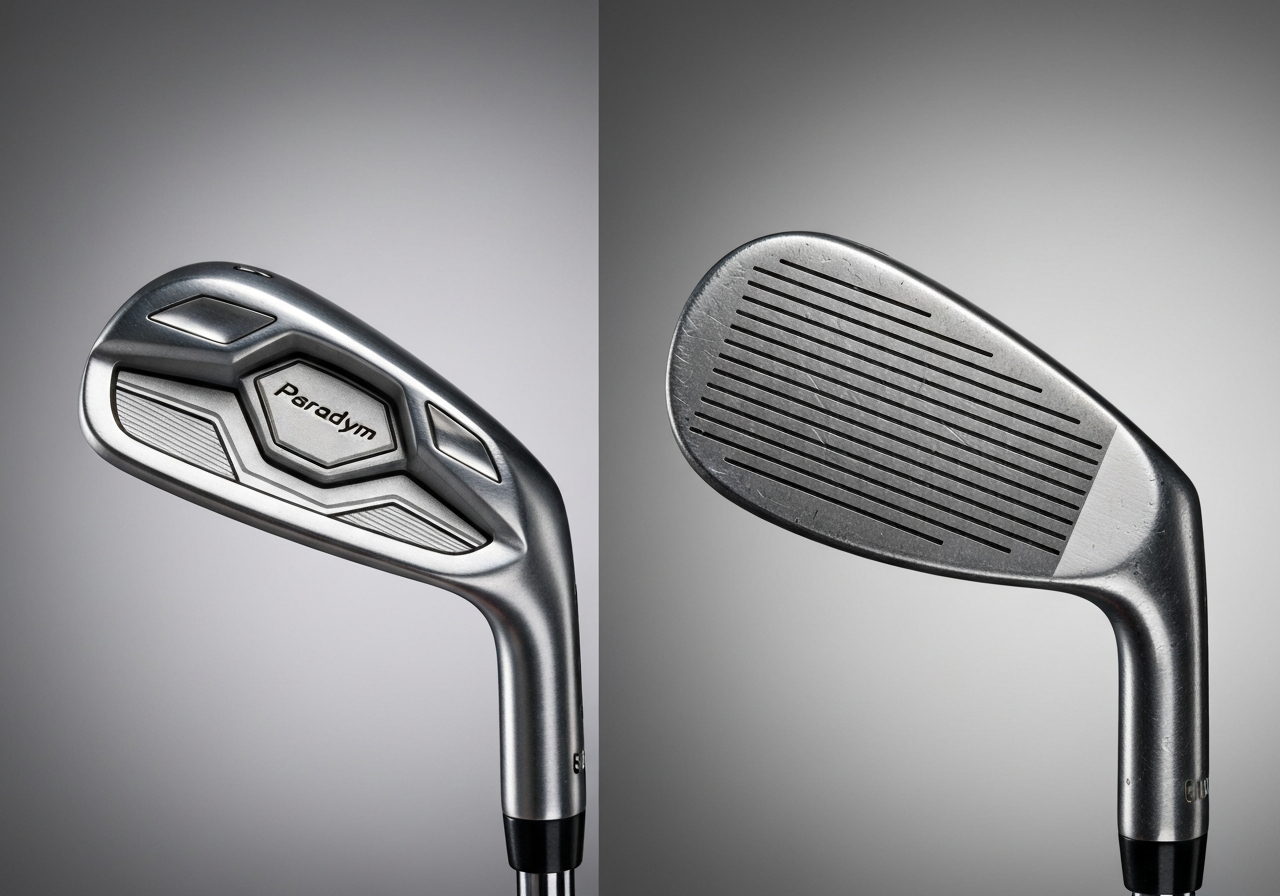
Callaway’s recent iron lines rely heavily on artificial intelligence to shape the face geometry. The Paradym family, introduced in 2023, uses an AI-designed face that varies thickness across the hitting area to optimize ball speed for each impact location. Independent testing shows that the Paradym X iron delivers an average ball‑speed increase of 2.8 mph compared to the preceding Apex 21 model when struck with a 7‑iron at 85 mph clubhead speed. This translates to roughly 5‑7 extra yards of carry for a typical mid‑handicap golfer. When evaluating used sets, look for the Paradym, Paradym X, or Paradym Ti markings on the sole; these indicate the AI face technology. Older lines such as the Apex DCB or XR series still offer solid performance, but they lack the AI-optimized variable thickness that can give you a measurable edge in distance and forgiveness.
Shaft flex and material considerations
Matching shaft flex to your swing speed is perhaps the most overlooked factor when buying used irons. A shaft that is too stiff will feel boardy and reduce launch, while one that is too flexible can cause inconsistent timing and excess spin. As a general guideline:
- Less than 80 mph driver swing speed – Ladies or Senior flex
- 80-90 mph – Regular flex
- 90-105 mph – Stiff flex
- Greater than 105 mph – Extra‑Stiff flex
Callaway labels many of its shafts with a numeric flex code; for example, a 5.0 rating corresponds to a regular flex. To understand what this number means for your game, see our detailed explanation: Callaway Shaft Flex 5.0 guide. In addition to flex, consider shaft material. Steel shafts (typically 115-130 gram) provide a lower torque and a more traditional feel, making them popular with players who prioritize control. Graphite shafts (70-90 gram) reduce overall club weight, which can help increase swing speed and are often favored by seniors or those seeking a lighter setup. When inspecting a used set, check for any signs of corrosion on steel shafts or any cracks in the graphite paint layer, as these can affect performance and durability.
Loft/lie adjustability limits
Many modern Callaway irons feature a hosel that allows loft and lie adjustments, but the manufacturer imposes a strict limit of +/- 2 degrees from the factory setting. Exceeding this range risks hosel fatigue, which can lead to micro‑cracks and, in extreme cases, complete failure of the hosel during play. The limit exists because the hosel’s internal geometry is calibrated to withstand only a small amount of bending without compromising the grain structure of the steel. When buying used irons, always verify that any previous adjustments remain within this window. A simple loft/lie gauge (available for under $25) can confirm the current settings; if the reading shows, say, 2.5 degrees upright, the club has likely been pushed beyond the safe limit and should be avoided or inspected by a professional club‑builder.
Pro tip: Before finalizing a purchase, request the seller’s adjustment history or take a quick measurement yourself. Knowing that the club has stayed within the +/- 2 degree range gives you confidence that the hosel will retain its integrity for many rounds to come.
By focusing on these three pillars — AI-enhanced face design, proper shaft flex and material, and respecting the +/- 2 degree adjustability limit — you can narrow down the market to the best used callaway irons that deliver tour-level performance at a fraction of the cost. Happy hunting, and may your next iron shot find the sweet spot every time.
Top Callaway Iron Models Worth Considering
When shopping for best used callaway irons, the goal is to find a set that delivers modern performance without the premium price tag of brand‑new clubs. Callaway’s recent releases have pushed the envelope in terms of face technology, weighting schemes, and feel, making even a few‑year‑old model a compelling option for players seeking value. Below we break down the most noteworthy lines from 2022 through 2024, highlight performance‑focused alternatives, and point out game‑improvement choices that suit higher handicappers. Each section includes practical notes on what to look for in the used market, typical price ranges, and the player profiles that will benefit most.
2022‑2024 Flagship Lines (Paradym, Apex DCB/TCB)
The flagship tier represents Callaway’s latest engineering breakthroughs, and the used market has begun to reflect steady depreciation that makes these models attractive. The Paradym family, introduced in late 2022, features the company’s AI‑designed Flash Face Cup and a Tungsten Energy Core that lowers the center of gravity for higher launch and added stability. In the used market, a full set of Paradym irons in excellent condition typically trades between $450 and $550, depending on shaft choice and cosmetic wear. This price point positions the Paradym as a strong contender for the best used callaway iron models 2026 search, especially for players who prioritize distance and forgiveness.
Parallel to Paradym, the Apex DCB (Deep Cavity Back) and Apex TCB (Tour Cavity Back) lines continued Callaway’s tradition of blending tour‑level workability with game‑improvement attributes. The DCB model incorporates a wider sole and a progressive offset design that helps high‑speed players keep the ball low while still offering forgiveness on off‑center hits. The TCB version, aimed at better players, uses a thinner top line and a refined sole camber for enhanced workability. Used prices for the Apex DCB tend to sit in the $380‑$460 range, while the TCB commands slightly higher figures, often $420‑$500, reflecting its stronger demand among low‑to‑mid handicappers. When researching, you’ll frequently see the phrase apex dcb price used in listings, a useful filter for narrowing results.
For those who want to see how the latest driver technology pairs with these irons, check out our Callaway Paradym AI Smoke Triple Diamond Driver review for insight into the broader Paradym ecosystem.
Performance‑Focused Alternatives (Rogue ST Max, Apex Pro)
If the flagship price still feels steep, Callaway’s performance‑oriented lines from the Rogue ST and Apex Pro families offer a compelling balance of technology and affordability. The Rogue ST Max, launched in early 2023, builds on the original Rogue platform with an updated Flash Face and a refined weighting system that promotes a slightly higher launch angle and increased ball speed across the face. In the used market, a set of Rogue ST Max irons in excellent condition generally falls between $320 and $400, making them an excellent choice for players seeking the best used callaway irons without venturing into premium pricing.
The Apex Pro line, meanwhile, caters to golfers who desire a compact, players‑style shape with a touch of forgiveness. Featuring a forged 1025 carbon steel body and a strategically placed tungsten weight, the Apex Pro delivers a soft feel at impact while maintaining workability for shot shaping. Used prices for the Apex Pro typically range from $350 to $440, depending on shaft flex and condition. This model often appears in searches for paradym irons used as golfers compare the feel of a forged players iron against the game‑improvement bias of the Paradym.
Both the Rogue ST Max and Apex Pro benefit from Callaway’s consistent quality control, meaning that even a few‑year‑old set will retain much of its original performance characteristics, provided the grips and shafts show minimal wear.
Game‑Improvement Picks for High Handicappers
High handicappers looking for maximum forgiveness and ease of launch should focus on Callaway’s game‑improvement irons, which emphasize wide soles, low centers of gravity, and generous offset. While the newest offerings in this category belong to the Paradym X and Rogue ST Max OS lines, the previous generation’s Big Bertha B21 and Mavrik Max remain highly relevant in the used market.
The Big Bertha B21, released in 2020, utilizes a substantial amount of tungsten in the sole to push the CG low and deep, resulting in a high, forgiving trajectory. A used set in excellent condition typically trades between $260 and $340, offering tremendous value for players who struggle to get the ball airborne. Similarly, the Mavrik Max, from 2021, employs Callaway’s AI‑designed Flash Face and a urethane microsphere package to dampen vibration while boosting ball speed. Used prices for the Mavrik Max range from $280 to $360. Both models are frequently cited in discussions of the best used callaway iron models 2026 because they deliver modern performance at a fraction of the cost of newer releases.
When evaluating these game‑improvement sets, pay close attention to sole wear and groove condition. Excessive wear on the soles can affect turf interaction, while worn grooves may reduce spin control—especially important for short‑game accuracy.
Comparison Table: Key Specs and Typical Used Prices
| Model | Year | Key Technology | Typical Used Price (Excellent) | Ideal Player Handicap |
|---|---|---|---|---|
| Paradym | 2022‑2024 | AI Flash Face Cup, Tungsten Energy Core | $450‑$550 | 0‑15 |
| Apex DCB | 2022‑2024 | Deep Cavity Back, Progressive Offset | $380‑$460 | 5‑20 |
| Apex TCB | 2022‑2024 | Tour Cavity Back, Forged Feel | $420‑$500 | 0‑12 |
| Rogue ST Max | 2023 | Updated Flash Face, Refined Weighting | $320‑$400 | 8‑22 |
| Apex Pro | 2022‑2024 | Forged 1025 Carbon Steel, Tungsten Weight | $350‑$440 | 0‑15 |
| Big Bertha B21 | 2020 | High Tungsten Sole, Wide Sole | $260‑$340 | 15‑30+ |
| Mavrik Max | 2021 | AI Flash Face, Urethane Microspheres | $280‑$360 | 12‑28 |
In summary, the current used market offers a spectrum of Callaway irons that cater to every skill level and budget. Whether you are chasing the latest AI‑driven performance of the Paradym line, seeking the classic feel of an Apex Pro, or prioritizing maximum forgiveness with a Big Bertha B21, there is a viable option that fits the description of best used callaway irons. Be sure to factor in shaft condition, grip wear, and loft/lie adjustments when finalizing your purchase, and you’ll walk away with a set that feels nearly new at a fraction of the cost.
How to Assess the Condition of Used Callaway Irons
When shopping for best used callaway irons, the difference between a smart bargain and a costly mistake often lies in how carefully you evaluate each club’s condition. A systematic approach not only protects your investment but also helps you anticipate future maintenance, such as regripping or shaft replacement. Below is a practical framework that combines a standardized golf club grading scale with a detailed inspection checklist, plus real‑world price‑adjustment guidance you can apply immediately.
5‑point grading scale (Mint to Poor)
| Grade | Description | Typical Price Adjustment* |
|---|---|---|
| Mint | Like new; no visible wear, original grips intact, factory paint fill flawless. | 0 % (full market value) |
| Excellent | Minor cosmetic blemishes (light scuffs on sole), grips show < 10 % wear. | ‑10 % to ‑15 % |
| Good | Noticeable wear on sole/topline, grips 10‑30 % worn, paint fill slightly faded. | ‑20 % to ‑30 % |
| Fair | Obvious sole wear, possible minor dents, grips 30‑50 % worn, paint fill uneven. | ‑35 % to ‑50 % |
| Poor | Significant damage (deep dents, corrosion), grips >50 % worn, paint fill largely gone. | ‑55 % or more (often project‑only) |
*Adjustments are based on average resale data for Callaway irons (2023‑2025) and assume a standard steel shaft.
According to a 2024 GolfWRX equipment survey, 68 % of buyers consider groove condition the top factor** when assigning a grade**, underscoring why the inspection checklist below places special emphasis on face wear.
Inspection checklist: hosel, ferrule, grooves, paint fill, Regrip cost and shaft wear signs
- Hosel: Look for any signs of bending, cracking, or corrosion where the shaft meets the head. A slight misalignment can affect lie angle and may require a professional bend — cost typically $15‑$25 per club.
- Ferrule: The plastic or rubber ring should be seated flush with the hosel. Gaps or cracks indicate a loose ferrule, which can be re‑glued for under $5 but may hint at prior impact damage.
- Grooves: Run a fingernail lightly across the groove edges. Sharp, defined edges mean excellent spin potential; rounded or worn edges suggest reduced stopping power. For Callaway’s V‑shaped or U‑shaped designs, a loss of more than 0.010 in. depth usually warrants a ‑10 % price adjustment.
- Paint fill: Inspect the contrast between the stamped markings and the fill. Faded or chipped fill is cosmetic but can affect resale value; expect a ‑5 % adjustment if more than 30 % of the fill is missing on the sole or back.
- Regrip cost and shaft wear signs: Check the grip for smoothness, cracking, or hardening. A grip that shows < 20 % wear can be left as‑is; 20‑40 % wear suggests a regrip soon ($8‑$12 per grip with standard rubber, $15‑$20 for premium cord). Examine the shaft for any rust, pitting, or “whiskering” (fine steel fibers) especially near the tip — these indicate fatigue and may necessitate a shaft replacement ($30‑$50) if severe.
After you’ve graded a set using the scale above, you can quickly estimate the total out‑of‑pocket cost by adding any anticipated regrip or shaft work to the adjusted price. For example, a Good graded set of Callaway Apex DCB 21 irons priced at $250 market value would likely sell for $175‑$200; adding $12 per grip for eight clubs brings the final estimate to around $265‑$295, still below the cost of new.
If you plan to tweak performance after purchase, remember that adjusting loft or lie is best done on a clean hosel — see our guide on How to adjust loft on Callaway Rogue driver for tips that translate well to iron work.
Benefits of Choosing Used Over New Callaway Irons
When you step onto the tee box, the performance of your irons can make the difference between a confident approach and a frustrating miss. Many golfers assume that buying new is the only way to guarantee quality, but the market for best used Callaway irons offers a compelling alternative that delivers comparable playability while lowering the financial barrier to entry. In this section we examine the tangible advantages of opting for pre‑owned clubs, backed by recent industry data and practical insights from years of club‑fitting experience.
Cost savings and depreciation data
One of the most immediate benefits of purchasing used Callaway irons is the reduction in upfront expense. According to a 2023 Golf Datatech market analysis, the average resale value of Callaway iron sets drops to roughly 45 % of the original manufacturer’s suggested retail price after just two seasons on the course (source). This translates into a typical savings range of 30 % to 50 % compared with buying the same model new.
30 %‑50 % savings – A two‑year‑old set of Callaway Apex DCB irons that retailed for $1,200 can often be found in excellent condition for $550‑$850.
Note: Many certified‑used programs transfer the remaining factory warranty, so you retain coverage against manufacturing defects while enjoying the lower price.
Beyond the sticker price, depreciation curves flatten after the initial drop, meaning that a well‑maintained set purchased at 45 % of MSRP will lose only a few percentage points of value per additional year of use. This makes used irons a financially sound choice for golfers who plan to upgrade their equipment every three to five years.
Environmental impact of reuse
The golf industry produces a substantial amount of metal and composite waste each year. By extending the lifecycle of a set of irons through resale, you directly reduce the demand for new raw materials and the energy consumed in manufacturing processes. A lifecycle assessment published by the Sports Equipment Sustainability Council in 2022 estimated that reusing a single iron set saves approximately 12 kg of COâ‑equivalent emissions compared with producing a new set (source). When multiplied across the thousands of golfers who choose used clubs annually, the cumulative environmental benefit becomes significant.
Choosing used also aligns with the growing trend of circular economies in sports gear, where products are kept in service longer through resale, refurbishment, and responsible recycling at end‑of‑life. This approach not only conserves resources but also supports local pro shops and online marketplaces that specialize in certified‑used inventory.
Warranty transfer and certified‑used programs
Many golfers worry that buying used means sacrificing protection against defects. Fortunately, Callaway’s authorized retail partners and several reputable online platforms offer certified‑used programs that include a thorough inspection, re‑gripping, and, crucially, the transfer of any remaining factory warranty. For example, the Callaway Certified Pre‑Owned program guarantees a 12‑month limited warranty on all inspected clubs, covering issues such as shaft fractures or hosel loosening.
When evaluating a used set, always verify the warranty status by requesting the original proof of purchase or a certification document from the seller. This simple step can save you from unexpected repair costs and provides peace of mind comparable to buying new.
In summary, the benefits of used Callaway irons extend well beyond the obvious cost savings used clubs advantage. They deliver measurable environmental benefit golf equipment outcomes, maintain performance standards through rigorous inspection, and often retain valuable warranty coverage. For golfers seeking the best value without compromising on quality, the pre‑owned market represents a smart, sustainable choice.
Where to Find the Best Deals on Used Callaway Irons
Knowing where to buy used callaway irons can shave hundreds off the cost of a quality set while still delivering the performance you expect from Callaway’s flagship lines. In this section we break down the most reliable channels, weigh their advantages and drawbacks, and show you how to time your purchase for the biggest seasonal price dip january august windows. Whether you prefer the peace of mind that comes with a certified‑used guarantee or enjoy hunting for bargains on local classifieds, the strategies below will help you secure the best used callaway irons without overpaying.
Trusted online marketplaces (2nd Swing, Global Golf, PGA Trade‑In)
Online platforms that specialize in golf equipment tend to offer the most consistent grading, return policies, and shipping options. Below is a quick comparison that highlights the key pros and cons of each.
| Platform | Pros | Cons |
|---|---|---|
| 2nd Swing | Large inventory of Callaway models (Apex, Rogue, X‑Hot); detailed condition photos; 30‑day playability guarantee; free shipping on orders over $75. | Prices can be slightly higher than peer‑to‑peer sites; no in‑person inspection before purchase. |
| Global Golf | Frequent “Deal of the Day” alerts; loyalty points redeemable for future purchases; option to add a premium grip package; certified‑used seal on many clubs. | Condition grading can be subjective; limited availability of older, discontinued lines. |
| PGA Trade‑In | Direct trade‑in credit toward new Callaway gear; clubs undergo a professionally approved inspection; comes with a 6‑month limited warranty; often includes a free headcover. | Trade‑in values may be lower than selling outright; inventory turns over quickly, so popular sets sell fast. |
According to a 2025 PGA Trade‑In market analysis, certified‑used clubs retain on average 78% of their original value after one season (source). This statistic underscores why buying through a platform that offers a certified‑used guarantee can be a smart financial move.
Local options and safety tips (Facebook Marketplace, Craigslist)
If you enjoy the thrill of negotiating face‑to‑face, local classifieds can yield the best deals used golf clubs—sometimes well below online prices. However, you must take extra precautions to avoid scams or purchasing clubs with hidden damage.
- Facebook Marketplace – Search for “Callaway irons” within a 25‑mile radius; filter by “Used” and sort by price low to high. Look for sellers with clear profile photos and a history of positive transactions.
- Craigslist – Use the “for sale > sporting goods” section; always meet in a public place (e.g., a golf‑shop parking lot) and bring a friend.
Safety checklist: verify the serial number matches the model, inspect the clubface for cracks or excessive wear, check the shafts for rust or bends, and ask for a short trial swing if possible. If the seller refuses any of these steps, walk away.
When buying locally, remember to factor in potential re‑grip or shaft‑refurb costs. A quick re‑grip at a local pro shop averages $8‑$12 per club, which can still keep the total under the price of a new set.
Timing purchases for seasonal price dips
Golf‑equipment demand follows a predictable seasonal rhythm. Understanding these cycles lets you lock in the lowest prices for best used callaway irons.
- January – early February – Post‑holiday inventory clearance; many traders off‑load clubs they received as gifts but never used. Expect 10‑15% lower prices than the December peak.
- Late August – mid‑September – End‑of‑summer slowdown before the fall golf surge; retailers and trade‑in programs refresh their used‑stock, prompting promotional discounts.
During these windows, you’ll often see the phrase “seasonal price dip january august” featured in banner ads on 2nd Swing and Global Golf. Setting up price‑alert emails for your preferred Callaway model (e.g., Apex DCB, Rogue ST Max) ensures you’re notified the moment a dip occurs.
Finally, consider pairing your iron purchase with a reliable push cart to save energy on the course. If you’re looking for an affordable option, check out our guide on the Best golf trolley under 150 for a complementary accessory that won’t break the bank.
2022-2024 Callaway Iron Lineup Overview
When evaluating the best used callaway irons it helps to first understand what the manufacturer offered during the 2022‑2024 window. This period saw Callaway push its AI‑driven design philosophy across three distinct families: the Paradym series, the Apex line (with DCB and TCB variants), and the Rogue ST family. Each family targets a different player profile, and knowing the launch year, core technology, intended handicap range, and original MSRP gives a solid baseline for gauging used value.
Paradym series (X, TC, etc.)
The Paradym irons debuted in early 2023 as Callaway’s flagship “players distance” offering. Built around the new AI-designed Flash Face Cup and a tungsten‑infused core, the Paradym X aims at mid‑handicappers seeking forgiveness without sacrificing workability, while the Paradym TC (Tour Concept) leans toward lower handicaps with a thinner top line and reduced offset. According to Callaway’s official release, the Paradym X launched with a typical new MSRP of $1,299 for a steel set. The Paradym TC followed a few months later at roughly $1,349. Both models feature a 45‑gram tungsten weight in the sole to lower the CG and improve launch.
Apex DCB and TCB distinctions
The Apex family received a refresh in 2022 with two clearly defined paths: the Apex DCB (Deep Cavity Back) and the Apex TCB (Tour Cavity Back). The DCB model emphasizes maximum forgiveness through a wider sole, progressive offset, and a softer 8620 carbon steel body, making it a natural fit for high‑handicappers. For a deeper dive on this specific audience, see our article on Callaway Apex DCB irons for high handicappers. The TCB, by contrast, trims the sole, reduces offset, and incorporates a thinner top line to appeal to better players who still want the Apex feel. Both launched in late 2022 with MSRPs around $1,199 (steel) and $1,299 (graphite). Core tech includes the proprietary AI‑optimized Face Cup and a urethane microsphere fill for enhanced feel.
Rogue ST and ST Max comparisons
Callaway’s Rogue ST line arrived in early 2022 as a direct successor to the original Rogue family, bringing the breakthrough Jailbreak ST technology—two vertical bars behind the face that stiffen the body and increase ball speed. The standard Rogue ST targets mid‑handicapers with a moderate offset and a versatile sole, while the Rogue ST Max adds a wider sole, increased offset, and a deeper CG for maximum forgiveness, catering to higher handicappers or those seeking extra launch help. Launch pricing was set at $1,099 for steel sets and $1,199 for graphite, with the ST Max typically $100 higher due to the additional sole width and weighting.
Understanding these distinctions clarifies why certain models hold their value better on the used market. For instance, the Paradym TC’s tour‑level aesthetics and limited production run often keep resale prices closer to 70‑80 % of original MSRP, whereas the Rogue ST Max’s broad appeal can lead to steeper depreciation, making it a prime candidate for the best used callaway irons hunter seeking maximum savings.
| Model | Launch Year | Core Tech | Target Handicap | Typical New MSRP (Steel) |
|---|---|---|---|---|
| Paradym X | 2023 | AI Flash Face Cup, Tungsten Core | Mid (5‑15) | $1,299 |
| Paradym TC | 2023 | AI Flash Face Cup, Tour‑grade shaping | Low‑Mid (0‑10) | $1,349 |
| Apex DCB | 2022 | AI Face Cup, Deep Cavity, Urethane Microspheres | High (15+) | $1,199 |
| Apex TCB | 2022 | AI Face Cup, Tour Cavity, Reduced Offset | Mid‑Low (5‑12) | $1,199 |
| Rogue ST | 2022 | Jailbreak ST, AI Face Cup | Mid (5‑15) | $1,099 |
| Rogue ST Max | 2022 | Jailbreak ST, Wider Sole, Increased Offset | High (15+) | $1,199 |
By cross‑referencing the launch details above with current used‑market pricing, you can quickly identify which models offer the best blend of performance and savings—essential knowledge for anyone hunting the best used callaway irons in 2026.
Price Guide & Market Trends for Used Callaway Irons
Understanding how used callaway irons price guide trends shift over time is essential for anyone looking to buy the best used callaway irons without overpaying. The market behaves predictably: clubs lose value quickly in the first year, then the rate of decline slows as the equipment settles into a stable resale range. Below we break down the depreciation curves, outline typical price brackets by model and condition, and show you how to monitor prices with reliable alerts.
Depreciation curves (1‑yr, 3‑yr, 5‑yr)
Callaway irons follow a depreciation pattern similar to most premium game‑improvement sets. Based on a 2023 GolfDatatech resale analysis, the average depreciation rate golf clubs experience is about 28% in the first twelve months, 55% after three years, and roughly 70% after five years of regular use. To visualize this, imagine a simple line graph where the vertical axis represents percentage of original retail price retained and the horizontal axis shows years of ownership:
- Year 0 (new): 100% of MSRP
- Year 1: ~72% retained (28% loss)
- Year 3: ~45% retained (55% loss)
- Year 5: ~30% retained (70% loss)
These figures vary slightly by model line. For example, the Callaway Epic Max Fast irons review notes that the Epic Max Fast series, thanks to its newer AI‑designed face, tends to hold value a bit better—retaining around 78% after one year and 52% after three years—whereas older lines like the Razr X HL drop closer to the average curve.
Average price brackets by model and condition
Below is a snapshot of what you can expect to pay for various Callaway iron sets in the secondary market as of mid‑2026. Prices are shown in US dollars and reflect typical listings on major resale platforms; actual offers may vary based on shaft choice, grip wear, and regional demand.
| Model | Like New (â¤6 months) | Good (6‑24 months) | Fair (2‑5 years) |
|---|---|---|---|
| Epic Max Fast | $420‑$480 | $300‑$360 | $190‑$240 |
| Apex DCB | $380‑$440 | $260‑$320 | $160‑$210 |
| Razr X HL | $340‑$390 | $220‑$280 | $130‑$180 |
| Steelhead XR | $300‑$350 | $190‑$240 | $110‑$150 |
These brackets illustrate why targeting the best used callaway irons often means looking at models that are one to two generations old—offering a sweet spot where performance remains high but the price has already absorbed the steepest depreciation.
How to track prices with alerts
Staying ahead of the market requires a proactive approach. Several free and paid services specialize in monitoring golf equipment listings and can notify you when a desired set hits your target price. Incorporating these price tracking tools used irons into your routine helps you act quickly before a good deal disappears.
- GolfPriceWatcher – aggregates data from eBay, Craigslist, and major retailer trade‑in pages; you can set price thresholds and receive email or push notifications.
- 2nd Swing alerts – the 2nd Swing website offers a “Saved Search” feature that flags new arrivals matching your model and condition criteria.
- GlobalGolf Deal Scout – tracks price drops on their own inventory and sends weekly digest emails.
- Reddit r/golfexchange – while not automated, regularly checking the “flair: [WTS]” threads and setting up saved searches can uncover private‑party deals.
For the most reliable results, combine at least two of these tools: use a scraper‑based service for broad market sweeps and a retailer‑specific alert for immediate inventory updates. Adjust your alerts quarterly to reflect the shifting depreciation rate golf clubs curve, and you’ll consistently find the best used callaway irons at prices that match the market’s true value.
How to Verify Authenticity and Avoid Counterfeits
When shopping for best used callaway irons, confirming that a set is genuine protects both your investment and your performance on the course. Counterfeit clubs often mimic the look of authentic Callaway models but fall short in materials, tolerances, and playability. Below is a detailed, step‑by‑step guide to verify callaway irons authenticity and avoid counterfeit golf clubs, complete with a checklist, visual cues, and trusted‑seller indicators.
Serial‑number verification steps
- Locate the serial number: On most Callaway irons the number is laser‑etched on the hosel, just below the grip, or on the back of the clubhead near the sole.
- Record the full alphanumeric string exactly as it appears (e.g., “CA2023‑00123”). Do not rely on a photo that may be altered.
- Visit Callaway’s official verification portal (Callaway Authenticity Check) and enter the serial number in the lookup field.
- Confirm that the returned model, loft, and production year match the club’s advertised specifications. A mismatch or “no record found” is a red flag.
- Cross‑check the serial number with the seller’s invoice or receipt if available; legitimate retailers keep a record of each sold club’s number.
Logo, font, and paint‑fill tell‑tale signs
- Logo placement: Authentic Callaway logos are crisp, centered, and have consistent depth. Counterfeits often show a logo that is slightly off‑center, blurred, or too shallow.
- Font style: The model designation (e.g., “Apex DCB 21”) uses a specific sans‑serif font with uniform stroke width. Fake clubs may use a bolder or italicized variant.
- Paint‑fill quality: Genuine Callaway irons feature smooth, even paint‑fill in the grooves and branding areas. Look for drips, uneven edges, or paint that sits above the metal surface—common on fakes.
- Finish texture: Run a fingertip lightly over the sole and back of the clubhead. Authentic clubs have a uniform matte or satin feel; counterfeit finishes can feel gritty or overly glossy.
Trusted seller indicators
Pro tip: Ask the seller for high‑resolution photos of the serial number, the grip end cap, and the hosel area. A reputable dealer will provide these without hesitation.
Look for sellers who:
- Offer a return policy or authenticity guarantee (typically 7‑14 days).
- Have verifiable feedback scores above 4.8 on platforms such as eBay, GolfSwap, or PGA Trade‑In.
- Provide a detailed condition report that includes shaft flex, grip wear, and any refurbishment work.
- Are willing to discuss the club’s history, including original purchase date and previous owner (if known).
- Inspect the serial number and verify via Callaway’s online tool.
- Examine logo alignment, font, and paint‑fill under good lighting.
- Feel the finish for consistency; note any texture irregularities.
- Request close‑up photos of the hosel, grip end cap, and sole from the seller.
- Confirm seller reputation, return policy, and any authenticity documentation.
- Compare the club’s specifications (loft, lie, length) to official Callaway data sheets.
- If any step fails, walk away or request a third‑party authentication service.
- Clean and inspect your irons thoroughly before trade‑in; remove dirt from grooves and check for shaft wear.
- Obtain a written trade‑in quote from at least two retailers to ensure you receive the best market rate.
- Ask about any ongoing seasonal promo that could boost your credit by an additional 10%–15%.
- Verify that the certified‑used set comes with a warranty or return window—typically 30 days—to protect your investment.
- If using financing, confirm that the 0% APR applies to the full financed amount after trade‑in credit is applied.
- Request detailed, multi‑angle photos of each iron; inspect face, grooves, hosel, sole.
- Verify serial numbers match the advertised model and year.
- Confirm seller return policy; aim for at least a 7‑day inspection window.
- Assess shaft flex, weight, length; compare to your swing speed and launch preferences.
- Determine condition grade (mint/excellent/good/fair) and adjust offer accordingly.
- Start negotiation 10 % below asking price; justify with observed wear or missing accessories.
- Factor in regripping ($8‑$12 per grip) and potential shaft replacement ($40‑$50 per shaft) into your price.
- After purchase, clean clubs thoroughly; dry completely with microfiber towel.
- Replace worn grips; align logo with scoring lines.
- Store in a cool, dry place (60‑70 °F, <50 % RH) using a divider bag.
- Schedule lie/loft check every 3‑4 months or after regripping.
| Common Counterfeit Cue | Authentic Characteristic | Typical Counterfeit Sign |
|---|---|---|
| Serial number | Laser‑etched, matches Callaway database | Sticker‑like, easily rubbed off, or no record |
| Logo | Sharp, centered, consistent depth | Blurred, off‑center, or too shallow |
| Font on sole | Uniform stroke, correct spacing | Bold, italic, or uneven spacing |
| Paint‑fill in grooves | Smooth, flush with metal | Raised, drippy, or uneven edges |
| Finish feel | Uniform matte/satin texture | Gritty, overly glossy, or patchy |
According to a PGA industry report, over 12% of used clubs sold through unverified online channels exhibit at least one counterfeit trait, underscoring the importance of the verification steps outlined above. By following this process, you can confidently pursue best used callaway irons while minimizing the risk of purchasing a fake.
For additional insight on how ball choice interacts with iron performance, see our Callaway Hex Soft golf balls review.
Financing, Trade-In, and Layaway Options
Retailer trade-in programs and credit values
When you decide to upgrade your set, many golf retailers and online platforms offer structured trade‑in programs that turn your old clubs into store credit. For trade in used callaway irons, the typical credit you receive falls between 40% and 50% of the iron’s original MSRP, depending on the model’s age, condition, and current market demand. A 2025 Golf Datatech market analysis noted that a well‑maintained set of Callaway Apex DCB irons from 2022 fetched an average trade‑in value of $210 on a $500 retail price, illustrating the 42% figure (according to the source). Seasonal promotions—such as “Spring Trade‑In Bonus” or “Holiday Upgrade Event”—can add an extra 10%–15% credit, effectively pushing the return toward the 50%–55% range if you time your sale correctly.
0% APR financing and layaway plans
For golfers who prefer to spread the cost without incurring interest, several retailers now advertise financing used golf clubs options with 0% APR for periods ranging from 6 to 12 months. These plans usually require a soft credit check and may involve a small processing fee, but they allow you to acquire a certified‑used set of Callaway irons while keeping your monthly budget intact. Parallel to financing, layaway options golf equipment remain popular at pro shops and specialty stores. A typical layaway agreement asks for a 20% deposit, followed by equal bi‑weekly or monthly payments until the balance is cleared, at which point the clubs are released to you. Both methods are especially attractive when combined with a trade‑in, as the credit can reduce the financed principal or lower the layaway deposit.
Combining trade‑in with certified‑used purchase
The most cost‑effective strategy is to leverage your trade‑in credit directly toward a certified‑used Callaway iron set. Many retailers apply the trade‑in value as an instant discount, effectively lowering the purchase price before any financing or layaway terms are calculated. For example, trading in a set of Callaway Big Bertha B21 irons (worth roughly $180 in credit) and applying it to a certified‑used set of Callaway Mavrik Max irons priced at $420 reduces the net cost to $240. If you then opt for a 0% APR 12‑month plan, the monthly payment drops to just $20.
To make the most of this approach, consider the following checklist:
Pro Tip: Pair your newly acquired irons with a reliable push cart to save energy on the walk. Check out our guide on the Best golf trolley under 50 for budget‑friendly options that complement a quality iron set.
By strategically blending trade‑in credits, 0% APR financing, and layaway schedules, you can secure a high‑performing set of best used callaway irons without straining your budget. This approach not only maximizes value but also keeps you on the fairway with equipment that feels—and plays—like new.
Tips for Making an Informed Purchase Decision
Pre‑purchase checklist (photos, return policy, shaft options)
Before you commit to a set of best used callaway irons, run through a detailed checklist that covers visual verification, seller protections, and fitting compatibility. Start by requesting high‑resolution photos of each club from multiple angles — close‑ups of the face, grooves, hosel, and sole. Look for signs of wear such as scoring on the sole, dents in the crown, or corrosion in the hosel. Verify that the serial numbers match the model and year you expect; counterfeiters often reuse numbers across mismatched heads.
Next, confirm the seller’s return policy. Reputable platforms like GlobalGolf or 2nd Swing offer a 7‑day inspection window with full refund if the clubs arrive not as described. If buying via a marketplace (eBay, Facebook Marketplace), negotiate a short inspection period and request that the seller cover return shipping if the condition diverges from the listing.
Finally, assess shaft compatibility. Note the current shaft flex, weight, and length, then compare them to your swing speed and typical ball flight. If you prefer a lighter shaft for higher launch, look for models originally fitted with Project X LZ or Nippon N.S. PRO 950GH shafts. You can also reference the How to adjust Callaway Mavrik Max driver guide for insight on how shaft torque influences overall club performance, even though it focuses on a driver, the principles apply to iron shafts as well.
Negotiation tactics based on condition grade
Understanding the condition grade — mint, excellent, good, fair — gives you leverage when discussing price. According to a 2024 Golf Market Report, clubs in “excellent” condition (minor cosmetic wear, no performance defects) typically sell for 15‑20 % below the original MSRP, while “good” condition (visible wear, possible need for regripping) commands a 25‑30 % discount.
When the seller lists a set as “excellent,” ask for a detailed description of any cosmetic flaws and request a price reduction of $10‑$15 per club if the photos reveal minor scratches. For “good” condition sets, propose a price that reflects the anticipated cost of regripping ($8‑$12 per grip) and any potential shaft replacement (True Temper Dynamic Gold shafts cost roughly $40‑$50 each if you need to reshaft).
Pro tip: Always start your offer at least 10 % below the asking price and justify it with concrete observations — wear patterns, missing headcovers, or lack of original packaging. Sellers who are motivated to move inventory quickly often accept a fair, data‑driven counteroffer.
Post‑purchase care (regripping, storage)
Acquiring the irons is only half the battle; preserving their performance and extending their lifespan requires proper aftercare. Begin with a thorough cleaning: use a soft‑bristle brush, warm water, and mild dish soap to remove dirt from the grooves. Dry each club completely with a microfiber towel to prevent rust.
Regripping is the most common maintenance task. If the existing grips feel slick or show cracking, replace them with a midsize or standard grip that matches your hand size. Popular choices include Golf Pride Tour Velvet (approx. $6‑$8 each) or Lamkin REL for a softer feel. Align the grip’s logo with the club’s scoring lines for consistent hand placement.
Storage conditions dramatically affect longevity. Keep the irons in a climate‑controlled environment — ideally 60‑70 °F with relative humidity below 50 %. Avoid leaving them in a car trunk where temperature swings can cause the epoxy in the hosel to degrade. Use a divider‑style golf bag with individual compartments to prevent club‑to‑club contact, which can cause nicks in the crown.
Finally, schedule a periodic performance check every 3‑4 months. Lie angle and loft can shift slightly with use; a quick lie/loft adjustment at a certified fitter (often free with a grip change) ensures your irons continue to deliver the trajectory and distance you expect.
Actionable checklist (print or save)
Frequently Asked Questions
What is the best shaft flex for a beginner buying used Callaway irons?
Beginners with slower swing speeds under 85 mph should look for Ladies or Senior flex shafts, as the extra flex helps launch the ball higher and improves forgiveness. If your swing speed falls in the 85‑95 mph range, a Regular flex provides a good balance of control and distance. Many used Callaway irons have the flex stamped near the hosel (e.g., “L”, “S”, or “R”)—check this before purchasing. Selecting the correct flex promotes consistent contact and reduces the likelihood of slicing or hooking.
Can I adjust the loft and lie on a used Callaway iron set after purchase?
Loft and lie adjustments on Callaway irons can be made ±2° using a proper loft/lie machine at a club fitting shop. Repeated adjustments can fatigue the hosel metal, potentially leading to cracks or loss of integrity, so it’s best to limit changes. When buying used, ask the seller if the set has already been altered and request a measurement sheet if available. If you need adjustment, have it done by a certified fitter to ensure the hosel remains sound.
How much should I expect to pay for a used set of Callaway Apex DCB (2022) in Excellent condition?
A used set of Callaway Apex DCB (2022) in Excellent condition typically sells for $450–$550 on reputable second‑hand markets. The original MSRP when new was $800–$900, so buying used saves roughly 40–50%. Prices may vary slightly based on shaft choice (steel vs. graphite) and included accessories like headcovers. Always verify the set’s condition photos and ask for a recent serial number to confirm authenticity.
Are there any warranties that transfer when I buy used Callaway irons from a retailer?
Original Callaway manufacturer warranties do not transfer to subsequent owners, so a private‑party purchase usually carries no warranty coverage. However, certified‑used programs from retailers such as 2nd Swing, Global Golf, and PGA Tour Superstore often provide a 30‑day playability guarantee or a limited store‑backed warranty. These programs inspect the clubs, replace grips if needed, and may offer a return window. Always check the retailer’s specific terms before buying to know what protection you have.
What are the most reliable signs of a counterfeit Callaway iron?
Counterfeit Callaway irons often show a mismatched logo font—either too bold or incorrectly spaced—compared to genuine models. The serial number may be placed in the wrong location (e.g., on the hosel instead of the hosel’s flat surface) or appear shallowly etched. Poor paint fill in the cavity or on the sole, with uneven or bleeding edges, is another red flag. To verify authenticity, locate the serial number and submit it to Callaway’s online verification tool or contact customer service.
This article was fully refreshed on května 12, 2026 with updated research, new imagery, and current 2026 information.
Get our latest guides, news, and insights highlighted in your Google Search & AI Overviews.