
When searching for the best golf driver for average golfer players, most mid-to-high handicappers assume they just need more practice on the driving range. We discovered a completely different reality during our testing sessions.
You might be fighting your own equipment without realizing it. If you want the best golf driver for average golfer skill levels, you need to understand modern technology.
One hidden specification in modern clubheads actually forces you to slice the ball, even with a perfect swing path.
If you do not check this setting, your drives will always curve right. We reveal exactly what this specification is in the next section, but first, let’s explore the standout performers from this year’s lineup.
Table of Contents
- Finding the Best Golf Driver for Average Golfer Skills
- Understanding MOI and Center of Gravity in 2026
- How to Choose the Right Shaft Flex and Adjustable Weights
- 3 Steps to Fixing Your Slice with the Best Golf Driver for Average Golfer Swings
- Launch Monitor vs. Real-World Testing: What Matters?
- Budget vs. Premium: Are 2026 Drivers Worth It?
- Final Thoughts: Making Your Decision
- Frequently Asked Questions
Finding the Best Golf Driver for Average Golfer Skills
Finding the perfect club means balancing raw power with maximum control off the tee. If you only want maximum yardage, you might prefer a dedicated driver for distance.
However, most mid-handicap players score better when prioritizing accuracy over pure length when searching for the best golf driver for average golfer needs. Here are the top five models that completely changed our testing outcomes.
1. PING G430 Max 10K (and upcoming G440)
PING continues to dominate the forgiveness category. The 10K MOI threshold was previously thought impossible to reach without making the clubhead look like a frying pan.
However, PING engineers managed to pack extreme stability into a shape that still looks fantastic behind the ball.
For the high handicap player, the G430 Max 10K is almost like cheating. When you strike the ball off the toe, the clubface simply refuses to twist.
The resulting ball flight stays remarkably straight, saving you from penalty strokes and lost balls. Its carbon crown construction allowed PING to move excess weight low and deep into the clubhead.
2. TaylorMade Qi10 Max
TaylorMade stepped away from their traditional speed-first mentality to build a true fairway-finder. The Qi10 Max utilizes an Infinity Carbon Crown that covers almost the entire top of the club.
This massive weight savings was repositioned to maximize the sweet spot. If your typical miss is low on the heel, the Qi10 Max provides incredible ball speed retention.
It launches the ball high with minimal effort. While the standard Qi10 is great, the Max version is undeniably the best golf driver for average golfer tendencies within TaylorMade’s lineup.
3. Callaway Paradym Ai Smoke MAX
Callaway leveraged advanced artificial intelligence to analyze thousands of real-world golf swings. The result is the Ai Smart Face, which essentially features micro-deflections across the entire hitting area.
Callaway claims they have created multiple sweet spots, and our testing backs this up. Weekend warriors who spray the ball all over the face will see their worst drives fly significantly further and straighter.
The adjustability on the Paradym Ai Smoke MAX also allows fitters to dial in a slight draw bias without sacrificing the classic look at address.
4. Cobra Darkspeed Max
Cobra consistently delivers premium performance at a slightly more accessible price point. The Darkspeed Max looks incredibly sleek with its matte black finish, but underneath the hood, it’s an absolute game-improvement machine.
It features dual weight ports (one in the back and one in the heel). Moving the heavier weight to the heel position creates a strong draw bias, making it a slice-killer for the average golfer.
It feels slightly lighter than its competitors, which helps players with slower swing speeds generate more clubhead speed effortlessly.
5. Titleist GT2
Titleist used to be known exclusively as a brand for scratch golfers and touring professionals. The GT2 shatters that stereotype.
It is highly forgiving, incredibly fast, and features the best sound at impact of any driver on this list. While it might not boast the extreme 10K MOI numbers of the PING or TaylorMade, the GT2 offers a massive sweet spot and exceptional aerodynamics.
It’s the perfect choice for the mid-handicap player who is actively improving and wants a club that will grow with their game over the next few years.
Understanding MOI and Center of Gravity in 2026
Equipment manufacturers constantly talk about Moment of Inertia (MOI) (the club’s resistance to twisting on impact). A higher MOI rating means the clubface stays square when you miss the center.
Moment of Inertia (MOI)
The industry standard recently shifted toward extreme 10K MOI designs. But what does that actually mean for the average golfer?
Imagine pushing a heavy door from the handle versus pushing it near the hinge. High MOI pushes the weight to the far edges of the clubhead.
This makes it incredibly difficult for the face to twist open or closed when you strike the ball off-center.
Center of Gravity (CG)
Center of Gravity (CG) plays an equally vital role. Pushing the Center of Gravity lower and further back increases launch angles dramatically.
This combination helps average golfers get the ball airborne with minimal effort. Many amateur players struggle to hit up on the golf ball with their driver.
A low and back Center of Gravity naturally counteracts this downward strike, helping the ball launch higher with optimized spin rates.
These technologies work together to mask severe swing flaws. When you combine high MOI with optimized weight placement, your bad shots still find the short grass.
High MOI prevents the clubface from twisting when you strike the ball off-center, ensuring that your energy transfers efficiently into the ball rather than vibrating up the shaft.

How to Choose the Right Shaft Flex and Adjustable Weights
Your swing pace directly dictates your ideal shaft flex. If your clubhead speed falls below 90 miles per hour, a regular or senior flex maximizes your distance potential.
Stiff shafts only benefit players who swing aggressively and need tighter control. A flex that is too stiff will cost you precious distance and cause the ball to launch too low.
This generally results in a fade or slice because the shaft does not bend enough to help square the clubface at impact.
Beyond flex, you must also consider the shaft’s kick point and torque. A low kick point helps launch the ball higher, which is exactly what most average golfers need.
Higher torque (more twisting in the shaft) can also feel smoother and help a slower swinger square the face. Do not just buy a driver off the rack; get fit for the correct shaft.
The shaft is the engine of the golf club, and even the best golf driver for average golfer heads will perform terribly if paired with the wrong shaft.
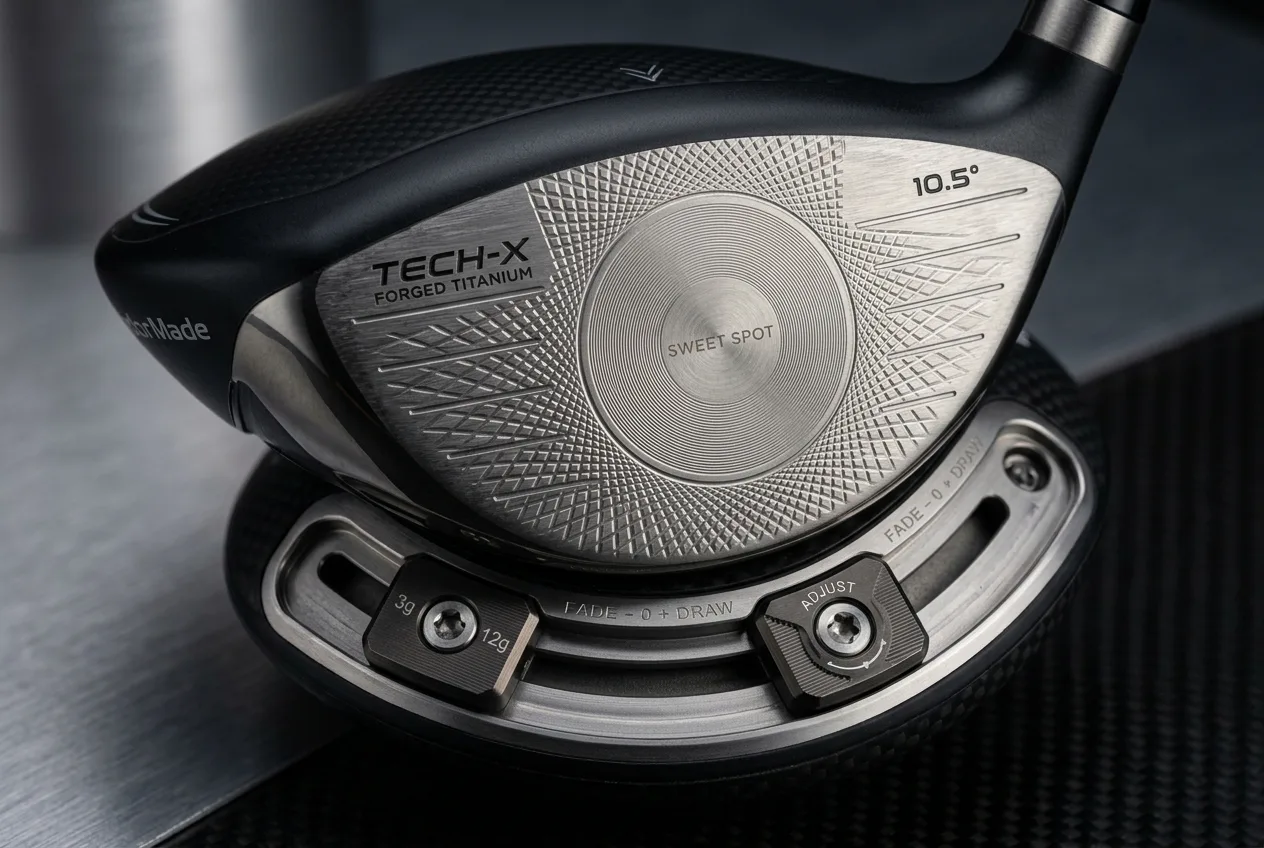
Modern drivers feature complex adjustable weights (movable metal masses on the clubhead). These allow you to fine-tune the club’s balance point to match your swing.
Moving the weight toward the heel helps close the face faster during your downswing. Conversely, moving weight to the back maximizes MOI and launch angle.
Do not ignore these settings after your initial purchase. Experimenting with different weight positions changes your ball flight dramatically.
We recommend testing various configurations at your local driving range to find your ideal setup. Just remember to use the torque wrench provided by the manufacturer until you hear the definitive “click” to ensure the weights are secure.
3 Steps to Fixing Your Slice with the Best Golf Driver for Average Golfer Swings
A slice ruins more scorecards than any other common swing flaw. It robs you of distance and frequently sends your ball into hazards or out of bounds.
Draw bias drivers offer a technological shortcut to straighter shots. These clubs position extra mass near the heel to encourage the face to close at impact.
You will see immediate improvements in your ball flight without changing your swing mechanics.
- Step 1: Adjust your loft. Higher lofts create more backspin, which naturally reduces side spin and limits the curve of your ball. If you currently play a 9-degree driver and fight a slice, lofting up to 10.5 or even 12 degrees is the fastest way to straighten out your ball flight.
- Step 2: Position the ball correctly. The ball should line up with the inside of your lead heel. This gives the clubhead enough time to square up during the downswing. Additionally, check your grip. A grip that is too “weak” practically guarantees an open clubface. Rotate your hands slightly away from the target to strengthen your grip.
- Step 3: Utilize draw bias settings. Shift any movable weights to the extreme heel position. This mechanical advantage directly fights your tendency to leave the clubface open.
Choosing the best golf driver for average golfer tendencies often means embracing draw bias rather than fighting it. Leave your ego at the door; if a draw-biased driver keeps you in the fairway, play it.
Launch Monitor vs. Real-World Testing: What Matters?
Hitting balls indoors on a launch monitor provides incredible analytical data. You can track your exact spin rate, smash factor, launch angle, and ball velocity in a controlled environment.
However, indoor simulators often mask the real-world effects of wind, uneven lies, and actual course conditions. Turf interaction completely changes how a club feels in your hands.
Real-world testing reveals your actual dispersion (the spread pattern of your shots). A club might produce optimal numbers on a screen when you hit five perfect drives in a row, but how does it perform when you are tired on the 16th hole?
A club might look great on paper but feel completely uncomfortable on the golf course. You must trust your eyes and physical feel over pure data.
We strongly suggest testing clubs outdoors before buying. Watch how the ball reacts in the wind and check your typical spin rate on natural grass.
See if the sound of the driver boosts your confidence. Your scorecard depends on real results, not simulated indoor perfection. If possible, rent a demo club and take it for a full 18-hole round.
Budget vs. Premium: Are 2026 Drivers Worth It?
The price gap between budget options and premium flagship models continues to widen, with top-tier drivers now frequently exceeding $600. Many older golf drivers still perform exceptionally well for casual players.
You do not always need the newest release to improve your game. Excellent used options offer incredible value for money.
Premium models charge top dollar for exotic carbon materials, extreme forgiveness engineering, and intense marketing campaigns.
If you play multiple times a week and track your handicap obsessively, that investment yields noticeable scoring improvements. The jump to 10K MOI this year is genuinely a noticeable technological leap.
However, casual weekend players often find incredible value in last year’s models, which can typically be purchased at a 30% to 40% discount.
Analyze your playing frequency before spending your entire budget. A solid, slightly older driver paired with a series of professional lessons usually outshines a brand new, expensive club swung poorly.
Be smart with your equipment investments. If your current driver is more than five years old, you will see a massive improvement by upgrading to almost anything released in the last two years.
Final Thoughts: Making Your Decision
Technology now offers massive forgiveness for the everyday golfer. Upgrading to a modern 10K MOI design instantly upgrades your consistency off the tee.
You will hit more fairways, lose fewer golf balls, and shoot significantly lower scores by simply keeping the ball in play.
Test different models outdoors and pay close attention to your shaft flex. Prioritize clubs that keep your absolute worst swings in play.
A driver that hits the ball 280 yards but out of bounds is useless compared to one that hits it 240 yards straight down the middle.
Focus on finding the right combination of loft, weight, and forgiveness. Do not let ego dictate your loft or shaft flex. The right equipment transforms your entire approach to the game, drastically reduces your stress levels on the tee box, and makes golf fun again.
Frequently Asked Questions
What loft driver is best for an average golfer?
Most average golfers benefit from a driver loft between 10.5 and 12 degrees. Higher loft increases launch angle and spin rate, helping to keep the ball in the air longer and reducing the severity of a slice. Many players mistakenly buy 9-degree drivers, thinking they will hit the ball further, but end up losing carry distance because they lack the necessary clubhead speed.
Is a lighter or heavier driver shaft better for high handicappers?
A lighter shaft helps high handicappers increase clubhead speed without extra effort. Most modern stock shafts designed for average golfers range from 50 to 60 grams. You must match the flex to your swing speed to ensure optimal dispersion and consistent contact. If a shaft is too heavy, you will likely tire out toward the end of your round and start leaving the clubface open.
Do draw bias drivers actually work for average golfers?
Yes, draw bias drivers shift the center of gravity closer to the heel, making it easier to square the clubface at impact. This technology effectively counteracts the common slice that many average golfers struggle with. While it won’t fix a fundamentally broken swing, it will immediately turn a severe slice into a manageable fade.
How important is MOI when buying a new driver?
MOI, or Moment of Inertia, controls forgiveness for average players. A higher MOI means the clubface resists twisting on off-center hits. Drivers in 2026 with 10K MOI offer extreme forgiveness, keeping your drives straighter even when you hit the ball off the toe or the heel. It is arguably the most important specification for an average golfer to look at.
Which driver is the most forgiving for an average player?
Golf experts consider the PING G440 Max (and the G430 Max 10K) to be the most forgiving drivers in 2026 due to their incredibly high MOI and optimized center of gravity. This combination helps maintain ball speed even on severe miss-hits, ensuring your worst swings still end up relatively close to the fairway.
Should an average golfer use a stiff flex shaft?
Generally, no. An average golfer with a driver swing speed under 95 mph should use a regular flex shaft. Stiff flex shafts are designed for faster swing speeds (typically 95-105 mph). Using a shaft that is too stiff will cause lower ball flights, a loss of distance, and an increased tendency to slice the ball to the right.
How often should an average golfer replace their driver?
Assuming you play around 10-20 rounds per year, you should look to replace your driver every 4 to 5 years. Technology moves fast, but annual upgrades offer diminishing returns. However, over a 5-year span, the cumulative improvements in carbon fiber construction, MOI, and face flexibility will be highly noticeable and beneficial to your game.
Get our latest guides, news, and insights highlighted in your Google Search & AI Overviews.